A Guide to England’s Glorious Cathedrals
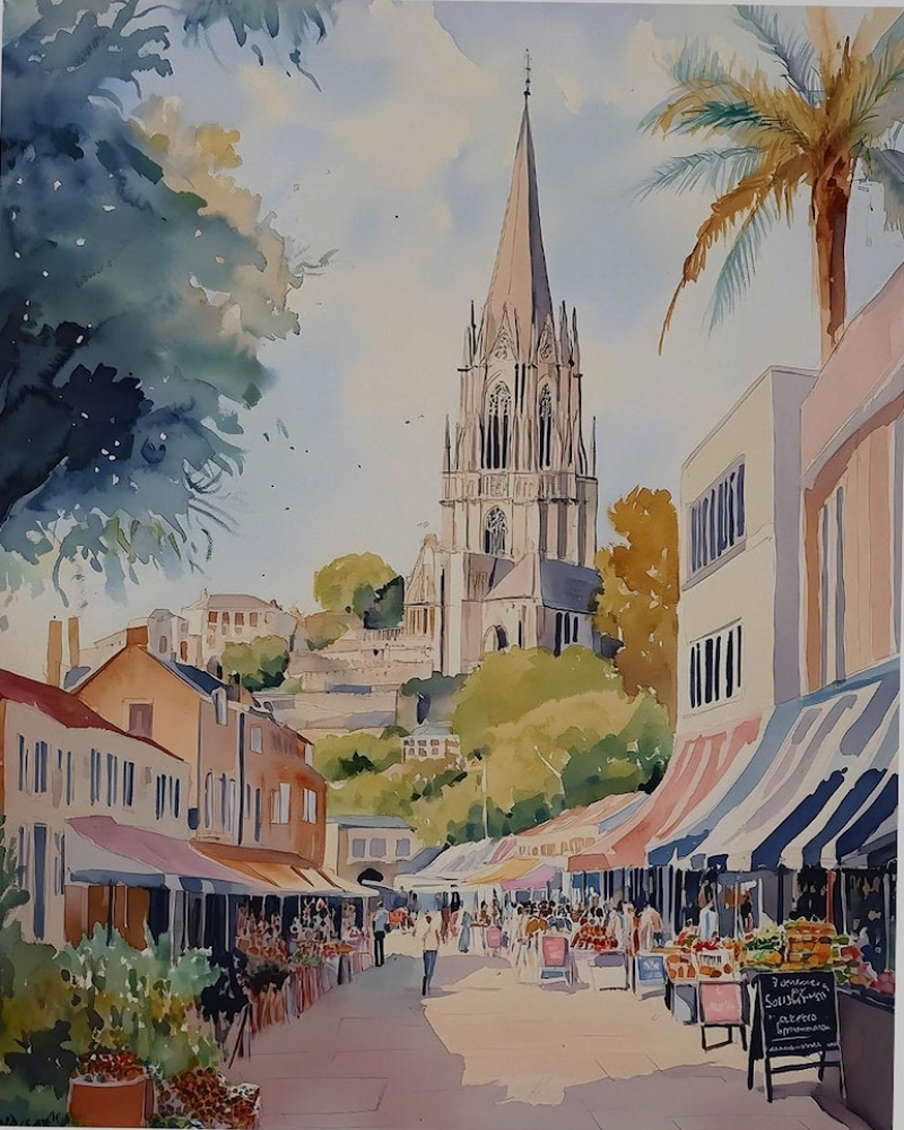
American writer Bill Bryson once wrote that he believed Salisbury Cathedral to be England’s most beautiful building (he also is an avid campaigner against litter, saying he cannot believe that people drop sweet wrappers and crisp packets on our green and pleasant land).
The cathedral took 38 years to build, and is a striking example of English Gothic style, with the world’s oldest working mechanical clock, stunning stained glass and peaceful cloisters. The Chapter House displays one of the four surviving copies of the Magna Carta.
Outside, the lush close is ringed with trees and lawn, and as popular as the cathedral itself.
The History of England’s Cathedrals (by a professor of history) provides a complete guide to all the cathedrals (both Catholic and Anglican, 62 in all).
Collectively visited by millions of worships and visitors each year, this book covers not just the architecture, but also the history and life of each one, from Roman times to the present day.
You’ll learn where and why each cathedral was founded, and how worship has changed over the centuries, along with dipping inside unique schools and libraries of each one, and how they communicate and interact with life outside the cathedral.
Does a City Need a Cathedral?
You’ve probably heard that a place can only be a city, if it has a cathedral. Not so. If it has a university or even a large population, it can apply for city status.
What the reason is for applying is anyone’s guess. We already have over-tourism, and keeping places smaller would likely be better for residents and visitors.
What Do Cathedrals Actually Do?
Now there’s a thought. This priest has some interesting ideas on how cathedrals can do more to help local communities (like homeless people) rather than be used for tourist attractions.
Cathedrals are huge buildings, so would be good to look at ways to become greener churches, for both the planet and to save colossal amounts of money, including energy bills. There are many new inventions to help restore and maintain heritage buildings, including alternatives to double glazing, which can stop draughts, without hefty maintenance bills.
Ecclesiastical Insurance specialises in insurance for churches and cathedrals, which also covers church halls that hold coffee mornings etc.
England’s Ancient Catholic Cathedrals
- Aldershot is the Catholic cathedral for members of the British Armed Forces.
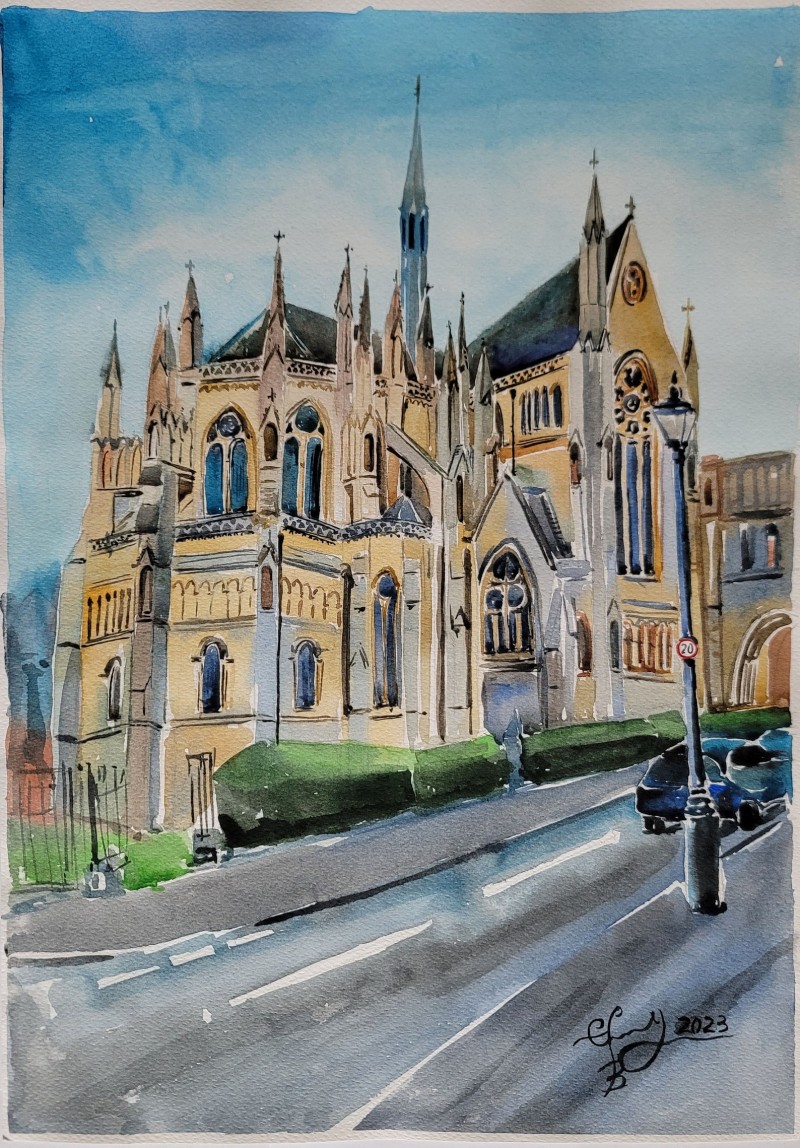
- Arundel (above image) is a French Gothic cathedral (located near Arundel Castle, owned by the Catholic Duke of Norfolk). His estate is not popular with animal welfare campaigners, due to breeding pheasants for shooting. And setting snares that trap wildlife and dogs.
- Birmingham was the first Catholic cathedral to be built in England, after the Reformation (there is also an Anglican cathedral in Brum).
- Brentwood is a small Gothic cathedral.
- Clifton is a modern cathedral, built in the late 1960s.
- Lancaster is a former parish church, made a cathedral in 1924.
- Leeds is a rebuilding (1904) of an ancient Catholic church
- Liverpool Metropolitan Cathedral became very popular for local Catholics, many of whom fled Ireland during the potato famine.
- London Cathedral is the Catholic church for Ukrainian Greek Catholics.
- Middlesborough is a modern building, with lots of natural light.
- Newcastle is a Gothic cathedral, designed by Augustus Welby Pugin
- Norwich is England’s second-largest Catholic cathedral.
- Northampton was designed by Augustin Pugin.
- Nottingham again was designed by Augustus Pugin.
- Plymouth has Devon’s St Boniface (a Benedictine monk) as its patron.
- Portsmouth was completed only in 1906.
- Salford is a Gothic-influenced cathedral, built to resemble a crucifix.
- Sheffield is of a similar designed to Heckington Church (Lancashire).
- Shrewsbury was designed by the son of Augustus Pugin (Edward)
- Southwark is near Waterloo station. Bombed during the war, it’s opposite the Imperial War Museum.
Westminster is the ‘mother church’ in England (one of the biggest Catholic churches on earth), a neo-Byzantine red brick building that poet Sir John Betjeman called ‘a masterpiece in striped brick and stone’, showing that a ‘good craftsman has no need of steel or concrete’.
The cathedral caused embarrassment for UKIP a few years back, when it complained that a BBC presenter was reporting from ‘outside a mosque’.
Not that there was anything wrong it had been, but it showed that ‘nationalists’ don’t even know their own architecture!
Actor/writer Alex Andreou began a Twitter feed of ‘ThingsThatAreNotMosques’ (posting images say of the Eiffel Tower) to gently chastise those who seek to divide, rather than unite us in the most tolerant of nations.
When asked about the incident, Nigel Farage told the BBC ‘Well, the people’s army are not wholly trained. They are enthusiastic volunteers’. A similar mix-up happened when members of the English Defence League mistook Brighton Pavilion for a mosque.
Westminster Abbey is not a cathedral. But instead it’s the ‘royal church’ where monarchs are crowned.
England’s Church of England Cathedrals

St Paul’s (after Liverpool Cathedral, this is England’s biggest church) is located at the City of London’s highest point. It was rebuilt after the Great Fire of London. This was the city’s tallest building for 250 years, and took 30 years to build.
A bomb disposal expert during the war successful defused a time-released bomb, otherwise the church would have been blown up, and lost forever. This is the church where Charles and Diana were married in 1981.
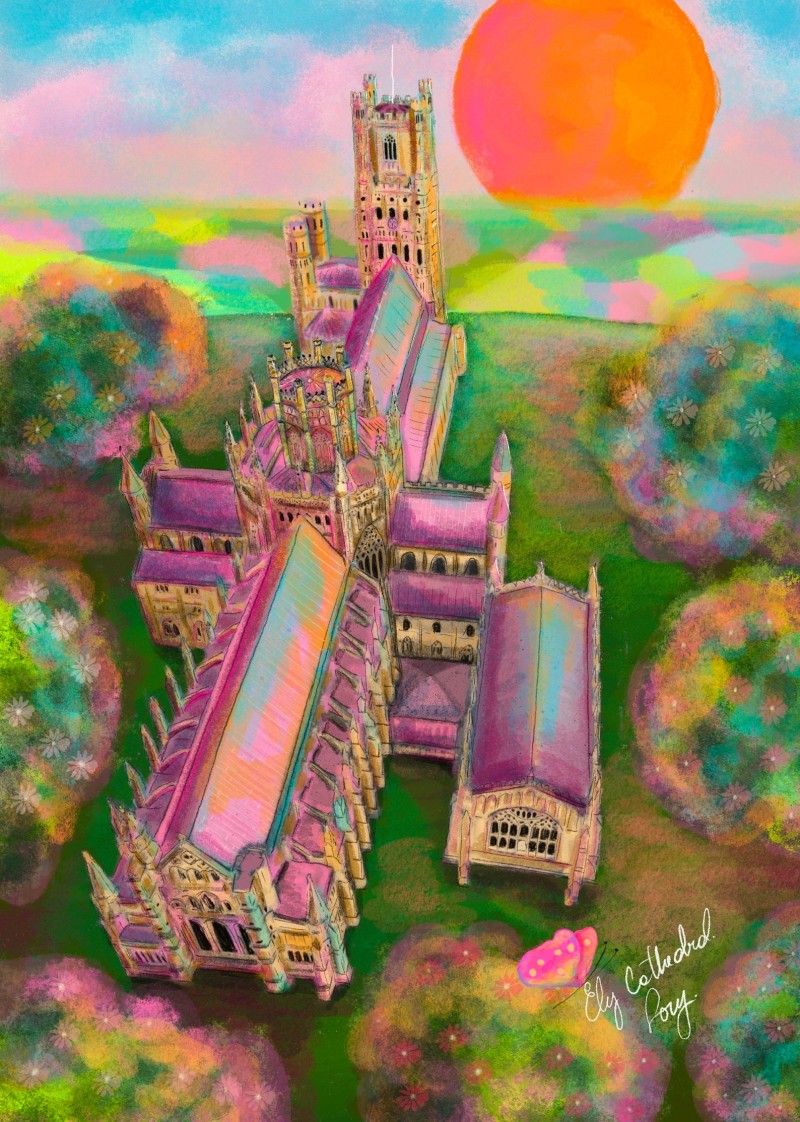
- Ely is named ‘the ship of the Fens’, due to its immense length. The cathedral stands on a site that used to house a monastery, founded by Saint Etheldreda (called ‘Audrey for short!), a 7th century princess who gave up royal comfort, a life of faith.
- Birmingham was designed by Baroque architect Thomas Archer. This is a very theatrical Italian-style of building with lots of curves.
- Blackburn was given cathedral status in 1926, for the local church. It’s one of England’s oldest places of worship.
- Bradford was originally a Norman church that was rebuilt (after the Scots destroyed it!).
- Bristol was originally an abbey.
- St Edmundsbury is on the site of a place of worship for over 1000 years.
- Canterbury is one of England’s oldest places of worship.
- Carlisle is the second smallest (after Oxford).
- Chelmsford is over 800 years old.
- Chester was formerly a Benedictine abbey.
- Chichester was created, when the Bishop moved here from Selsey.
- Coventry was built after the originally got bomb during World War II.
Derby: Home to England’s Smallest Cathedral
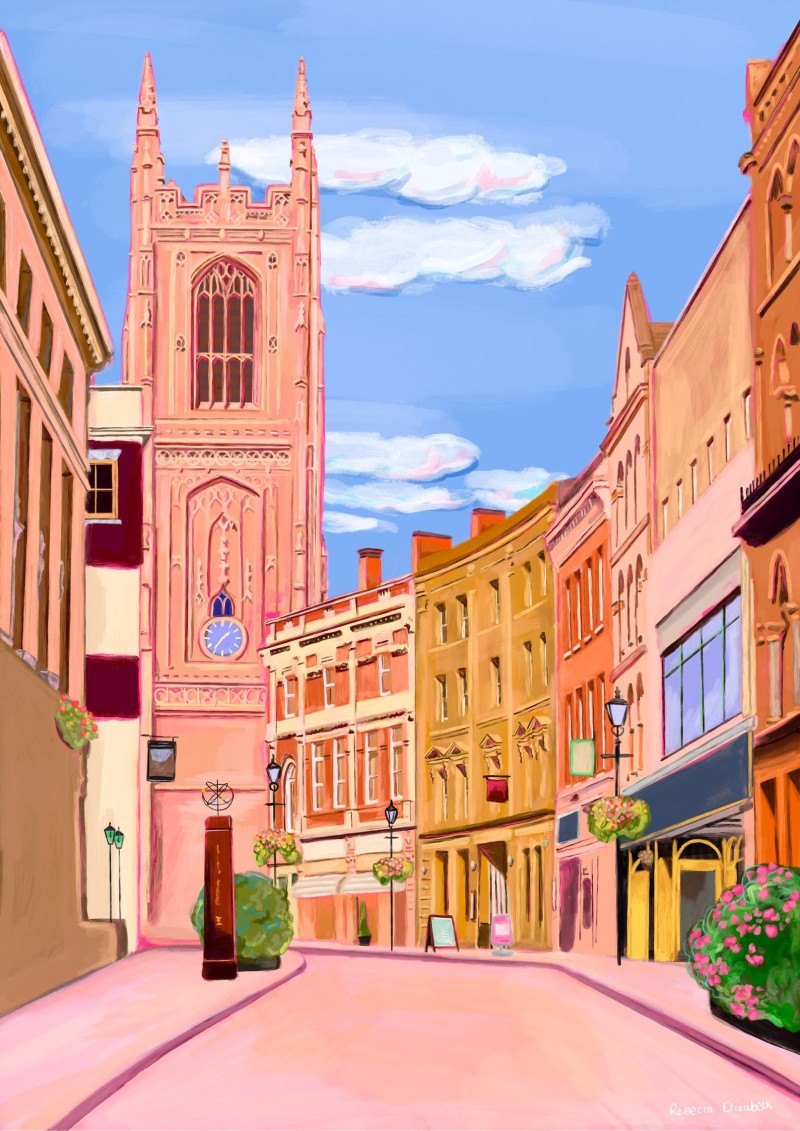
Derby city has around 260,000 people, which is smaller than most cities. It’s also home to England’s smallest cathedral. With a strong history of cotton mills and railways, it’s base on the River Derwent made it a core contributor during the Industrial Revolution.
Derby is also home to England’s oldest public park. The Derby Arboretum, opened in 1840, and inspired city parks across England.
Blind from birth, Joan Waste lived in the mid-1500s and worked as a rope maker. She wanted to read the Bible in English (not legal at the time) and so with help had words read to her. Refusing to give up her faith, she was burned at the stake in Derby in 1556, just 22 years old. A plaque in her memory can be found near Derby cathedral.
Another local was Richard Bell, a railway worker who became one of England’s first Labour MPs, in the day when they fought for the common man. He was a contemporary of Keir Hardie, who famously predicted the abdication of Edward VIII, and was shut down, for asking that parliament add an obituary to the miners who died in a colliery accident, on the day celebrating the new prince’s birth.
- Durham is a beautiful Norman building, with links to St Cuthbert
- Exeter was built to deter local pagans!
- Gloucester is a very ancient church
- Guildford is a modern red brick cathedral.
- Hereford still includes the 11th century bishop’s chapel.
- Leicester is a rebuilt church, made a cathedral in 1927.
- Lichfield replaced a wooden Saxon church with a Norman building.
- Lincoln was the world’s tallest building for over 200 years (before the spire collapsed).
- Liverpool began work in 1904, but was only completed in 1978.
- Manchester was restored during Victorian times, before being damaged during the Blitz.
- Newcastle is named after the patron saint of sailors and boats (St Nicholas). Again this was damaged by fire and rebuilt.
- Norwich is an ancient church, rebuilt from an early Saxon settlement.
- Oxford is also the chapel for Christ Church College.
- Peterborough dates back to an ancient monastery
- Portsmouth is built on land gifted from a Norman merchant.
- Ripon still has the original small 7th century chapel.
- Rochester was partly designed by a French monk, and
- St Albans is dedicated to the local saint, who was England’s first Christian martyr, beheaded for his faith.
- Sheffield was originally the local parish church.
- Southwark has been a place of worship for over 1000 years.
- Southwell Minster has had a church on the site since 627.
Truro: Cornwall’s (only) Cathedral City

Truro is a Georgian city, just 9 miles from the sea. Its name means ‘three rivers’ (named after the rivers Truro, Kenwyn and Allen). Many places in Truro are named after the Lemon family, who had great political clout. Sir William Lemon and his family were wealthy landowners.
The Gothic cathedral was designed by architect John Loughborough Pearson, whose son Frank carried on the work, after his father’s death. It has three spires, stained glass windows and carved choir stalls.
- Wakefield is situated on the site of a Saxon church.
- Wells is in England’s smallest city.
- Winchester is in England’s old capital city, founded during Pagan times.
- Worcester was built on the site of an old Saxon cathedral.
- York Minster is the seat of the Archbishop of York (the second-highest office, after King Charles III). Built on the site of a wood church first used to baptise the King of Northumbria!
Well-Known Beautiful Cathedrals Abroad

Notre Dame (Our Lady of Paris) is now almost restored, after a serious fire a few years back. Marking the central point of Paris, the fire is believed to have been caused by a discarded cigarette butt inside the building – good reason for smokers to use personal ashtrays.

St Basil’s Cathedral (Moscow) is also recognised by most people, the bright flame-shaped domes (representing different churches) apparently representing colours described for Heaven, in the Book of Revelations.
Of course in recent years prayer was not allowed due to the atheist state, although Orthodox Christian prayer services have been restored.
This cathedral was built on orders of Ivan the Terrible. Although reportedly an Orthodox Christian, he is said to have killed over 3000 people, including his own son.