The Stunning Colours of Nature: Purple

Purple is a captivating colour, that is often found in flowers and exotic bird sand animals. This striking colour plays an important role in nature. It’s also pretty rare.
From shades of soothing violet to rich plum tones, many people find purple an uplifting colour to find in nature. Lavender is known to relax and calm, and thrives in sunny dry climates. Purple orchids are also stunning, though toxic to pets).
Most pets won’t eat lavender, but the plants can be toxic. Never use aromatherapy oils near pets (including if cats sleep on beds – air rooms if used before allowing them back in, if used). Read our post on pet-friendly gardens.
If growing or displaying plants indoors, never face them to outdoor gardens, to help stop birds flying into windows.
Did you know there are purple frogs in India? They spend most life underground, only coming up to breed after monsoons. Their unique colouring is likely due to avoiding predators.
In the sea, purple sea slugs are also unique. Their colours show predators they are toxic, and they glide gracefully underwater, displaying psychedelic patterns purple, yellow and white.
Anthocyanins give plants their red, blue and purple hues. This can appear as flowers, but also as feathers and scales, to attract mates or deter predators.
Purple Fruits and Vegetables
Purple vegetables and fruits are as delightful on the plate as they are nutritious. Blue fruits are really purple (there are no blue fruits). This blueberry smoothie (Love & Lemons) whizzes up in seconds. Blackberries also contain the same health-giving nutrients.
Three Pretty Purple Flowers
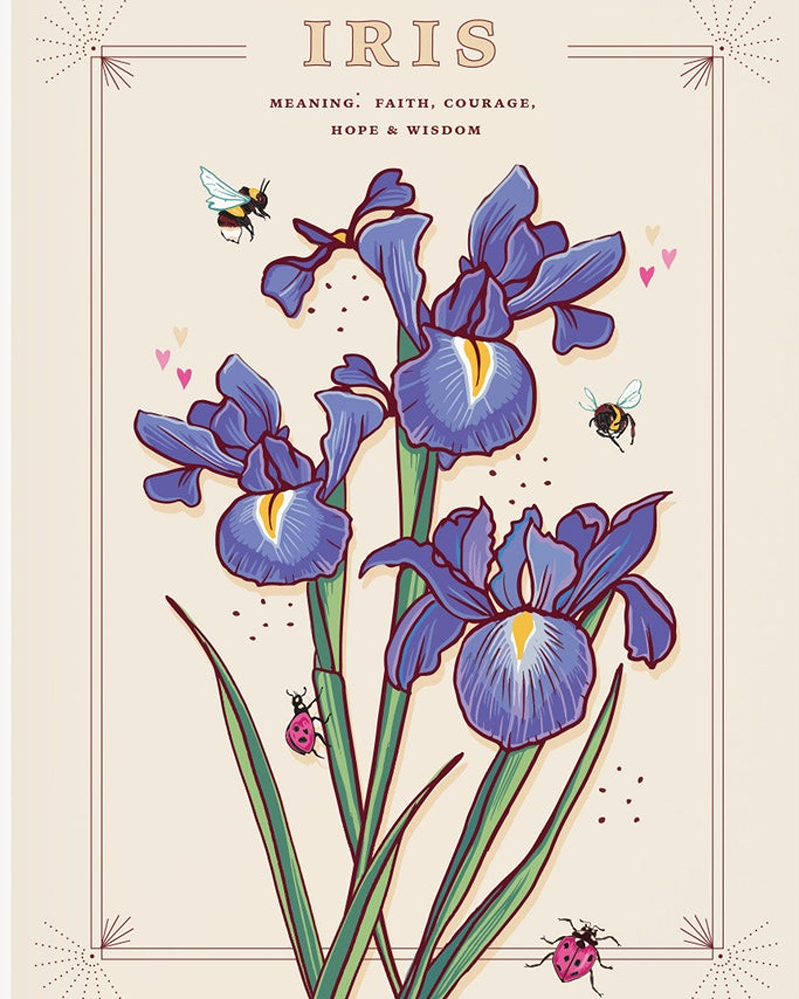
Irises (toxic to pets) are named after the Greek goddess of the rainbow, bloom in many colours including purple (not red) and have unique three ‘standards’ and three ‘drooping falls’. With Egyptian roots, they are the official state flower of Tennessee.
Bearded irises have fuzzy caterpillar-like strips on the lower petals, which attract pollinators. The dried ‘orris root’ is sometimes used in perfumes.
Lilacs are hardy perennials from the olive family, which only bloom for a few weeks each spring, but can live for 100 years. Able to survive low temperatures, they are also in many colours, not just purple. They are loved by bees, butterflies and hummingbirds.
Violets have a unique scent, and feature two types of flowers, including small closed ones for self-pollination. Ants help to spread their seeds, due to being attracted to their nutrition. This is the official flower of several US states (Illinois, New Jersey, Rhode Island and Wisconsin).
African violets (not really violets) are endangered in the wild.