How to Grow Food in Your Polytunnel
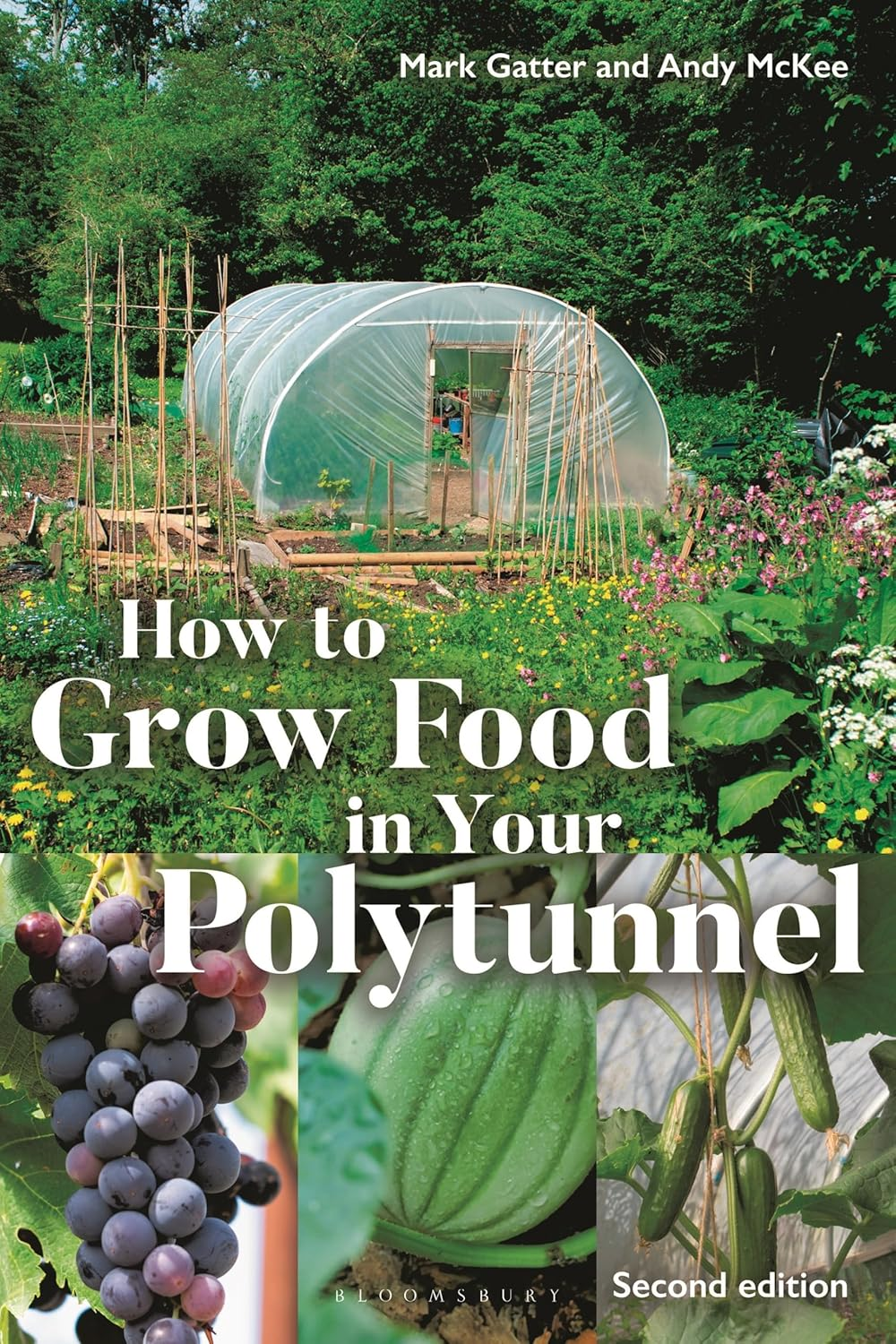
How to Grow Food In Your Polytunnel is the ideal book if you wish to grow food out-of-season or run an organic veg box farm, to offer your customers more food during the ‘hungry gap’ (when not much grows apart from kale!)
Read more on no-dig gardening and humane slug/snail deterrents. If you live with animal friends, read up on pet-friendly gardens (some recommended flowers and fruit trees are not safe). Also avoid netting to protect food (just leave some for wildlife!)
Birds often clash with glass windows (including greenhouses) when seeing vegetation inside. So softer fabric polytunnels are usually safer to help stop birds flying into windows.
Polytunnels are ideal for English weather, as they enable gardeners to grow and harvest fresh organic food year-round. This book (illustrated with photos and diagrams) offers a detailed crop-by-crop guide to grow:
- Sweet potatoes and celery in November
- Winter radish, baby carrots and celeriac in early Feburary
- Salad leaves all through winter
- New potatoes, pak choi, peas, cabbage and beetroot in early spring
You’ll find dedicated chapters on growing for each season, plus a handy sowing/harvesting calendar to help with planning. And tips to increase crop quality, yield and harvesting.
About the Authors
Mark Gatter has been growing vegetables since the early 1980s, and is a firm fan of the organic raised-bed approach. He grows food all year round, in chilly Northumberland!
Andy McKee began gardening with his dad as a child, and grows sustainable food for his family (and wildlife) using a mix of no-dig, perennial and polytunnel methods.