A Year on the North Sea Coast (coldest on earth!)

A Line in the World is lauded book by a writer who lives on the North Sea coast in Denmark. The coldest sea in the world stretches from the north tip of Denmark to the Netherlands, and of course is home to most of our East Coast.
The author (who says she is from ‘Denmark’s answer to Manchester’) writes how her family has lived amid storm-battered trees and wind-blasted beaches – a story of shipwrecks and storm surges, of cold-water surfers, sun-creased beach mums and sailors’ wives.
It’s a sea that in the past has been rich with fish, but issues with declining populations of puffins and kittiwakes, has led to a controversial ban on sandeel fishing, which some European fisherman are up in arms about.
As England is an island nation, its coast faces several powerful seas, which touch every part of our lives.
The North Sea
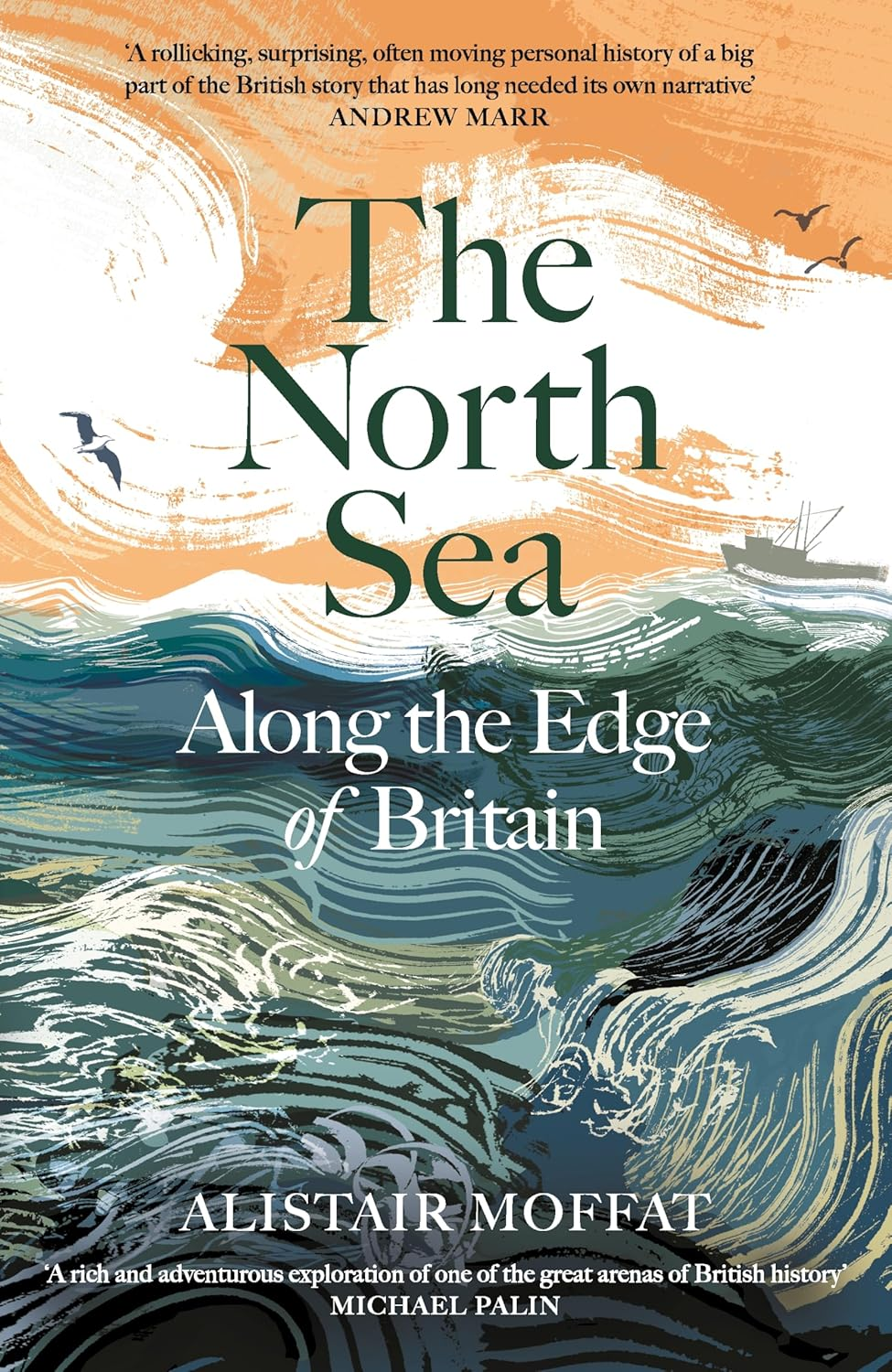
This sea (in East of England) is the world’s coldest, linking us to Belgium, The Netherlands and Scandinavia. It’s a foggy sea that also unfortunately contains busy shipping lanes, oil platforms and too many wind farms. It also includes major ports like Hull and Newcastle.
The North Sea: Along the Edge of Britain is a historical journey that traces the windswept story of the coldest sea on earth, and examines how it has shaped who we are, and how we see ourselves.
This maritime highway that faces Belgium, the Netherlands and Scandinavia, looks out from Norfolk, Suffolk, Lincolnshire and Northumberland. It runs from Kent and the Rhine estuary to the Norwegian coast and tips of the Shetland Islands (closer to Norway than London).
Popular as a resort for central England holidaymakers (Leicestershire, Derbyshire), the sea is continuing to rise, claiming land mass as the east coast crumbles and sinks.
In Norfolk, the villages of Hemsby and Happisburgh have suffered severe coastal erosion, and some villages like Eccles have literally been swallowed up, leaving ‘ghostly imprints of ancient churches’ in the sand, when the tide is out.
The author (a renowned historian) takes us on a sweeping history, from the white cliffs of Dover to flooded homes, crossing wild fenland and visiting well-worn seaside towns and windswept island monasteries.
From its sad whaling history (Whitby) to modern controversy over oil and gas drilling and offshore wind farms, this is the story of how the North Sea shaped us, and we can protect it and all the people who live near it, and creatures that live in it.
A masterful telling of the stories of the sea that has shaped our island nation. I loved it. A perfect mix of personal and historical. Gavin Esler
The North Sea also houses several islands on the Scottish coast and Danish Coast (Sylt is also known as ‘The Hamptons of Germany’, made popular in the 60s by playboy Gunter Sachs and his then-wife Brigitte Bardot).
The English Channel
This is in the south of England, the border from England to France, which is just 21 miles at one point. From many areas of Sussex and Kent, on a clear day you can see the French coast.
Of course it’s been in the news recently, as this is the controversy with the migrant boat tragedies. It’s also the world’s busiest shipping lane with cargo ships, fishing boats and ferries crossing each day, and of course under the water is the Channel Tunnel.
The Solent (seagrass meadows and chalk reefs)
The Solent is the large stretch of water between the Isle of Wight and the main coast (Portsmouth, Southsea, Hayling Island etc). It’s one of England’s busiest waterways, home to the annual Cowes Festival.
The Solent was formed over 7000 years ago, when sea levels rose during the last Ice Age. This flooded the River Frome estuary, and caused the Isle of Wight to separate from the mainland.
The area has many shipwrecks including the HMS Mary Rose, which sank in 1545, and was only salvaged in 1982 (a feat watched by millions of people on TV). It’s now displayed in a Portsmouth museum.
This narrow stretch of sea is a very important haven for seagrass meadows (home to endangered sea turtles and sea horses) and rare chalk reefs (like our version of coral reefs).
Hayling Island is the largest island in the Solent, with many Blue Flag beaches. The shallow waters has made it popular for water sports (this is where windsurfing was invented).
The Celtic Sea
This is a small wild sea with strong winds and rough waters, that stretches from Cornwall to the Atlantic Sea. Many seabirds and dolphins live here.