Straw Bale Buildings (cheap and naturally insulated)

Straw bale buildings are quick and easy to build, naturally insulated (when plastered with lime) as safe as wooden houses, and make use of waste from the farming industry (which is otherwise burned emitting pollution). So why don’t councils make use of it?
The UK could build half a million affordable insulated homes each year from waste straw, presently burned as waste material from farming. This would reduce climate change and homelessness.
What Is Straw Bale Construction?
Straw bale buildings are basically made from tightly packed blocks of straw bales (so they are as safe as wood, as it would be like burning a phone directory). When plastered with lime and following building codes, they are likely the cheapest and warmest easy-build homes there are.
Load-bearing homes are stacked like bricks, and carry the weight of the roof. Non-load bearing use a timber frame to support the roof, then straw bale is filled in the space.
Clay or Lime Plaster Finishes

Once built, the walls are plastered with clay or lime, to finish them off and leave breathable walls, but help stop water getting inside. ClayWorks offers naturally-coloured plasters, to do two jobs in one!
Natural Insulation Properties
Straw bale homes are naturally insulated, so (like all new homes) you don’t have to worry about installing it. The typical R-value is better than most brick walls, which keeps homes warm in winter and cool in summer, and drastically reduces bills.
In England, houses built this way often get fire ratings the same or better than regular homes. The lime plaster finish adds another strong layer of defence.
Cost, Building Process, and Regulations
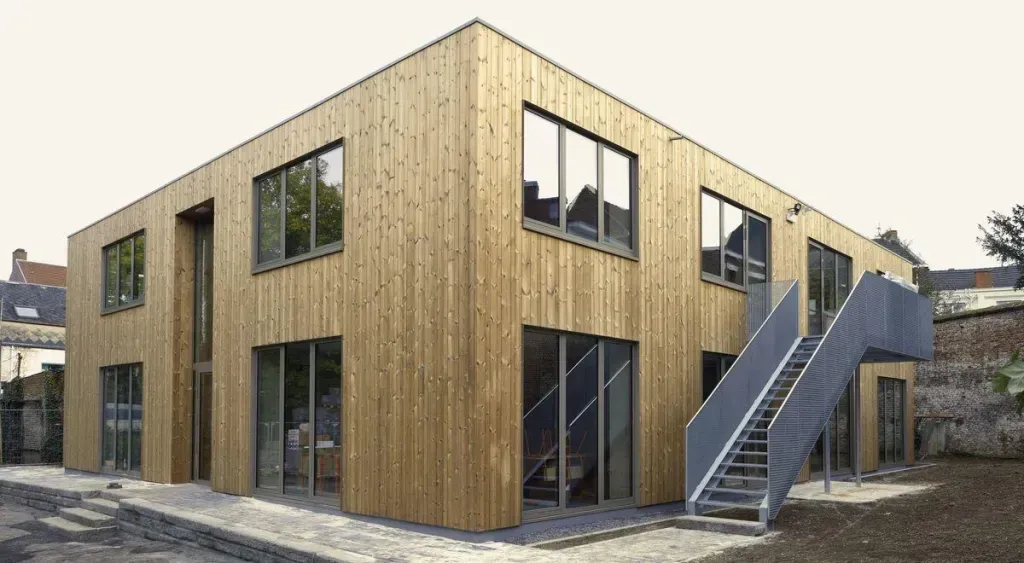
This Belgian school is built from straw bales.
An average straw bale house costs much less than a brick house, the issue is finding land to build them on, you need eco-friendly councils! Some people build the homes themselves, but obviously you need to get professionals in otherwise, and also for plumbing, electrics and gas.
But a small straw bale can be built with everything included, for as little as £50,000.
One reason is that the straw is free! It is simply the waste left from farmers, which if left on the ground contributes to air pollution and even wildfires in hot weather.
Straw bale homes are at no greater risk of mice and rats, as the material is not hay (food) but the empty stem of a crop. The best way to humanely deter rodents in any home is to seal up walls and don’t leave food out.
Sustainability Benefits and Challenges
When built properly, a straw bale home can last a long time (the newest ones in Nebraska are already over 100 years old, some say they could last 200 years (we don’t know yet, as there are none that old!
As straw bale works best in moderate dry climates, extra help and care may be needed in wet climates, like England. Barbara Jones (our leading straw bale expert – a woman!) is expert at building homes in our rainy climate.
She got into female carpentry to improve her own living situation, when funding cuts from her job helping drug addicts, ended up with her living in a squat with cold water and an outside loo!
Learn More on Straw Bale Building
- EcoCocon is a straw bale from Lithuania, championed by Barbara Jones. Over 300 buildings have been built with it.
- Building with Straw Bales is Barbara’s book (a few years old, but no others exist).
- Straw Bale Building Redefined is an English translation of a book from Lithuania, a hotspot for straw bale construction.
- Wellspring Architecture builds homes with straw bale, and Straw Bale Building is UK hub for all things straw bale.
- Huff and Puff offers a building alternative to cement, responsible for 10 to 15% of climate emissions worldwide. This company builds homes, and runs courses for self-builders.