Zero Waste Washing-Up Tools

This bamboo washing-up brush is the zero waste alternative to plastic brushes. It has a bamboo handle and sistal bristles (from a type of cactus). So it can tackle tough grease and grime, without scratching your dishes. At end of use, just biodegrade in the compost bin (or bin to naturally break down without harm to the planet).
Use with plastic-free cloths or sponges.
Use with Miniml refillable washing-up liquids (or Nonscents for pregnancy/nursing, babies and pets).
EcoCoconut Dish Brush is made from coir (coconut fibres) as alternative to plastic scouring pads. It’s non-scratch so okay for stubborn plates and non-stick pans, but not for plastic surfaces. Rinse after each use, and store in a dry place. You may notice some loose fibres at first, this will reduce over time.

The pack of two donut-shaped biodegradable scourers, are the alternative to those green-backed plastic scourers, that release microplastics down drains, once rinsed. These are safe to be used on non-stick pans, and also good to clean your cooker hob or stove top, and even safe for enamel sinks and baths.

The bottle brush has a curled tip, for precision cleaning at the bottom of bottles, and can also be used to clean wine glasses and stainless steel flasks.
A Stainless Steel Washing-up Bowl
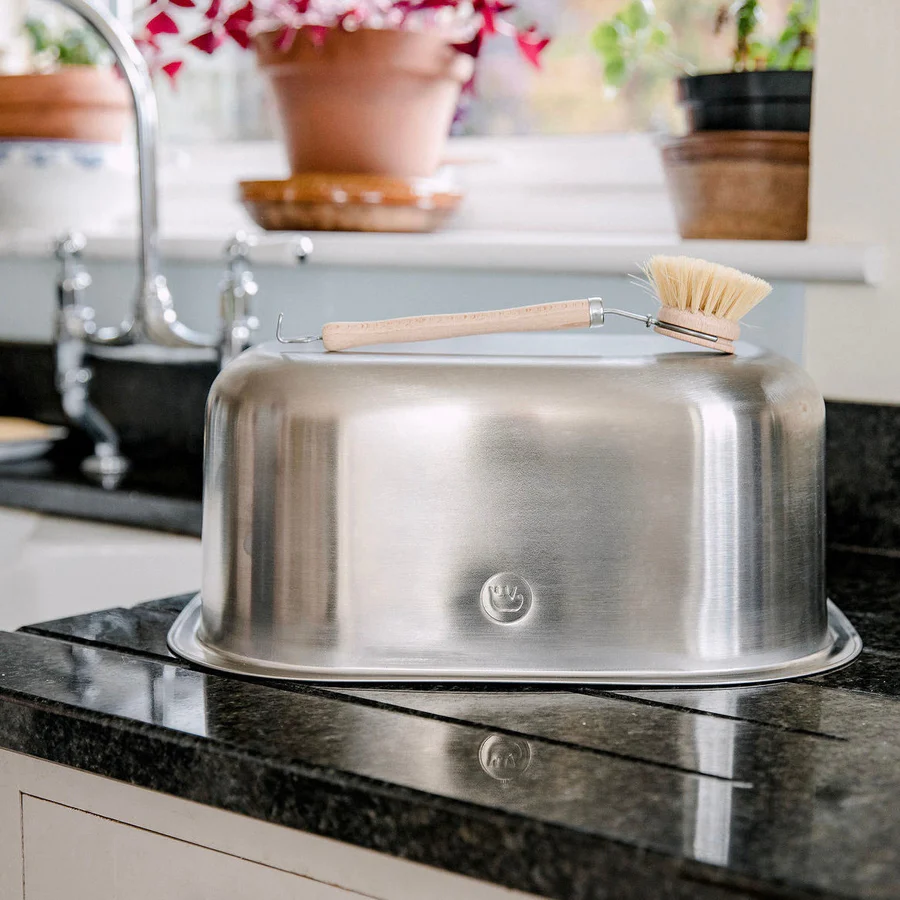
Instead of plastic bowls that support the oil industry and go mouldy and slimy, invest in a lifetime of use stainless steel washing-up bowl (also in orange).
Use with plastic-free cloths or sponges.
Use with Miniml refillable washing-up liquids (or Nonscents for pregnancy/nursing, babies and pets).
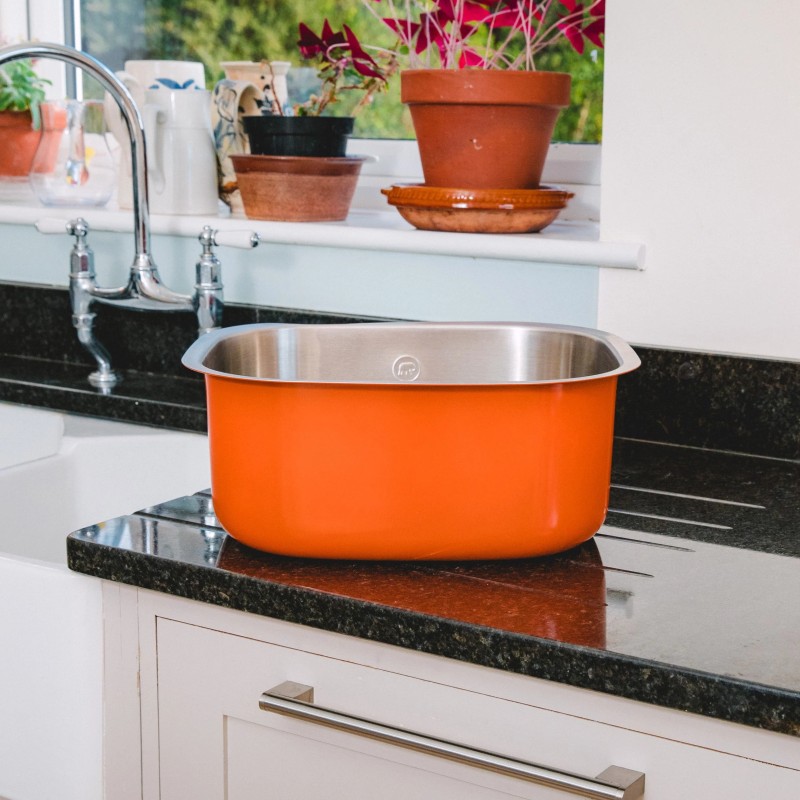
This has a non-porous surface to wipe off food residue, and is heat-resistant and is easily recycled, at end of life. Stainless steel does not absorb stains or smells. just wash with mild soap, then rinse and wipe dry. Remove water marks with a cleaning vinegar and water mix, then a quick rinse.