Reasons to Choose Natural Rubber Flops

Sea Sense Flip Flops are made from 100% natural Fair Trade rubber, so biodegrade if they got lost in a wave or dropped off a boat, unlike plastic versions. Natural rubber is also more comfortable, so less likely to cause blisters between your toes.
Sold in sustainable packaging, the cushioned footbeds support the natural shape of your feet, and padding absorbs impact if you’re on rough paths, or spend hours on your feet. The slight arch support also makes them comfortable for tired feet, and natural rubber lets your feet breathe.
These flops also dry fast, even after a paddle in the sea or sudden rain.
It’s not good to wear flops all the time, as this could cause flat feet.
Why Choose Natural Rubber Flops?

Flops are cheap and comfortable, so are worn by over 1 billion people worldwide. But plastic ones break down into microplastics, and get ingested by marine wildlife. It’s estimated that around 25% of all ocean waste is made up of discarded plastic flops.
You can send any brand of plastic flops to Waves Flip Flops for recycling (and get a discount on your next pair). Ocean Sole is a Kenyan social enterprise that creates local jobs, by turning discarded flops into colourful art.
Cork Flops (with Natural Rubber Base)
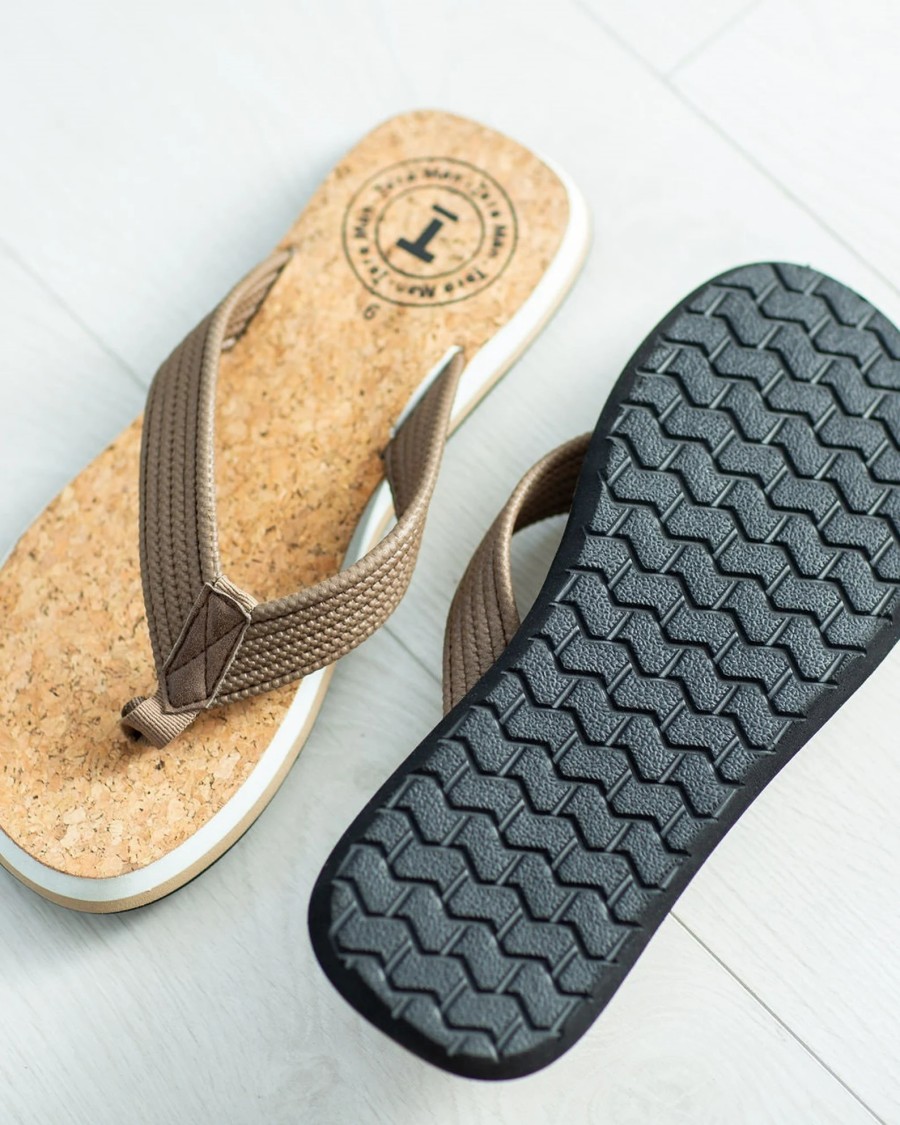
These natural cork flops are made by artisans in Bali, and are perfect for the pool, beach or lounging around at home. The natural rubber base has an excellent grip.
Cork is a lightweight and comfortable material that’s easy to clean. It comes from stripping the bark of trees in Spain and Portugal every few years, so no trees are chopped down.
Keeping the cork industry alive (in a world of plastic wine corks) is a good idea, to stop industry knocking down forests to build things.
Issues with Plastic Flip-Flop Waste
Millions of plastic flops are discarded daily, and most end up in our oceans. Because they are not biodegradable, they break down into tiny microplastics that are invisible to see, but are accidentally ingested by sea birds and marine creatures.
Most cheap flops made from plastic also have a very short lifespan (of around two years) leading to massive turnover and waste. Flat thin soles also offer no arch support or shock absorption, and can lead to plantar fasciitis, heel pain and shin splints.
Poor grip can also cause tripping (not safe on docks or boats), and on the beach, the thin material provides little protection against sharp objects, like discarded glass.
Plastic also makes your feet sweat, and in some people can cause allergic contact dermatitis. Moist conditions between the foot and flop can also promote bacterial and fungal growth, to produce conditions like athlete’s foot.
Poorly-designed flops can even alter walking and cause fatigue, due to users having to ‘grip’ the flop with their toes, and this in turn can cause lack of heel support and increase risk of ankle sprains.