The Best Brands of Sustainable Gin (and tonic!)
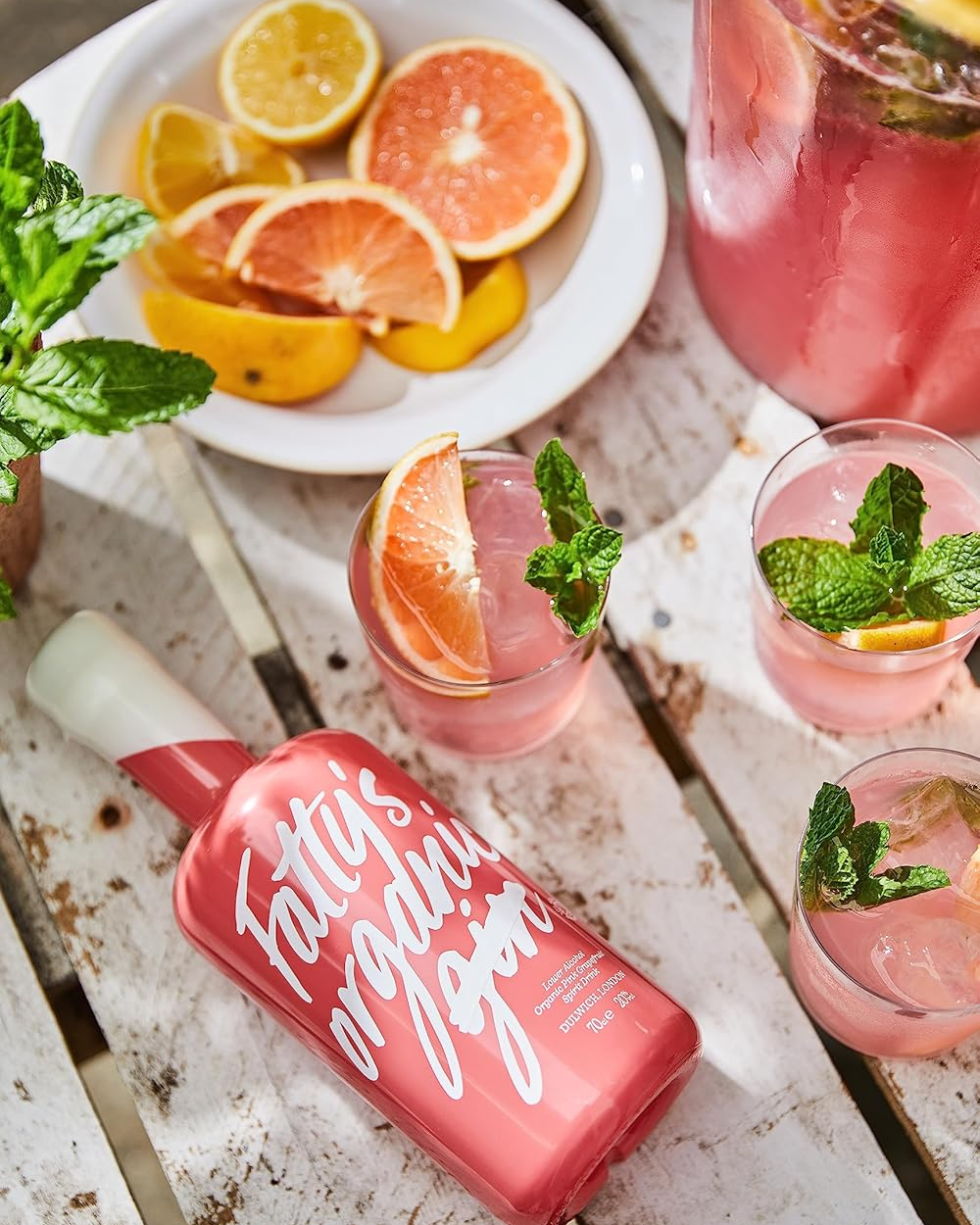
Fatty’s Organic Gin uses dill as the key botanical. Dulwich (an affluent borough of southeast London) literally means ‘the meadow where dill grows’. There’s also a winter spiced gin with cinnamon and nutmeg.
The low-alcohol version is based on pink grapefruit; serve with lime and pink grapefruit juice with crushed ice, garnished with a wedge of pink grapefruit.
Muddle 50ml of Fatty’s organic gin with four lime wedges, two springs of fresh dill and one teaspoon of sugar. Add to a glass half-filled with ice and 2 slices of diced cucumber. Stir and top with soda water.
Corks are too dense to recycle and are choking hazards, so send off in bulk to Recorked, if your local off license does not collect.
Check medication before drinking tonic water (contains quinine). Also avoid tonic water for pregnancy/nursing (but hopefully you won’t be drinking gin anyway).
The Best Brands of Artisan Tonic Waters

Tonic water is mostly served as a mixer for gin and vodka, or sometimes alone as a refreshing drink. But it was originally used to help prevent malaria, as it contains quinine (from the bark of the cinchona tree).
It was so bitter that medics added gin, to make it more palatable. Modern tonic waters don’t have as much quinine, and are generally sweeter.
- Fentimans (Northumberland) makes a wide range of botanically brewed tonic waters, made with herbal infusions from lemongrass to Sicilian lemon oil.
- Luscombe (Devon) blends Dartmoor spring water with wild or organic fruits, and Indian quinine. Also in flavoured versions (elderflower and grapefruit) and a Light version (sweetened with fruit sugar, with Japanese yuzu).
- Daylesford makes organic tonic water with dandelion, instead of quinine. Containing far less sugar, it’s bottled on a family farm in Devon. Choose from Light, cucumber, wild elderflower or Damescena rose.
Elephant Gin (a tipple to help gentle giants!)

Sold in recycled glass bottles with natural corks, Elephant Gin offers a range of tipples alongside coffee liqueur and ready-to-drink negroni. It uses profits to help charities that are helping to save endangered elephants.
Its current financial situation means the company can only support smaller projects, so please support this company over big brands, to fund its wonderful work. The UK shop is currently closed, so ask in local shops or find online retailers.
Gorilla Spirits Co (drinks to help endangered great apes)
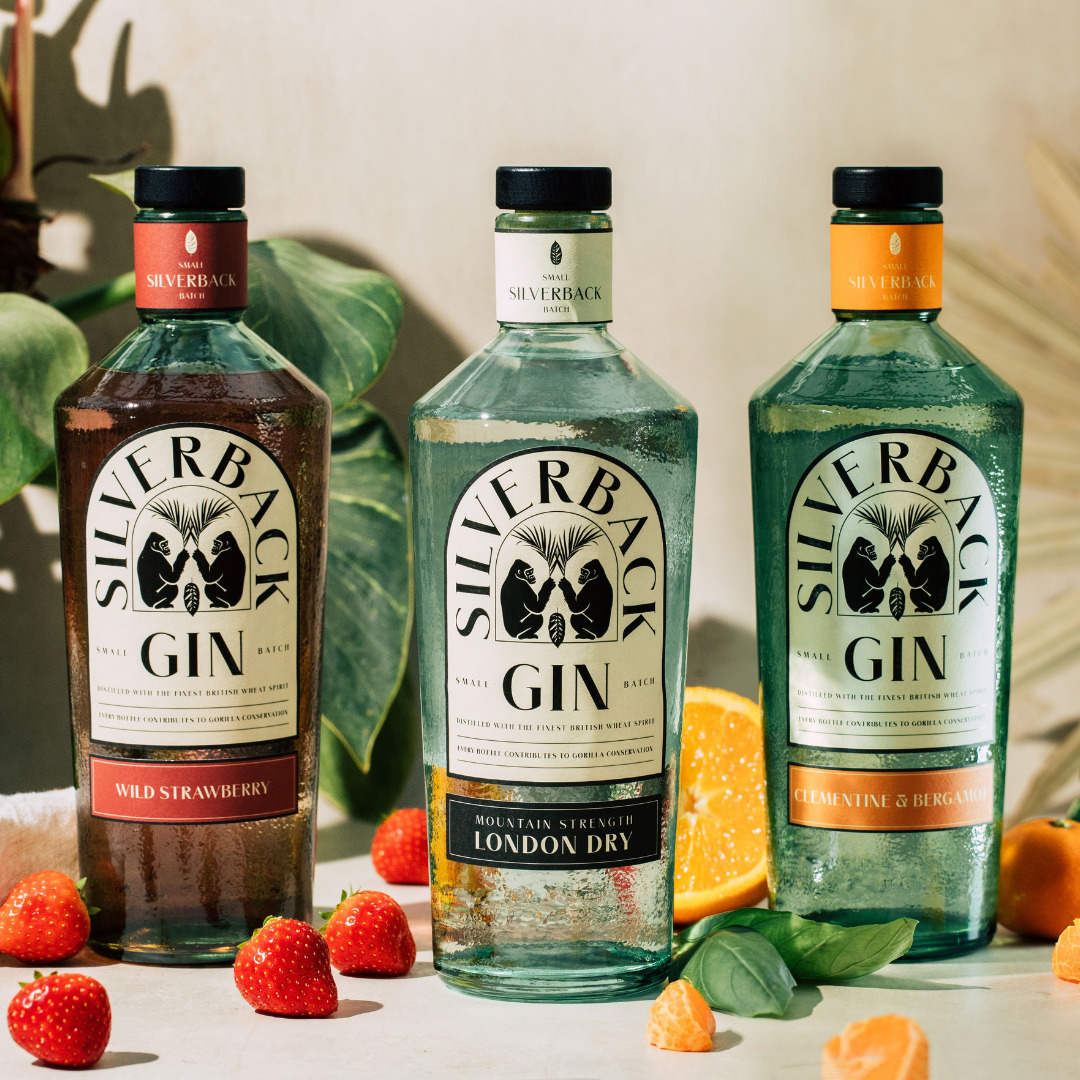
Gorilla Spirits Co offers boozy spirits and liqueurs with a difference. As a portion of profits go to a charity that helps endangered gorillas, one of our closest relatives.
Due to quinine, avoid tonic water for certain medical conditions (liver failure, blood thinners, antibiotics and anti-depressants). Also check medication inserts, before consuming grapefruit or rhubarb drinks.
Unless chopped up, corks are too dense to compost (and choking hazards, if left around). So recycle them at your local off license, or send off in bulk to Recorked.

The range includes:
- Blackback Mountain Strength Vodka!
- Karisimbi Golden Rum
- Karisimbi Spiced Rum
- Karisimbi White Rum
- Maraba Coffee Liqueur
- Maraba Salted Hazelnut Liqueur
- Silverback Clementine Bergamot Gin
- Silverback Wild Strawberry Gin
- White Rum
Tips to Help Save Endangered Gorillas

Wild gorillas live in central Africa (eastern and western gorillas don’t see each other, as there is a big rainforest between them).
They move in ‘troops’ of up to 30 gorillas, which is led by the dominant silverback male, a few females and the children. They are critically endangered, due to loss of habitat and poaching.
Mostly herbivores (they will sometimes eat insects and snails), the silverback is around 10 times stronger than a human man, but mostly is gentle. He will only attack if he feels at risk, or is trying to protect his family.
One of the most clever of all animals, gorillas can make bamboo ladders to help babies reach trees. And even make cutlery from twigs, to eat insects!