Simple and Affordable Stewed Fruit, Pies & Crumbles

Plums are popular fruits served fresh or in jams, pies or crumbles. They are good served with olives, vegan cheese, spicy or chocolate dishes.
Easy Stewed Plums (Veggie Desserts) are poached in orange juice syrup and brown sugar, infused with cinnamon. Serve with vegan ice-cream or custard.
Plums are choking hazards for babies and swallowing difficulties. Avoid for kidney disorders (due to oxalic acid). Keep recipes away from pets, due to fruit pips/seeds and fresh dough. Read more on food safety for people and pets.
How to Buy, Store & Prepare Plums
- Buy plums in season from August to October (not all are purple).
- To remove the skin, drop plums in boiling water for 15 seconds, then into cold water.
- You can eat plums raw, or poach/stew stem. or roast in the oven.
- Keep plums at room temperature (no more than a few days). Or store them in the fridge (as long as there is air circulating).
- Dried plums (prunes) are good for icky digestive systems.
Homemade Strawberry and Rhubarb Crumble Recipe

This strawberry rhubarb crumble (Cupful of Kale) can be made as is, or just use rhubarb alone, though it won’t be as sweet.
Avoid rhubarb for kidney stones or liver problems (even a history). Check medication , before eating. Keep rhubarb away from pets (due to soluble oxalate crystals).
Rhubarb is one of England’s favourite fruits (even though it’s not a fruit, it’s actually a seed!) Related to buckwheat, it’s too bitter to eat raw, but cooked it’s delicious with sugar, and just as popular in Scandinavia).
If you’ve never tasted rhubarb, it’s difficult to describe as it is unique. Someone once described it as a cross between a ripe strawberry and a tart Granny Smith apple?
How to Buy & Store Rhubarb
There are two types of rhubarb:
- Forced rhubarb (January to March) is grown in pots in Yorkshire’s ‘rhubarb triangle’ region (Bradford, Leeds and Wakefield). It’s said the eerie ‘cracks’ of the stalks, means you can hear it growing!
- Maincrop rhubarb (March to June) is more tart.
Look for healthy looking rhubarb, often the leaves have already been removed.
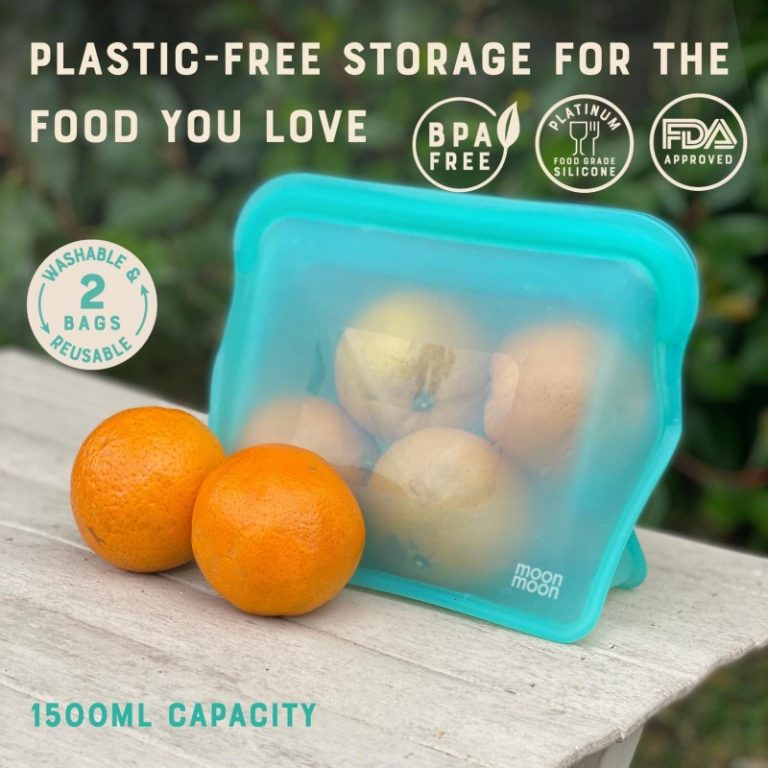
Once home, trim off excess leaves and store in a reusable silicone freezer bag (keep it open) or at least cut a few holes inside, to let the rhubarb breathe. Then store in your fridge’s salad crisper drawer.
Today ‘forced rhubarb’ is so popular, that growers outside of Yorkshire are supplying supermarkets, including many from Norfolk.
Due to acids, rhubarb and leaves (along with citrus fruits and all alliums – garlic, onion, shallots, chives and leeks) could harm compost creatures. So just bin scraps, to naturally break down.
How to Prepare & Cook Rhubarb
Rhubarb has to be cooked (discard and bin the leaves).
Bring to the boil in a pot with enough water to cover, then simmer for around 20 minutes. Then stir in sugar (and optional cinnamon). Serve with vegan custard or ice-cream.
More about Yorkshire’s Rhubarb Triangle
Let’s learn more about this, as it’s an interesting story.
- Yorkshire has the ideal soil to grow rhubarb as cold weather up north has no effect (rhubarb is native to Siberia!)
- Years ago, 200 local growers would send their rhubarb via ‘rhubarb trains’ to London’s Covent Garden market.
- The crop has been popular ever since, apart from during the Second World War (when the rationing of sugar, meant it was too bitter to eat).
- The Rhubarb Triangle consists of 9 square miles in West Yorkshire. At one point, the area produced 90% of the world’s winter forced rhubarb, from the sheds near the fields.
- Forced rhubarb is grown in a very special way, without light (even harvesting is done by candlelight, so not to stop growth). Then once harvested, any root stock left is composted.

The novel The Body on the Train (published in 2019) has a plot of a man, whose murdered body is found on a rhubarb train, on arrival in London.
Homemade Vegan Cherry Pie Recipe
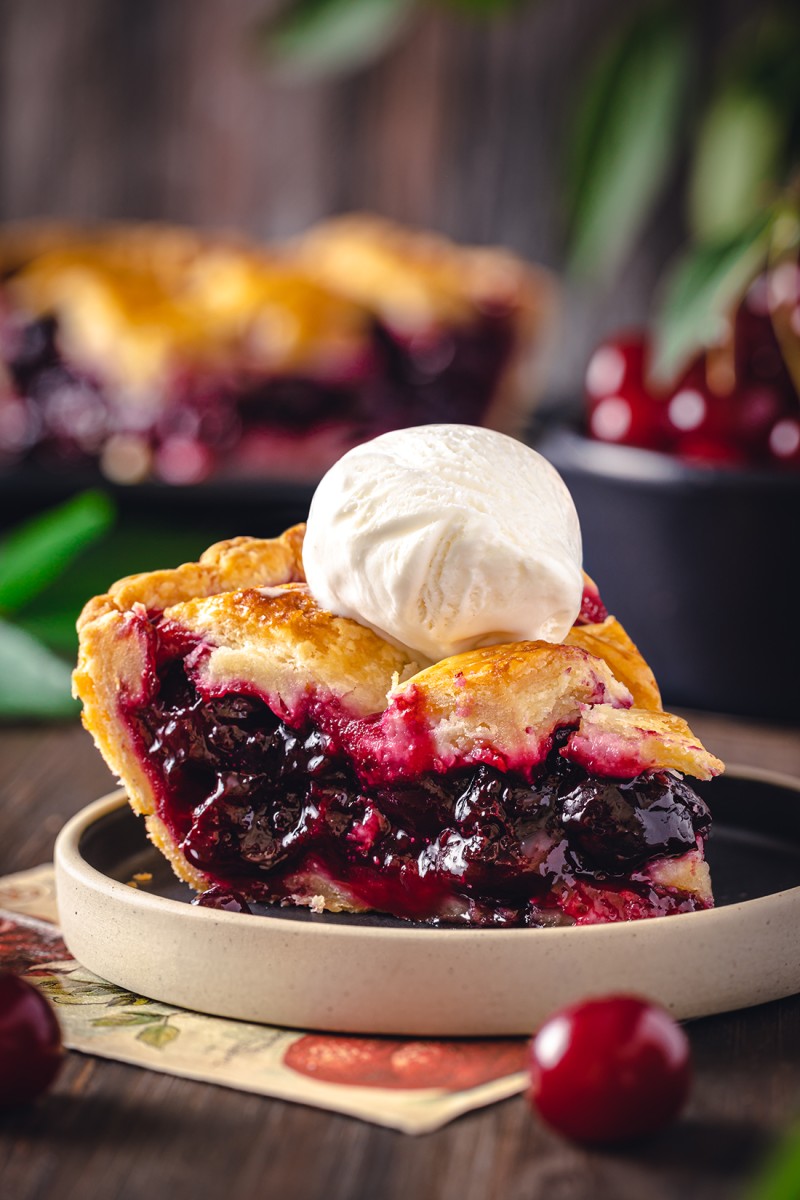
It’s surprising considering the abundance of cherries in England, that cherry pie is not (like in the USA) more popular. Cherries are expensive but delicious and make a lovely pie filling, serve with vegan custard or ice-cream.
This cherry pie recipe (Willow’s Kitchen) is super-simple to make, packed with fruits and sweetened with coconut sugar.
To avoid palm oil, make your own pastry with vegan butter (like Flora, which has no palm oil).
This recipe has a homemade pastry base, or use a simpler recipe at the post above. The pitted cherries are then combined with sugar, cornstarch, lemon juice and vanilla.
If you eat a lot of cherries, it’s worth investing in a cherry stoner, which can also be used for to remove olive stones.
You simply add the cherry mix over one half of the rolled-out dough, then cover with the other half (after cutting it into strips and weaving into a lattice shape).
Chill the pie for half an hour (sprinkle on optional sugar) and bake until done. There won’t be many leftovers!
How to Buy & Store Cherries
Red cherries have a lighter flavour, but most interchange nicely in recipes. Look for ones with bright firm skin, and only wash them just before serving (they only keep a few days in the fridge). Look in farm shops for organic cherries with low food miles.
Fresh Peach or Berry Cobbler Recipes
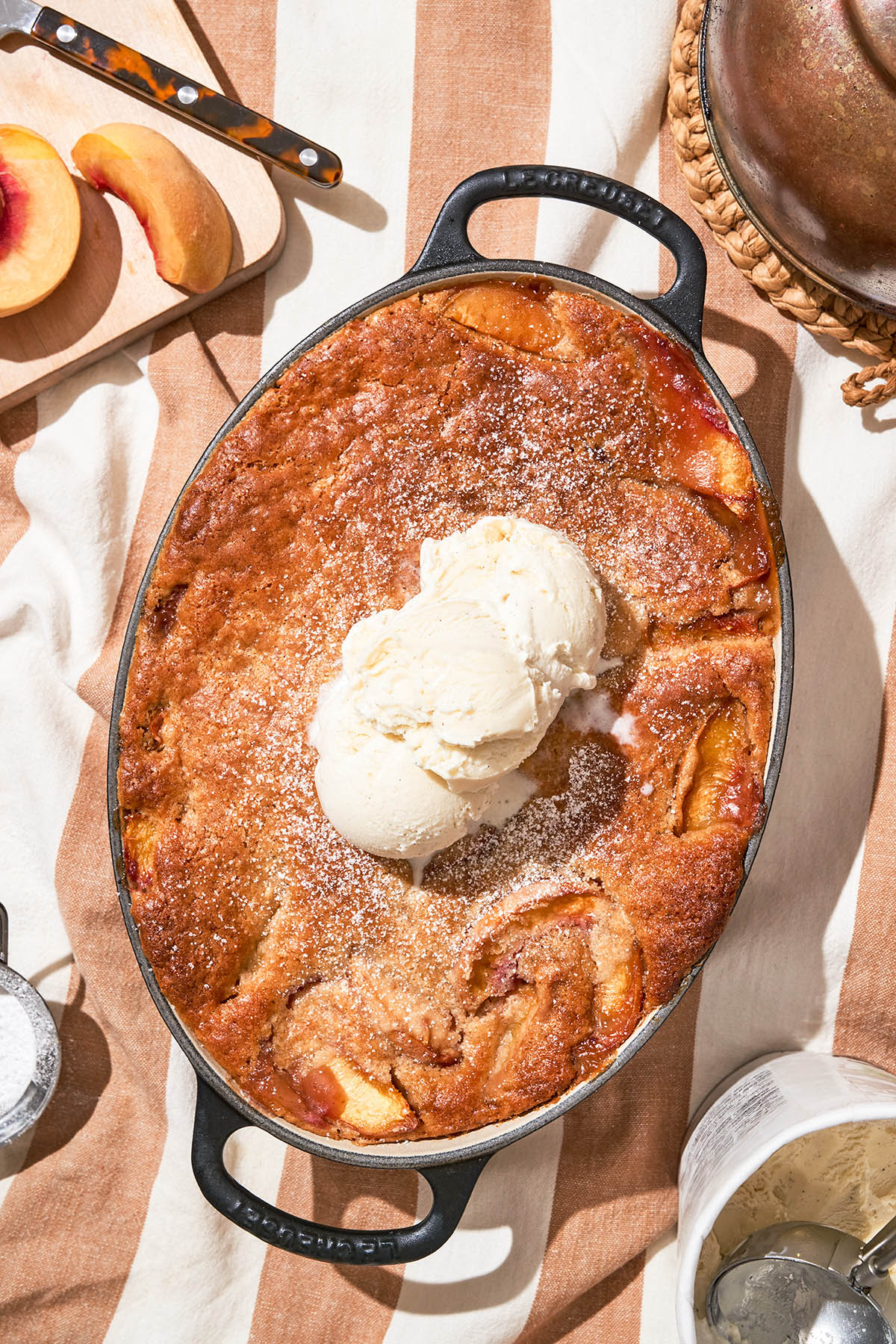
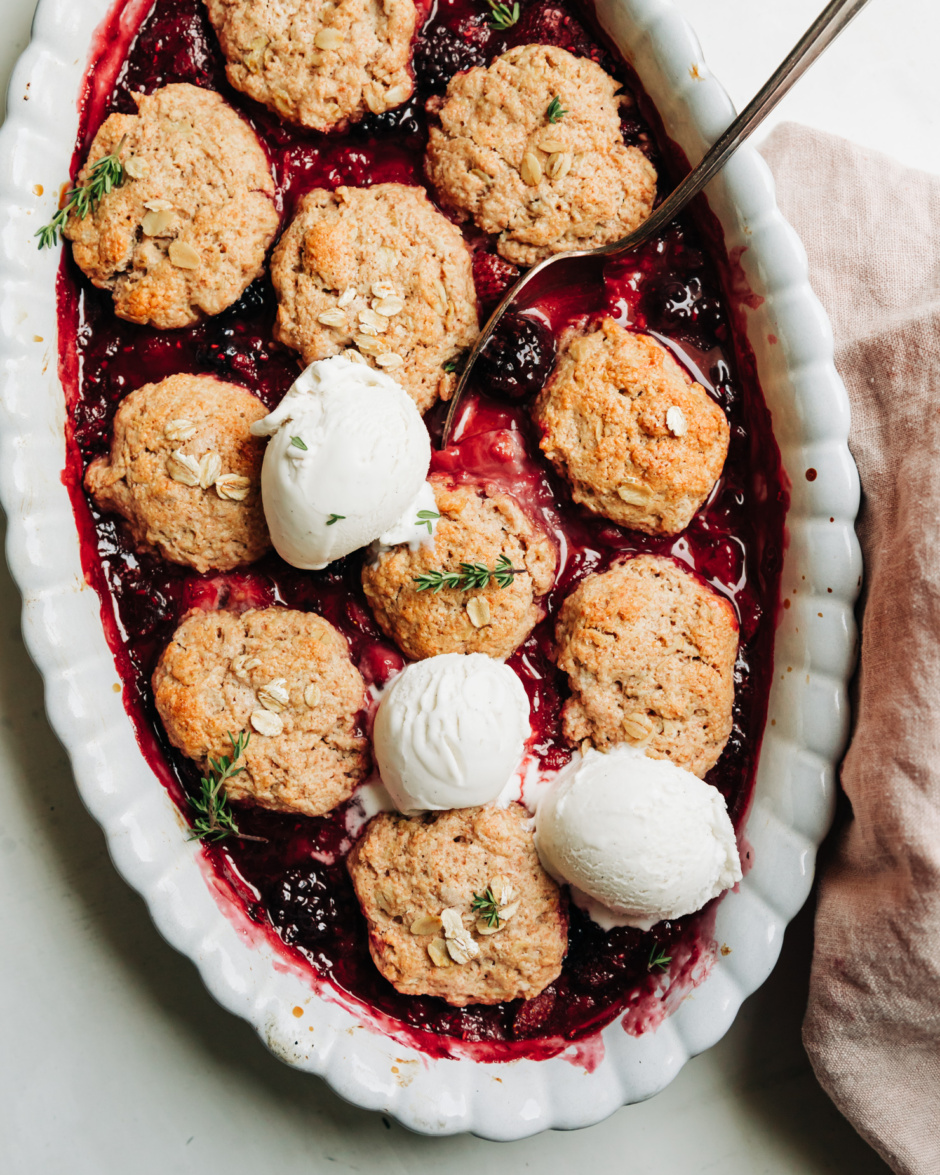
You know about fruit crumbles and pies, so why not be inspired by the USA and try a fruit cobbler? It’s kind of similar (almost like sweet dumplings in a fruity pie).
You can’t get more Deep South than this peach cobbler (Wholehearted Eats). Also try this recipe for a berry cobbler (The First Mess).