Interesting Books about the History of England
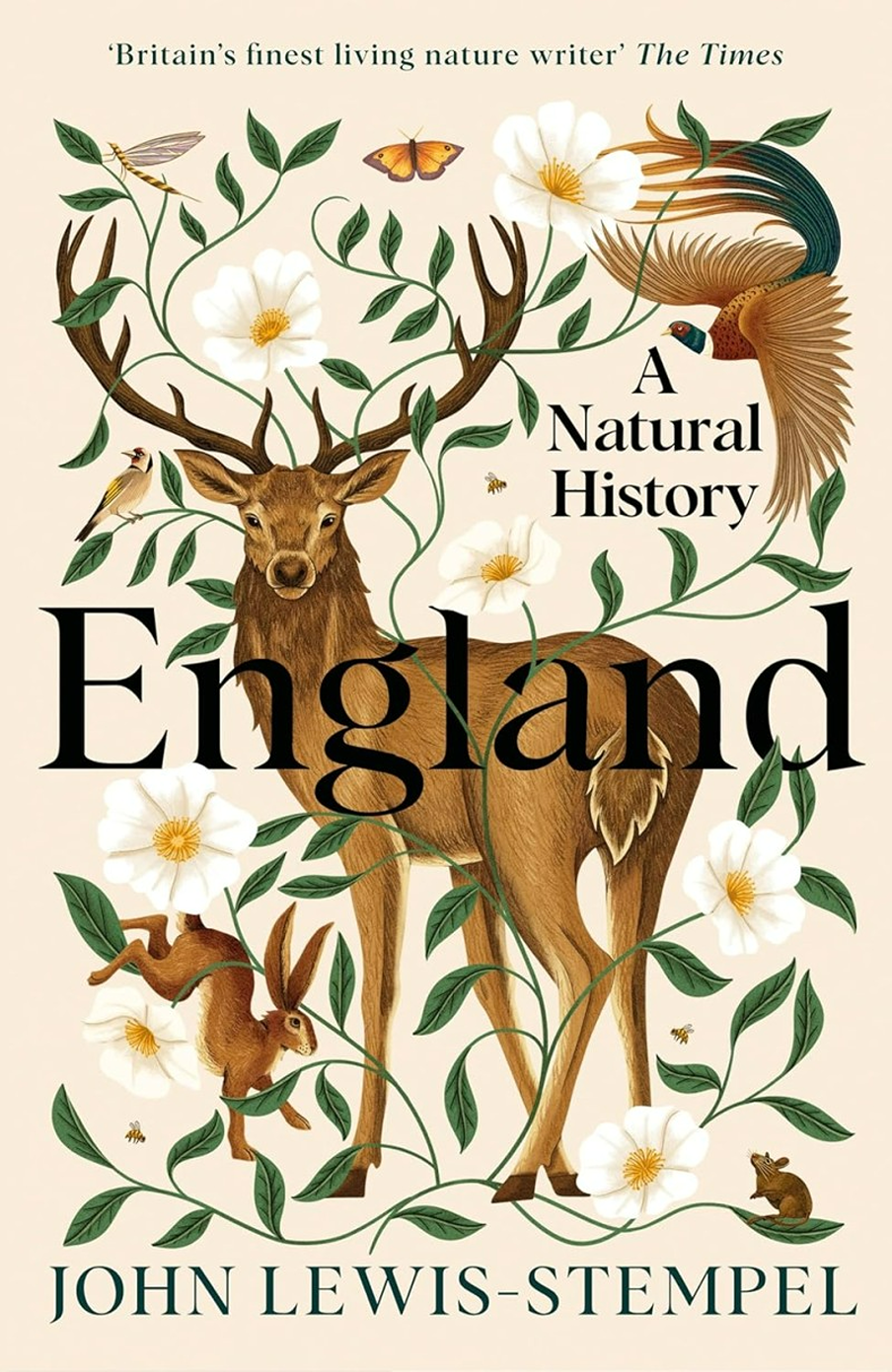
England: A Natural History is the ultimate guide to our countryside and native wildlife. England is a series of distinctive habitats that unite to create a landscape that is unique, for its rich diversity of flora and fauna.
In his book, the author explores each habitat in turn, taking us from coast to moor, from downs to field, from the park to the village – to create a vivid living portrait of our natural history:
If out walking in nature, always follow the Countryside Code to protect all creatures (many woodland flowers like bluebells are not safe near flower-nosey pets).
- Clear waters & dragonflies
- Bluebells, badgers & stag beetles
- Wild thyme & granite cliffs
- Rock pools & sandy beaches
- Red deer standing at ancient trees
- The wayside flowers of the lane
- Hedgehogs & hares
- Snow on the high peak
Each landscape (be it calm green or wild moor, plunging cliff or flatland fen) has shaped our idea of ourselves, and a sense of what it is to be in England.
To stand alone in a field in England and listen to the morning chorus of the birds, is to remember why life is precious. John Lewis-Stempel
John Lewis-Stempel has been called ‘Britain’s finest living nature writer’. Born in Herefordshire (where his family has lived for over 700 years), he is not afraid to call out ideas which he thinks are problematic.
Although rewilding in theory is good, he says just ‘leaving nature alone’ could lead to more problems, due to predatory species, which could destroy other creatures.
Secret Britain (explore 70 ancient places)
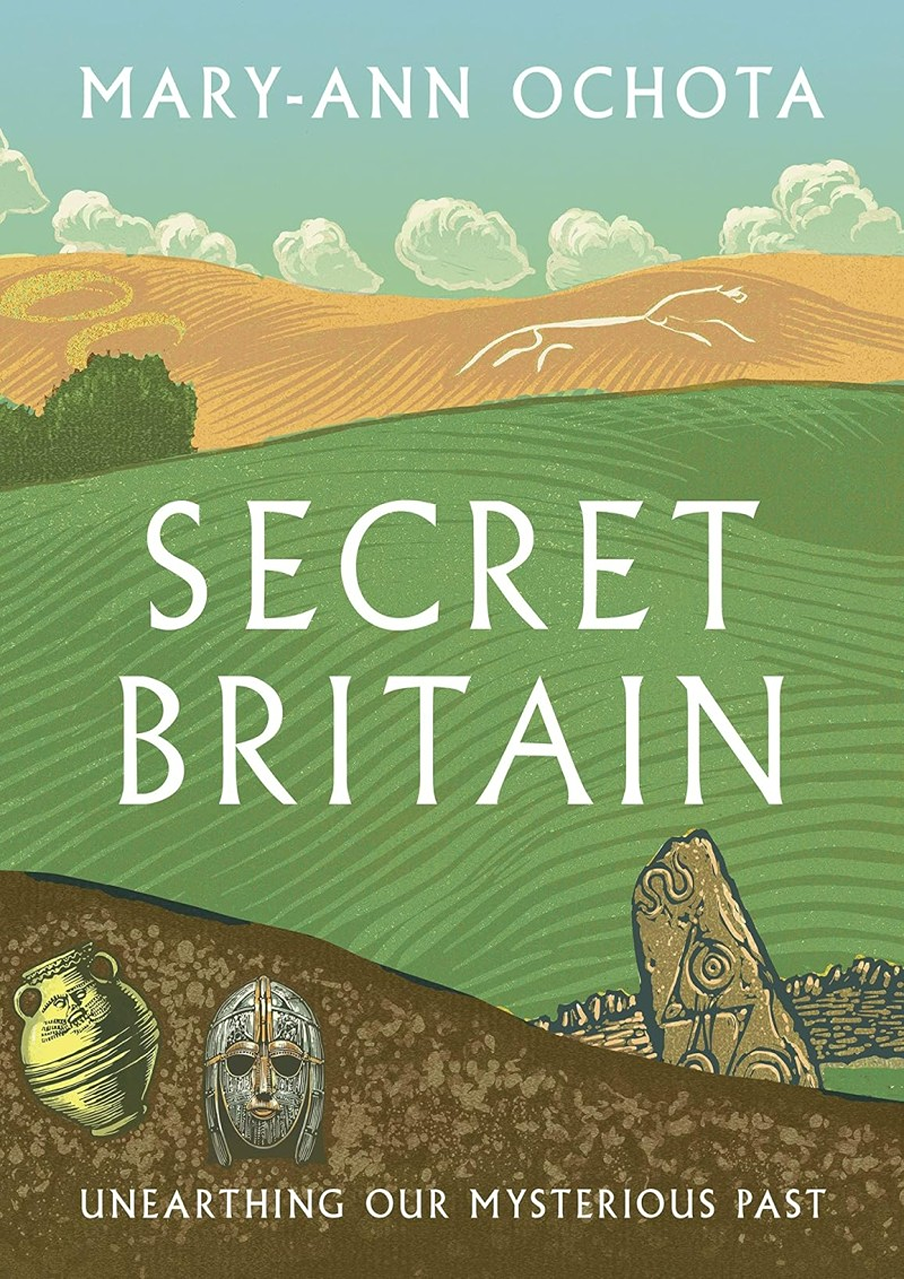
Secret Britain looks at this country of ancient wonders: not grand with ‘Egyptian pyramids’ but containing over 70 intriguing ancient places.
This book explores the mysteries behind them from an Ice Age cannibal’s skull cap to a hoard of Anglo-Saxon gold. Anthropologist Mary-Anne Ochota unearths small strange places and objects, that hint at a deep enduring relationship with the mystic.
Illustrated with beautiful photographs, the wonders include buried treasure, outdoor places of worship and caves filled with medieval carvings. Explore famous sites like Stonehenge.
Also discover The Lindow Man bog body (with neatly trimmed hair and manicured fingernails, despite having been killed 2000 years ago). And the Uffington White Horse (maintained by an unbroken chain of people for 3000 years).
Every step you take in Britain treads on the past. A street now filled with shops and houses might once have been a royal palace. An anonymous farmers’ field glimpsed from a car window, might have borne witness to the last gasps of a bloody battle.
Mary-Ann Ochota gives guided walks and performs archaeological storytelling. She’s a Fellow of the Royal Geographical Society, hillwalking ambassador for the British Mountaineering Council and holds an MA from Cambridge University in Archaeology and Anthropology.
A Charming Journey through England’s Villages

England’s Villages is a stunning book by the host of BBC2’s Villages by the Sea. What makes a village, and how have some survived and others thrived?
Take a charming unexpected journey through the quirks of England’s villages through the ages, with the excellent company of archaeologist Dr Ben Robinson as your guide.
If out walking in nature, always follow the Countryside Code to protect all creatures (many woodland flowers like bluebells are not safe near flower-nosey pets).
Join him in visiting prehistoric to Roman to medieval villages, through to modern urban villages of today. Learn how landowners, governments and communities have shaped villages, and why village greens, pubs and halls exist. And the meaning behind names like Great Snoring!
The history of England is in large part a history of its villages. Villages have much more to offer than first meets the eye, but often you have to do a little work to uncover their secrets.
A hamlet is defined as a small village, especially one without a church. Yet Bicester Village is second only to Buckingham Palace among Britain’s must-see destinations for Chinese tourists: no residents, all private property and the same fashion stores you find in shopping centres all over the world.
Dr Ben Robinson is an archaeologist who currently works for Historic England. He has presented for the BBC including co-presenting a series of Britain’s most historic towns with Coast’s Dr Alice Roberts.
An Updated Journey of Britain (over seventy years)

About Britain is a book to take you beyond the capital, to explore Britain as a living country. In 1951, a series of guides celebrated the rural splendour of our island nature, and now historian Tim takes to the roads, to find out what has changed.
And what has remained the same, in the 70 years since the guides were first published.
From Oban (in the Highlands) to Torquay (and taking in Welsh Caernarvon to Cambridge), he explores visible changes to our landscape, and subtle social and cultural shifts that lie beneath.
This is a warm timely meditation on our changing relationship with landscape, industry and transport.
As he looks out on apple orchards and vineyards, power stations and slate mines, and (in the modern age) vast greenhouses and fulfilment centres for shopping online, this is a stark contrast with the guidebooks of yesteryear. The book covers:
- West Country
- Wessex
- Home counties
- East Anglia
- Chilterns to Black Country
- South Wales and the Marches
- North Wales and the Marches
- East Midlands the Peak
- Lancashire and Yorkshire
- The Lakes to Tyneside
- Lowlands of Scotland
- Highlands and Islands of Scotland
Professor Tim Cole is Professor of Social History at Bristol University. He previously wrote a book on the Holocaust, which was commended by the jury of the Fraenkel Prize.
Hadrian’s Wall: England’s Ancient Roman Monument
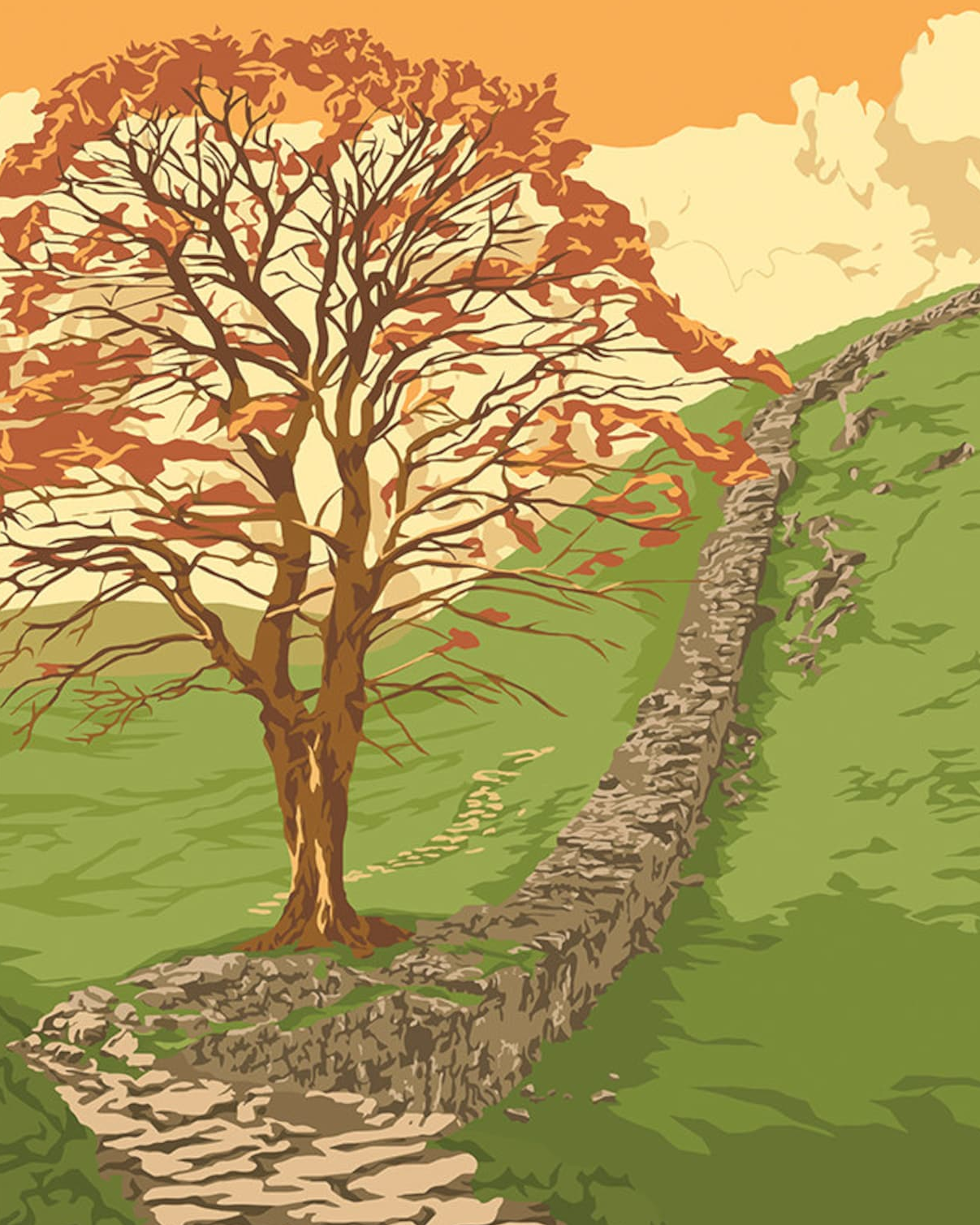
Hadrian’s Wall stands as one of England’s most iconic ancient landmarks. Built under Roman rule almost 2,000 years ago, this structure stretches coast to coast across northern England.
And cuts right through Northumberland National Park (this is where Sycamore Gap was illegally felled recently by two eco vandals, though shoots are starting to grow back).
If walking Hadrian’s Wall, follow the Countryside Code to keep all creatures safe. Keep dogs on leads near livestock and nesting birds.
The wall took 15,000 men to build, and stretches from Cumbria. Archaeologists have found many human skeletons (one with a dagger between his ribs, a still-unsolved murder mystery).
The wall when built was about 73 miles long, and took six years to built. Today it’s World Heritage Site and popular walking path.
Giant Shoes Found by Archaeologists
Recently a shoe shop was found in the ruins of a fort alongside Hadrian’s Wall. What surprised them is that the soles of the found shoes were huge, far bigger than even our average shoe sizes today. Some of the shoes were size 13.5, so experts began looking for explanations:
Perhaps they were stuffed winter shoes and the builders wore extra socks? But in the end archaeologist Rachel Frame said that the conclusion was simply that these people had ‘really big feet!