Eavesdropping on the languages of Mother Nature!

Eavesdropping on Animals is a book by a Yellowstone wildlife ecologist, who shares fascinating stories and insights on how to tap into animal sounds, and decode the secret conversations happening all around you.
Whereas humans once relied on the calls of wild animals to understand the natural world (and their place in it) now this remarkable guide reveals what our ancestors knew long ago: that animal sounds can tell us important information, and help us feel connected to the wild community.
The book also includes information and advice for readers living in urban and suburban areas, not just in rural villages. You can listen and observe wildlife in your own backyard, or in local parks, fields and forests. This book can lead to extraordinary experiences and a profound sense of belonging.
Are you ready to listen to your wild neighbours? Are you ready to learn how to tell a warning call from a mating call, or a purr of satisfaction from idle chatter? Then this book is for you!
George Bumann is an animal language expert, artist and naturalist who lives at the entrance to Yellowstone National Park. He has 40 years of experience in wildlife ecology, and knows most of his wild neighbours!
I’ve spent my entire life listening to the natural world. And after reading George’s book, I realise I wasn’t really listening at all. Jack Horner
The Wild Languages of Mother Nature
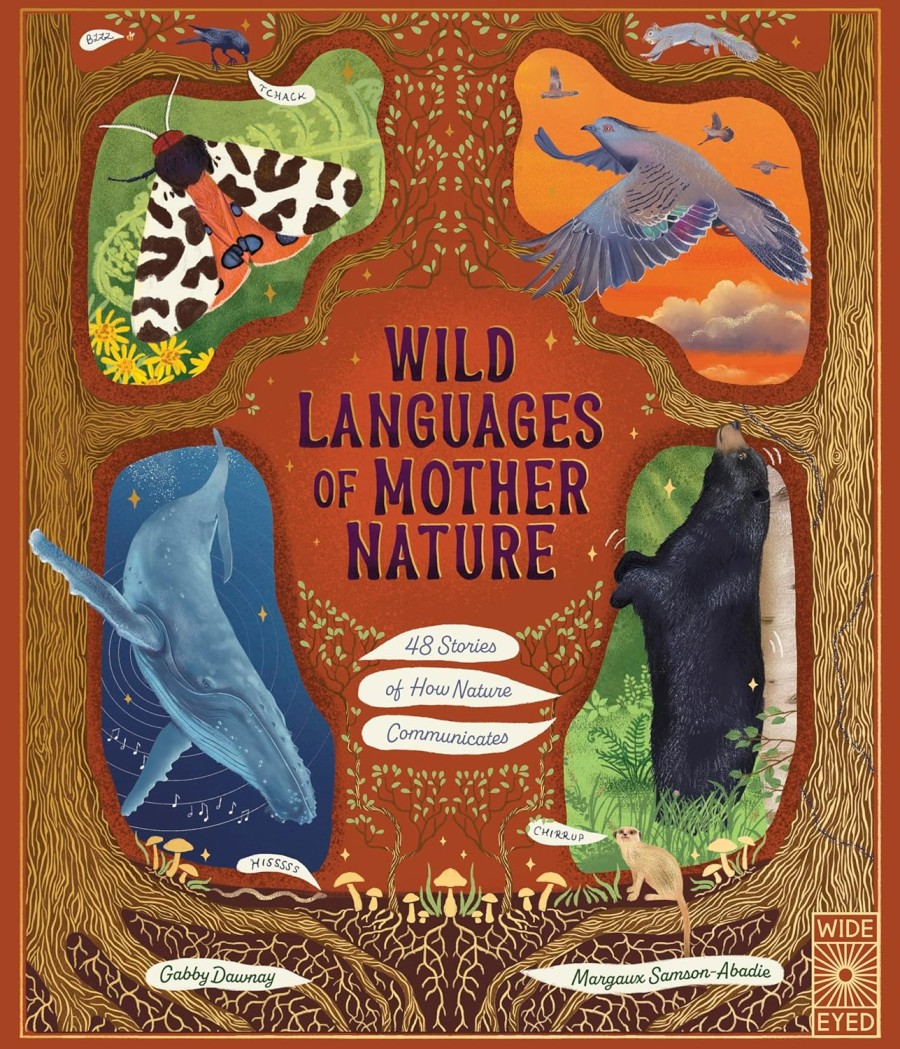
Wild Languages of Mother Nature is a beautifully illustrated book for children, featuring 48 stories on how animals and plants communicate in very creative ways. Mother Nature has devised so many beautiful and surprising ways to share information.
Nature can be marvellously noisy (with birds singing, bears roaring, frogs croaking and kangaroos stomping). But many creatures and plants communicate through other less vocal methods.
In this book, meet noisy and not-so-noisy communicators:
- Bees who ‘waggle dance’ to explain pollen routes
- Rhinos who leave messages, with their dung
- African elephants (who send vibrating messages)
- Demon mole rats (who communicate by headbutting!)
- Ravens who use silent sign language
- Ants who leave hormone trails
- Pufferfish who use artistic displays
- How chimpanzees use touch to talk
- How humpback whales communicate by song
- Trees who use underground fungal networks
The stories also delve into why wildlife communications, to share information within their pack, flock or herd. Or to win the affections or attention of a mate, or to scare off predators and rivals.
A wealth of information is woven into the stories, to ensure readers are left with more knowledge and wonder for the wide world. From huge mammals to tiny insects to plants.
Some plants send out smelly signals to call for help. Others repel with a stink or lure with perfume. Squid skin changes colour to hide or woo. Mosquitoes duet, fruit flies learn dialects and tiny pufferfish create underwater masterpieces.
Did you think humans were the only beings on earth to speak? Welcome to the wild and wonderful language of Mother Nature!
Mammal Stories
- Human
- Kangaroo
- Chimpanzee
- White rhinoceros
- Humpback whale
- African wild dog
- African elephant
- African demon mole rat
- Egyptian fruit bat
- Prairie dog
- Black bear
- Gorilla
- Drongo & Meerkat
- European bison
- Hippopotamus
- Tarsier
- Koala
- Grey squirrel
Bird Stories
- Crested pigeon
- Raven
- Blue-capped cordon bleu bird
- Peruvian warbling antbird
- Jackdaw
Fish Stories
- Mantis shrimp
- White-spotted pufferfish
- Caribbean reef squad
- Electric eel
Reptile & Amphibian Stories
- Grass snake
- Sea turtle
- Brazilian torrent frog
- Insect stories
- Fruit fly
- Mosquito
- Ant
- Blue butterfly caterpillar
- Honeybee
- Deathwatch beetle
- Cicada
- Tiger moth and Hawkmoth
- Treehopper
Plant and Fungi Stories
- Grass
- Sea rocket
- Pitcher plant
- Sagebrush
- The ‘forest’ & the wood wide web
- Black walnut
- Camphor tree
- Cordyceps fungus
- Split gill fungus
The New Science of Animal Communication

Why Animals Talk is a beautiful journey into the world of animal communication, from the majestic howls of wolves to the enchanting chatter of wild parrots, melodic clicks of dolphins to spirited grunts of chimpanzees!
These diverse and often bizarre expressions are more than mere noise. They hold secrets that we are only just beginning to understand.
For example:
- Wolves (just like humans) possess unique accents that distinguish their howls.
- Gibbons have different alarm calls (for leopards or snakes). And also sing romantic duets with their partners!
- Dolphins not only give themselves names, but respond excitedly to recordings of the whistles of long-lost companions.
In each chapter (and by animal), the author draws on extensive research and observations of animals in the wild, to explain why animals communication.
This also offers revealing insight into human language, and how it differs from the entire animal kingdom.
Dr Arik Kershenbaum is a world expert in animal vocal communication, and has roamed the wilds of Europe, North America, the Middle East and Southeast Asia, in order to understand it.
He is a college lecturer and fellow at Girton College (University of Cambridge) and has published over 30 academic publications.
The Voices of Nature (the meanings of animal sound)

The Voices of Nature is a fascinating book, look at the meanings of animal sound:
- Songs
- Barks
- Roars
- Hoots
- Squeals
- Growls
What is the meaning of birdsong, a baboon’s bark, an owl’s hoot or a dolphin’s clicks? In this book, you’ll find out!
Readers will journey from the steamy heat of the Amazon jungle to the icy terrain of the Arctic, to reveal the amazing variety of animal communication.
Learn who different species use sound to:
- Express emotion
- Choose a mate
- Trick others!
- Mark their territory
- Call for help
What may seem like random chirps and squawks actually allows animals (just like us) to carry on conversations with others.
The author explains how animals make and hear sounds, and what information is encoded in such signals of sound. He also explains how sound travels underwater (think of whale song travelling miles across the ocean).
An immersive sonic journey, led by a tour guide with extensive knowledge of the subject. Leon Vlieger (biologist)
There’s no-one better to tell us how diverse animals talk with one another. His enthusiasm is contagious. Marc Bekoff (animal psychology expert)
Nicolas Mathevon is a professor of neuroscience and animal behaviour at University of Saint-Étienne, France.