England’s Lovely Lighthouses (let’s take a boat trip!)
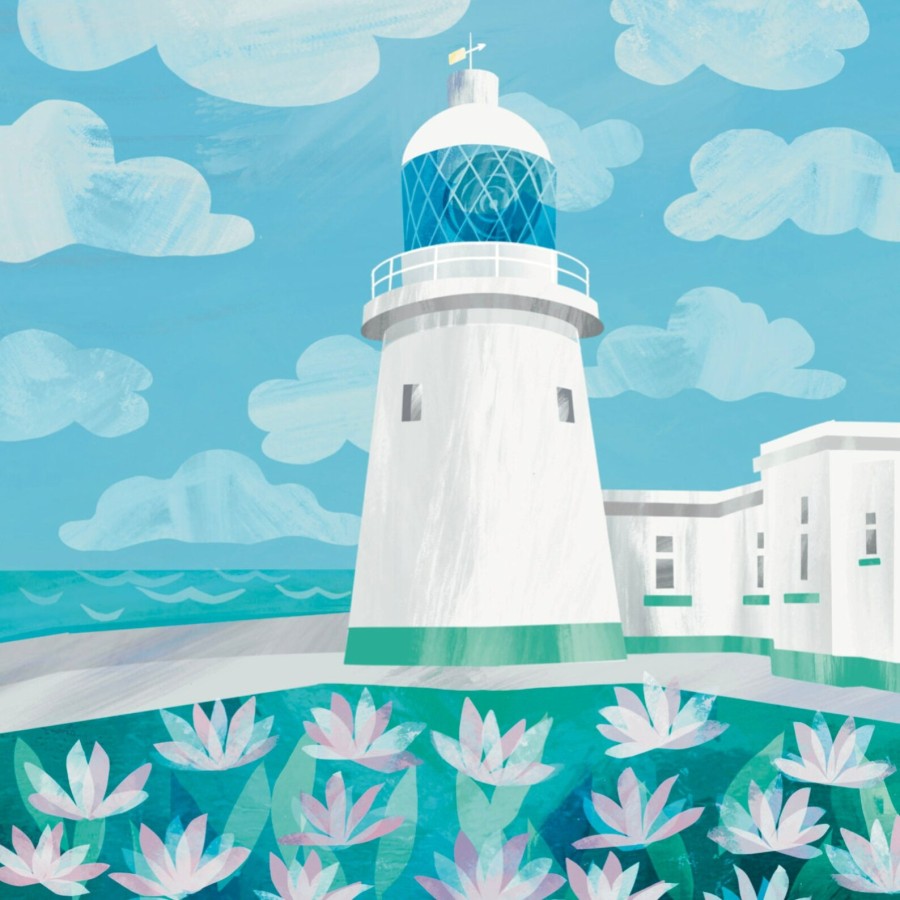
Cornish lighthouse Gill Wild

Gill Wild

A lighthouse always looks better from the water. From land, you see a tower. From a boat trip, you see the full scene, sea spray, dark rocks, cliff edges, and that slow sweep of light and colour across the coast.

That’s part of the charm of England lighthouses. Many were built for rough channels, hidden reefs, and crowded routes, so the view from the sea feels right. You understand them at a glance.

Due to being a coastal nation (with lots of changeable weather and hazards like rocks and cliffs), England has many lighthouses. Some are no longer in use (used for tourist information or even holiday homes).

But many are still working lighthouses, although most now operate automatically from Trinity House, rather than by a lighthouse keeper.

Not all lighthouses have red and white stripes (this is done to make them stand out against white cliffs, which is why say Beachy Head lighthouse is this blend of colours). Other lighthouses are white, and some are tall and others short and fat!

Black Nore Lighthouse in Portishead (Somerset) is currently now in jeopardy from ending up as a holiday home (or being knocked down) due to lack of funds (it’s not covered by Trinity House, instead a local community looks after it).

The unique latticework frame was specially designed to reduce wind resistance. If no-one is found to care for it, it will revert to being owned by the Crown (King Charles III).

A Brief History of English Lighthouses

St Anthony's lighthouse Falmouth Gill Wild

Gill Wild

Lighthouses in England date back to Roman times, when fire (before lamps) was used to guide seafarers. Later came lighthouse keepers whose job would be to keep the lamps burning, though of course it was a solitary job.

The ‘Scottish lighthouse mystery’ that has puzzled people for years, was recently probably solved. Three men working in the Highlands mysteriously disappeared, while keeping watch in a lighthouse. It’s now believed that one was swept to sea, and the other drowned, trying to save him.

In 1514, Henry VIII (not a very nice man who kept beheading wives and did awful things to the Catholic Church) did do one good thing, and that was to create Trinity House. Which today is still in charge of maintaining and protecting England’s lighthouses.

Noteworthy Lighthouses and Their Stories

Smeaton's tower Abbie Imagine

Abbie Imagine

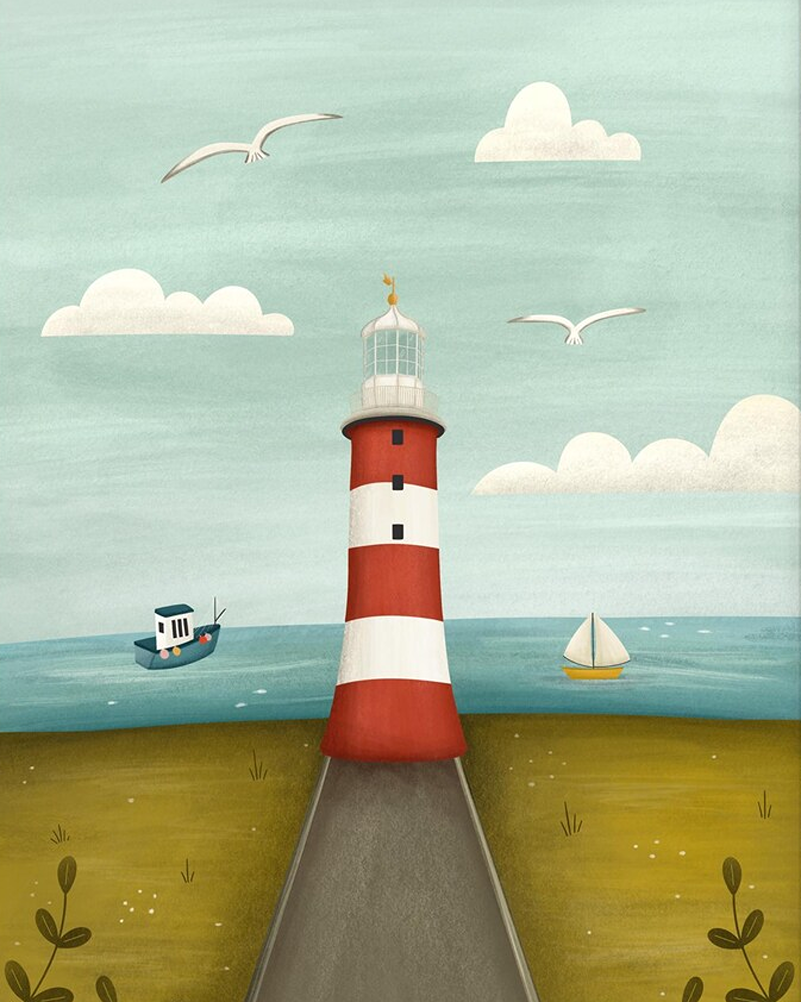
Smeaton’s Tower (Plymouth) is one of England’s best-loved lighthouses, named after John Smeaton, who used interlocking stones to build it, to withstand strong waves.

Burnham-on-Sea (Somerset) is a curious ‘lighthouse on legs’ that is raised on nine wooden stilts. It was built to warn ships to keep away from dangerous sands (you may know that Weston-super-Mare and other areas are home to dangerous sinking mud).

Start Point Lighthouse (Devon) sits on one of the most exposed areas of the English coast. Built in 1836, the fog signal building collapsed in 1989, due to coastal erosion. A free-standing alternative now stands in its place, protected by a retaining wall.

Greenwich Lightvessel is England’s moving lighthouse, a ship fitted with lamps and fog horns. This striking red ship once guarded the busy Thames approach. Now retired, it’s a reminder of the genius of lighthouses.

Southwold Lighthouse is unusual, in that it stands within the town, near high street homes and shops.

Recently, a rare job came up as a lighthouse keeper, asking for someone with a good head for heights, happy to work alone, able to change lightbulbs and must like seagulls!
What makes lighthouse-spotting by boat so special in England

England’s coast is full of contrast, and lighthouses sit right in the middle of it. Some are neat white towers on headlands. Others stand alone offshore, striped, weather-beaten, and oddly elegant. From a boat, those differences feel sharper.

You also see why they were placed where they are. A map can tell you there are rocks below. The sea makes that plain in seconds. Water moves fast around points and shoals, and the tower starts to look less decorative, more hard-working.

You see the coastline the way sailors once did

From the sea, the coast stops looking flat. Cliffs rise higher, caves darken, and headlands push out farther than they seem on land. A lighthouse becomes a marker in a real, physical setting.

There’s also a stronger sense of scale. A small tower can look huge when waves lift you up, then drop you again. In that moment, the place feels less like a postcard and more like a working edge of the country.

Wildlife, sea air, and big views add to the charm

Then there’s everything around the lighthouse. Gulls hang in the wind, auks skim low over the water, and seals sometimes turn up like quiet locals. You’re not just looking at one building. You’re seeing a whole strip of coast in motion.

The sea air helps, too. It clears the head a bit. Add open views, changing light, and the steady sound of the boat, and the trip starts to feel simple in the best way.

Beachy Head Lighthouse, bright red and white below the chalk cliffs

Few sights are as clean and striking as Beachy Head Lighthouse from the water. The red and white stripes stand just offshore, while the chalk cliffs behind it rise pale and sheer. On a clear day, the colours almost look painted in.

That contrast is what makes it memorable. The tower is bold, but the cliffs still dominate. From a boat, you get the whole composition at once, the striped lighthouse, the Seven Sisters, and the broad sweep of East Sussex sky. It’s one of the most photogenic spots on the English coast, yet it doesn’t feel fussy. It feels crisp, open, and a little dramatic.

St Catherine’s Lighthouse, a classic Isle of Wight sea view

At the southern tip of the Isle of Wight, St Catherine’s Lighthouse sits in a setting that feels properly maritime. The coast here is rugged and open, with long Channel views and a sense of weather always nearby.

From a boat, the lighthouse looks calm against a restless background. That’s part of its appeal. The cliffs and sea can seem rough-edged, while the tower keeps its shape and balance.

Longstone Lighthouse, linked to grace and rescue off Northumberland

Longstone Lighthouse, among the Farne Islands, has a quieter kind of pull. The setting is low and exposed, and the sea around it often feels busy with life. That makes the lighthouse seem both isolated and companionable.

Its best-known human story is tied to Grace Darling, whose rescue from here still gives the place a personal note. You don’t need a long history lesson to feel that. The name alone adds warmth to the view.

The Farne Islands help, too. Seabirds wheel overhead, and seals often rest on nearby rocks. So the lighthouse becomes part of a wider scene, part rescue tale, part sea colony, part windswept marker in the north.

Eddystone Lighthouse, standing alone in the open sea

Eddystone feels different because it stands so firmly on its own. Offshore from Plymouth, it rises from the sea with almost no softening detail around it. No beach, no village, no cliff path nearby, just water and rock.

That isolation gives it force. From a boat, it looks brave, almost stubborn. You can also sense why people talk about its engineering history. Building anything there would have taken nerve.

Similar Posts