Zero Waste Hair Accessories (ties, brushes and combs)

Plastic-free hair ties sound like a small switch, and they are. But if everyone did this en-masse, it would have huge positive effects, as most are made from nylon (plastic) so break into microplastics when they fall off wrists (or hair for children doing handstands) or get lost, which millions do.
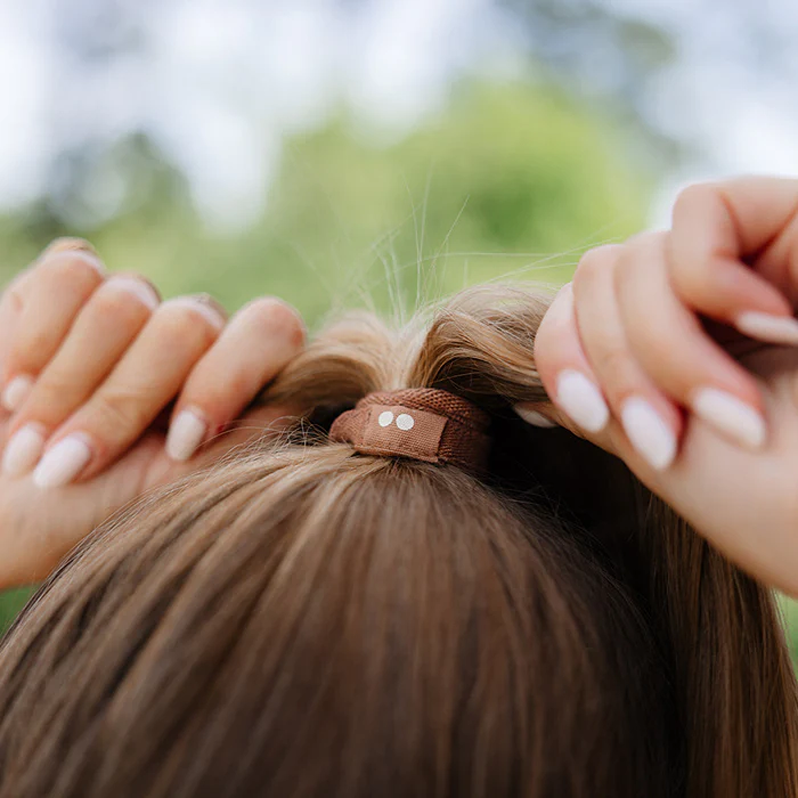
Next time it comes to replace, consider Wild & Stone’s plastic-free hair ties, which are made from natural cotton, in plastic-free packaging.
A lot of everyday hair elastics hide plastic in plain sight. With plastic-free hair ties, the point is simple: you’re choosing a version that avoids plastic components. This is better for everyone.
Keep hair ties away from young children and pets.
Don’t always tie your hair back tightly, as this is a main cause of traction alopecia (you can lose hair at the front of your head).
Hair and beauty salons (or offices or schools) can order a Terracycle Hair & Body Care Waste Box (this is a one-off fee, then send back the box using the prepaid envelope, to be recycled into industrial goods). You can include non-pressurised hair sprays (recycle empty pressurised cans, take half-empty ones to hazardous waste).
Avoiding elastic bands helps wildlife
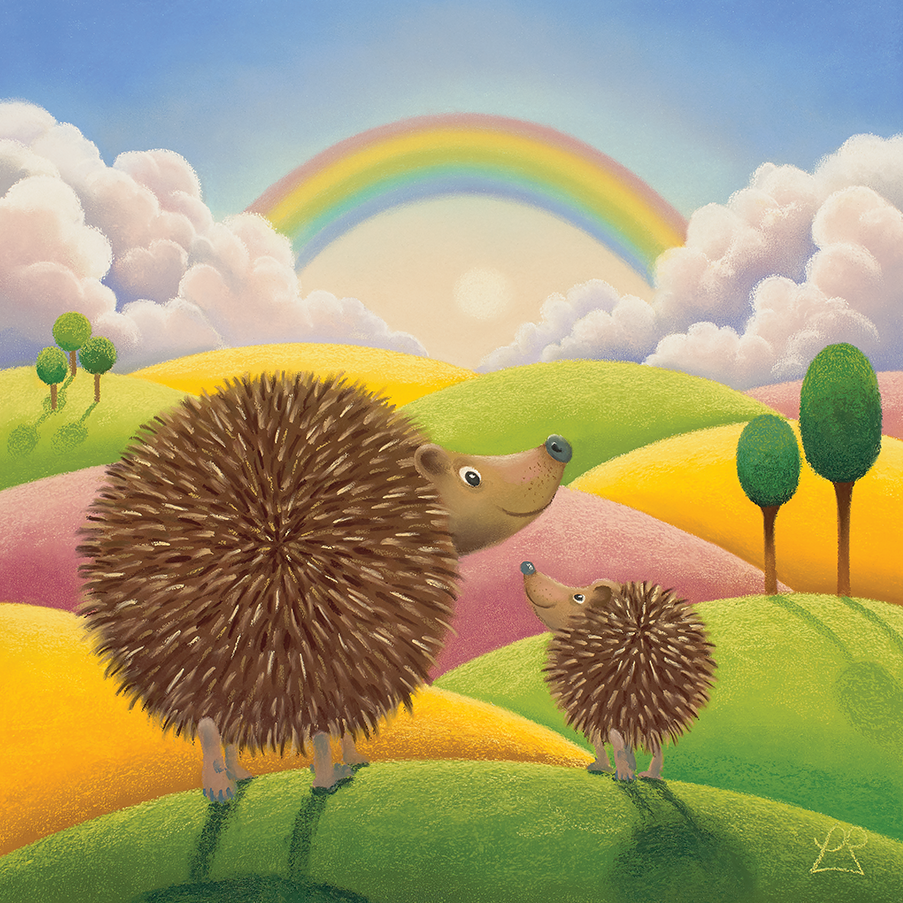
Elastic bands should not be used either (littered ones harm wildlife, which is why people are asking Royal Mail to stop using red elastic bands, as they trap hedgehog claws, and ducks feed them to chicks, thinking they are worms.
If you see any littered elastic bands, cut them up and securely bin (or keep them in an office environment).
Less pulling, snagging, and breakage
A lot of standard hair ties have a weak point, often a hard seam, a metal clip, or a stiff bit of trimming. That area can drag across the hair shaft, especially when you are in a rush. Over time, that repeated friction can leave hair looking rougher than it needs to.
By contrast, softer fabric-covered ties often move more cleanly through the hair. They still need to hold, of course, but they do not always grip in that harsh, jerky way. As a result, taking your hair down at night can feel simpler and calmer.
This can help with many hair types. Fine hair tends to show breakage quickly. Curly hair can snag if the surface is rough. Thick hair needs hold, but it also needs a tie that will not yank. Fragile or bleached hair benefits from gentler daily handling too.
A more comfortable fit for long wear
Comfort is easy to ignore until a tight ponytail starts to ache. Hard joins and metal parts can create pressure in one small spot. After a few hours at a desk, on a train, or at the gym, that pressure can become the whole story.
Plastic-free hair ties often feel more even around the hair. The stretch tends to sit flatter, and the fabric can feel softer against the scalp and neck. That can make a difference during work, exercise, sleep, or travel, when you want your hair secured but not clamped in place.
An alternative to plastic waste litter
Cheap synthetic ties often live short lives. They snap, stretch, disappear into coat pockets, or roll under the bed and get binned later. Because they are cheap, they are easy to replace without much thought. That cycle repeats.
A longer-lasting, lower-plastic option slows that down. If a tie holds its shape better and feels nicer to use, you are more likely to keep it, use it, and replace it less often. That is not a dramatic change. It is a quiet one, and that is often how waste reduction works in real life.
Buying fewer, better hair ties saves money
A well-made hair tie often costs more at first. That part is true. But price alone does not tell you much if the cheaper option stretches out in a week. When a tie keeps its shape, stays comfortable, and does not snap quickly, the value shifts.
You may not save a huge amount at once. Still, buying fewer replacements is usually easier on the wallet than repeatedly topping up a pack of poor ones. In other words, the cost sits in the pattern, not only the price tag.
They’re easy to store (without plastic)

Most hair ties are not just made from plastic, but sold in plastic wrap or on plastic cards. These ones are not, so that’s less plastic you have to be concerned with recycling.
They’re useful (beyond hair)
Hair ties are good for other roles too. You can use them to bundle cables, secure small items, hold together loose items, and even to keep notebooks shut.
They make practical, low-cost gifts
If you are wondering what to give as an affordable low-waste gift, then these are ideal for anyone who has medium or long hair. They likely use hair ties, and will appreciate the benefit of receiving pretty plastic-free ones (these come in all styles, from white to neutrals to pretty pastels and brights).
Kooshoo (fancy plastic hair ties from abroad)
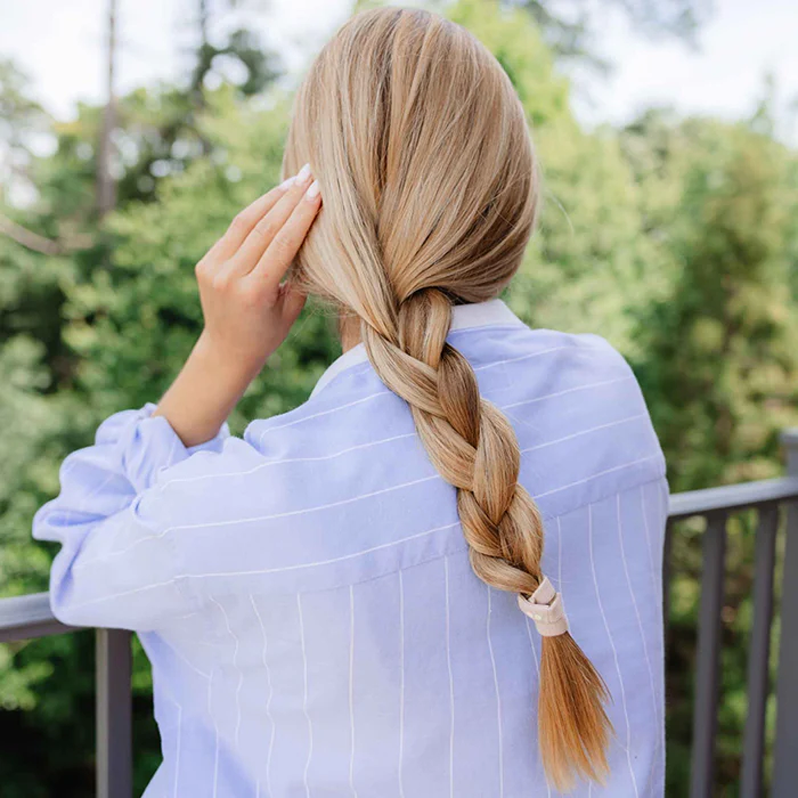
Kooshoo is another brand worth mentioning. Although these are ordered from the USA, they are of super quality and will last you years, so one purchase may be worth the cost (bundle with friends to reduce shipping – costs around £20 and takes 1 to 3 weeks).
We only recommend the hair ties, as hair bands and scrunchies do contain synthetic fibres.
Jungle Culture’s bamboo hairbrush (and comb)
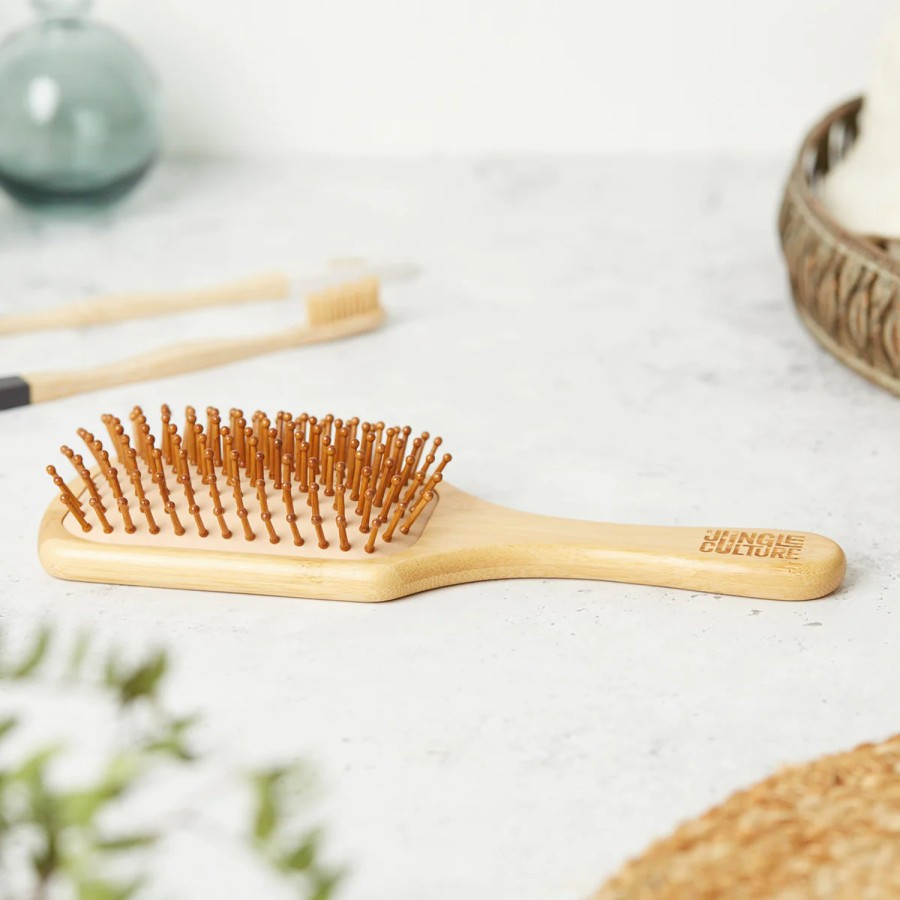
A hairbrush rarely gets much thought, until it snags, scratches, or falls apart. That’s part of why bamboo hairbrushes and combs have become more popular in everyday hair care. They feel simple, but they answer two common wants at once, gentler handling for hair, and less plastic in the bathroom.
Jungle Culture bamboo hairbrush is designed for all hair types, with a pressured paddle surface and soft bristles to brush your hair wet or dry, without irritation.
Avoid boar bristle brushes for animal welfare reasons. Also avoid tortoiseshell (illegal) in combes. Instead, choose bamboo, wood and metal.
Hair and beauty salons (or offices or schools) can order a Terracycle Hair & Body Care Waste Box (this is a one-off fee, then send back the box using the prepaid envelope, to be recycled into industrial goods). You can include non-pressurised hair sprays (recycle empty pressurised cans, take half-empty ones to hazardous waste).
Gentle bristles and smooth teeth can help
When a brush drags, you notice it at once. The same goes for a comb with rough seams or sharp edges. In contrast, a well-made bamboo brush often has smooth pins, and a bamboo comb usually has polished teeth. That smoother finish can help the tool move through the hair with less catching.
This matters most during detangling. Wet hair, curly hair, long hair, and bleached hair can all be more prone to snapping when pulled too hard. So a wide-tooth bamboo comb or a brush with rounded pins may feel easier to use, especially if you work from the ends upwards.
Less tugging often means less breakage from rough handling. It can also make brushing feel less irritating, which is useful if your scalp is a bit sensitive or you brush a child’s hair.
A bamboo handle often feels comfortable
There’s also the matter of grip. Bamboo tools are usually light, but not flimsy. Because of that, they often sit well in the hand and feel steady during brushing, sectioning, or styling.
That comfort becomes more obvious with thick or tangle-prone hair. If you spend several minutes brushing, a slippery handle can get annoying. A bamboo handle often feels drier and more secure than glossy plastic, so daily use feels a bit less fussy.
Shape matters too. A broad paddle brush can cover more hair at once. A slimmer comb can help with parting or quick touch-ups. In each case, the natural weight of bamboo tends to feel balanced, not heavy, not toy-like.
A well-made bamboo brush or comb can last well
Bamboo grows quickly, and that’s a big part of its appeal. Compared with many plastic-based materials, it’s widely seen as a more renewable option. For shoppers trying to buy fewer petroleum-based products, that can feel like a sensible step.
Longevity matters just as much as raw material. If a comb lasts for years, you buy fewer replacements. As a result, you create less waste and spend less over time.
A solid bamboo comb can hold up very well if you keep it dry and clean. The same goes for a bamboo brush with secure pins and a sturdy base. Basic care is enough for most, remove trapped hair often, wipe the surface clean, and don’t leave it soaking in water.
Options for detangling or styling
A paddle brush suits medium to long hair, and it works well for general brushing and smoothing. A wide-tooth comb is useful for curls, coils, or wet detangling, because it separates hair without forcing it.
Round brushes are common for blow-drying and adding shape. Meanwhile, a tail comb helps with neat partings and sectioning. Smaller combs also work well for travel bags or quick tidy-ups during the day.
Before you buy, pause for a minute and look at the details:
- Pin or tooth shape: Rounded, smooth tips are gentler.
- Spacing: Wider gaps usually suit thick, curly, or knot-prone hair.
- Handle comfort: Pick a shape that feels secure.
- Cleaning: A simple design is easier to keep free of old hair.
- Material mix: Check whether the whole tool is bamboo.
That last point matters more than it first seems. Some products lean on the bamboo look, while most of the item remains synthetic. If you want the full benefit, read the product details closely.
How to choose a good hair comb
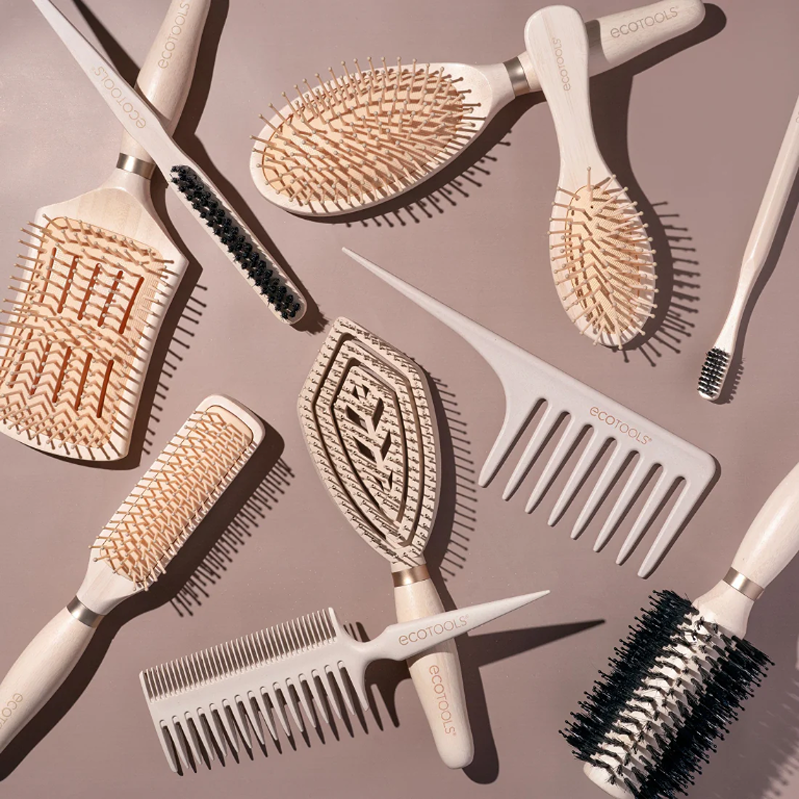
Tooth spacing is the main choice. Wide-tooth combs suit detangling, curls, and hair that knots easily. Finer teeth help with smoothing, parting, and short styles.
Eco Tools is known for its vegan make-up brushes, but also makes eco-friendly combs and brushes, made from recycled materials. Some brushes are specifically designed to tame unruly hair or deal with tangled fine hair.
Run a finger along the teeth if you can. You want rounded tips and a smooth finish. Also check that the spine does not flex too much, or else it may warp when damp.

A small wooden or bamboo beard comb is worth having if you use beard oil. It spreads oil more evenly, tames fly away hairs and reduces static. Cleaning is simple: wipe it, then wash quickly with mild soap, and dry flat. This beard comb is suitable to tame unruly hairs, made from bamboo and sold in a vegan leather pouch.