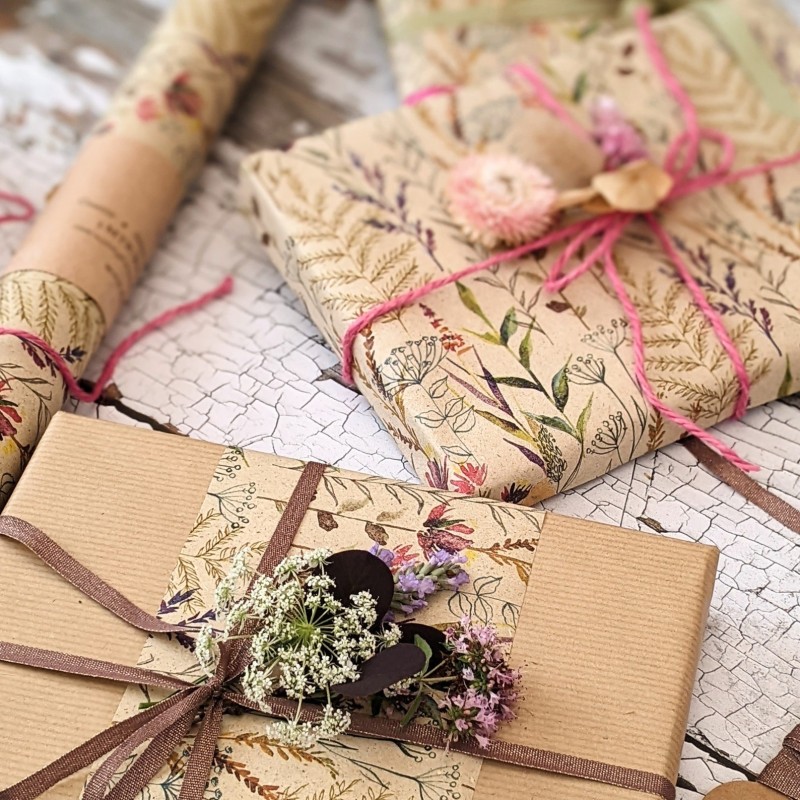
Grass-paper gift wrap is indeed made from grass fibres, and easily compostable after use. So pretty you can use as place mats or table runners.
Also read about plastic-free paper tape. Also read our post on keeping pets safe at Christmas.
Although FSC-certified paper gift wrap is better, it still involves growing fast-growing plantations of monoculture trees, often with pesticides. These (unlike old-growth trees) don’t provide homes, shelter and food for native wildlife, and don’t absorb carbon dioxide, to help prevent climate change and floods.
Issues with ‘Plantable Gift Wrap
This is not a ‘party pooper post’, but it’s important that wedding and other eco paper goods makers, are clear to customers about safety and eco issues with some ‘plantable papers’.
Of course it’s great to buy wedding invites and place names etc, made with post-consumer waste paper, to save trees. But a huge volume of these are now embedded with wildflower seeds.
The idea sounds good: you receive wrap, then plant it in the garden and water it, and it turns into beautiful flowers.
But great care must be taken. Unless you know you are sending cards to pet-free homes, nearly all wildflowers (like poppies) are toxic to pets. So you don’t want to be sending dangerous gift wrap (or cards) that could be planted and turn into dangerous flowers near animal friends.
Of course if you know the recipients don’t live with or have visiting pets, it’s not a problem. Read more on pet-friendly gardens.
Issues with Sustainability (imported seeds)
The other issue is where the wildflower seeds come from. If you are choosing a quality local artisan brand, then it’s likely the seeds are fine.
But many brands don’t even know where the seeds are from. If they come from abroad, you could be importing non-native seeds that could harm native flowers or even bring disease into the country.
We have enough problems already with providing enough native wildflowers to supply endangered pollinators like bees, butterflies, moths and bats.
Importing non-native seeds means these can outcompete native flora, disrupt local ecosystems and harm local biodiversity. Many of the imported seeds may also be grown using GM methods, not good for the environment or wildlife. They also likely don’t germinate well.
So in a nutshell, choose plain recycled paper and wrap. Or if you choose seed paper of any kind, then go for local quality artisan brands, and only send to pet-free homes.