Dandelions (crucial early spring food for pollinators)
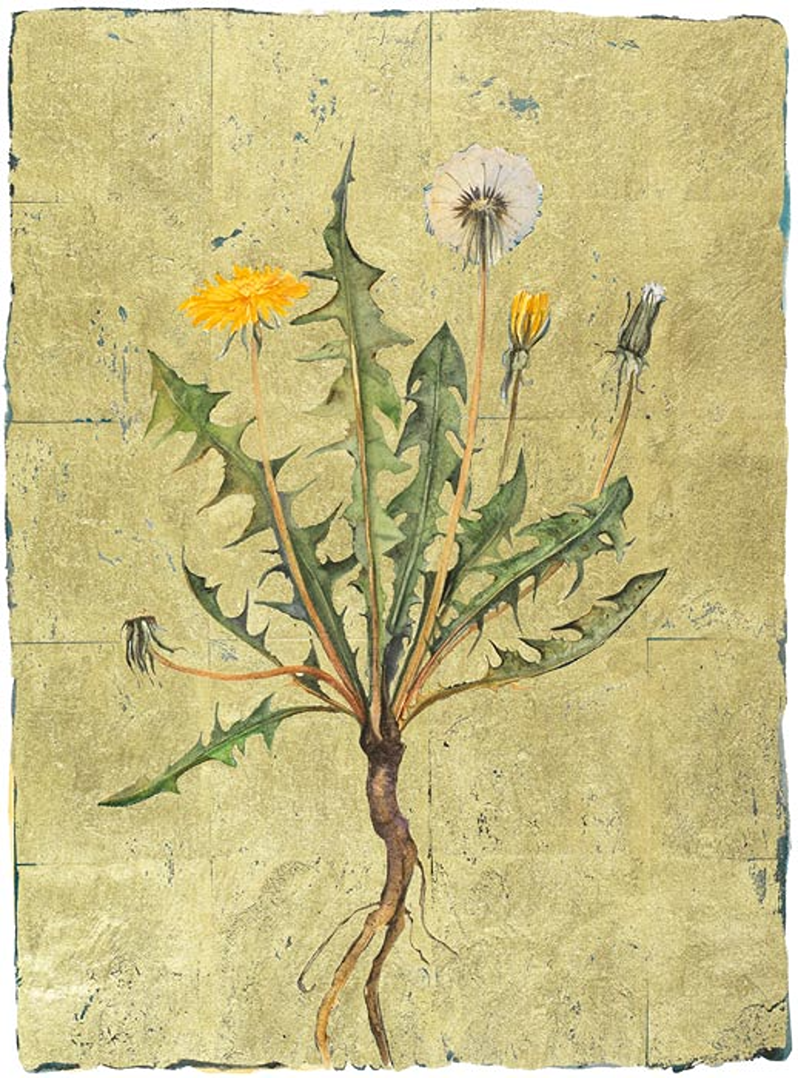
Many people think that dandelions are just annoying weeds that grow through pavement cracks. But oh how wrong they are! These perennial plants are not just quite the beauties, but are crucial early-spring food for pollinators. It’s a bit mad when people visit B & Q to buy ‘bee-friendly flowers’, when in fact dandelions are right there on their doorstep!
With deep taproots, dandelions are difficult to remove, so it sometimes is best to work with nature. If you do have to remove them, then avoid chemicals and use a manual tool to remove the taproot (never use pesticides or chemicals).
You can compost dandelions. But due to being high nitrogen, ensure they are dried out in the sun for a couple of days first, otherwise the fluffy seed heads will re-root and even survive in compost.
Read our post on pet-friendly gardens and wildlife-friendly gardens to know urban plants to avoid, near animal friends. Never forage nettles with ‘little alligators’, these are baby ladybirds! Wait a few weeks, until they have grown and flown!
A single dandelion can produce over 5000 seeds that can travel up to five miles. And can live for around 10 years in undisturbed areas. Each dandelion is not just one flower. It’s a ‘flower head’ made up of up to 100 small florets (a bit like cauliflower or broccoli!)
Dandelions are named after the French phrase for ‘lion’s tooth’ (dent de lion) due to the toothed leaves. They also used to be known as ‘wet the bed’ plants, as their have diuretic properties for humans!
Dandelions offer high-value nectar and pollen when other flowers are scarce, helping many creatures including bumblebees, solitary bees, hoverflies, butterflies, moths, wasps and beetles. Ladybirds don’t eat them, but they eat aphids that live on them, protecting the sunflowers (nature working hand-in-hand).
One wildlife survey found that in 10 minutes, there are an average six creatures making use of a dandelion flower.
Why organic lawns are super-important
Dandelions often grow on lawns. And if you use chemicals (which can cause cancer in dogs and cats, even from neighbouring gardens), it becomes even more important if you feed them as the odd treat to garden pets that eat them.
Although both creatures can eat them in moderation (only a few times a week as high calcium could cause urinary issues in some), the chemicals and pesticides could harm.
Read more on happy healthy rabbits and guinea pigs.
Other pavement plants in England
Pavement plants don’t just survive, but often thrive in these busy corners of towns and cities, and even on urban wasteland. Let’s look at England’s pavement plants, growing under your feet!
Wall lettuce (the ‘dainty dandelion’) has thinner leaves and smaller flowers, often found in shaded alleyways and along neglected pavements. It will grow very tall, if untouched.
Herb Robert is a delicate pink flower with fine leaves, often turns red in winter, adding more colour to city streets. It’s a ‘little geranium’ that’s common along walls, and in damp shady pavements. This does spread quickly, so again use a hoe or manual weeding tool, if you wish to avoid it taking over your local area.
Buddlea (the butterfly bush) is loved by butterfly friends, Buddleia pops up in the most urban of areas, from railway viaducts to busy streets. The tall woody stems and purple flower spikes, makes it easy to spot.
Bees love this flower too, so it’s important to protect, to help our pollinators. This is easy to grow in most soils. In pink, red, purple or white, it blooms through summer and is pruned in spring.
Plantain (not the savoury banana!) is a low broad-leaved plant that often has tough seed heads that stick up like ‘little matchsticks’. Often found in pavement cracks, the flat leaves cope well with being walked on. Just as well! This is the plant where the seeds stick to your shoes (and pet paws).
Greater plantain is (as the name suggests) larger and broader, with the ribbed leaves resembling rosettes. These long flowers stand tall, even in poor quality soil. Children often play games with this plant, seeing who can pull the elastic fibres the longest.
Ivy-leaved toadflax (looks like snagdragons) often grows as the base of pavements, the pale lilac and yellow flowers (which look like snapdragons) often seen flowing over old brick walls. The creeping stems and small leaves, help it to hang on, in tight spots. This plant was introduced to England in 1640.
Shepherd’s Purse (releases ‘copper coins!) is named after little heart-shaped seed pods it produces. The small white flowers are hard to spot, but the seed pods on kerbsides and in playgrounds are easier to see. When the seed pods break open, the copper seeds resemble coins!
Again, this is a hardy plant, that copes well with being tramped on by feet! It’s officially a ‘weed’. But as Winnie-the-Pooh noted ‘Weeds are flowers too, once you get to know them!’
Annual meadow grass often shoots up through tiny pavement cracks. It’s very common, and can survive in urban areas, where few other plants can. The blunt blades have triangular flower-heads and spiky yellow-green flowers.
Creeping cinquefoil (food for caterpillars) is a yellow flower with five petals and trailing stems. It’s often used on wildflower lawns or found in pavement cracks and amid gravel. It’s often used on wildflower lawns.
The leaves of this plant are good food for caterpillars, which turn into grizzled skipper butterflies (with brown-and-white checks, this fast-flyer can sometimes be found near railway lines and even landfills) and yellow shell moths (whose wings resemble sea shells).
Learn more on urban plants
Urban Plants is an intriguing look at Britain and Ireland’s urban plants, which make up the built environment on walls, pavements, lawns, parks, playing fields, verges and waste ground. These species find ways to endure in often harsh habitats.
A leading botanist tells the story of urban flowers, ferns and conifers: how they arrived, and how they survive. And a few species that seized the opportunity to become ‘masters of the streets’. Learn how our villages, towns and cities have changed over time – from Roman Britain to reconstruction after World War II, which resulted in the geographical variations that exist today.
From London rocket at the Tower of London to the newly evolved York groundsel recently discovered in a railway station car park. The author also looks at the future of urban plants, and the potential impacts of invasive species, herbicides and climate change. As well as the concept of urban rewilding.
The book includes 350 colour photos, plus maps and diagrams. And text boxes to explore key species and habitats: from pavements and walls to derelict land, street trees and ‘grassy bits’.
Wild Pavements (exploring cities with an urban naturalist)
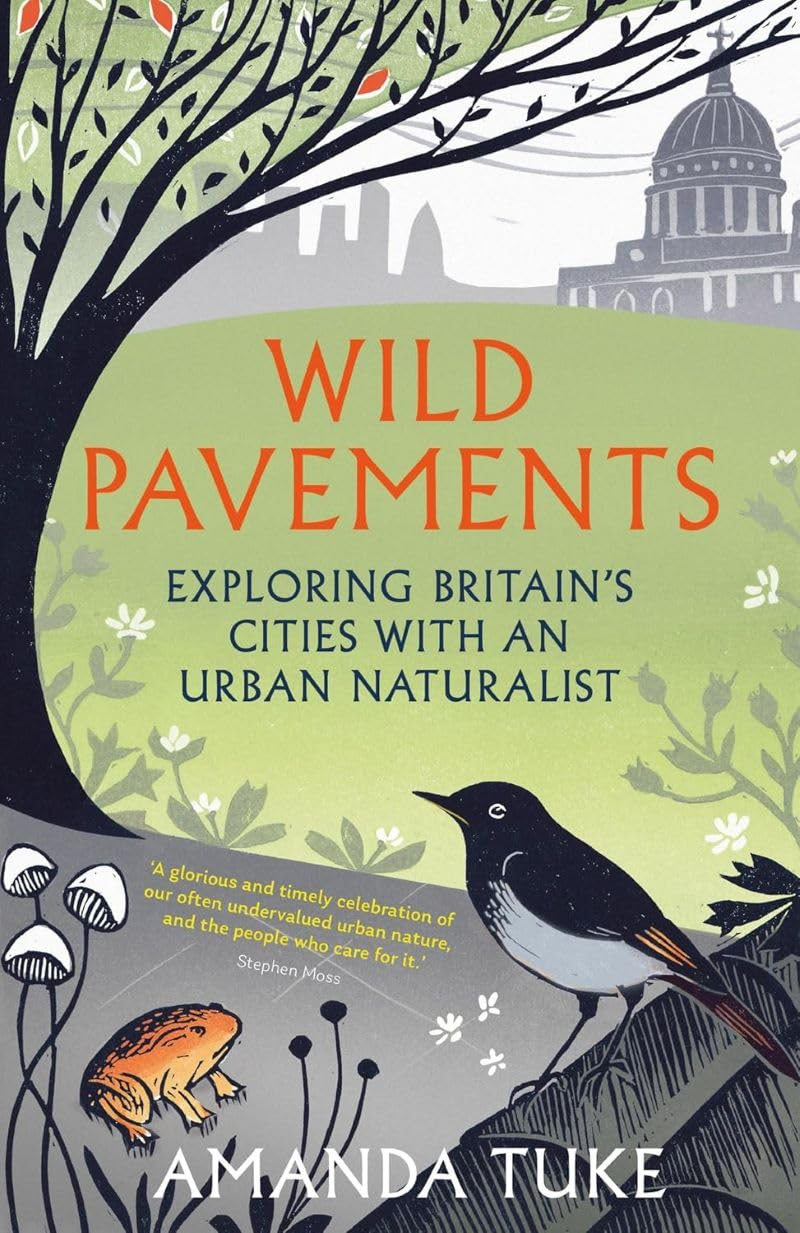
Wild Pavements is a unique book, where a naturalist shares her delight on the overlooked and under-appreciated wildlife in England’s cities. She also meets people who care for urban wildlife, and explores what current thinking on ecology and conservation means for the future of urban nature.
Join Amanda as she explores London (from the city to the suburbs) and also visits Liverpool and Sheffield. And ventures over the border to Edinburgh, Aberdeen, Cardiff and Belfast. Exploring the diversity of urban nature.
From wild bees living in canal banks to black redstarts nesting in London’s Oxford Street, she also finds rare plants in pavement cracks and even fish struggling to survive in trolley-filled urban rivers. Noticing the wild world around you, may just change the way you think about our cities for good.
Learn how to help your local wildlife rescue.