Wake Up to the Crisis: Save Endangered “Sleepy” Dormice
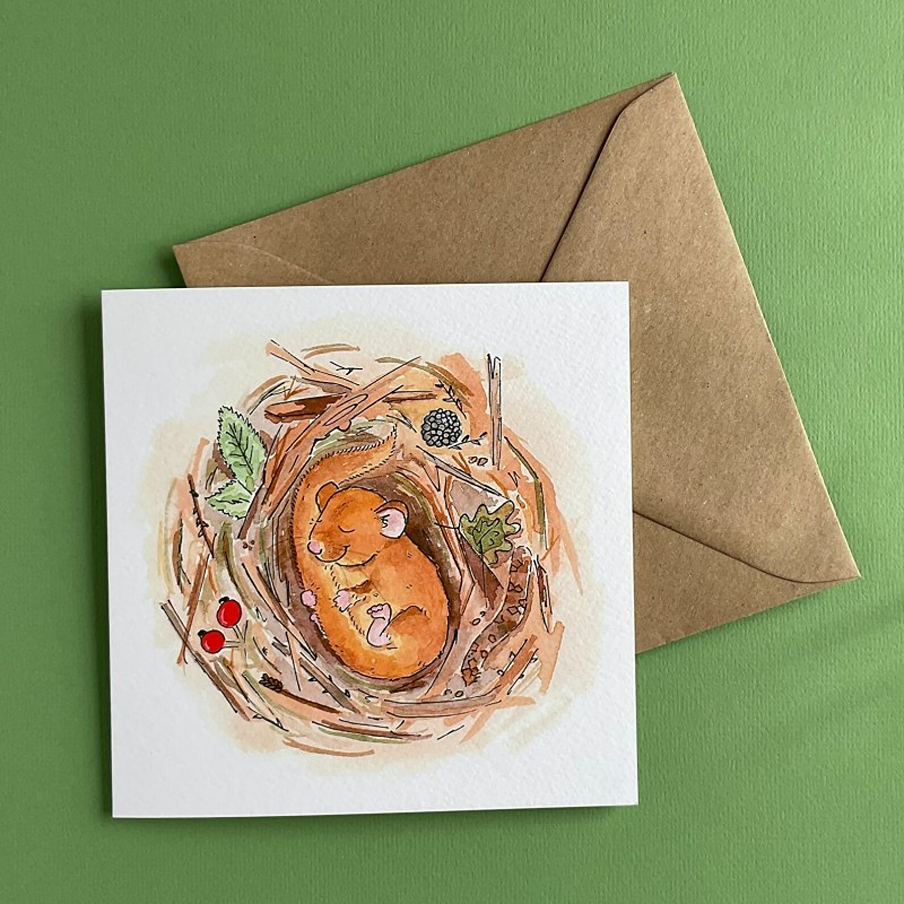
Tiny dormice are one of England’s most charming mammals, with big black eyes and golden-brown fur. These shy creatures live in hedgerows and woodlands.
This lovely card is printed on recycled paper, with natural flecks. And 20% of proceeds go to People’s Trust For Endangered Species, to help save dormice.
Unlike most tiny mammals, dormice travel on branches and hedges, hardly ever touching the ground. But due to their size, they often can’t leap more than a couple of feet, so it’s vital they have lots of branches and woodland, to keep them safe.
In the wild, dormice eat many other foods in hedgerows and woodlands including:
- Flowers and pollen
- Caterpillars and aphids
- Berries (from bramble and honeysuckle)
Dormice are critically endangered, with numbers having dropped by 75% in 25 years. And they only have one or two litters a year.
Why are England’s dormice endangered?
Dormice are endangered due to habitat loss (replaced by fences, roads, houses) and farmers replacing wild crops with pasture. This means there are less ‘connected corridors’ for dormice to move through.
Hedges are also important places for dormice to feed and nest, so when people trim them too much, this impacts their natural homes.
Warmer and wetter weather (due to climate change) is also negatively affecting their food supply, and altering hibernation patterns.
Why it’s important to plant more hazel trees
Farmers and public bodies can help, by planting more hazel trees. Dormice (aka ‘hazel dormice’) thrive on these trees, as they offer food that is high in protein and fat (to get them through a winter sleep) along with shelter through the year.
You can tell if a dormouse has been eating a hazelnut, as it leaves unique round holes in each shell, with its strong front teeth. Dormice also use the flexible branches, to make nests for breeding.
Connected hedgerows (for hiding, nesting, sleeping)
Dormice are very vulnerable to predators due to their tiny size. So thick connected hedgerows give them safe places to hide, nest and sleep.
Many hedge plants (including yew, privet, laurel, buckthorn and holly) are unsafe near grazing horses or livestock. Read more on toxic plants to horses and livestock..
In the wild, dormice build woven nests of grass and bark, from May to October, to raise babies. These hedges also provide cover for their deep winter sleep.
This free Dormouse Conservation Handbook is an ideal read for farmers and town planners. Reconnecting these green corridors helps dormice to find food, grow numbers and keep safe from predators.
Provide dormouse nesting boxes
Wildlife World’s Dormouse/Mini-Mammal Box has been created by experts, based on a design by People’s Trust for Endangered Species. Access to the nesting space is through a secure, predator-resistant cavity located at the rear.
The durable roof is made from recycled plastic (from farm waste) and it’s easily lifted, and can be secured at the back for added safety and peace of mind. Trade orders welcome.
Install commercial ‘dormouse bridges’
These are now available for sale, after People’s Trust for Endangered Species trialled their use. They enable dormice (and squirrels) to safely cross from place to place, without being in danger from road traffic.
The bridge can be built to free-stand on its own, or fitted onto an overpass or other structure. This company works closely with Highways England for bridges built over large roads, to ensure safety and quality.
Saving England’s two other hibernating mammals
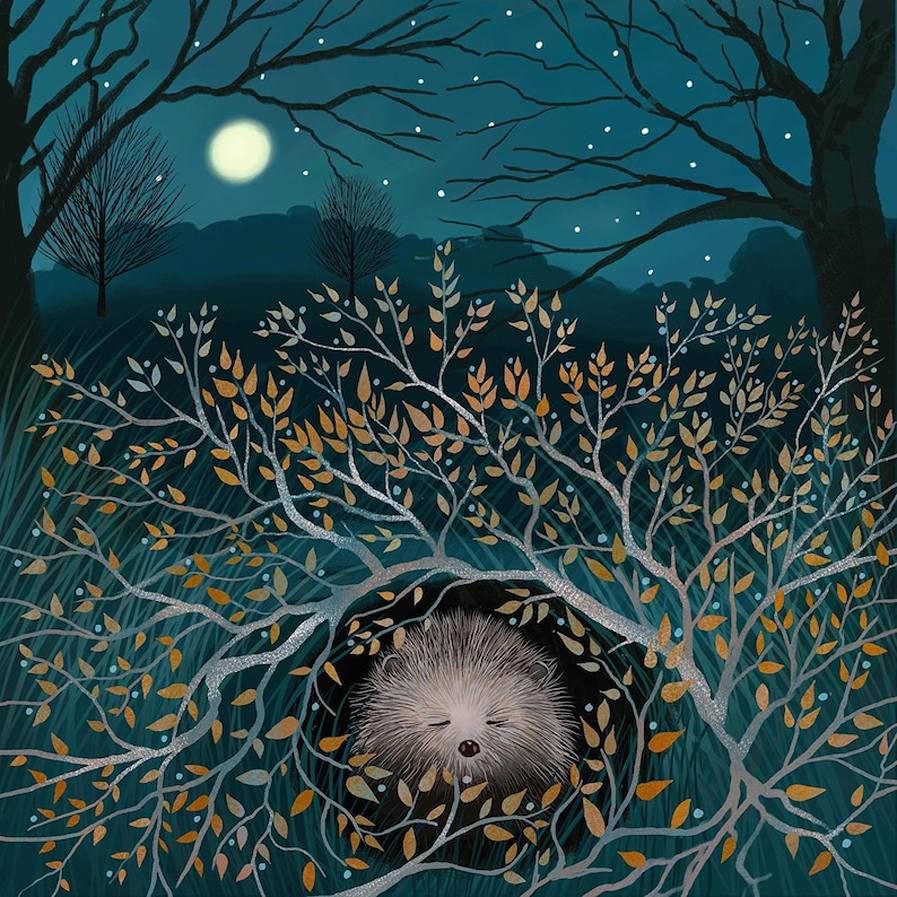
Did you know that England has just three hibernating mammals? Which creatures do you think they are? Hibernation is very different to going to sleep, as these creatures are able to slow down their heart rates, so they stay alive, but conserve energy through winter months.
Hedgehogs
Nocturnal hedgehogs like log piles and leaf litter, so leave your garden a bit ‘messy’ for sleeping and hibernation spots (never knock down sheds/outbuildings until at least 8 weeks after birth to ensure hoglets have left – can be any time from summer to autumn).
What about male hedgehogs? Like some men, they mate – and then disappear!
All hibernating creatures can be helped, simply by leaving nature alone. Hedgehogs benefit from organic gardens left ‘a bit messy’ with log piles and leaves.
Don’t encourage hedgehogs if you live with dogs, that are natural predators.
Bats
Bats benefit from no light pollution and night-scented flowers (avoid toxic plants near pets).
Don’t encourage bats if your live with or near feline friends, as cats are natural predators.
How to Help Hibernating Mammals
England has three hibernating mammals. Here is how to help them:
Leave them be! Hibernating mammals do so to preserve their body fat and temperature, so they can survive cold winters. So never disturb them, unless it’s absolutely necessary for their safety.
Dormice are severely endangered, so councils and farmers can help by planting hazelnut trees (these are rich in fat, to pack on calories!)
Hedgehogs love hedges (the clue’s in the name!) But due to lack of habitat, people with gardens can help by cutting out little ‘hedgehog highways’ in their fences (around 13cm by 13cm) so they can travel up to 2 miles each night between gardens, to find food and shelter.
If you have garden pets, you can cover the hole up during the day, as hedgehogs will be asleep!
Hedgehogs are curious creatures, so clear all litter and don’t leave plastic bags, open drains, netting around etc, and ensure ponds have sloping sides. Never knock down sheds until a month after you’re sure baby hogs have gone. Also avoid garden strimmers and bonfires.
If you use a hedgehog house, only clean it (with boiling water then leave to dry) once hibernating hogs have left. An easy way to check is to place a small stick or flower head in the entrance for a few nights (this will be pushed aside, once the hog wakes up and goes on his way).
For info and help, contact British Hedgehog Preservation Society.
Bats are England’s only flying mammals and like bees and butterflies, need night-scented pollinating flowers. If you live with animal friends, learn about pet-friendly gardens, to avoid toxic plants.
For information and help, contact Bat Conservation Trust.