What we can learn from animal friendships
Many creatures can teach us so much about to raise children! Let’s meet a few of them and the lessons we can learn!
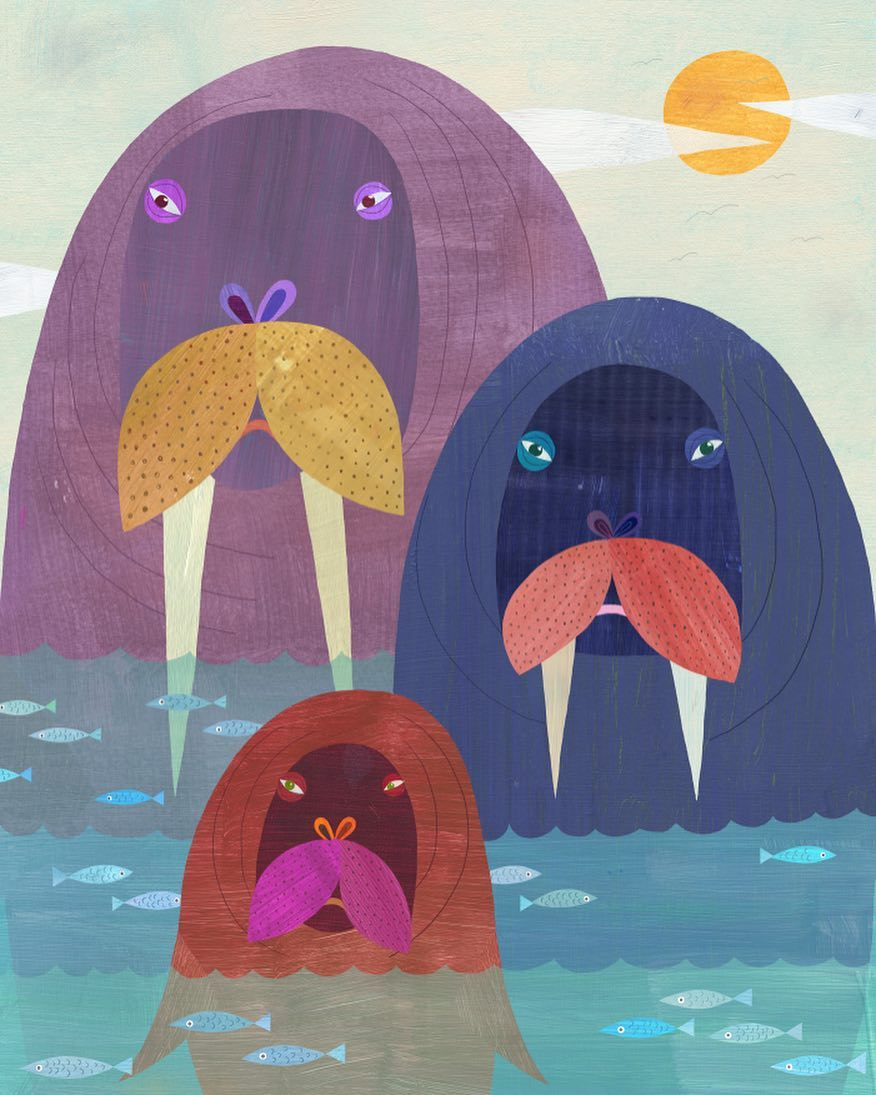
Walruses
Females often forming a shield around young calves in the water. They don’t have human arms, so use their flippers to hold offspring close! They even adopt orphans, if youngsters lose their parents. They will even fight polar bears, to defend their young.
Domestic cats
They let their young roam and take risks, giving kittens room to explore. The mother may watch from nearby but rarely intervenes unless trouble appears. Sometimes stepping back gives children the space they need, to grow stronger and more independent.
Lions
Lionesses often team up, sharing feeding and protecting duties. While mothers are there for cubs, the pride works as a group to defend against threats and bring home food. This teamwork shows the value of group support, trust and shared responsibility in raising children. Relying on community makes tough times easier.
Eagles
These birds of prey bring strong safe nests high above ground. As eagles mature, the parents nudge them out of the nest, when the time is right. This blend of guidance and gentle pressure helps young eagles learn to survive. Parents can learn to support children with protection, then step back so they find their wings.
Beavers
These large rodents work side by side to create lodges and dams. Parents teach young beavers the skills they need to build safe homes, and gather food. Showing hands-on learning, builds strong foundations for the future.
Emperor penguins
They team up to raise chicks in freezing weather. After the mother lays her egg, the father keeps it warm, often for months, while she returns to sea to feed. Later, both parents share the work of feeding and keeping the chick safe. Shared roles and support teach the power of working together, even when conditions are tough.
Wolves
They look after each pup as a group. Older siblings or “aunts” and “uncles” help the main pair by feeding, playing, and protecting the pups. This all-in approach means every young wolf gets attention and help from more than just the biological parents. People see a model of extended family care and deep social bonds.
Elephants
Female elephants form tight groups called herds, led by a matriarch. Mothers, aunts, and older siblings all pitch in to watch over new calves. If a young elephant wanders too far or needs comfort, any member will respond. Youngsters learn the rules and get guidance, surrounded by support and wisdom.
Albatrosses
Chicks are raised by two mothers. These pairs form strong bonds and share all parenting tasks. They keep the chick warm, feed it, and ward off threats. This cooperative parenting model shows that love and commitment, not just biology, can create a strong family unit.
Emus
Male emus take parenting into their own hands. After the female lays her eggs, the male incubates them, rarely leaving the nest for weeks. Once the chicks hatch, dad leads them for months, teaching and protecting them until they’re ready on their own. He proves that dads play a key role in nurturing and guiding children.
Whales & Orcas (never forget your mother!)
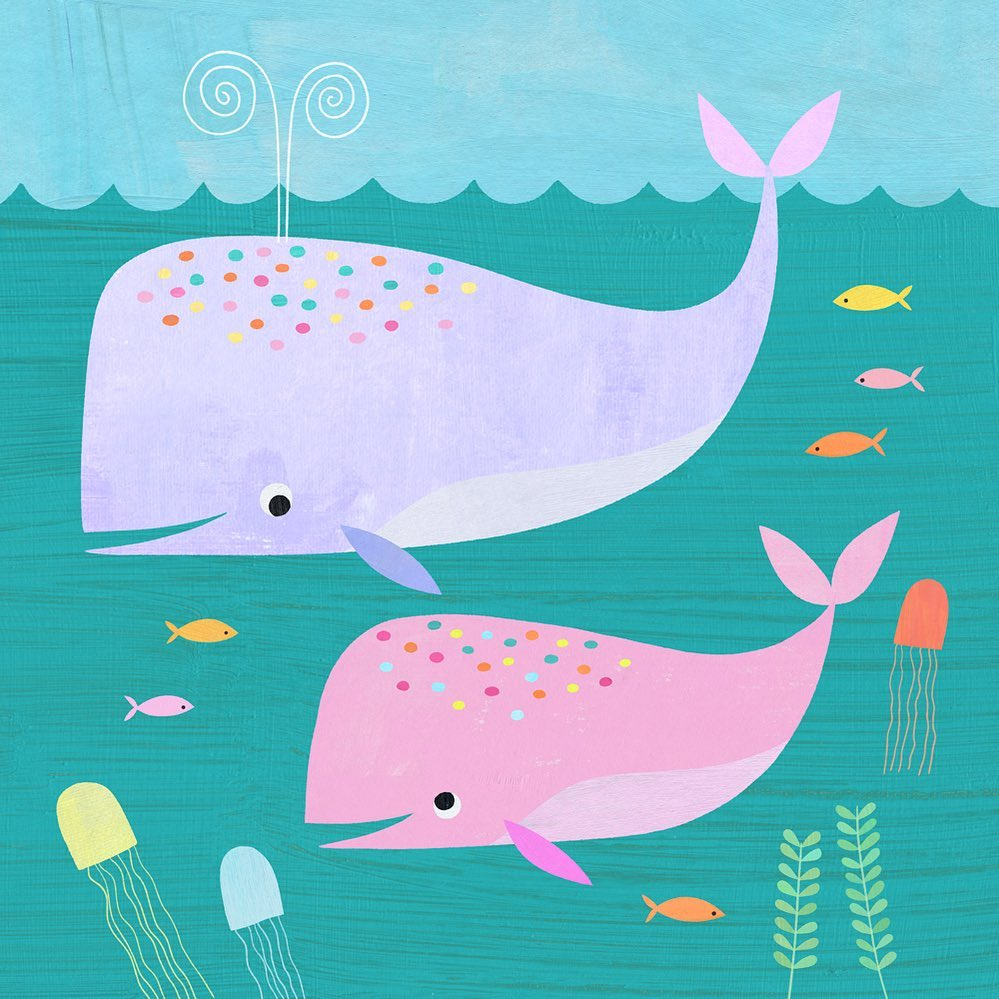
Whales raise their young in matrilineal pods, so calves learn vital skills like communication and hunting. The mothers often push their calves to the surface to breathe, as whales have long periods of dependency. Even longer with orcas (killer whales) who stay with mum for the rest of their lives. Cute!
Mother, Creature, Kin is a series of essays about the natural world, asking what other-than-human creatures can teach us about mothering, belonging, caregiving, loss and resilience. What can be learn from the plants and creatures, who mother at the edges of their world’s unravelling?
Becoming a mother in this time, means bringing life into a world that appears to be coming undone. Drawing upon ecology, mythology and her own experiences as a new mother, the author confronts what it means to ‘mother’: to do the good work of being in service to the living world.
What if we could mother the places we live, and the beings with whom we share those places? And what if they also mother us?
In beautiful prose combined with a knowledge of ecology, she writes of the silent flight of barn owls, of nursing whales, of forests, tidal marshes, ancient single-sell organisms and newly-planted gardens.
I set out to write this book, because my daughter was born into a world that is unravelling. And because there are fewer than 350 North Atlantic right whales left. And because there are single-cell organisms dwelling in the peat of salt marshes that are utterly mysterious. And because that peat is, in many places, eroding away and washing out to sea.
Rooted in wonder while never shying away from loss, this book reaches toward a language of inclusive care learned from creatures living at the brink. Despair and fear will not save the world any more than they will raise our children, and while we don’t know what the future holds, we know it will need mothers.
This is a heartachingly beautiful, deeply life-altering book, one I will be placing into the hands of many mothers, creatures, and kin. There is grace here, and hope, and the light we need to guide us onward. A book for these times. Kerri ni´ Dochartaigh
The author invites us to understand mothering in a larger sense, as caring for all creatures – for birds and whales, trees and grasses, the entire web of life. Scott Russell Sanders
Chelsea Steinauer-Scudder has a masters of theological studies from Harvard Divinity School and writes for Emergence Magazine, a magazine exploring ecology, culture, and spirituality. She grew up in the Great Plains of Nebraska and Oklahoma, and now lives in New England, USA.
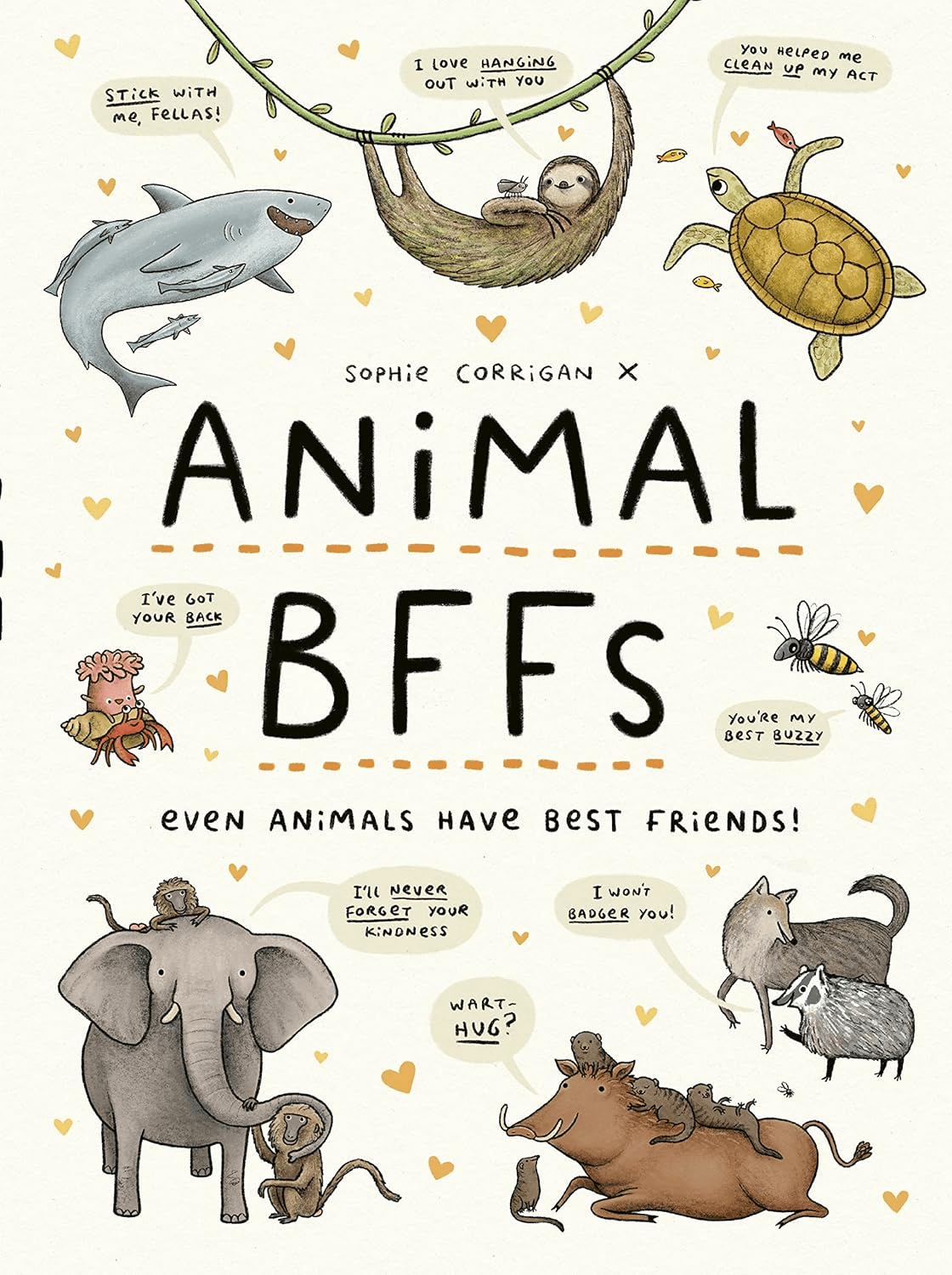
Animal BFFs is a fun illustrated book, teaching young readers who creatures in the wild kingdom also have best friends, often to help each other out. Someone who’s always there for them through thick and thin, to help them out with all the usual things that friends do.
You know like – picking ticks off your back, or letting you know when a lion is about to make you its dinner, or helping you to hunt down some tasty prey.
The animal kingdom is full of odd couples, that prove that sometimes it’s better to be together:
- Ostriches and zebras
- Grey wolves and striped hyenas
- Egrets and water buffaloes
- Grouper fish and octopuses
- Warthogs and banded mongooses
- Oxpeckers and big mammals
- Goby fish and pistol shrimp
- (some) frogs and tarantulas
- Capybaras and wattled jacanas
- Remora fish and sharks
- Sea anemones and hermit crabs
- Elephants and baboons
- Caimans and butterflies
- Cleaner fish and ocean creatures
- Coyotes and (some) badgers
- Crocodiles and plovers
- Sloths and sloth moths
- Marine iguanas and lava lizards
- Anemones and clownfish
- Sally Lightfoot crabs and sea lions
- Deer and turkeys
- Squirrels and songbirds
- Golden jackals and tigers
- Burrowing owls and rattlesnakes
- Bushveld lizards and oogpister beetles
- Arctic foxes and caribou
- Beavers and frogs
- Atlantic puffins and rabbits
- Hoverflies and wasps
- Hermit crabs and sea snails
Sophie Corrigan is an illustrator and writer from Lancashire, who has a first class degree in illustration. When not drawing and painting, she enjoys going to shows, watching nature programmes and eating vegan food.
Nature’s remarkable partners
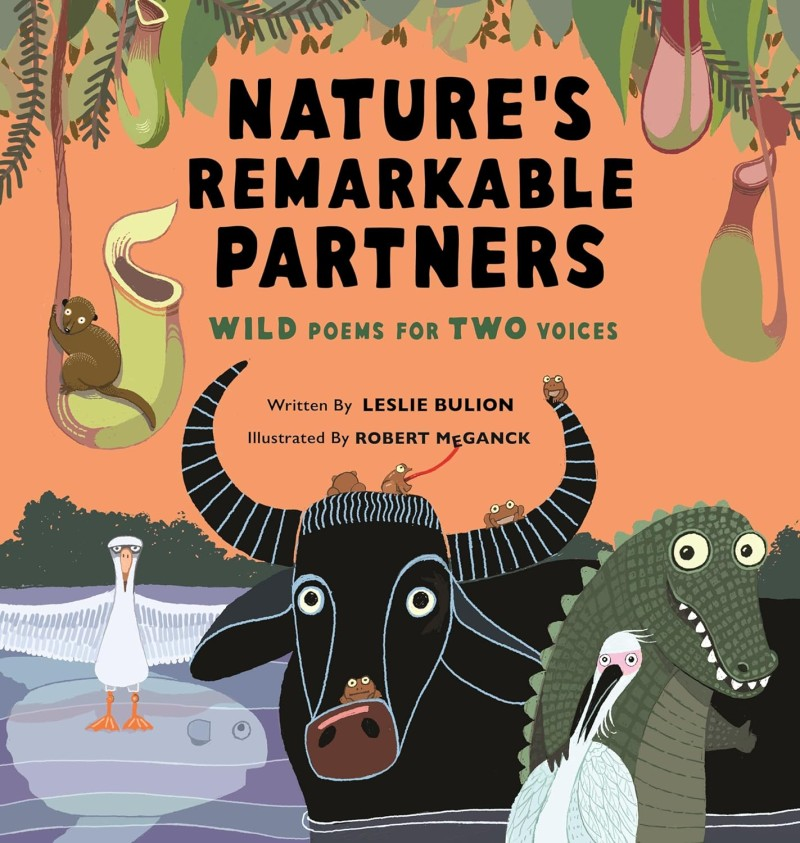
Nature’s Remarkable Partners is a fun book for young readers and two voices, peeking into mutually beneficially partnerships in nature – from butterflies and milkweed, to clownfish and anemones.
Children will enjoy poems that teach about the egg-laying carrion beetle and its hitchhiking mite passengers, and the little goby fish (that guards the pistol shrimp from predators, in exchange for a safe haven).
Brief science notes accompany each featured partnership, with back matter offering more opportunities for study.
To have or to hold (nature’s hidden relationships)
To Have or to Hold is a thrilling exploration of nature’s relationships, nominated for the Wainwright Prize. Learn about eight symbiotic relationships, trying to survive climate and biodiversity crises, to regulate ecosystems and strengthen resilience.
What can nature teach us, about living together? These relationships don’t happen by accident, there are dynamics involves. Species form (and sever) relationships everywhere, from temperate rainforests to the open ocean, and from quiet tidal pools to chalk grasslands.
In this book, Sophie travels (using low-carbon methods) around the British Isles to relish the inter-connectedness between species, and sharing some of their tales. A call to avoid exploiting nature’s resources, instead to love and cherish what remains, to shape a more restorative life alongside nature.
This miraculous book blindsided me. I raced through its pages as though reading a beautifully written thriller, while learning so much about things I never knew existed. Joanna Lumley
From mint-sauce worms (they are bright green due to algae!) to tree lungwort (toxic to pets), this is a glorious guide to coupling in the animal, plant and fungal kingdoms. Guy Shrubsole
She is one of the best nature writers of our time, her ability to make readers giggle and feel empowered and motivated to do something, is like no other. This is an absolute masterpiece. Megan McCubbin
Sophie Pavelle is a US-born science communicator who now lives here. She has done a lot of good work for wildlife (especially beavers) and her writing appears in many newspapers and magazines.
The Internet of animals (what other creatures know)
The Internet of Animals is an illuminating account of the untapped knowledge of the animal kingdom, from animal migration to how elephants can detect tsunamis. What do animals know that we don’t?
In this book, scientist Martin Wikelski argues that animals have a unique ‘sixth sense’. If we give animals a voice, our perception of the world could change forever.
As they tag animals around the world with tiny tracking devices and link their movements to the International Space Station, this taps into the ‘internet of animals’, an astonishing network of information made up of thousands of creatures communicating with each other and their environments.
This project ICARUS is poised to change the world. We learn how barnyard animals become restless when earthquakes are imminent, African animals sense when poachers are on the move and frigatebards in South America depart before hurricanes arrive.
We also now know that animal migrations are not triggered by genes encoded in DNA but by elaborate cultures. By learning from them, we can better prepare for earthquakes, floods and hurricanes – and also learn to live alongside animals in harmony.
Martin Wikelsi is director of the Max Planck Institute of Animal Behaviour and honorary professor of ornithology at University of Konstanz.