Beautifully illustrated dictionaries on nature
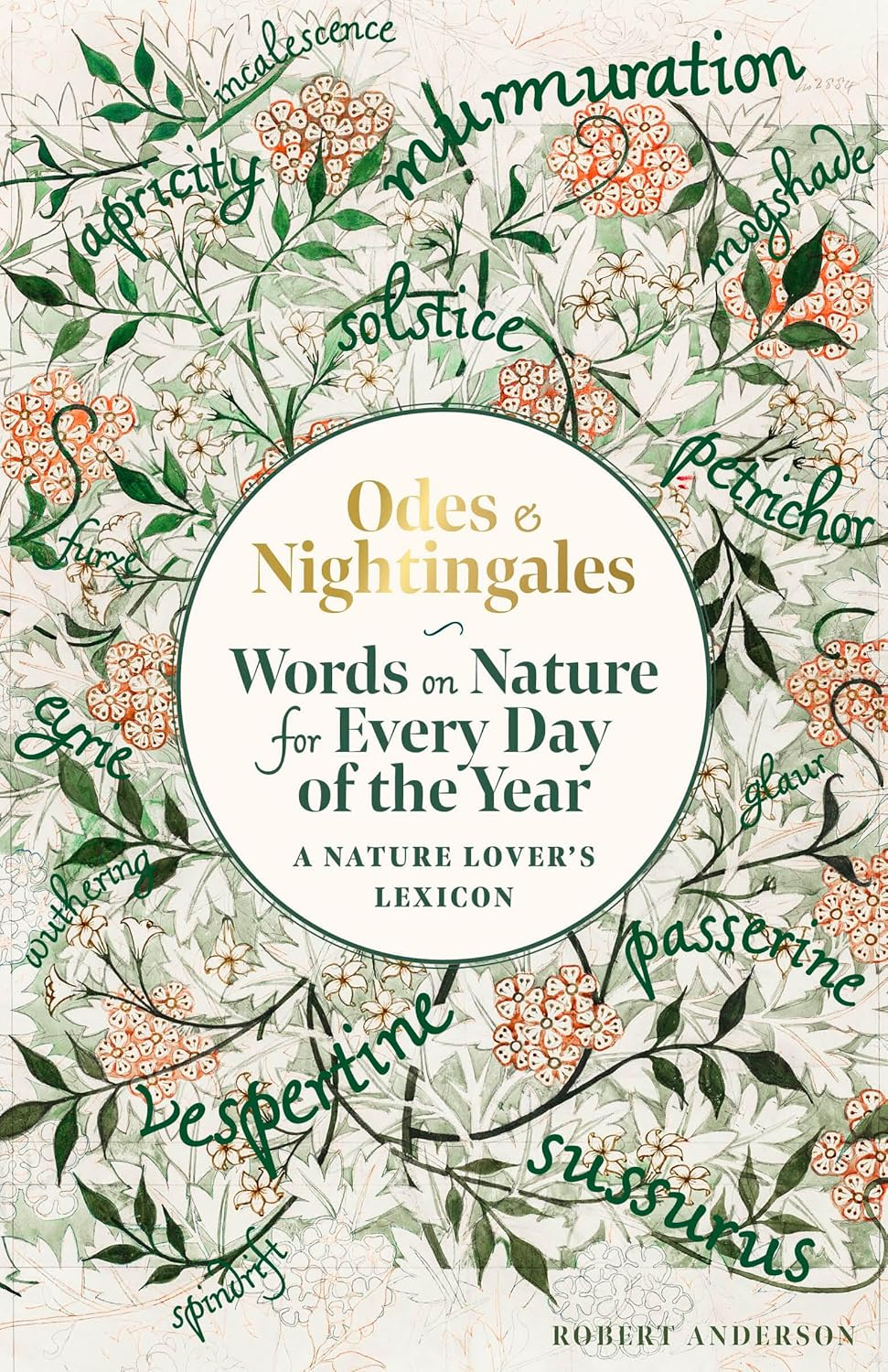
Odes and Nightingales is a gift book showing the language we use, to describe the natural world. Words like petrichor (the earthy smell of rain) to murmuration (aerial dances of starlings). In Japan there is ‘forest-bathing’, and in Norway there is ‘Friluftsliv’ whih translates as ‘free-air life’ when connecting with nature.
The natural world has inspired poets and writers through the centuries, and the phrases used are often what we bring to mind: Wordsworth ‘wandered lonely as a cloud’, Keats wrote his ‘Ode to a Nightingale’ and Shakespeare ‘compared his muse to a summer’s day’.
Find extracts from some of our best loved nature poets and writers in including Robert Burns, Tennyson, Jane Austen and Emily Brontë.
Discover words from around the world including Inuit words for snow, to Japanese blossom viewing parties. And even the Icelandic custom of closing the office early on a sunny day!
Robert Tuesley Anderson is a writer, poet and editor living in the Southern Uplands of Scotland.
A Charm of Goldfinches (and other collective nouns)
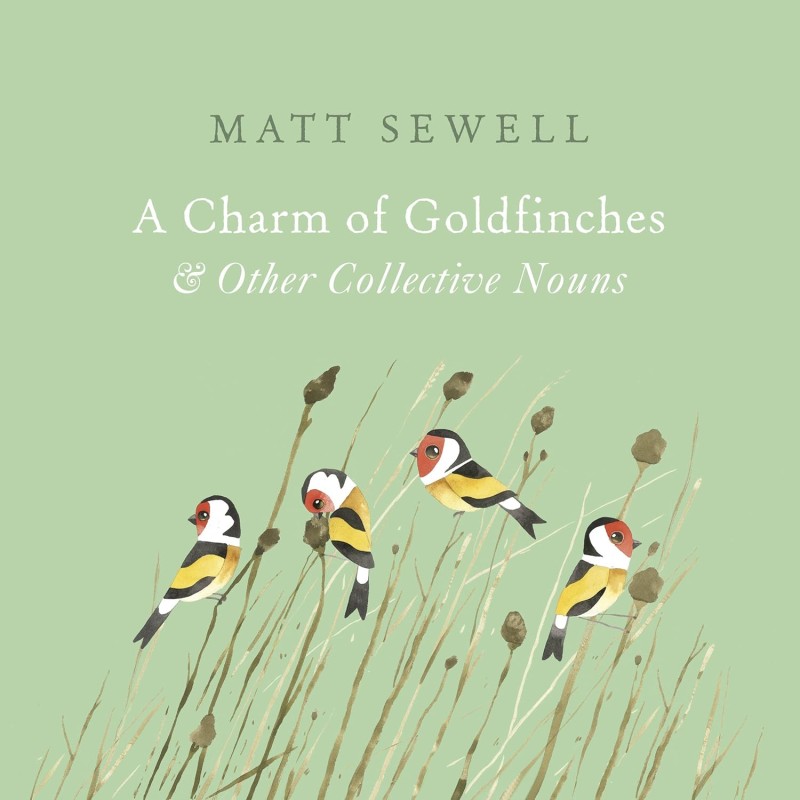
A Charm of Goldfinches (and other collective nouns) is a gorgeous book and educational and funny too. This is a really really good book – really do buy a copy! You’ll learn all manner of info about creatures around the world, in funny narratives.
Some of the creatures featured (grouped by land and sea) include:
- An Array of Hedgehogs
- A Memory of Elephants
- A Skulk of Foxes
- A Down of Hares
- A Pride of Lions
- A Trip of Rabbits
- A Crash of Hippos
- A Richness of Martens
- A Dazzle of Zebras
- A Lounge of Lizards
- A Mural of Buntings
- A Skein of Geese
- A Crown of Kingfishers
- A Cloud of Bats
- A Murmuration of Starlings
- A Flutter of Butterflies
- A Watch of Nightingales
- A Pod of Dolphins
- A Harem of Seals
A Mob of Emus: Emus are nearly 6 feet tall and certainly not afraid to look you in the eye. They are like a bunch of locals who gate-crash your party.
All weird haircuts and mono-brows, they’re funny and quite charming at first. Until they’ve drunk all your booze and things start to turn a bit nasty. So it’s probably best to avoid eye contact from the get-go.
Who wrote this book?
Matt Sewell is a popular writer and artist, and ornithologist. He has written several books on birds and the natural world, and his art even appears on stamps on the Isle of Man.
The Lost Words (an illustrated guide to forgotten nature)
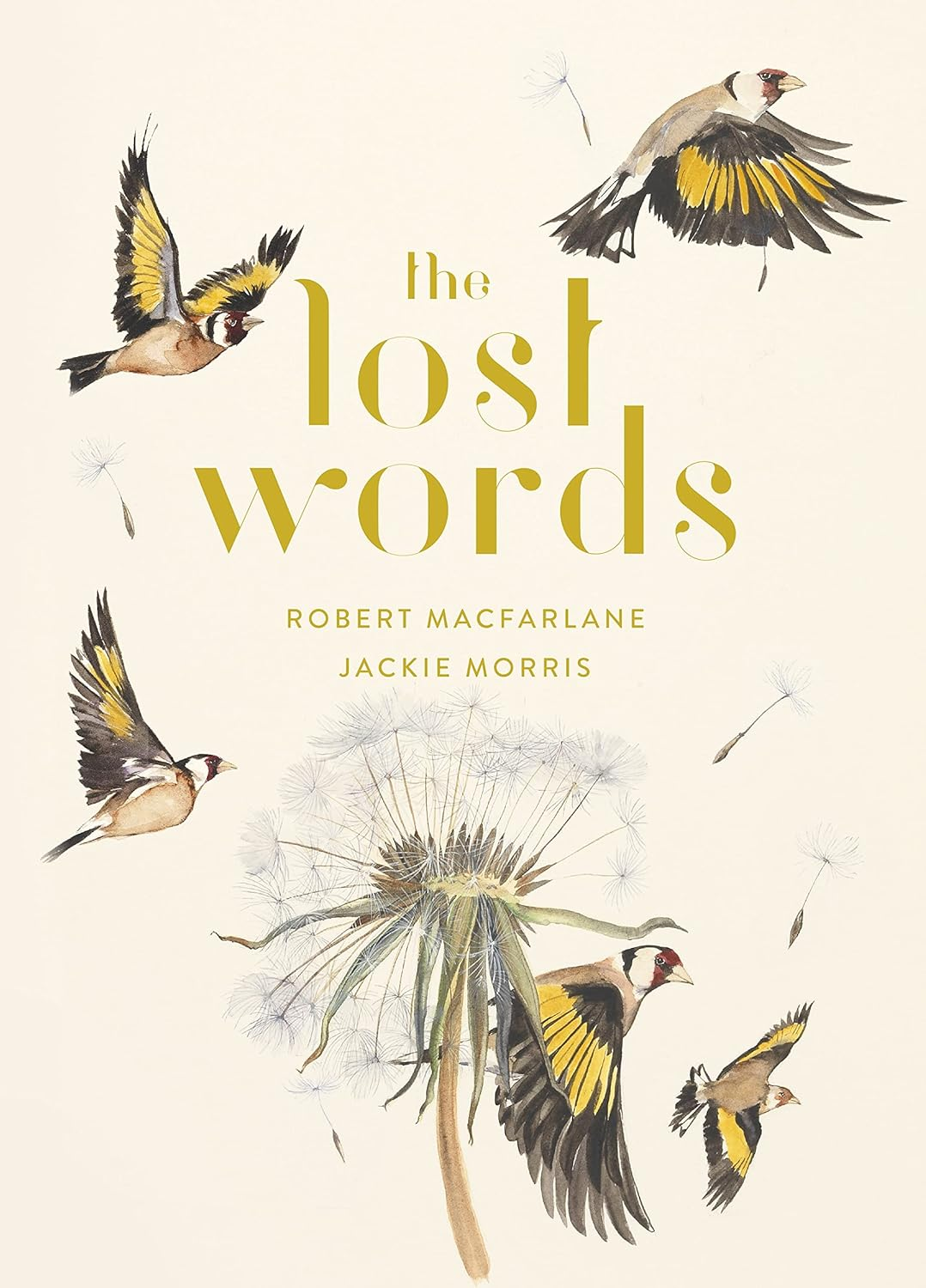
The Lost Words is a bumper book of lost words of nature, illustrated by Welsh artist Jackie Morris. Words from the natural world are disappearing from children’s lives (Dandelion, Otter, Bramble and Acorn). A wild landscape of imagination and play is rapidly fading from our children’s minds.
The book grew from a letter that Jackie was asked to sign, when it was found that certain words from the Oxford Press Junior Dictionary were to be removed: heron, acorn and even kingfisher?
Due to a culture that viewed the urban world as more important than the natural world. ‘A timely reminder that we should take a good long look at what we value’.
Jackie wondered how these words could be removed. What did that teach about the importance of nature? She emailed Robert and the book was born.
The poetry and art of this writer and artist appear on bags of Skylark Coffee, a non-profit brand based in Brighton, whose drink sales support many local charities.
The most beautiful and thought-provoking book I’ve read this year. Frank Cottrell-Boyce
Robert Macfarlane and Jackie Morris have mad a thing of astonishing beauty. Alex Preston
Gorgeous to look at and to read. Jeanette Winterston
Who wrote this book?
Robert Macfarlane is the author of many books on landscape, nature, people and places, his work has been translated into many languages and widely adapted.
Jackie Morris is an artist who lives in Wales, where she shares a small cottage with her children, two odd dogs and cats of various colours, mostly ginger!
The Lost Spells is the equally stunning sequel, a book of poems and art – from Barn Owl to Red Fox, Grey Seal to Silver Birch, Jay to Jackdaw – with which we share our lives and landscapes. This is written to be read aloud, to teach the names of everyday species.
A Winter Dictionary of Warming Words
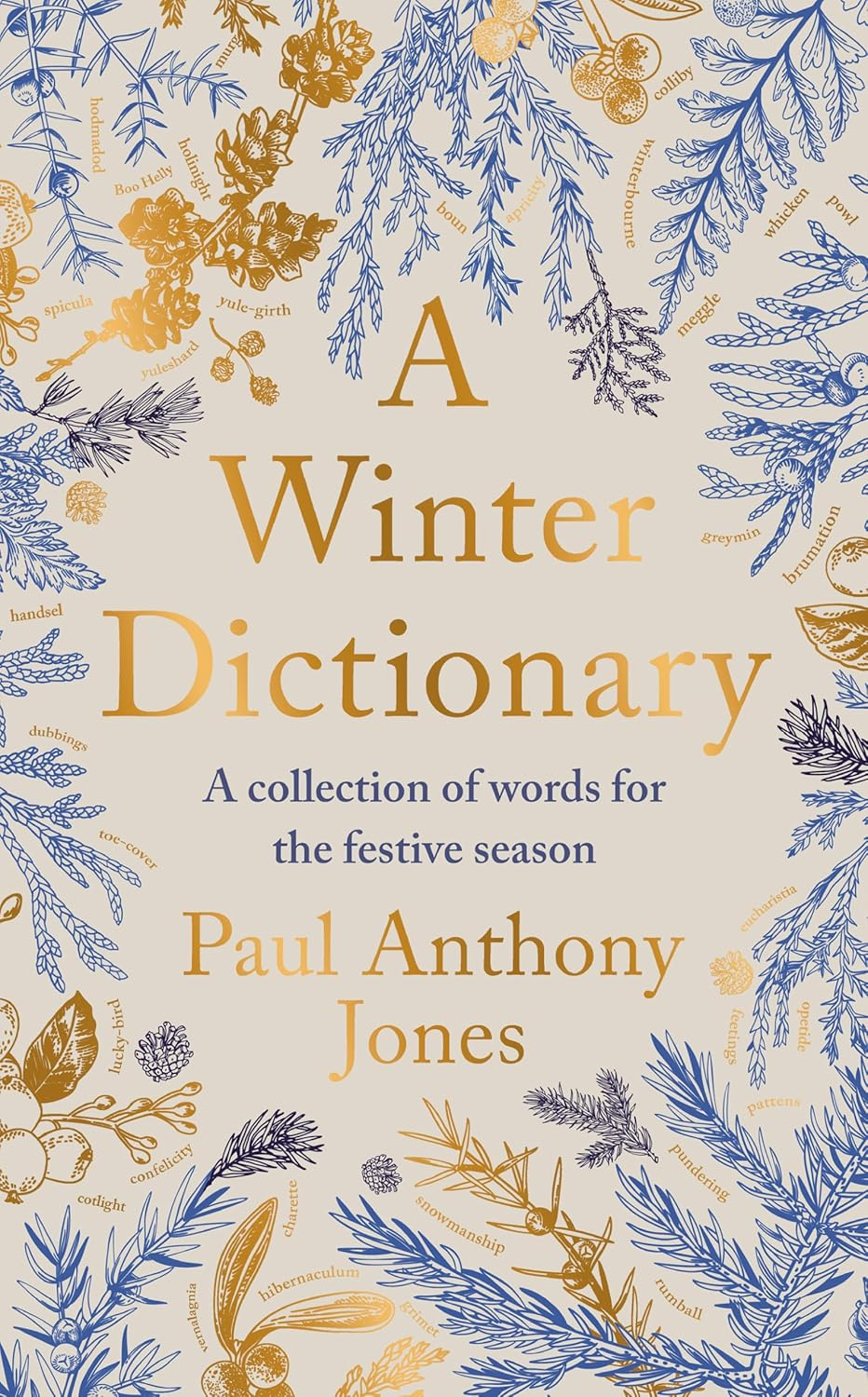
A Winter Dictionary is a beautifully written guide to warm the coldest of hearts, as the nights drawn in and the cold descends. Including an incredible array of words to superbly capture the season, this is ideal indoor reading.
Discover rare, fascinating and forgotten words on winter months. From frost dogs (tiny frozen particles of falling snow) to chibbly (crisp with frost).
Read how to keep safe in snow (including pets).
A few new words to learn!
Abscission – the process by which a leaf detaches from its tree in autumn
Afterlight – the glow that remains in the sky, after the sun has set
Blewse – a blueish morning’s mist
Chirming – the subdued twittering of birds before a storm
Cosmognosis – the instinctive force that tells an animal when and where to migrate
Erythrophyll – a natural pigment that turns leaves red in autumn
Wedge – the v-shaped line formed by geese in flight
Paul Anthony Jones is the author of several books, and has contributed to the online Oxford and Cambridge dictionaries. He lives in Newcastle-upon-Tyne.
When is England’s winter season?
England’s winter season is shorter than many other countries, running only from December to February. Unlike classic alpine winter, our climate is moderated by the Atlantic ocean, so brings wet, grey and breezy weather, rather than lots of snow and ice.
Sometimes you get heavier snow in the Northern uplands (like the Pennines or Lake District). But lowlands are more likely to experience rain and high winds.
The most severe winter ever was in 1963, when people died (even animals as farmers could not reach them). Snowdrifts reached six meters, and the River Thames and even the sea froze.