The Orchard in Your Garden: Growing Organic Fruits
No matter how small or large your outdoor space, keen gardeners may wish to have a go at growing organic fruit trees (there are dwarf varieties available, to suit small spaces). Once you learn this craft, you can harvest fresh tasty organic fruits, straight from your garden. How good is that?
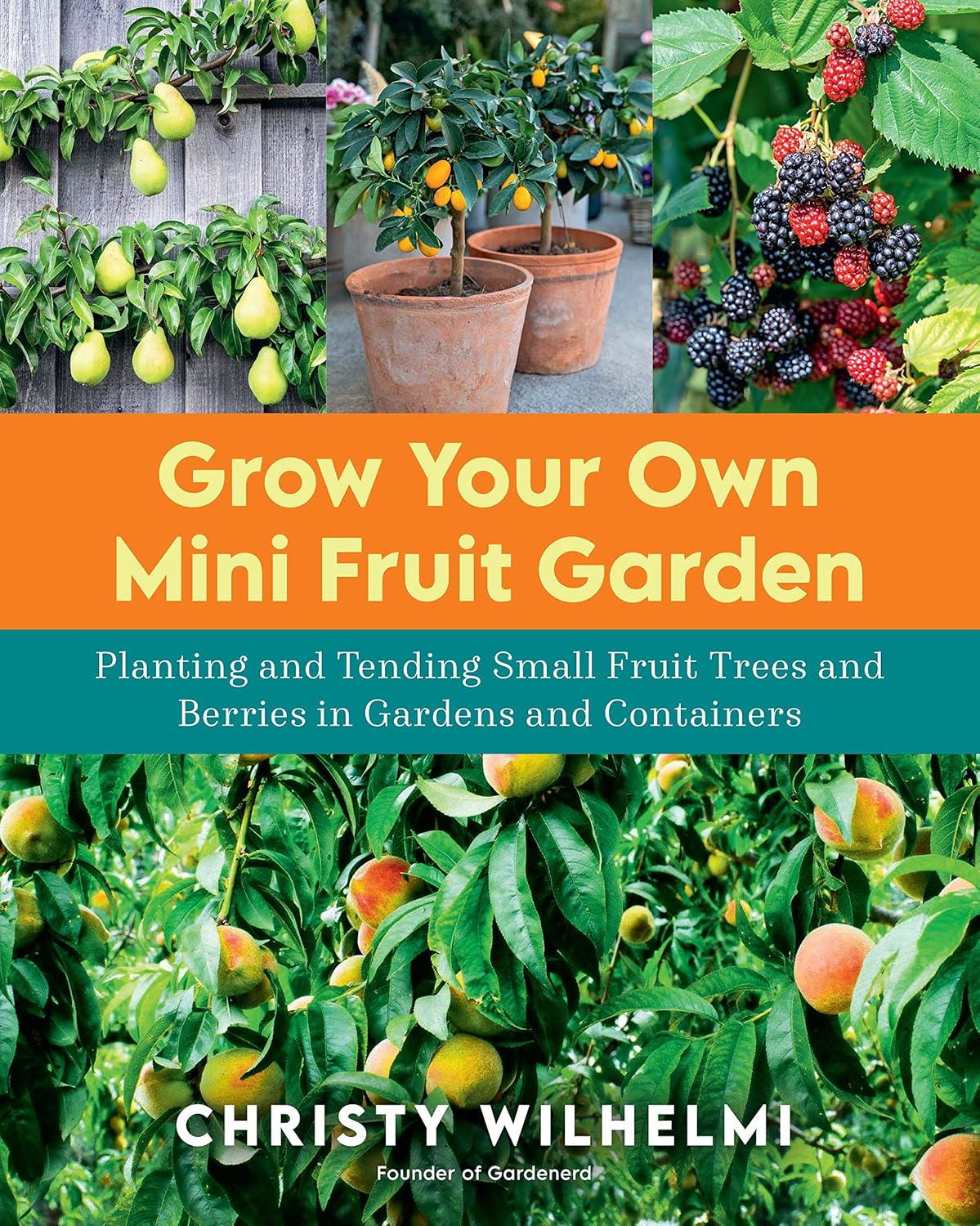
Grow Your Own Mini Fruit Garden shows how to grow mini fruit trees, bushes, vines and plants, in this book of small-space fruit growing. Turn your urban yard into a fruit factory. There are tips on edible container fruit gardens, and how to grow fruit trees in small spaces. And learn how to maintain your fruits, for years of harvesting.
Learn how to create pet-friendly gardens and wildlife-friendly gardens (use fruit protection bags over netting). Also learn how to stop birds flying into windows.
Keep fruit pips/seeds away from animals as they contain natural cyanide, and use humane slug/snail deterrents).
The author empowers people to grow their own food, one garden at a time. Growing up to 80% of her own produce in a garden less than 300 square feet, she also runs organic gardening classes for small spaces in California, and gardens almost entirely with heirloom produce.
Grow and prune small-space fruit trees
Grow a Little Fruit Tree is another book on growing trees, this time by an expert pruner, who shows how to grow the smallest apple, plum, pear, apricot, peach, cherry and peach trees. These trees are easy to maintain.
To avoid pruning thorn accidents, get a pair of gardening gloves (made from organic cotton and fairly-traded rubber).
Tips for growing organic fruit trees
The most popular fruit trees to grow in England are apples, pears and plums. Cherry trees are nice, but may take years to harvest. For organic growing, choose disease-resistant varieties.
- Always consider your space, before buying fruit trees. Choose dwarf varieties for small gardens, and consider creative solutions like vertical gardening against sunny walls. Remember that tree roots can expand, so be aware of that, near house foundations. And that they don’t obscure window views, to confuse birds who may fly into windows (see above).
- Good soil equals good fruit trees! Most fruit trees thrive in rich well-drained soil. You can buy kits at garden centres to test for PH (most fruit trees like slightly acidic soil at 6 to 6.5 PH). You can add organic compost or well-rotted manure to boost soil fertility.
- Young fruit trees will need regular watering, especially in dry spells. Soak the soil thoroughly after planting, then soak the soil twice a week. Don’t leave watering cans around, as creatures could drown if they fall in). This watering can includes a little ‘frog ladder’ to help small creatures escape, if they did fall in accidentally.
- Prune trees in late winter or early spring, while they are dormant. Removing dead or crossing branches (and thinning out excess growth) can allow sunlight and air to penetrate the canopy.
- Fruits are ripe when they slightly soften and change colour (apples and pears will come off the branch easily, and berries should be bright and sweet).
- Learn how to store your garden produce, so you can know how to dehydrate, freeze, ferment and pickle your fruits, for turning into homemade chutney or anything else!
How to grow a native food forest
A native food forest is really just a simpler way of saying ‘permaculture’, which is a unique way of growing that after a bit of trained planning, kind of lets nature take care of itself. So rather than ‘rows of beans’, you build a forest to feed you.
Feed Us With Trees is a book on how perennial nut trees can be the future of free food. Growing native nut trees is not just for snacks. Nuts can be made into flours, milks and cooking oils.
Avoid nuts for children, allergies and pets (macadamia nuts especially). Never give whole nuts to birds as they can choke (use quality brands without aflatoxins in brand-name feeders). Tree 2 My Door offers native nut saplings (hazelnuts, chestnuts, walnuts, almonds and cobnuts).
This book goes beyond industrial monocultures of nuts (almonds have huge controversy over growing methods in California).
Instead, this uplifting book meets ‘zero food mile nut growers’ who are building a brighter future, growing one of earth’s keystone species. An ideal read for locavores, regenerative farmers and environmentalists.
By including plants from different layers, you build a ‘mini food forest’ to produce edible treats for years to come, with less work and fewer resources:
- Trees
- Sub-canopy trees
- Shrubs
- Vines
- Perennials
- Annuals
- Ground cover
- Edible roots
The author is a trained horticulturist who designs food forests and ‘layered gardens’ in Vancouver (Canada).
Plant free fruit & nut trees (for everyone!)
Incredible Edible began in Yorkshire, and is now a worldwide movement, planting free edible food for everyone in local communities. Commuters can pick herbs at railway stations, and schools are growing organic vegetables. But some chapters also grow trees for people to help themselves to free fruits and nuts. What a wonderful idea!
Get involved with volunteer projects like The Orchard Project, which also teaches local people to grow and maintain nut and fruit trees.
And growing hazelnut trees will make you very popular with endangered dormice, if you share your harvest with them! This is the most helpful way to help sleepy dormice, as it fattens them up with their favourite food, just before hibernation!
Created layered gardens (do the work themselves!)
The Layered Edible Garden shows how to grow food as nature does. No more rows of plants, but an interplanted paradise that outcompetes weeds, and grows beautifully together.