The Suffolk Broads (peat pits to manmade wetlands)

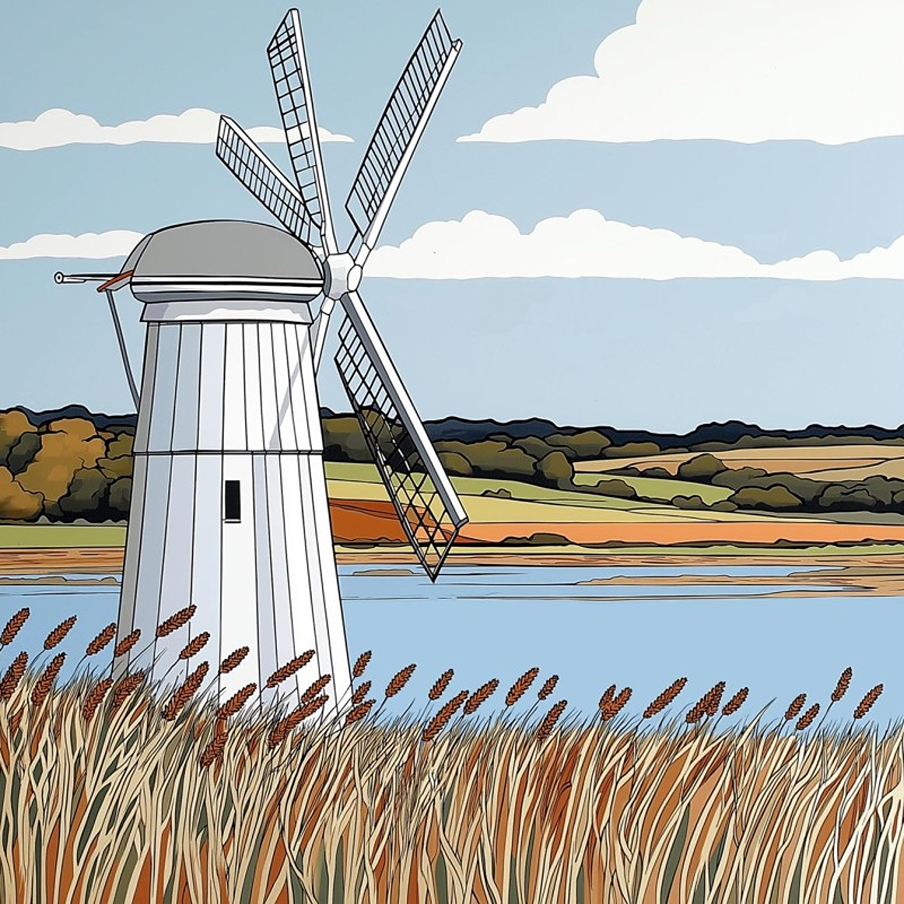
The Suffolk Broads are (along with the Norfolk Broads) one of England’s most popular boating destinations. Wherry boats are the traditional way to get around here. Most rely on human power or wind, so they don’t pollute the water either. They also don’t have engine noise, a bonus for local wildlife.
Beccles is the main market town in the Suffolk Broads, sitting by the River Waveney. These streets have old buildings, little shops and cosy cafés. There are great views from the tall church tower in the centre of towns.
Always follow the Countryside Code to keep all creatures safe. Keep dogs away from steep banks, mushrooms (and toxic plants/trees) and on leads near birds, barnyard friends and wild ponies.
How peat pits became the Suffolk Broads
Peat bogs formed over long periods from partly decayed played. But once cut and dried, it served as useful fuel, so workers removed large amounts in the Middle Ages, and this left deep pits and channels in the soft ground. As water levels rose, river flooding increased. And the Broads were formed.
As this happened, industrial spaces became open broads, reeds spread and silt settled. Marsh plants moved in. In short, a working landscape turned into wetland.
Shallow edges warm more quickly than deep water, and that helps many plants and insects. Reeds give cover to nesting birds. Wet grassland offers feeding space. Slow-moving rivers connect one habitat to another, so fish, amphibians, insects, and water birds can move through the system.
A single broad can hold open water, reed fringe, fen, scrub, and marsh within a short walk. That variety supports species different needs. Some need shelter, some need mud, and some need calm water full of plant life.
- Reedbeds are among the most recognisable habitats. They shelter birds, insects, and small mammals. They also soften banks and filter water.
- Open water supports fish, aquatic plants, and feeding birds.
- Grazing marsh adds another layer. These wet meadows are shaped by water and long-term farming. They offer feeding grounds for birds and help keep the wider wetland open.
How to upright an overturned sheep
Sheep are often used on the Broads for conservation grazing.
Pregnant sheep (and sometimes due to wool waterlogged from rain) can sometimes roll over onto their backs, and can’t get back upright, due to having four stomach chambers (so will die if not turned back upright).
If you see a sheep on its back, just firmly right it back, then stay with it, until rain has drained off, so it won’t happen again. Then inform your local farmer.