Coraline Soaps (ideal for children with eczema)
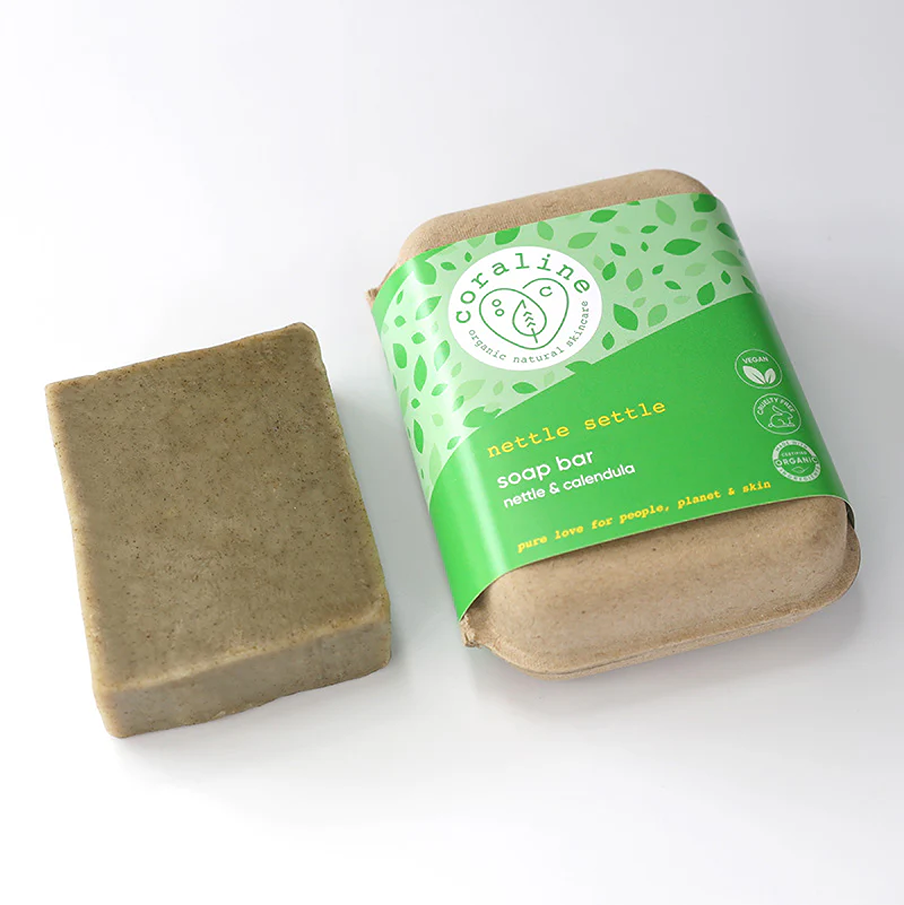
Coraline Soap was created by the parents of a baby with Down Syndrome, who could not tolerate ‘sensitive skin’ soaps. The chamomile soap has anti-inflammatory ingredients to relieve dry itchy skin.
For 3 months and up only. Check for nut allergies.
Skin experts often recommend Coraline Soaps for people with sensitive skin. Their formulas are tested to make sure they’re safe and kind. Learn how to help people with eczema.


Don’t bar soaps dry skin out?
You’ve been reading silly beauty magazines! Real soap (made with caustic soda – don’t try this at home!) is then ‘cured’ for weeks. Which results in ‘proper soap’ to clean your skin, but retains the moisturising glycerine.
Most commercial soaps (which nearly all contain palm oil, contributing to deforestation of habitats for endangered orangutans) takes out the moisturising glycerine, and sells it to industry.
Or uses it to make fruity ‘transparent glycerine’ soaps for extra profits. Which don’t dry skin out, but won’t clean it either (because they are not soaps!
So seek out proper handmade soaps to find pure bars that both clean and moisturise your skin. Try using one on your face and nothing else for a month. And notice the difference!
Managing eczema (oatmeal baths)
It’s common these days for babies to develop skin conditions like eczema. Ask your GP or midwife first for reasons (some are due to breastfeeding mothers having dairy allergies etc).
Before reaching for medicated creams, try soothing oatmeal baths made by adding a handful of oats to a muslin bag or washcloth, in the bath water. Oats help to calm red and inflamed skin. You could follow with a tin coating of coconut oil, to seal in moisture.
It also helps to choose clothes (and reusable baby wipes) made from cotton or hemp, and choose unscented biodegradable laundry detergent. This can protect sensitive skin, without triggering new reactions.
Avoid scents, as these can cause small airways to become irritated, and babies with eczema have a stronger risk of asthma or breathing difficulties. Studies have pointed to a link between scented products and higher rates of wheezing and respiratory issues in young children.
Safety for baby baths
- NHS has a good 2-minute video by a midwife, on how to safely bathe babies. Never leave babies alone for a second (even with older children).
- Do not use baby bath seats, these can quickly detach and drown babies, even in a few centimetres of water.
- Run cold water first (then add hot water, testing with your wrist or elbow). Keep your baby’s head clear of water.
- Don’t bathe straight after feeds, or if hungry or tired. Avoid baby oils in baths, due to risk of slipping.
- Avoid talcum powder, it’s linked to ovarian cancer and increasingly banned in many countries. Don’t use cotton buds to clean baby’s ears (the cause of nearly all infections).
Organic oat body powder (for sensitive skin)
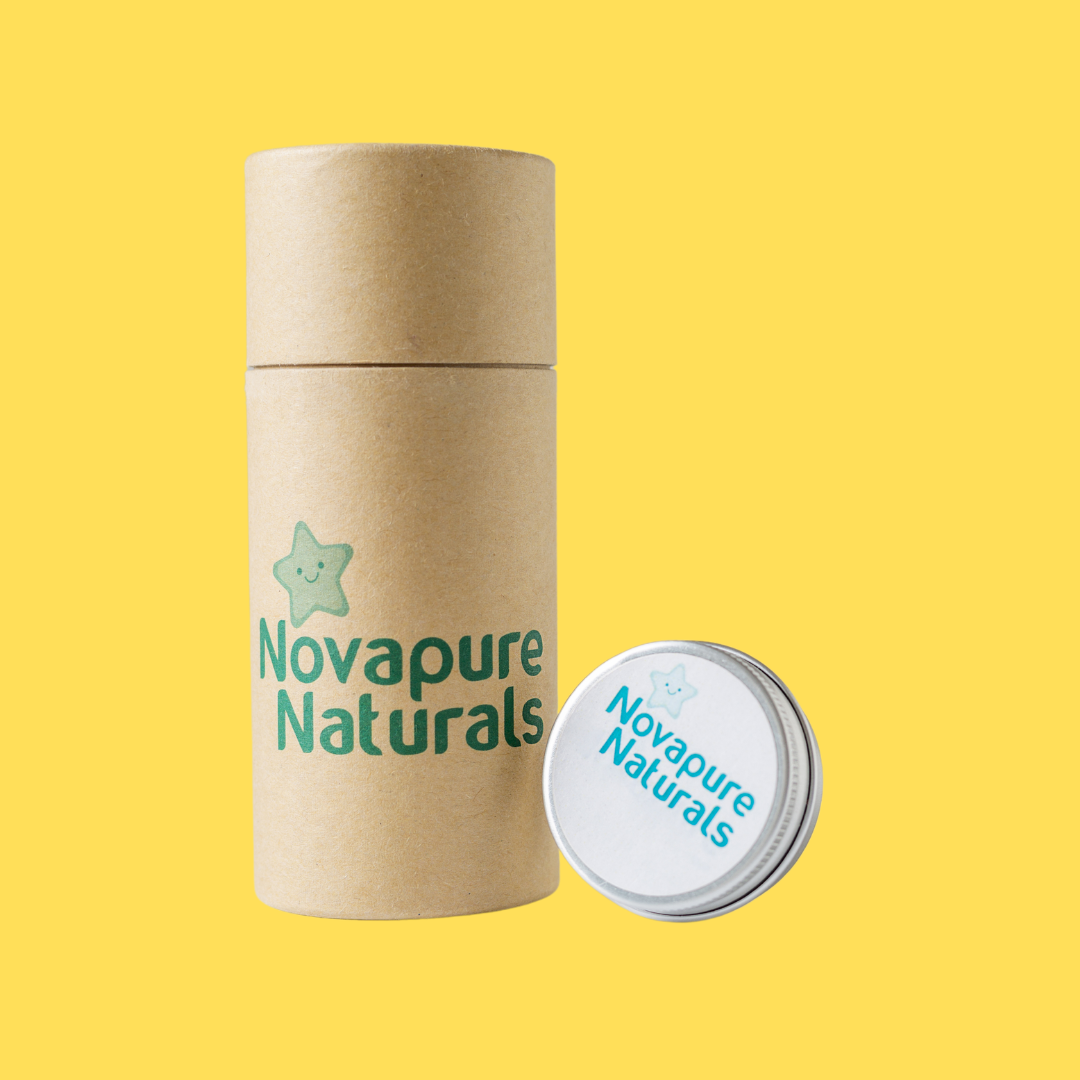
Novapure Naturals Body Powder is made with organic oats, arrowroot, kaolin clay, chamomile and calendula. Ideal to prevent rashes, there are before/after photos of babies whose skin has healed in weeks (sometimes hours) of use. .
Keep this powder away from water and open flame. Keep away from pets, as it contains zinc (also found in sunscreens, wash off before letting pets lick you!)
The product was created by a mother (who has achieved a monumental task of creating this business, after being diagnosed with MS)) who got incredible feedback from users with psoriasis, eczema, acne and athlete’s foot. It has a shelf life of 12 months, store out of direct sunlight/heat and keep dry. Sold in travel tins with refills.
Vets may wish to look at this. Although zinc oxide is toxic to pets (a reason why you should always wash off sunscreens and cosmetics before letting them lick or kiss your skin), it is used in small percentages for some veterinary healing creams (not to be licked, but medical topical ointments that are sealed).
This product does contain zinc oxide, and there’s a before/after healing photo of a canine wound, which vets may be interested in exploring further.