Dr.Vegan Hair Saviour Supplement
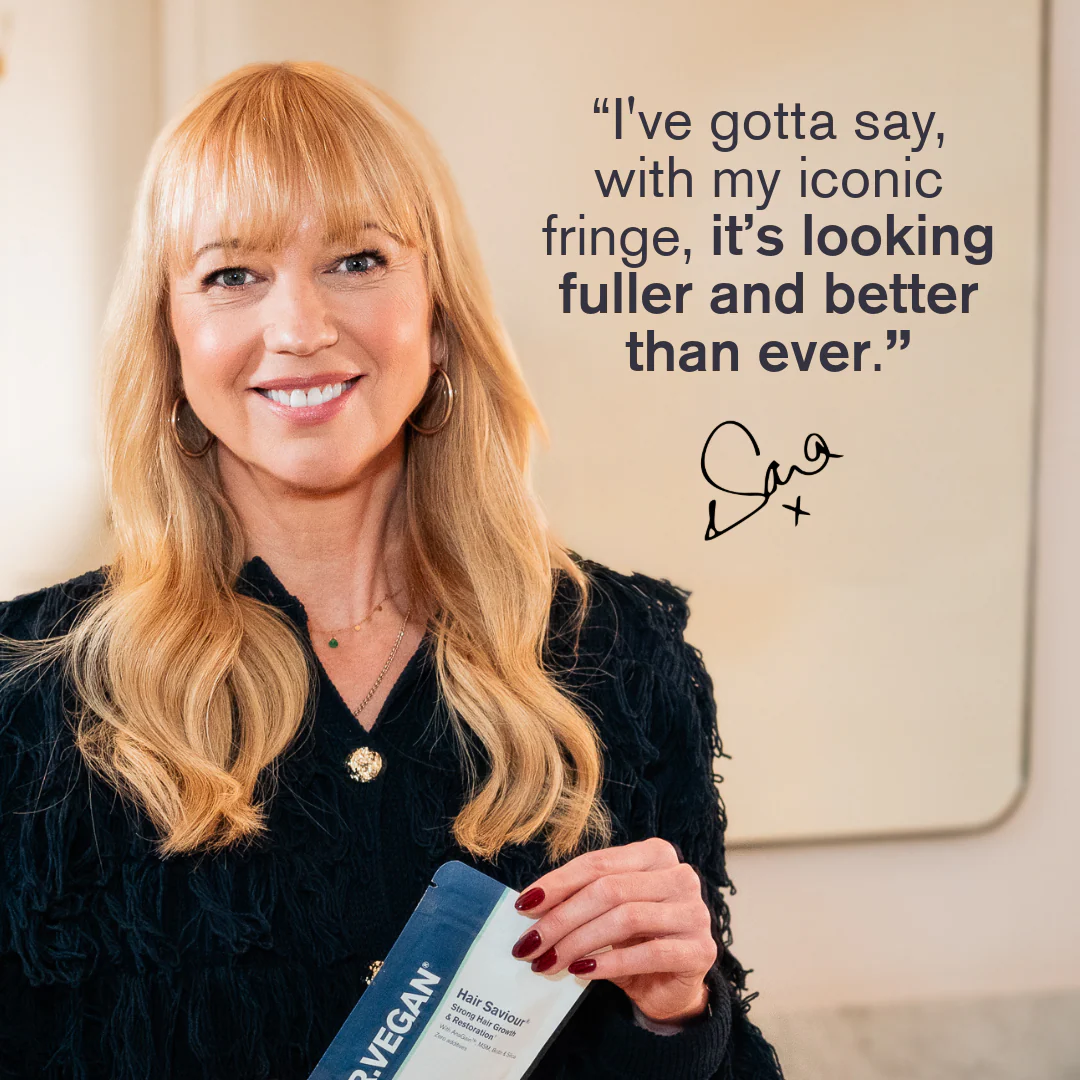
Dr.Vegan Hair Saviour is sold in a metal tin, just order refills in pouches after that (subscribe online for big savings). With results in 90 days, this helps hair growth, along with thinning or brittle hair, with 14 14 clinically-proven nutrients including AnaGain™ & Biotin. Many people also find improvements in eyelashes, eyebrows and nails.
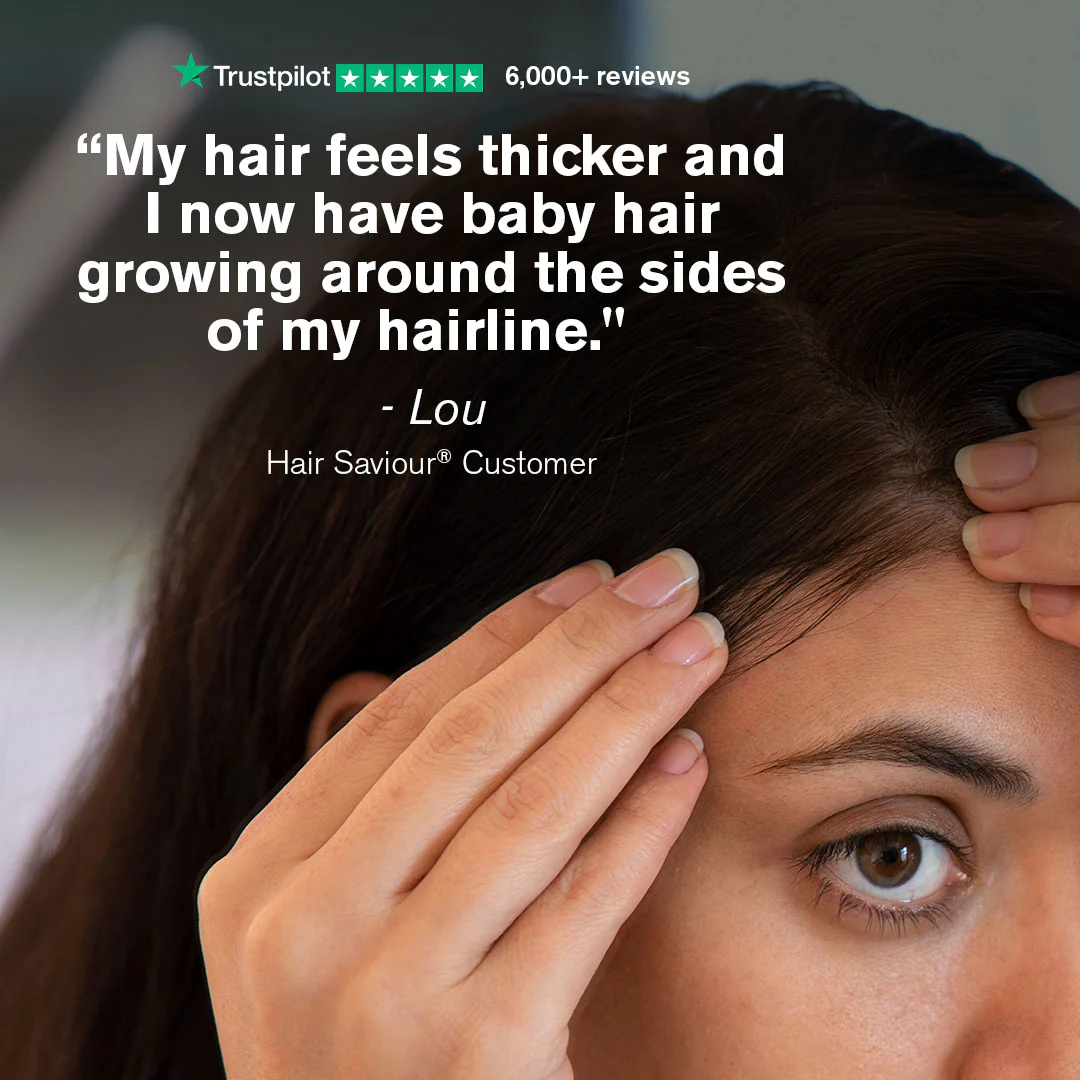
In 1 month, you should find hair loss and thinning reduced by up to a third, and in the second month you should find new baby hair growth with full results in 3 months (including thicker stronger nails). Some hair salons report being amazed by results.
Know that when taking hair supplements, you may find things get worse before they get better. This is because we lose hair every day, so your ‘old hair’ will fall out, and then you wait for the new hair to form, which of course takes a while. So don’t be discouraged and give the supplements a full three months to start showing results.
Formulated by experts, the results of this supplement are due to a combination of hair-nutrients including ones that also support pigmentation (so may even in some cases help to restore hair colour).
What causes hair loss?
We all lose 50 to 100 hairs each day (different hairs are dormant, growing or shedding). Over 15 million people in the UK have some kind of hair loss, whether that’s due to male pattern baldness, stress, nutritional deficiencies, pregnancy or drugs (like chemotherapy).
Male pattern baldness has affected around 80% of men by age 70, due to DHT (a chemical produced by testosterone). It nearly always affects the temple and crown of the head. There is no cure, so don’t worry – we love you as you are!
Female pattern baldness affects around 30% of women by age 70, and usually hormone-related (after menopause or due to stress). It tends to affect the top of the head.
Alopecia is a rare auto-immune condition where people lose all their hair (including eyebrows, eyelashes and body hair). People affected (Gail Porter and Louis Theroux) have made it ‘okay to talk about’, if you don’t want to spend your life in wigs.
It can be genetics, but sometimes to do with thyroid conditions or lupus. Again it’s nearly always incurable.
Post-partum hair loss is common (nutrients needed for your baby are directed there, rather than for your hair). It’s nothing to worry about, and hair grows back soon after.
Common sense tips for healthy hair growth
Often slow hair growth or falling hair is due to lack of certain nutrients (it’s not true that being vegan is always the cause – more than anyone living on refined foods will suffer, vegans included). Sort out your diet first for healthy hair, before trying supplements:
Ensure you eat plenty of plant-based proteins (lentils, pulses, nuts, seeds etc). Iron is also important as it carries oxygen to hair follicles (dark leafy greens are good – check medication for contraindications, again pulses are a great source, as are dried organic apricots). Vitamin C aids absorption if iron, so eat plenty of fresh produce (and again don’t smoke, as it reduces absorption).
- Don’t scrape hair into tight ponytails (this causes tension alopecia, common in ballet and ballroom dancers, as too much stress is placed at the hair line (people with African-African hair can also suffer, due to trends for tight braids and dreadlocks).
- Leave hair loose or make loose ponytails with plastic-free hair ties.
- Relax! Stress can ‘push hair follicles’ into the resting phase, where they stay before falling out. If ‘growing hairs’ slow down, you could lose up to 300 hairs a day (compared to the average 100).
- Smoking cigarettes can double chances of early-onset alopecia (as can alcohol) due to increasing free radicals, and depriving hair follicles of vitamins and minerals. Read our posts on how to give up smoking and help for alcohol addiction.
- Choose natural shampoos and conditioners. There is some evidence that modern foaming agents (like sodium lauryl sulphate found in most shampoos – used as engine degreaser for industry) is too harsh, and could cause hair loss or slow hair growth.
- Also choose natural hair dyes for the same reason.
Cut your hair off! If your hair is very damaged from over-processing or too many hair dyes, often the damage travels up to the roots. In some cases, your best bet is to just bite the bullet, and chop your hair off short, and start again. Your hair will likely grow quicker!
What causes hair loss?
We all lose 50 to 100 hairs each day (different hairs are dormant, growing or shedding). Over 15 million people in the UK have some kind of hair loss, whether that’s due to male pattern baldness, stress, nutritional deficiencies, pregnancy or drugs (like chemotherapy).
Male pattern baldness has affected around 80% of men by age 70, due to DHT (a chemical produced by testosterone). It nearly always affects the temple and crown of the head. There is no cure, so don’t worry – we love you as you are!
Female pattern baldness affects around 30% of women by age 70, and usually hormone-related (after menopause or due to stress). It tends to affect the top of the head.
Alopecia is a rare auto-immune condition where people lose all their hair (including eyebrows, eyelashes and body hair). People affected (Gail Porter and Louis Theroux) have made it ‘okay to talk about’, if you don’t want to spend your life in wigs.
It can be genetics, but sometimes to do with thyroid conditions or lupus. Again it’s nearly always incurable.
Post-partum hair loss is common (nutrients needed for your baby are directed there, rather than for your hair). It’s nothing to worry about, and hair grows back soon after.
Common sense tips for healthy hair growth
Often slow hair growth or falling hair is due to lack of certain nutrients (it’s not true that being vegan is always the cause – more than anyone living on refined foods will suffer, vegans included). Sort out your diet first for healthy hair, before trying supplements:
Ensure you eat plenty of plant-based proteins (lentils, pulses, nuts, seeds etc). Iron is also important as it carries oxygen to hair follicles (dark leafy greens are good – check medication for contraindications, again pulses are a great source, as are dried organic apricots). Vitamin C aids absorption if iron, so eat plenty of fresh produce (and again don’t smoke, as it reduces absorption).
- Don’t scrape hair into tight ponytails (this causes tension alopecia, common in ballet and ballroom dancers, as too much stress is placed at the hair line (people with African-African hair can also suffer, due to trends for tight braids and dreadlocks).
- Leave hair loose or make loose ponytails with plastic-free hair ties.
- Relax! Stress can ‘push hair follicles’ into the resting phase, where they stay before falling out. If ‘growing hairs’ slow down, you could lose up to 300 hairs a day (compared to the average 100).
- Smoking cigarettes can double chances of early-onset alopecia (as can alcohol) due to increasing free radicals, and depriving hair follicles of vitamins and minerals. Read our posts on how to give up smoking and help for alcohol addiction.
- Choose natural shampoos and conditioners. There is some evidence that modern foaming agents (like sodium lauryl sulphate found in most shampoos – used as engine degreaser for industry) is too harsh, and could cause hair loss or slow hair growth.
- Also choose natural hair dyes for the same reason.
Cut your hair off! If your hair is very damaged from over-processing or too many hair dyes, often the damage travels up to the roots. In some cases, your best bet is to just bite the bullet, and chop your hair off short, and start again. Your hair will likely grow quicker!