The Missing Half of the Law: Ban Fur Imports

red squirrel Ailsa Black

Ailsa Black

Thanks to Compassion in World Farming, fur farms are now banned in England. But it’s still legal for stores to sell imported fur, from animals that are often skinned alive, for the fashion industry. Buckingham Palace also still uses real bearskins (one bear killed for each guard’s hat).

Sign the petition at Fur Free Britain to ban the sale of fur, an industry where animals spend their lives in cramped cages, and causes wild-trapped animals to suffer in snares or steel-jaw traps.

Ruth Jones MP has recently tabled a motion to ban the sale and import of fur. It’s presently going through Parliament. Write to your MP  to urge support.

The appalling conditions on fur farms are perfect for viruses to mutate and spread (COVID-19 was identified on nearly 500 fur farms during the pandemic, and led governments in Italy, Denmark and the Netherlands to ban the practice.

As long as we allow the import of fur products into Britain, we are complicit with suffering of those animals, and the risks that come with it. I say it’s time we stop exposing the country to this potential danger, all for a bit of fashion. Ruth Jones MP

Always check labels, as DNA tests on some ‘faux fur trim’ and novelty ornaments in gift shops have been found to be from real fur. 

Although previously it was thought cutting up fur coats to use for orphaned animals was a good idea, new advice is not to do this, as the fur is difficult to clean and could rot.

Just recycle old fur coats at textile banks. Fur coats are not good for homeless people, as they are heavy (especially when wet) to drag around, modern sleeping tents for homeless people are better.

The EU has recently delayed the ban yet again for banning the sale of real fur. Contact Olivér Várhelyi (Europe’s commissioner for animal welfare) to take action.

Myths about real fur

Although it’s true that some faux furs use synthetic materials, real fur uses a lot of chemicals before it goes on sale.

It’s only trim’ is no argument. As trim often makes more profits than fur coats, from trim around coats or even in novelty ornaments. It’s also easier to ‘hide’ in shops. When real fur is not popular anymore.

Sign up as a Fur Free Retailer

Small shops can sign up at Fur Free Retailer, to receive a ‘fox logo’ to display in your window. Active in 24 countries, there are no fees, just confirm (in writing) your credentials.

Boycott stores that sell real fur (like Harrods). This London shop even has a dress code, refusing to let in people who not appropriately dressed? So it’s okay to wear real fur, but not a pair of jeans?

Leona Lewis famously turned down a lot of money to turn on the store’s Christmas lights, due to its policy on selling real fur.

New biodegradable faux fur brands

Clean these at eco-friendly dry cleaners.

  • Bio-fluff has received over $2 million in seed funding to help produce it for the mass market. Used by Stella McCartney.
  • EcoPel is a luxury faux fur made from recycled polyester. The Ministry of Defence has been offered this for free, to replace bearskins at Buckingham Palace, but so far has not taken up the offer, despite it being identical in water run-off and quality.
  • Gacha is a sustainable fur that is commercially compostable in 180 days (brands can take back end-of-life garments to industrially compost in proper facilities).

Faux fur saves wild cats in Africa
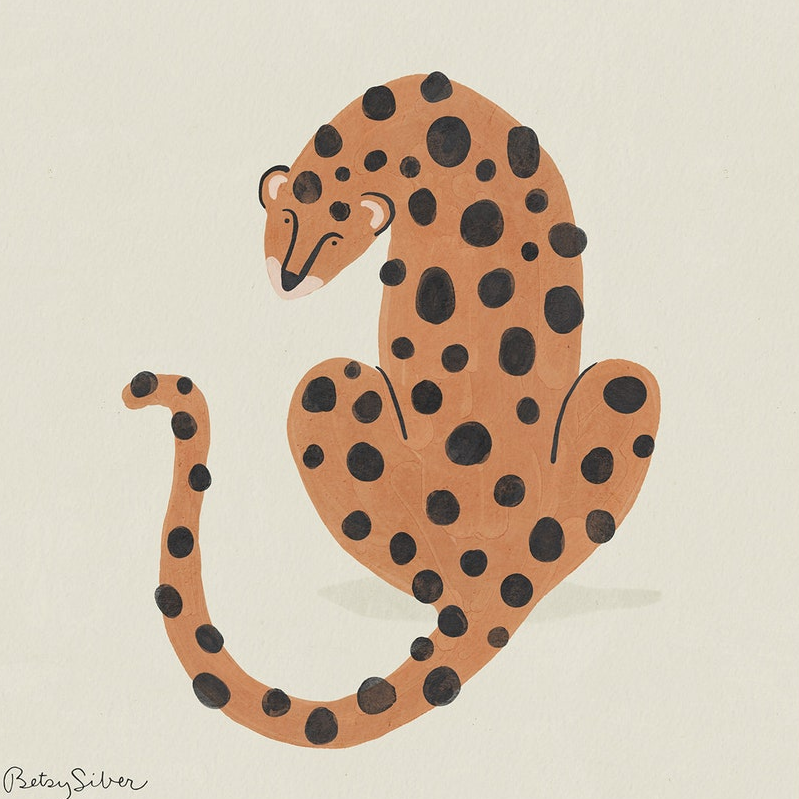
leopard Betsy Siber

Betsy Siber

Panthera (an international animal welfare charity that removes big cats caught in snares) is helping to protect leopards from being killed in South Africa, for coats used in ceremonial regalia, although the tribes revere this beautiful species.

It has worked with graphic designers to replicate the costumes with Heritage Furs, which the communities adore. And also protects these beautiful spotted big cats.

Ban bear fur for Buckingham Palace hats

black bear and cubs Mint Sprinkle

Mint Sprinkle

A.A. Milne (who wrote the Winnie the Pooh books), wrote the famous poem on how ‘they’re changing guards at Buckingham Palace’. Even those of us who are not monarchists, can appreciate the sense of history and tradition, when the King’s Guards hand over their shifts, using precise military tradition.

The Captain of the Guard can choose the music he likes (sometimes classical, sometimes Tom Jones!)

The changing of the guards usually happens at 11am on certain days of the year, and is sometimes cancelled in rainy weather. The spectacle is a major draw for London tourists, so it’s understandable why the tradition will continue for many years to come.

The soldiers are known for their iconic red tunics (said to be so that from a distance, they would blend into ‘one’ so enemies would not know how many soldiers there were) and black hats. But what you may not know is that the hats are still made from real bearskin, from the hunting trade in Canada.

Why are real bearskins still used?

It’s a mystery. Animal charity PETA says that the Ministry of Defence has consistently refused to test ECOPEL (known to have the same water-run-off and warmth textures, and is quicker to dry) – even with a free offer of the faux fur until 2030. So one presumes it’s just stick-in-the-mud tradition.

Yet Italy and Sweden have already switched to faux fur (and even Canada from where the bear fur is sourced) are considering a ban on real fur for ceremonial purposes.

Nearly everyone in the UK wants a switch (it’s unclear what the position of the royal family is – they do hunt, but King Charles III has banned foie gras from palaces and Queen Camilla has stopped wearing real fur).

Where does the bear fur come from?

The Ministry of Defence says the fur (one bear is killed per hat) is from regulated hunting in Canada, and that no bears are ‘sourced for hats’. But a Freedom of Information Act found that the UK government does not know the supply chain for the fur its buys for bearskin hats.

The online ‘royal collection shop’ even promotes a child’s replica, promoting it as the alternative for the ‘iconic bearskin hats’, as if it’s something that youngsters should be proud to be part of. Not likely, most children are more wildlife-aware than older adults.

Critics also say that real bear skin hats (which cost over £2000) are a waste of money – remember it’s your taxes that are paying for them.

We are a compassionate nation. And bears are living, feeling beings – not fabrics to make caps from. Allow us caps worthy of a royal guardsman. Allow us caps worthy of the UK. A Royal Guard

King of the ‘save the bears from being made into caps’ campaign is Stephen Fry, who says ‘tradition is never an excuse for cruelty’. He was shown footage of wild black bears being lured by buckets of cookies, then shot with crossbow bolts (often not dying instantly, suffering from infected wounds and blood loss).

How we can stop bears being killed for hats

The decision lies with the Ministry of Defence (and could be supported by vocal help from the monarchy). A few SNP MPs have researched and contacted the MoD about alternatives. Saying that many bears killed are just coming out of hibernation, so weak easy targets (others are nursing mothers, the cubs starving to death).

Canadian government culls are infrequent, and only authorised to kill the small number of bears straying too close to human habitation. The MoD has no idea about the provenance of the dead bears it buys. John Nicolson MP 

Petitions have now closed. So the best way to help is simply to write or email your MP asking them to bring the issue up in parliament. Hopefully an MP can bring a Bill to change the law, it would likely be supported by most MPs on all sides.

Black bears live on many foods (berries, nuts, seeds, salmon, crabs, mussels). In the forest, they disperse more seeds than birds, and use their paws to break logs while grubbing, which returns nutrients to the soil.

When one tugs at a single thing in nature, he finds it attached to the rest of the world. John Muir 

Yet over 1 million black bears have been killed for trophy hunting in the last 25 years, in North America.  Black bears only venture into ‘human areas’ due to lack of habitat or lack of food.

My chances of being murdered by a human are 60,000 times greater. In working closely with wild bears, I have used bad bear manners on occasion and been slapped, but they were usually just welts. Black bear claws are strong for climbing trees, not sharp for holding prey. Lynn Rogers PhD (black bear expert)

Monarchy and animal welfare issues

Although parliament is responsible for animal welfare law, the Crown (monarchy) has a kind of soft power, which is often why when they highlight a cause, the media and everyone else follows.

This can be good or bad. King Charles III recently banned the serving of foie gras in royal residences, but most ‘top royals’ still conduct pheasant shoots, with factory-farmed birds that causes suffering, road accidents and floods (due to flattening land on peat bogs).

Obviously, there is a history of animal welfare here (RSPCA stands for ‘Royal Society for the Protection of Animals’). But Brian May recently resigned as vice-president, as he was appalled at some barn animals being raised in conditions to factory farms).

This was not due to anything the royal family did, but King Charles III would have had the clout to likely talk out against it. And if he doesn’t, then why have a royal patronage attached?

There has also been controversy of late when rewilders in Dartmoor have asked for more than ‘small potatoes’ land needed to protect species, with no response from the owner (Prince William).

And of course there are huge welfare issues in horse racing, something the Queen in particular adored.

The deference towards the monarchy is for ‘tradition’. But of course, as a nation that overall disagrees with hunting and not protecting its native wildlife (by giving over land say on Dartmoor for it to thrive), this does not ally with official policy of the monarchy.

If it wants to survive, it will have to do more than just be a ‘slimmed-down bicycling monarchy’, but take a good hard look at the policies of hunting, not giving over land to rewilding and not looking into alternatives for hats made from real wild bears.

Similar Posts