Beautiful Blue Jays (shy woodland birds)

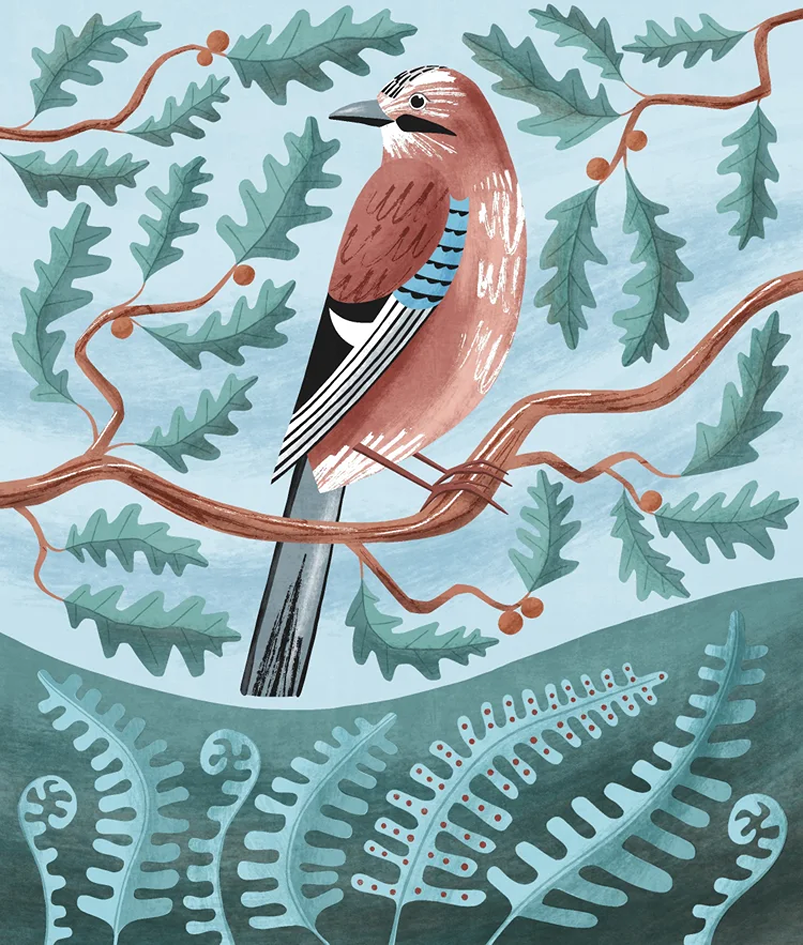
Jays are one of England’s most exotic looking birds, simply because amid their brown bodies, they have beautiful bright blue patches, almost unique in bird world – along with black moustaches!
The blue colour though is not due to pigment in the feathers (they are brown), it’s from light scattering (a bit like polar bears have translucent, not white fur).
Read how to create safe havens for garden birds (jays are more likely to visit woodland) and how to stop birds flying into windows.
Jays are one of England’s eight species of crow birds. These are woodland birds, ‘noisy chatterboxes’ that you may hear screeching in the park, but are unlikely to see, as they often hide away.
What’s important (and quite funny) about jays, is that they are very forgetful. So they hunt for acorns, then store them away, often forget where they put some of them, so are almost single-handedly responsible for many of England’s beautiful oak trees that grow from their forgotten stash!
Oak trees (and acorns) are unsafe near pets, horse and livestock, so keep them well away.
Jays also eat other foods, including fruits, beetles and caterpillars (which is why we need to protect natural habitats for butterflies). They are also good at mimicking the calls of other birds, to deter predators.
All UK crows are protected under the Wildlife and Countryside Act. Report concerns to Crimestoppers Wildlife Crime (anonymous).
Blue is one of the rarest colours in nature (less than one in 10 plants are blue, and even less ratio for birds and other creatures). Blue fruits and vegetables don’t really exist, as the anthocyanin compound with health benefits in blueberries and blackberries is actually purple.