Budget Living Room Makeovers (before/after inspiration)
A living room makeover doesn’t need a big budget to look like a real before and after. Most rooms change fast when you tweak the layout, fix the lighting, and add the right textiles. Paint helps too, but it’s not the only answer. Ensure any plants are pet-friendly and avoid facing outdoor gardens, to help prevent bird strike.
If you can shift a sofa, swap a bulb, and hang curtains higher, you’re already most of the way there.
Your home is your sanctuary, and giving it a beauty makeover does not have to cost a fortune. By room, it’s possible to do this on £50 to £100 if you have few resources, using a bit of innovation, second-hand finds and rearranging furniture.
Bright white often can look start, but off-whites are nice for small living rooms, then choose a couple of accent colours, to blend with the accessories you intend to choose.
Fresh natural paint is the quickest way to lift a tired living room. Some people prefer light and fresh living rooms, others prefer darker and warmer colours.
Living rooms benefit from a few nice lamps, so you are not sitting with strong light over your head. Also visit charity shops and discount stores to find bargain sofas and armchairs (ensure they have fire safety tags attached, they should do as it’s illegal to sell them otherwise).
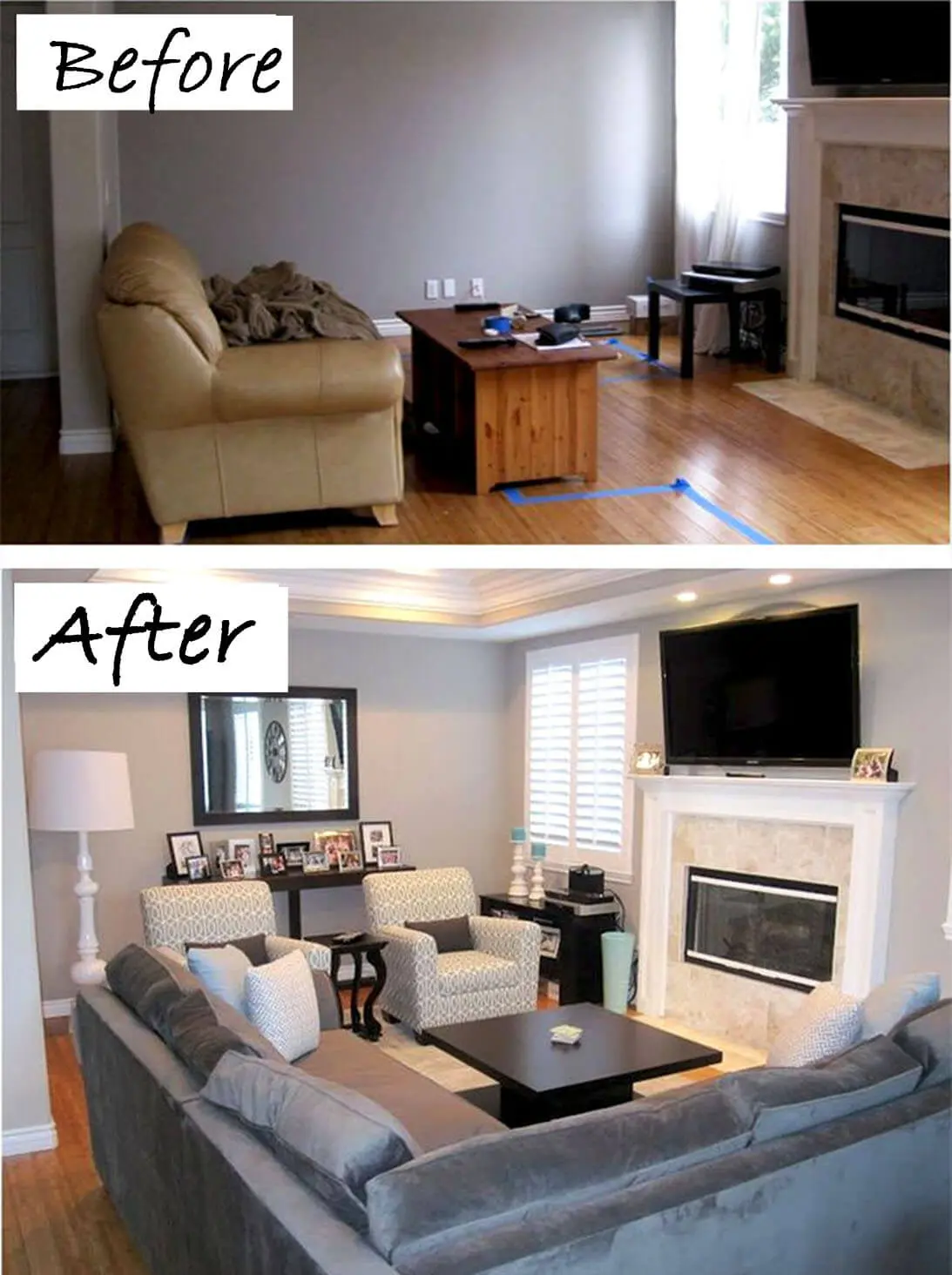
Experts say that rather make ‘all the chairs face the TV’, it’s nice instead to arrange them in an L-shape. You should still be able to see the TV, but this way you are also encouraged to sometimes turn the TV off and engage in conversation!
Often rearranging the furniture can encourage good walkability, and let in natural light. Look at the difference with this living room, simply from rearranging furniture and a fresh lick of paint:
The budget makeover game plan
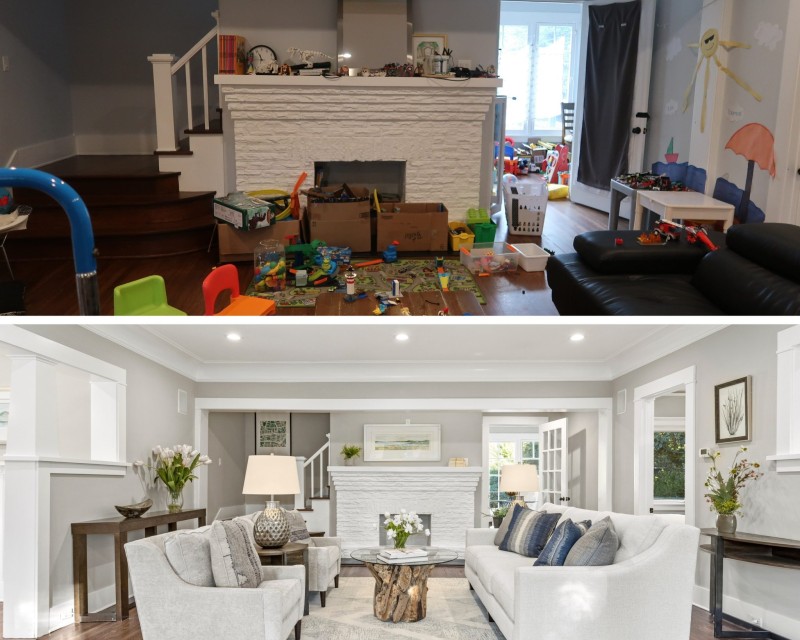
The easiest way to waste money is to shop before you decide what the room should feel like. Start with one clear goal, then make a few confident choices that support it. Think: brighter, calmer, warmer, or more pulled together.
Next, choose a colour direction. Keep it to two or three main colours, then add one accent. That alone stops the “bitty” look. After that, decide what stays. A sofa you already own is often the biggest “budget saver” in the room, so work with it.
If you only remember one thing, make it this: scale and light do most of the heavy lifting. A too-small rug and a single harsh ceiling light can make even nice furniture look wrong.
If the room feels off, it’s usually not your taste. It’s often layout, lighting, and clutter.
Take 15 minutes to audit the room: keep, fix, replace
Set a timer and do a quick room audit before you buy anything.
- Take photos from three angles, including the doorway view.
- Note what feels off, for example dark corners, cluttered surfaces, no focal point.
- Measure the sofa width, then measure the rug area (you want front legs on the rug).
- List what you can keep (sofa, TV unit, curtains), what to fix (handles, lampshade, cable mess), and what to replace (too-small rug, tired cushions).
Also, be practical about funding. Sell one unused item on Facebook Marketplace, or donate the rest. Even £30 back in your pocket can cover warm bulbs, a plant, and a cushion cover.
Spend smart: a simple budget split that works in most living rooms
This split keeps spending focused on what you see and feel every day.
- Soft furnishings (rug, cushions, throws, curtains) should be 40% share of budget (texture and scale change rooms fast)
- Lighting (lamps, shades, bulbs) should be 25% of budget (bad light makes things look cheaper)
- Paint an DIY bits should be 20% of budget (high impact and low cost)
- Decor and storage should be 15% of budget to finish the look
Two quick examples, just to make it concrete:
- £150 budget: £35 bulbs and a floor lamp (second-hand), £45 curtains, £40 cushions and a throw, £30 paint for one wall.
- £400 budget: £140 rug (right size), £90 lighting, £80 paint and tools, £90 curtains and cushion covers.
A few common money traps show up again and again: tiny rugs, cold overhead bulbs, and too many small ornaments scattered everywhere.
6 quick makeover recipes: cosy, brighter, bigger, calmer, warmer
- Dark and flat to bright and airy (£30 to £150)
Before: One ceiling light, heavy curtains, shadows in corners.
After: Soft, even light, lighter walls, the room looks open.
Actions: paint a warm off-white, add a mirror opposite the window, swap to sheer curtains, fit warm bulbs (2700K), add one table lamp.
Biggest impact: warm bulbs plus a lamp. - Small room to “feels bigger” (£80 to £250)
Before: Furniture pushed tight to walls, rug too small, lots of little colours.
After: Clearer floor plan, calmer palette, better proportions.
Actions: buy a larger rug (front sofa legs on), limit colours to three, pull the sofa 5 to 10 cm off the wall, hang curtains high and wide.
Biggest impact: the right-size rug. - Bland to cosy (£50 to £200)
Before: Matching cushions, thin throw, nothing feels soft.
After: Layered textures, warm tones, the room feels lived-in.
Actions: add a chunky throw, mix cushion sizes (50 cm and 45 cm), switch curtains to a heavier fabric, bring in warm wood (tray, frame, side table).
Biggest impact: textile layering. - Messy to calm (£30 to £180)
Before: Cables on show, remotes everywhere, open shelving looks busy.
After: Surfaces clear, storage looks intentional, less visual noise.
Actions: cable tidy box, one lidded basket for chargers, closed storage (even one unit), a tray for remotes and coasters, clear one “drop zone” surface.
Biggest impact: closed storage. - Rented and boring to personal but removable (£40 to £220)
Before: Beige walls, no art, you don’t want to risk damage.
After: More character, still easy to undo at move-out.
Actions: peel-and-stick wallpaper on one section, picture ledge (or freestanding), slipcovers or new cushion covers, Command hooks for frames, a washable rug.
Biggest impact: one bold wall moment (temporary counts). - Old-fashioned to modern (£60 to £300)
Before: Dated wood tones, fussy lampshade, tired handles.
After: Cleaner lines, sharper contrast, a fresher finish.
Actions: paint woodwork or a fireplace surround, swap handles on a TV unit, update the lampshade, add a simple gallery wall with matching frames, simplify the coffee table.
Biggest impact: painting one key feature.
You can shop most of this at IKEA, Dunelm, B&Q, and second-hand sites. Mixing new and pre-loved often looks best anyway.
The “hero swap” list: the one thing to change when money is tight
If you can only do one upgrade, pick from this list in order. These give the clearest before and after for the least fuss.
- Lighting (lamp and shade and bulb) choose warm white bulbs
- Rug (correct size), front sofa legs should sit on the rug
- Curtains (hang high and wide to stretch the window)
- Cushions (mix textures and use two sizes, keep to one colour family)
- Wall art (one large piece is better than lots of tiny frames)
- Paint (one wall or full room in a warm neutral, test first)
- Coffee table styling (tray and book), group items, don’t scatter
Styling rules that instantly lift a room (no fancy skills needed)
- Stick to two to three main colours, then repeat them. Next, repeat one material, such as warm wood, black metal, or a brass-look finish. That small echo makes the room feel planned.
- Mix textures so the room doesn’t look like a catalogue page. Linen-look, boucle, wool-look, and matte ceramics work well together. Also, group small decor in odd numbers, then leave some empty space nearby. The pause is part of the style.
- Plants help, but keep it simple. One medium plant usually looks better than three tiny ones. If you want an extra “home” feel, add a soft scent (candle or diffuser) and one cosy throw within reach.
Weekend DIY on a budget
A few low-effort projects can shift the room without major spend.
- Feature wall or fireplace surround (£25 to £80, 2 to 5 hours): Choose a warm neutral or muted colour. Open windows, and do a test patch first.
- Swap handles on a unit (£8 to £35, 30 to 60 minutes): Measure hole spacing before you buy. New handles make old storage look sharper.
- Update a lampshade or frames (£10 to £40, 30 to 90 minutes): A plain drum shade softens the room. Painted frames in one colour also tidy a gallery wall.
For renters, keep it removable. Use temporary wallpaper, removable hooks, and freestanding shelves where you can.