Small Steps, Huge Shifts: Good Habits Change Your Life
![]()
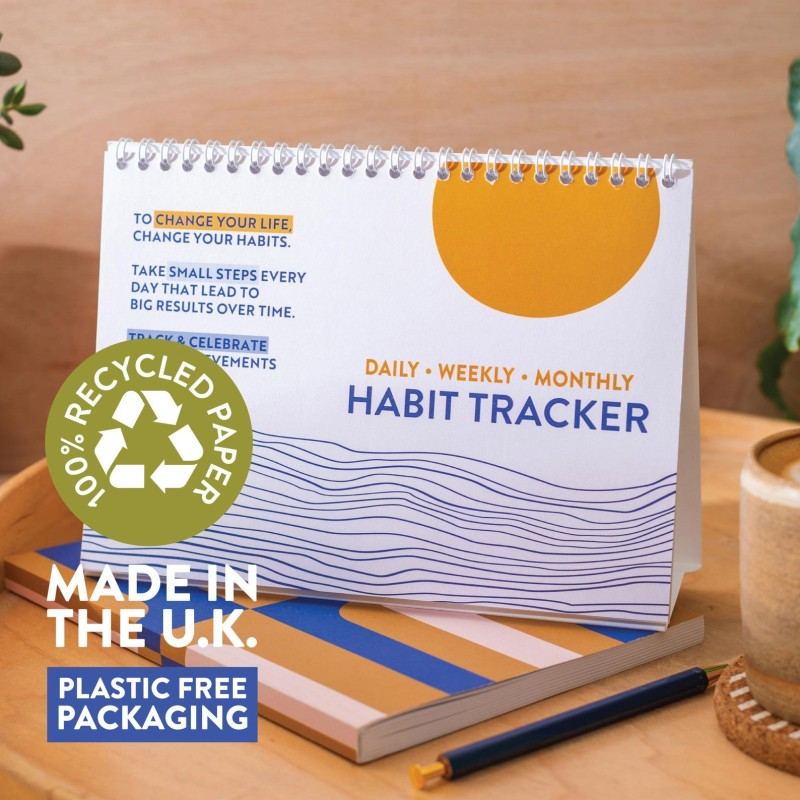
This eco-friendly habit tracker can help you stay focused on building strong habits, and accomplishing life goals. Divided into 3 different sections each month.
Choose the 6 habits you would like to build into a daily routine, and 6 habits to achieve on a weekly basis, and 3 habits you would like to achieve, once a month.
Track all your goals on this handy A5 freestanding habit tracker, that you can place on your desk or bedside table. It’s also undated so you can start whenever you like. Each month includes a positive quote, to keep you motivated!
Everything at Good Tuesday is printed on recycled paper, sent in plastic-free packaging, made in the UK and beautifully designed.
Choosing recycled paper is better than FSC-certified paper, as that still requires fast-growing trees with pesticides (instead these products ‘close the loop’ and use up unwanted waste that would otherwise end up at landfill, emitting methane gas).
About Good Tuesday Recycled Office Goods
Good Tuesday is a lovely brand of recycled paper goods, founded by a woman who lives in Cornwall, but was raised in the Caribbean (hence all the bright colours!)
Everything is made in the UK, sent in plastic-free packaging.
After creating one pretty calendar and placing it on Etsy, it sold seven overnight, and the brand was born! Today it offers everything from wall planners to diaries, calendars to to-do lists. You are sure to find something you adore, to help you keep organised and inspired!
The business is based within a community of small businesses, not far from the Cornish coast. The old barn houses Good Tuesday, along with a sourdough bread bakery, coffee roaster, vegan cafe and wine expert, so the staff are well looked after!
The benefits of forming good habits
Building good habits isn’t about grand gestures or sudden transformation, it’s about choosing simple actions that make your life easier and brighter every day.
Habits shape the way we live, work and connect with others, touching every part of our daily experience. When these patterns are positive, they lay a foundation for long-term wellbeing and success.
From brushing your teeth in the morning to taking a walk after dinner, the right routines become second nature, freeing up energy and attention for what matters most.
Let’s take a closer look at some of the main benefits that come from forming good habits. Every point here speaks to something real and practical. These are changes that anyone can make, at any age or stage, with results that build over time and bring lasting rewards.
Better physical health
Good habits like regular exercise, eating balanced meals and getting enough sleep help the body run smoothly. Simple routines, such as drinking water first thing in the morning or stretching before bed, add up to better health outcomes.
Healthy habits lower the risk of many illnesses, keep weight in check and support heart health. When these habits are automatic, you don’t have to spend so much energy making healthy choices every single day.
Improved mental health
Positive habits give structure to your day and help manage stress. Whether it’s keeping a journal, practising mindfulness or setting aside time for hobbies, these routines protect your mental health.
They offer regular breaks from daily worries and help you keep perspective when life gets busy. Small acts, like making your bed or writing a to-do list, set a positive tone for the day and give you little wins to build on.
Higher productivity
When you build habits around planning, focus and time management, you get more done with less effort. Checking your calendar each morning, breaking work into short sprints or clearing your desk at the end of the day all boost productivity.
Good work routines help you avoid distraction and keep track of progress. As these patterns become second nature, you waste less time deciding what to do next and spend more time moving forward.
Stronger self-discipline
Every time you repeat a positive action, you strengthen your willpower. Good habits make hard things easier, because you’re not relying on fresh motivation every day.
Over time, this consistency builds self-discipline, making it simpler to resist temptation or stay on track with personal goals. Each small success gives you confidence, showing that you can follow through and stick to your word.
Reduced stress and anxiety
Habits offer a sense of control when life feels uncertain. Regular routines around sleep, meals or work help reduce stress and keep anxiety at bay. When you know what’s coming next, it’s easier to handle the unexpected.
Even small routines like turning off your phone before bed or resetting your kitchen after dinner create a sense of security that helps your mind relax.
Efficient use of willpower
Willpower wears down during the day, but habits take over where conscious effort leaves off. If you always go for a walk after lunch or pack your bag the night before work, you don’t waste energy debating these choices.
This frees up your mental reserves for bigger decisions and helps you avoid decision fatigue. The less you rely on sheer willpower, the more you have left for moments that really count.
Positive impact on relationships
Habits can support kindness and connection. Making a point to check in with friends, say thank you or spend time with family helps relationships grow.
These actions, when done regularly, show you care without needing reminders. Good habits around communication and listening also build trust and make it easier to resolve conflicts.
Long-Term achievements
Success in any field often comes down to simple routines repeated day in and day out. Whether you’re learning a new skill, saving money or working towards a promotion, steady progress relies on good habits.
Small actions add up over time, building results that last. Habits turn effort into progress, and progress into achievement.
Increased confidence
As you stick to positive routines and see results, your self-confidence grows. You start to trust yourself to follow through, knowing you have what it takes.
This steady confidence spills over into other parts of your life, making it easier to take on new challenges and recover from setbacks.
More free time
By making daily tasks automatic, you save time and reduce the mental load. When you don’t have to think about every little step, you free up time for rest, hobbies or time with loved ones.
Efficient habits can shorten errands, streamline morning routines and leave you with more hours for what you enjoy most.
LSW mind cards for good habits
LSW Mind Cards were developed by a therapist to help people live with intention, and create new habits for good mental health.
Also find short self-hypnosis downloadable tracks. LSW Habit Notes is a 12-week undated tracking journal, to choose habits that can create goals, authentic to your new life.
Choose new beneficial lifestyle habits
Building new habits isn’t always easy, but small changes often lead to big improvements. Sometimes we overlook the simple routines that can transform our mood, health and outlook. With the right approach, anyone can add positive habits to daily life.
Prioritise quality sleep
Getting enough good-quality sleep helps everything run smoothly, from your mood to your immune system. Try to set a regular bedtime each night, aiming for about seven to eight hours. Avoid screens and caffeine before bed if possible.
Over time, you’ll probably notice more energy, sharper focus and fewer minor illnesses. Good sleep underpins almost every other healthy habit, so it’s a smart place to start.
Move your body daily
Physical activity doesn’t have to be intense or time-consuming. Even short walks, stretching or light exercise can improve strength and mood. Try to move in a way you enjoy, whether it’s dancing, cycling or gardening.
If gardening with animals, read our post on pet-friendly gardens.
Regular movement helps keep your heart healthy, supports strong bones and releases stress. If you sit a lot at work, stand up and stretch every hour or so.
Drink more water
Hydration often gets overlooked, but drinking water has loads of benefits. It keeps your mind sharp and helps your body get rid of waste. Carrying a reusable water bottle can remind you to drink throughout the day.
Swap sugary drinks for water when you can, as it has no calories and is better for your teeth and skin. When you’re well-hydrated, you might notice fewer headaches and clearer thinking.
Eat balance colourful meals
Meals packed with fruit, vegetables, whole grains and lean protein offer key nutrients your body needs. Try adding more colour to your plate with different vegetables and fruits.
Eating a variety of foods helps your gut, boosts your energy and supports your immune system. Remember to listen to your body—eat when you’re hungry, stop when you’re full and enjoy treats in moderation.
Read our recipe posts (also food safety for people and pets).
Set aside screens and devices
Modern screens grab our attention, but too much time online can leave you feeling drained. If you can, put your phone away during meals or set limits on social media.
Use the extra time to talk with others, spend time outdoors or read a book. Taking breaks from screens helps rest your eyes, settle your mind and can even improve your sleep.
Spend more time outdoors
Natural daylight and fresh air are good for your mood and your body. Try to spend time outside every day, even if it’s just a short walk or sitting in a park. Sunlight helps your body make vitamin D, which supports bones and the immune system.
Outdoor time also offers a break from screens and encourages gentle movement. Listen for birds, notice the breeze or enjoy the changing seasons.
Connect with others
Good relationships help us feel supported and valued. Even brief conversations or sharing a laugh can lift your mood. Make time for friends, family or community groups, in person or online.
Reaching out can help reduce stress and keep feelings of loneliness at bay. Small acts, like sending a message or joining a local group, can build connection over time.
Try something new
Learning or trying something different can brighten your mood and keep your mind active. Whether it’s a new recipe, hobby or class, fresh activities boost confidence and keep life interesting. You don’t need to be good at everything—just enjoy the process.
Trying new things can help you discover hidden interests and meet new people.
Little shifts for a big life (choice, courage, commitment)

Little Shifts for a Big Life is a wonderful book for anyone who wants to create a happier and more intentional life. In bite-size chapters, just open anywhere to find uplifting inspiration.
No one else can ensure you get the support you need. So make a vow to create a life where you are supported, whether or anyone else understands or gives you permission.
Your sleep, your diet, your sunlight, your music, your emotional support people, your quiet time, your creativity, your highest contribution.. all of those things include your willingness to make requests and be creative in doing so. What if you took responsibility for having the support you need?
Some of the lessons
- Embrace the shaky power of courage
- Break the rules you’ve made
- Respond instead of reacting
- Only empower what you want
- Believe you can so you can
- Focus on your purpose and nothing else
- Change yourself to change your life
- Choose the change you seek
Nancy Perry has been teaching others how to live inspiring lives for over a decade. She’s a trained yoga teacher and also runs courses, and has a lovely blog for daily inspiration. These short posts are wise, witty and funny, and sure to make you feel better as you start your day!
She has big blonde hair, because in Texas, she says that brings you closer to God!
Love is a choice you can make again and again, to change everything.
Today is a brand new day. Making just the tiniest change, can change absolutely everything. If there’s an area where you’re feeling stuck, sad, frustrated, anxious or disappointed – you can consciously choose to start fresh in that area today.
You have no idea what those changes could be, or their depth. Yet you do need to start, for something to happen. When we start fresh, we get to carry forward the learnings and the blessings while simultaneously releasing the heaviness. You are free to grow. What tiny change will you make today to start fresh?
Environmental benefits of plastic-free planners

Getting tired of losing all your appointments or not sticking to good habits? Treat yourself to one of these plastic-free diaries or organised. Good for you and good for the planet!
Check out these lovely diaries and planners by Good Tuesday. This Cornish company offers lots of lovely inspiring designs, all printed on recycled paper and sold in plastic-free packaging. A few items are also designed in recycled plastic.
And includes planners you can open in book form, or stick on your kitchen or office wall.
Plastic is made from oil. So these planners ensure you are not supporting policies that create climate change or even wars. And at end of use, they naturally break down to go back to the earth, without shedding microplastics in bins and landfills, or in oceans.
It also takes far less energy to produce recycled paper planners, than new. And supports circular economies, something that’s always good!
There are even ‘corner stickers’ you can use, also made from biodegradable materials in plastic-free packaging.
Why use a diary or planner?
Life is complicated these days. So using a diary or planner, is a great way to keep track of appointments and goals, and give you a clear vision on how you would like your life to look either in the next few weeks or months, or even years. It gives you a good roadmap to get there, especially if you don’t have others ‘cheering you on’.
Planners and diaries are good to:
- Reduce mental clutter (once down on paper, you can forget about it, and clear your head).
- Help not to forget things. Ideal if you’re a bit of an amnesiac!
- Breaks down large goals into small steps.
- Lets you practice mindfulness and gratitude
- A paper planner is a good way to ‘get offline’ and work things out with pen and paper, for a nice change!
Builds accountability. If you’re always writing lists for things that never get done, this can visually force you to confront daily progress, or lack of.
It’s easy to lose interest if your goals are so big that results feel far away. Realistic goals break the journey into short stops along the way, which makes it easier to stay on track. Each time you hit a small target, you get a little boost that pushes you onward.
Ways to keep your motivation up:
- Celebrate every little step forward, not just the end result
- Keep a written list or notebook to track your progress
- Give yourself small rewards when you reach each checkpoint
For example, if your goal is to save £20 a week, you’ll watch your savings grow over time. That’s far less daunting than waiting for a year to check if you’ve somehow reached a much bigger total. You stay focused because each move forward feels real.
Here’s what steady progress might look like in everyday life:
If you walk 5000 steps a day, that’s over 140,000 steps a month.
If you save £20 a week, that’s £80 saved in a month: and that’s almost £1000 saved in a year.
If you don’t have time to cook a meal each night, do it for 3 nights a week. Then that’s 12 healthy home-cooked meals you’ve managed in a month. Well done, you!
Keep track of your progress

Writing down your progress helps you see what you’ve done and what’s next. It stops the goal from feeling like a vague idea floating in your head. Tracking can be as simple as a checklist, a journal, or an app where you mark your steps.
Here’s an easy way to do it:
- List your small steps in order
- Tick them off as you do them
- Note any challenges or how you felt afterwards
When you see a list filling up with ticks, it’s like proof you’re moving forward. This makes it easier to keep going, even on tough days.
Making a plan helps to keep you on course. Instead of making endless ‘to-do lists’ that never get finished, make a weekly plan, and then have a weekly review on Sunday evenings.
Fall down seven times. Stand up eight. Japanese proverb
Stop Playing Small: Go for Your Wildest Dreams

Do you have a dream? It could be becoming a painter, buying a little run-down cottage and doing it up to make a stable cosy home. Would you like to give up a boring office job, and become a green architect? Or start an artisan vegan bakery, or organic veg box scheme?
Whether you dreams are big or small, it’s important to listen to that inner voice, and possibly start taking small steps, to make your wildest dreams a reality. It’s important to live in alignment with your values, as you’ll often then find that life ‘flows more smoothly’.
Learn to manage setbacks, and take small practical action steps, stop procrastinating, and take aim for your dreams. Most people give up at the first hurdle. Most people ‘can play a few chords on the guitar’, but not many keep training to become a professional.
If you play ‘chopsticks’ on the piano but work in a mind-numbing shop job – what if you took lessons? In a few years, you could be tinkling the keys in a nice hotel lounge, likely a far nicer job!
Build confidence through small wins
Big dreams, start with small wins. Decide what you want to do, then take small steps to create your dream. If you’re 30 years old and hate your job and don’t like where you live, don’t just complain for 5 years. Over this time you could take a multi-year course to train in the job you would love.
You could put away most of your savings, to put down a mortgage on a little place in somewhere you would love to live. In half a decade, you could be a in home you love and doing a job you love. It’s possible!
Going for your dreams also softens regret. You don’t want to be in the same place in five years time, watching others live the life you want.
Open doors to amazing opportunities
When you act on a dream, you step into rooms you would never enter otherwise. Mentors suddenly appear out of the woodwork, and the world expands. Because you are now a person who shows up, for what they want.
New paths often appear sideways, not straight ahead. A weekend ceramics class becomes a local stall, which becomes an online shop, which turns into a steady stream of custom orders. A blog attracts a podcast invite, then a freelance column, then a role with a community project.
Isa Chandra Moskowitz grew up in New York, and learned to cook via volunteering at her local ‘Food Not Bombs’ project, that urban New York. She went vegan, then volunteered at her local ‘Food Not Bombs’ project, that cooks and distributes leftover food to local people.
Her cooking skills (and sassy wit) led her to produce online videos in her tiny city kitchen. Someone saw the show and liked it, and gave her a deal for her first cookbook. That was over 20 years ago.
Today, Isa is one of the world’s best-selling vegan cookbook authors, and she used the funds to open her own vegan restaurant, feed many people, save lots of animals and create good jobs!
Discover hidden talents and paths
In his books, Aussie Andrew Matthews writes that most people who have no aim in life, say it’s because they don’t really know what they are good at. He writes that it’s usually because they haven’t tried many things to be good at!
Visit the library or bookshop. What subjects do you always veer towards at aisles? That should give a good indication of where your interests lie. Then think of how you could create skills aligned to interests.
For instance, if you adore history (and some people do!), would you like to teach it? Or write about it? Or take part in local archaeological projects?

Gracie Morbitzer is a talented Catholic artist. So bored of uninspiring images and words, she combined her faith and kills to produce Modern Saints, a book that updates the biographies of saints, along with her own unique art.
Ignore naysayers and trust yourself
If you are surrounded by naysayers, don’t tell them of your dreams, just work on them quietly in silence. If you start telling people, they will start telling you either you can’t follow them, or how to follow them, without listening to what your actual plans are.
Tell me, what is it you plan to do with your one wild and precious life? Mary Oliver
We either transform through experiencing the pain of what doesn’t work. Or through being brave enough to experience the beauty of what does work. The good news is, we can transform either way. Where could you let love lead you towards transformation, rather than waiting for hardship? Nancy Perry