Beyond Conflict: imagining peace between Israel and Palestine
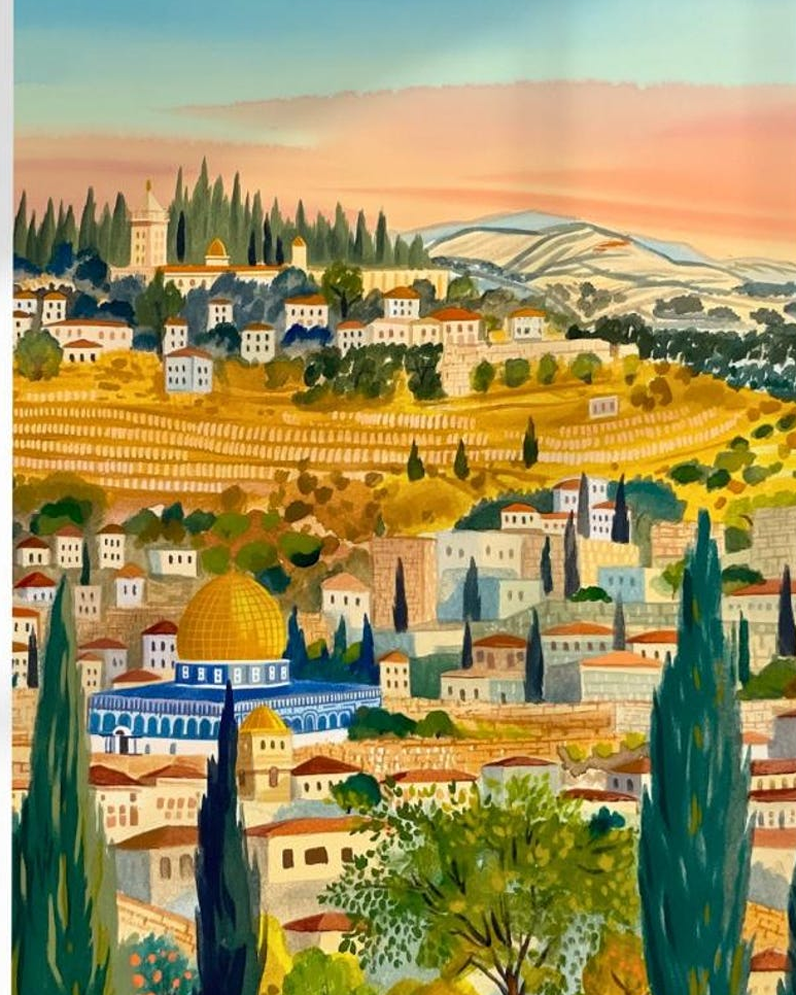
Jerusalem, Ava Lily
The new foreign secretary Ed Miliband has recently condemned Israel’s expansion of some settlements, which would make a future Palestinian state impossible. And is banning trade in goods to protest against war and blocking humanitarian aid (including life-saving treatment for children) to Gaza.
He like many supports the two-state solution, something that many of Israel’s right-wing government oppose.
Some may say this is nothing to do with England, but it’s creating (possibly worl) war, and many are calling the killing of tens of thousands of innocent Palestinians (and blocking of aid) genocide. Sometimes that some politicians and media are too frightened to call out, in case accused of anti-semitism.
The crimes are being committed by the Israeli govenment and Hamas, the innocent Jews and Muslims on either side are not the ones that need action taken against them.
Now we are having political elections won and lost on the issue. Some peaceful protestors like 84-year old Anglican priest Sue Parfitt (who has also been arrested for peaceful climate protests) have been arrested several times.
We are called to follow Jesus, whatever the cost. And Jesus was continually in breach of the law because he was calling out the evils of his day within the civil and religious authorities. He went to the cross directly because of his action in the temple, overturning the tables of the money changers and opposing the corruption and self-serving lifestyle of the rich. Sue Parfitt
What caused the Israel/Palestine conflict?
If you watch the news, all you’ll get is soundbites. So here is a very simple history of the conflict:
Before 1948, Palestine was mostly an Arab nation (with Muslims and Christians) and then Jews escaping persecution from Europe immigrated here, with the UN partitioning the area into two states, with Jerusulum as the capital city. Palestine Arabs have been fighting over this ever since.
There has been a six-day war in 1967 and the assassination of an Israeli Prime Minister (by a Jewish extremist opposed to him wanting peace).
And of course the awful attacks in 2023 when Hamas (the armed leaders of Palestine – a bit like say the IRA) crossed the border and killed 1200 Jews at a music festival and took 250 people hostage, many of whom were killed.
Since then Israel has launched air strikes in civilian areas that have killed over 73,000 innocent Palestinians and millions of people have lost their homes, with aid blocked by the Israel government to starving people (and animals).
The International Court of Justice has now investigating allegations of war crimes, and crimes against humanity.
Owen Jones recently reported how the Israeli army now admits killing a family in Gaza City in their car (the 5-year old surviving child called the Palestine Red Crescent society for help – both she and the two ambulance crew were shot dead too). But you’ll never see this reported on the BBC?
Owen Jones was a Labour voted for decades and recently left the party, appalled at how it won’t call out these atrocities.
It’s hell on earth, and nobody seems to be near solving this. Both Israel and Palestine claim Jerusalem as the capital, and yet the solutions are always from politicians. When of course we need peace. So who do we go to? Experts, but nobody seems to be listening.
What are the peaceful solutions?
Einstein once said that you can’t solve a problem, using the mindset that created it. Considering the two-state and one-state solution have been debated for decades, it’s likely neither are the solution.
Why don’t they just listen to experts outside politics instead? Daniel Levin (whose father had his arm blown off in the last days of the 1948 war) says a different vision of a two-state solution could work.
It would retain aspects of one-state (freedom of employment, movement and residency with security controls). So people could live, work and study anywhere. But only vote in their own state.
Israelis living in occupied Palestine could move back if wished to Israel (with relocation papers) or remain in Palestine and follow their laws. Visit A Land for All for more information.
Helping to bring peace for future generations
Seeds of Peace is a US summer camp, where they take opposing sides to have them work and play together, to become the future leaders of tomorrow (say Israeli and Palestinian teenagers). They arrive wanting to kill each other, and leave as friends.
The Forgiveness Project is a website set up by an Italian journalist, which interviews those who have chosen to forgive. This is big stuff: people who have forgiven terrorists who have murdered their families etc.
The founder recently interviewed two fathers (one from Palestine and one from Israel) who both had young daughters murdered (by an Israeli solider and two Palestinian suicide bombers respectively).
The stories are heartbreaking, but worth reading. One interviewee is a former Israeli soldier who was stood over a car of Palestinian children, with his gun. His wife then phoned him to talk about their young child. He realised the hypocrisy and featured in the documentary film Disturbing the Peace. And is founder of Combatants for Peace.
Help save donkeys in the Holy Land

Right on the border of all this are innocent donkeys, often use as the main form of ‘transport’ in the Middle East.
Safe Haven for Donkeys helps donkeys living on the border in the Middle East, of extreme concern at present. Donkeys and horses are the main form of transport for many, and often worked on little food or rest. Read more on helping donkey friends and how to help animals in war zones
Easy ways to help the charity
- Make it your page at easyfundraising. Then any time you buy something at participating retailers, the charity gets a cut, at no cost to you (loyalty points are not affected).
- Playing their Weather Lottery (instead of the national one) is good to earn them extra funds.
- Scrap your old car, and monies raised from metal will benefit this wonderful cause.
- Lucy’s UK Donkey Foundation also gives grants, to help working animals in the Holy Land. Again, make it your page at easyfundraising.
What are UK political policies on Israel/Palestine?
Of course you can’t be pro-peace if you’re selling arms. Join the campaign to stop selling arms, and discover alternative ways to earn income from the money lost from sales.
- Labour supports the two-state solution and has recognised the state of Palestine, which has made Israel (and President Trump) angry. It also supports humanitarium assistance for Palestinians in Gaza and has restrict some (not all) arms exports to Israel.
- Conservatives also supports a two-state solution and humanitarian aid to Palestinians, while opposing sanctions to Israel, wishing to fund its defence.
- Lib Dems wants an immediate ceasefire, a two-state solution, sanctions against violence and a ban on arms experts that could violate international law. Plus more humanitarium assistance for Gaza.
- Greens obviously wants peace and supports humanitarian aid and goes further, asking whether there should be new ideas beyond the two-state solution, which doesn’t look like it’s working anytime soon.
- Reform UK strongly supports Israel and opposes UK recognition of Palestine. It also wants to drastically reduce UK overseas aid.
What are US policies on Israel/Palestine?
The USA (under both parties) has been very supportive of Israel, often due to political reasons as many voters are Jewish.
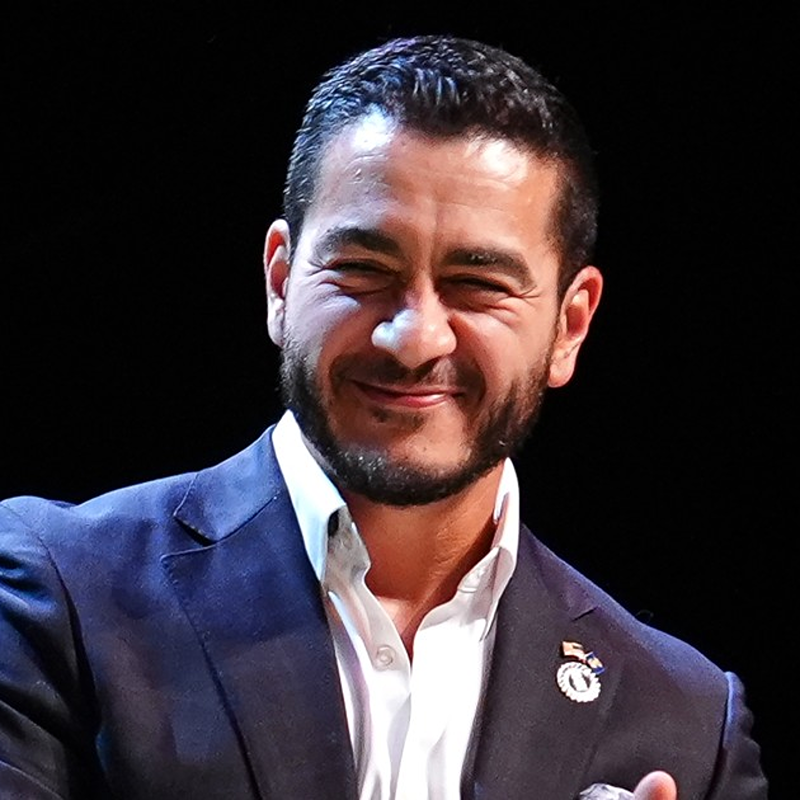
Abdul el-Sayed (who is being touted as a possible Presidential contender – he is of Egyptian heritage but was born in the USA) has been bringing disillusioned Democrats back in droves, as he calls for world peace, and is not afraid to call out the atrocities for what they are.
I love Judaism and the Jewish people, because I love People. And I love Palestinians, because I love People. Abdul El-Sayed
Music break: Higher ground