A Guide to the County of Cambridgeshire, Naturally
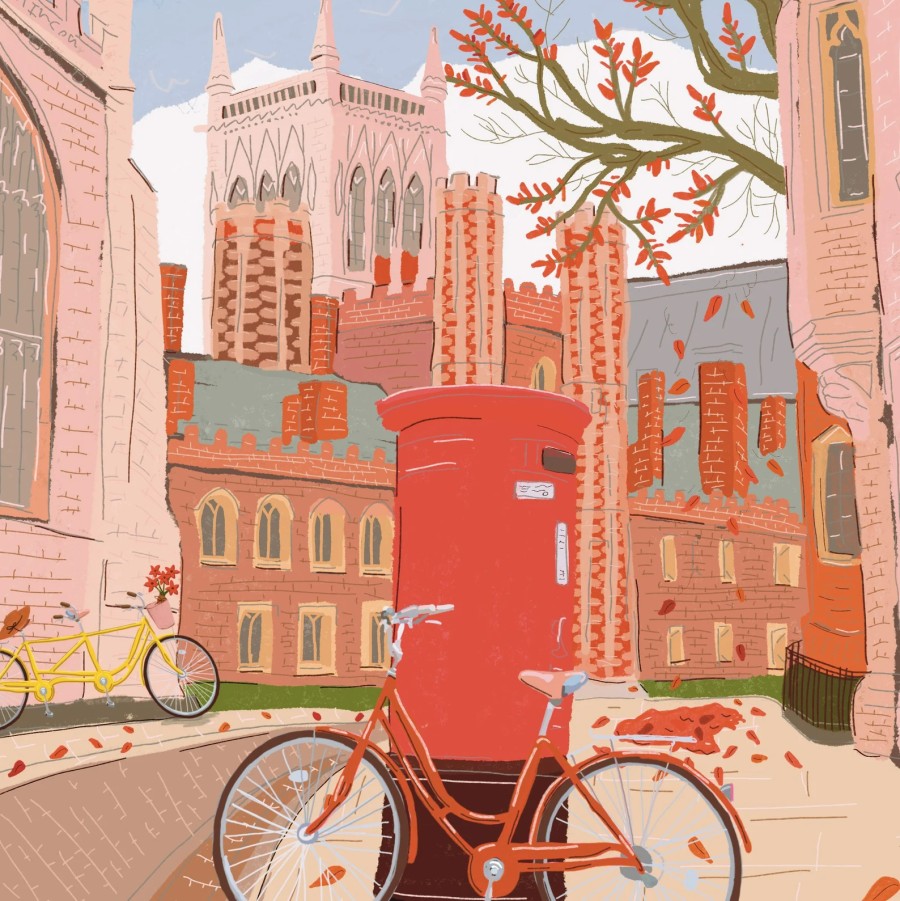
Cambridgeshire is a beautiful county that sits on The Fens, and is home to beautiful cities and pretty villages. It’s also home to two pretty cities (Cambridge and Ely) and punting!
If out walking, follow the Countryside Code to keep all creatures safe.
The Ancient University City of Cambridge
Cambridge is a ‘prettier city’ than Oxford, although both are known for their ancient universities. Cambridge is situated on the River Cam, and is home to 31 colleges, a few hidden behind old walls.
The 33 acres of land at Jesus College alone, is home to muntjac deer, sparrowhawks and endangered water voles.
Some of the best known are King’s College (known for its beautiful chapel and choir who perform Christmas carols on TV each year) and Trinity College (this is like a small town with huge courtyards, and holds the personal notebooks of Isaac Newton, a studied who discovered the laws of gravitation).
Other well-known Cambridge University graduates include A.A. Milne (creator of Winnie the Pooh), Bill Oddie (former Goodie and lover of wild birds) and national treasure Sir David Attenborough.
Grantchester: Pastoral Charm Close to Cambridge
If you’ve ever watched the TV series Grantchester, it’s based in this village just outside Cambridge, a sleepy quiet place, if you don’t like the bustle of the city.
Home to Byron’s Pool (a nature reserved named after Lord Byron who liked to go wild swimming there), the village has inspired many poets and academics alike.
Linton is a pretty village just 8 miles from the city of Cambridge, not far from the Essex border.
The Beautiful Bridges of Cambridge City
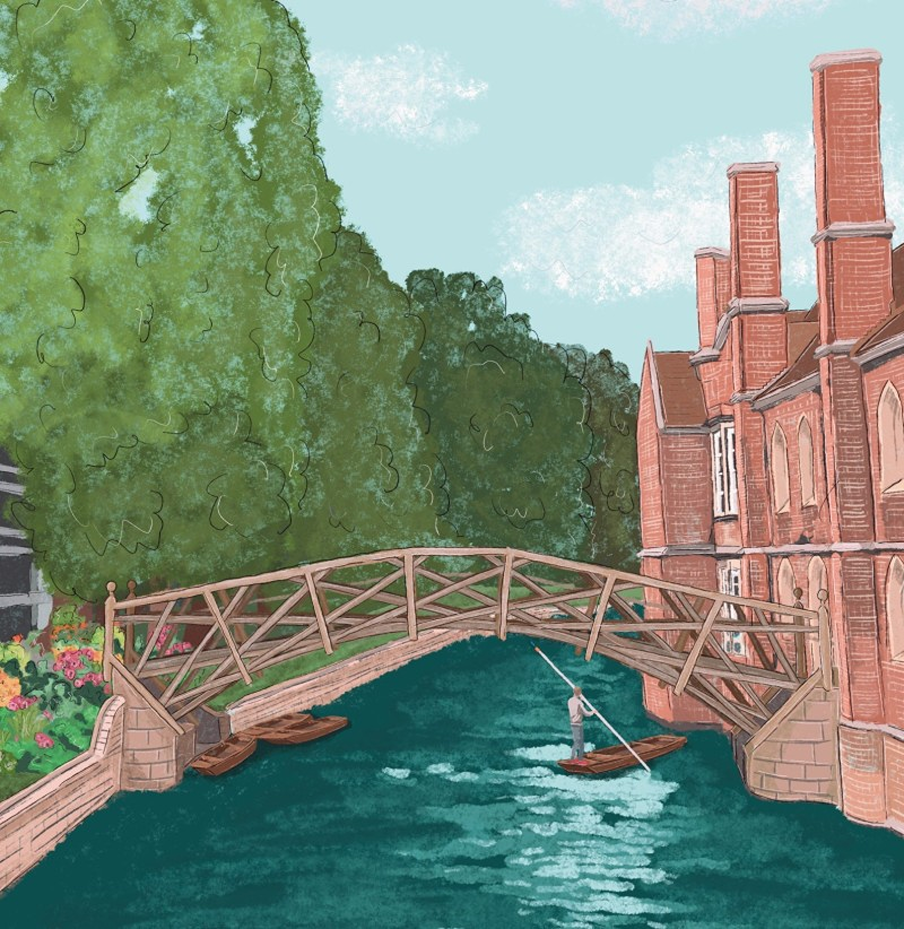
The ancient university city of Cambridge in the East Midlands, and home to some of England’s most beautiful and unique bridges. Many people walk or cycle along these bridges (half of all Cambridge residents ride a bicycle at least once a week!)
Most of Cambridge’s bridges sit on the River Cam, which is over 120,000 years old, shaped into its present form by a flood 14,000 years ago. It’s home to unusual wildlife like elaborately coloured mandarin ducks and sea shags (like small green versions of cormorants).
A popular pastime on the River Cam is punting (flat-bottom boats that you steer with a pole, far less polluting than most forms of river transport). Apparently it’s quite tricky, so get lessons!
The Mathematical Bridge at Queen’s College is an amazing piece of engineering. In that although it’s curved, it’s built from straight planks of wood!

The Bridge of Sighs is a covered stone bridge, known for its Victorian Gothic architecture. It’s located at St John’s College (the only one to have two bridges). Apparently it’s named after the prisoners on their way to court, who would sigh as they crossed it!
Clare Bridge is the oldest surviving bridge in Cambridge, built around 1640. It has a mystery attached, in that there is a sliced-off ball on one of the spheres. It’s now not believed that it was due to the mason being underpaid (this was an unfair myth, so it remains a mystery!)
Magdalene Bridge was built from stone in the 18th century, and was known for its May Day celebration, where crowds would gather to hear the choir sing from the tower, at sunrise. It’s the only bridge on the River Cam that allows for public transport.
King’s College Bridge was built in 1819, and was one of the last places to have legal duels!
Hildersham Bridge sits in a nearby village. Funded by Mrs Elizabeth Goodwin Hemmington in 1886 to replace a ford (made impassable by floods), this was built on dry land, then they moved the river (?!)
Saint Etheldreda of Ely (with a very long cathedral)

Cambridge may get all the headlines, but the city of Ely is equally as beautiful. And known for having one of the longest cathedrals in England (known as ‘the ship of the Fens’).
The cathedral stands on a site that used to house a monastery, founded by Saint Etheldreda (called ‘Audrey for short!), a 7th century princess who gave up royal comfort, a life of faith.
King Edgar the Peaceful (!) also played an important role in the city’s history, ruling in the 10th century. After many years of turmoil, he gave land and money to Audrey to help rebuild her abbey.
This turned the area into a place of power and wealth, which brought new money to build more majestic buildings. Thank you Audrey and Edgar!
Working-Class Roots: Ely and Littleport Riots
Not all of Ely’s history comes from royalty and saints. In 1816, local riots (due to unemployment, falling wages and high food prices) led to many people living on little more than gruel and water. While the Prince Regent (George V) was spending lavishly on multi-course banquets and spending hundreds of thousands of pounds, on redecorating Brighton Pavilion.
Things turned ugly with rioters even ransacking homes of innocent farmers, and magistrates promised a cap on the price of wheat, if things turned down. However, some riots continued, and some were publicly hanged (and buried in unmarked graves).
The King was known for his selfish lavish lifestyle, named by English Heritage as ‘Britain’s most useless monarch’. He amassed massive debts at the public’s expense, including remodelling Buckingham Palace and rebuilding Windsor Castle.
He also had many mistresses, and fathered several children outside his marriage. Nevertheless, despite always preferring ‘a girl and a bottle to politics and a sermon’, he repented his ways when dying. And actually became very devout, asking his subjects for forgiveness, for wasting his good fortune.
Indie Cambridge (empowering local businesses)
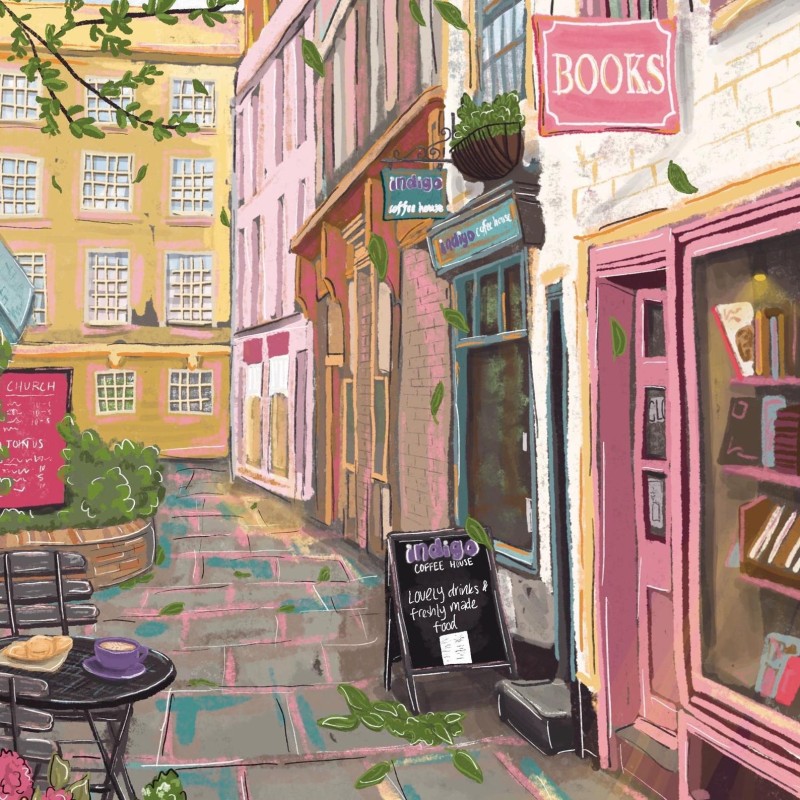
Indie Cambridge is a membership organisation designed to connect and support independent businesses and shops across the beautiful county of Cambridgeshire in East Anglia. It brings together businesses and customers, by reaching hundreds of local customers via the app.
Run an indie shop? Many seeds, flowers, plants (and plantable cards) are toxic to pets, so learn what not to sell to households with pets.
Membership (at around £45 a month) has many benefits. Your business will be listed on the app (far less than paying for an add) to targeted customers who like supporting indie customers, so of course you can also use this opportunity to offer special deals and new offers. Or even promote your own discount card.
You also appear on the website and may be mentioned in the popular monthly e-newsletter that is sent to 1000s of people. You also get to connect with other indie businesses, for mutual support.
There are also regular get-togethers with others, to network (so you don’t feel like an island, in a sea of chain stores and supermarkets).
You’ll even on membership be introduced to everyone they know, and be featured in the 36-page colour magazine, which is distributed free (over 5000 copies) in local shops twice yearly.
Indie Cambridge can even arrange an interview (for a fee) with a local journalist to write your unique store, and take a professional photo-shoot to use for your marketing.
And if you’re not ready to sign up just yet, you can still sign up, for a free basic listing.
Why Support Indie Shops in Cambridgeshire?
For a start, to help shops in Cambridge, which is one of the most cloned towns in England (more chain stores and less independent shops). For every £5 or £10 you spend each week at an independent shop, this brings collectively billions back into the local economy over a year.
This is because local businesses use local suppliers, pay local taxes, use local signwriters, and tend to eat and drink locally too. Plus ‘top profits’ go the retail shop owner, rather out-of-county to shareholders and companies abroad.