England’s Ancient Chalk Carvings (mostly horses)
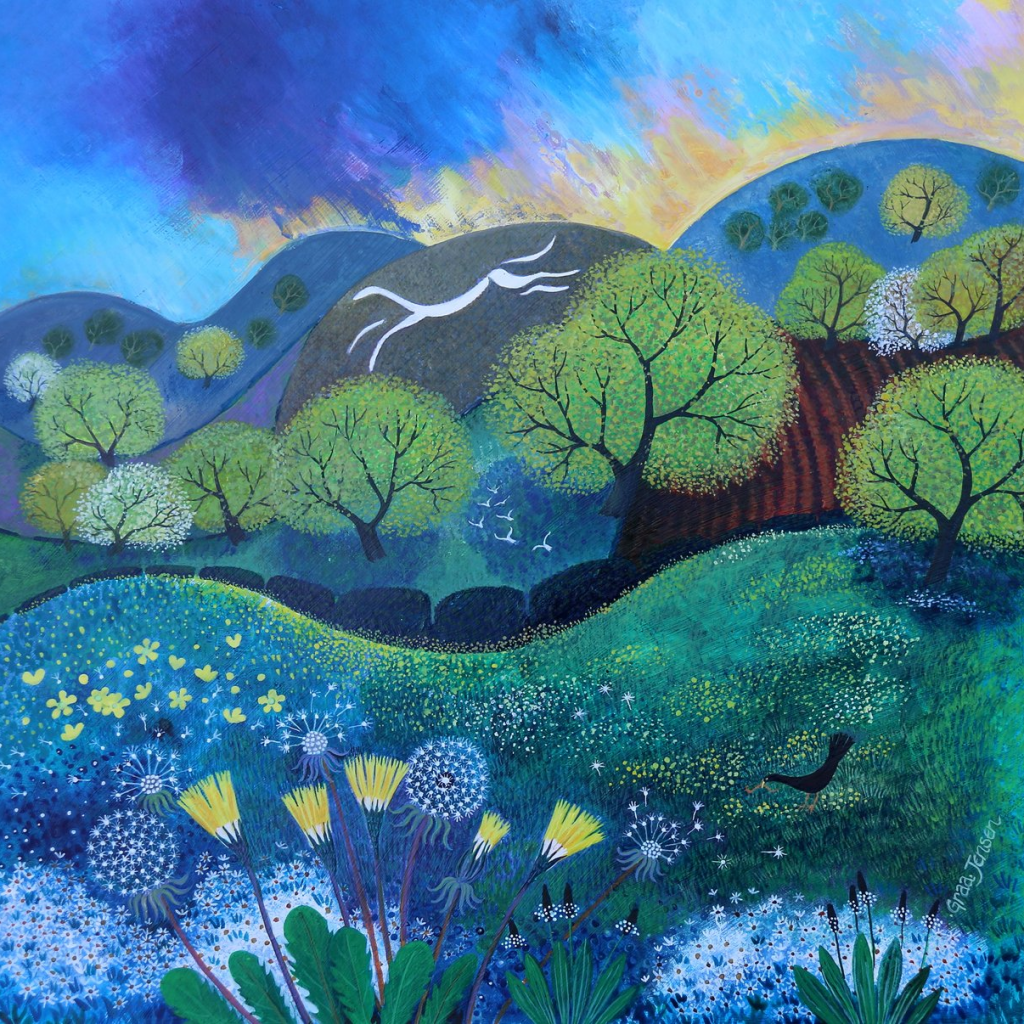
England’s chalk hills have many ancient figures, carved out by long-lost communities, hundreds of years ago. Most are in southern England (in Wiltshire especially).
If out walking, follow the Countryside Code, to keep all creatures safe.
The white lines sit in shallow cuts, and the edges crumble when people stray across them. Many sites are managed by organisations such as the National Trust, local councils, or local trusts, so access rules can change. A quick check before you set off saves hassle.
Uffington White Horse, Oxfordshire
Many sources place it in the late Bronze Age to early Iron Age, roughly around 3,000 years ago. The debate isn’t guesswork, because researchers have studied soil layers and chalk fill inside the cut lines to build a timeline.
Look for it near the Ridgeway, one of England’s oldest trackways. The setting matters. The horse sits close to Uffington Castle (an Iron Age hillfort), and the wider landscape is packed with prehistoric sites. For a strong viewpoint, walk along the ridge and let distance do the work, the figure reads best when you’re not standing on top of it.
Westbury White Horse and Cherhill White Horse
Westbury White Horse, on Bratton Downs, looks blockier than Uffington. It’s built for impact, with a bold body that shows up clearly across the valley. The horse you see today reflects major re-cutting and re-shaping over time, and the widely accepted origin sits in the 18th century, linked to local celebration and pride.
Cherhill White Horse also dates to the late 18th century. Its big draw is the setting, because it lies below the Lansdowne Monument. From many angles you get the horse, the hillside, and the landmark together, like a ready-made postcard.
Wessex and Sussex chalk horses
- Osmington White Horse (Dorset) shows a rider, often linked to George III. It feels more like a picture than a symbol, and its early 19th-century origin gives it a clear place in recent history.
- Alton Barnes White Horse (Wiltshire) sits high above the Vale of Pewsey. It’s a rewarding hike, and the open downland views are part of the appeal as much as the hill figure.
The Long Man of Wilmington (East Sussex)
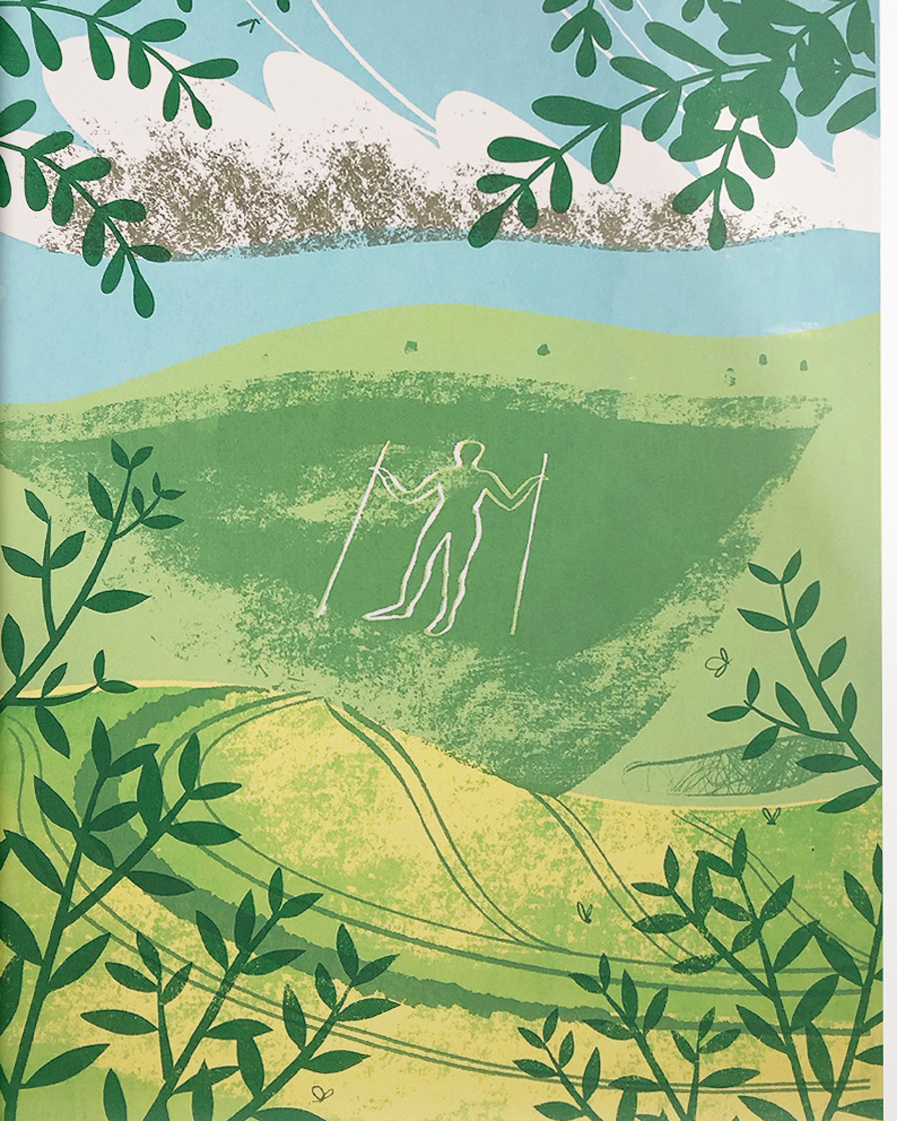
The Long Man of Wilmington is a 70ft giant man carved into the chalk hills of South Downs National Park near Alfriston (a pretty ancient Sussex village). His origin and reason for carving him have remained a mystery for generations.
We know he is over 300 years old (due to a sketch of him in 1710), and some believe he could have been carved as early as the Iron Age, or in Roman times.
In 1920, the chalk had faded, so locals and historians gave him a makeover with chisels and paint, and today there are surrounding concrete blocks, so he is easier to maintain!
The Long Man holds a stave in each hand, perhaps to symbolise his strength, to measure the land, or perhaps he was an astronomer? Or is watching over the fields? Nobody knows. One tale is that he marks the site of eternal rest, of two giant brothers who roamed the South Downs, and fell in battle.
If you wish to visit the Long Man without a big hike, it can be viewed from nearby Wilmington Priory. Nearby is the Litlington Chalk Horse, much smaller and carved into the hill in 1924.
The village of Litlington sits on the bank of the River Cuckmere, dating back to Domesday times. It’s home to one of the smallest churches in England, a charming architectural gem inspired by Gothic design, built in the 13 century. So is much older that its horse friend, by several hundred years!
How chalk hill figures are made
Chalk downland is perfect for hill figures. The slopes are open and smooth, with few trees, so a design reads from far off. The chalk itself is bright, and in dry weather it can shine. Thin soils help too, because you don’t have to dig deep to reach the pale layer.
Most chalk horses begin with an outline marked on the hillside. People then cut through the turf, scrape out the darker soil, and pack the trench with chalk. Over time, the surrounding grass creeps back. Rain washes soil into the lines. Wind drops seeds, and roots grab hold. Without regular work, a clean white shape turns patchy and dull.
Scale matters as much as skill. A hill figure needs long lines and bold curves, because you’re meant to read it at a distance. That’s why many horses sit on steep slopes and ridges, where the ground falls away beneath you and the view opens out. Quite a few also lie above old routeways. If you travelled the same track year after year, a big white horse on the hill would act like a signpost you could trust.
The simple tools and the not so simple upkeep
The basic job is straightforward: cut turf, clear soil, add chalk. Historically, that could mean spades, turf knives, mattocks, and barrows of chalk hauled by hand. Modern maintenance still relies on much the same actions, even if organisers use better tools and plan the work more carefully.
Upkeep is the hard part. Grass grows fast in spring and summer, so lines soften quickly. In wet weather, soil slides and fills the cuts. As a result, many communities held “scouring” days, when locals re-cut the edges and topped up the chalk. Those events could be as social as they were practical.
That repeated re-cutting also explains why shapes can change. If one generation prefers sharper angles and another favours rounder curves, small choices add up. Over decades, a horse can drift from its earlier outline while still “staying” the same figure in local memory.
Why horses, and what they symbolised
Nobody can pin down a single meaning for every chalk horse, and it’s wise not to pretend otherwise. Still, horses make sense on several levels.
First, they were working power. They pulled ploughs, hauled loads, and carried people. A large horse on a hillside could signal a place with resources and status. Second, horses also suit travel. On open downland, a horse is a natural emblem for movement along ridges and trackways.
There may be deeper echoes too. Some researchers point to stylised horses on Iron Age coins and tribal symbols, which show a similar love of bold, simplified lines. A hill figure could also work as a boundary marker or landmark, a way of saying, “this is our country”, without building walls.
A few chalk figures aren’t horses, which helps the point. England has giants, crosses, and other shapes, but the white horse remains the classic image because it speaks to both daily life and identity.
Books to Learn More on England’s Chalk Carvings
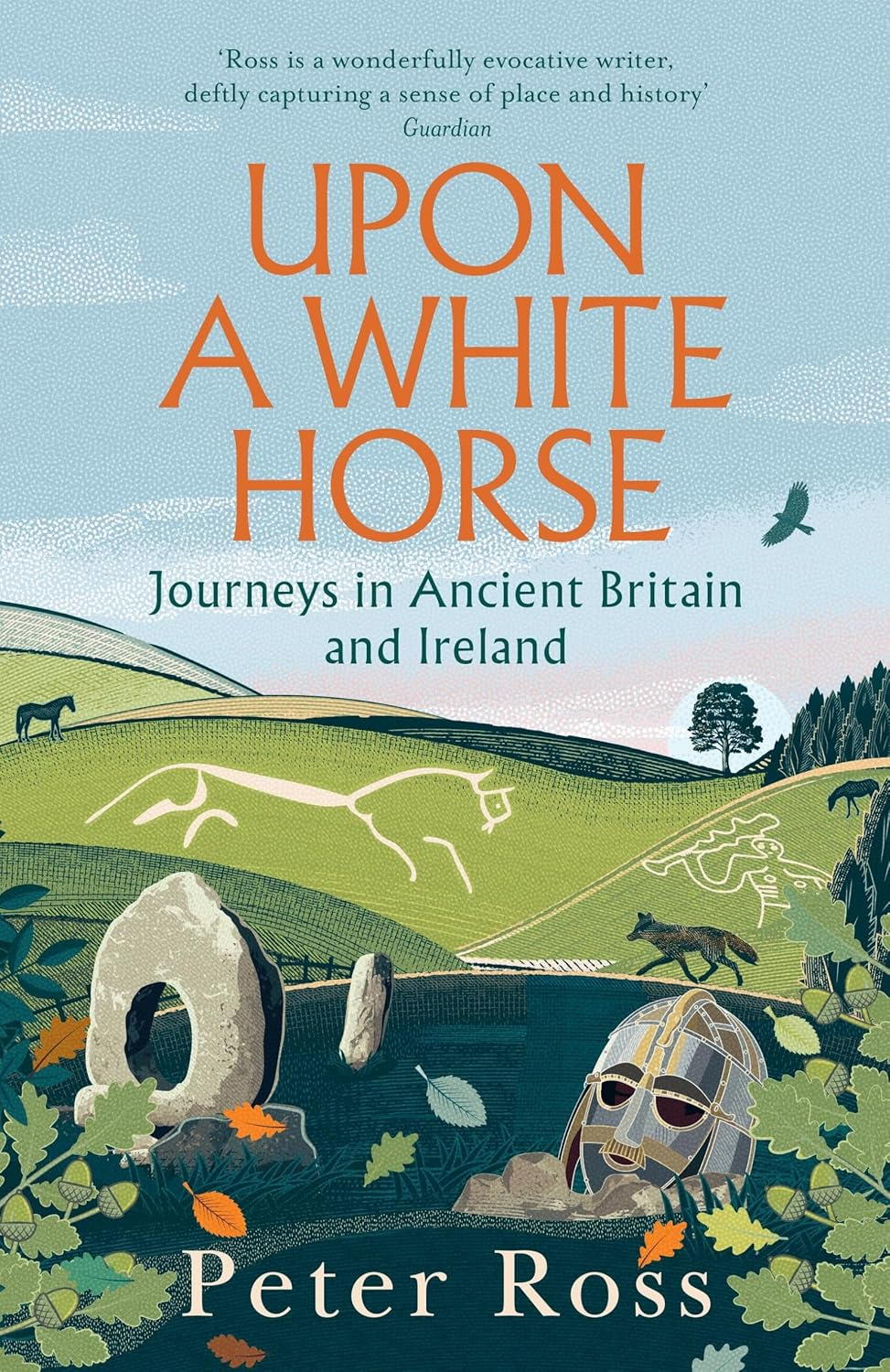
Once Upon a White Horse is an armchair journey around ancient sites in Britain and Ireland including chalk giants in Dorset (and learn what draws volunteers to care for the Uffington White (chalk) Horse).
The book also visits Stonehenge, Sycamore Gap, a wooden goddess in Edinburgh and even bog bodies in Dublin. Learn what it’s like to live within the great stone circle at Avebury, and how ancient places fill a hollow in our souls.
Author Peter Ross is an Orwell journalism fellow, who won the non-fiction prize at Scotland’s National Book Awards, and lives in Scotland.
Britain’s Landmarks & Legends is an illustrated guide to 50 iconic British landscapes including the Uffington White Horse, along with Cheddar Gorge, Sherwood Forest, the white cliffs of Dover, the standing stones of Avebury and Calanais, and the burial mounds of Sutton Hoo.
Many of these landmarks are open to the public, but a few are located on private land, with no public right of access. The author (writer in residence at Royal Scottish Geographical Society) advises you steer clear of Dunmail Raise, and it stands in the central reservation of a dual carriageway!
The Land of the White Horse tells the story of the iconic carving in Uffington, carved into the chalk of the North Wessex Downs. It has inspired artists, poets and writers including including Eric Ravilious, John Betjeman and J.R.R. Tolkien. Author David Miles is former director of Oxford Archaeological Unit and chief archaeologist at English Heritage.