Crack’d (a popular vegan ‘liquid egg’ replacement)
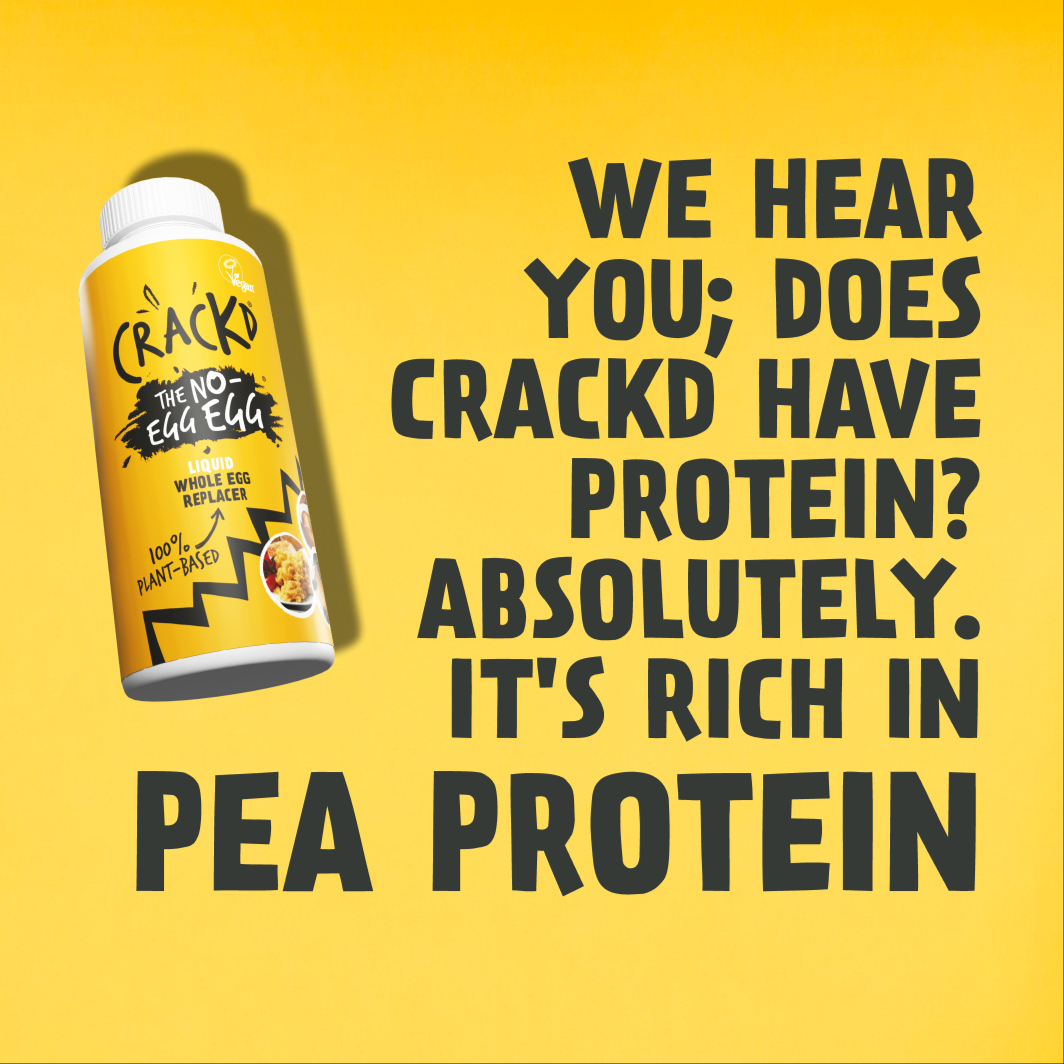
Crack’d is a popular ‘liquid vegan egg’, found in many stores. After trying out 46 different plant proteins, it plumped for pea protein. To make scrambled egg, just add to a little heated oil, and stir for a few minutes. It can also be used to make omelettes, Yorkshire puddings, pasta, cake and cookies.
Once open, keep in the fridge and use within a few days. Not for children under 6 due to methyl cellulose that’s high in fibre (same with most vegan sausages).
Before cooking, read our post on food safety for people and pets. If buying egg alternatives, recycle packaging at supermarket bag bins, if your kerbside doesn’t recycle.
Why Would Anyone Eat Vegan Eggs?

Of course, we all know that the only ‘ethical egg’ is certified free-range from local farms. So if you do eat eggs, then go for ones from a farmer you know, or look for ‘certified free-range’ on labels, anything else is greenwash.
If you have rescued chickens or buy from a friendly local farmer, it’s likely the chicks are okay. But in the commercial world, most male chicks are gassed at birth, as they are of no financial use (the egg industry is different to the broiler industry for chicken meat). Norway has just banned this practice.
So in a nutshell, that’s why vegans don’t eat eggs, because they don’t want to contribute to lots of male chicks being killed. Older hens also sometimes get killed at the end of their laying lives too.
Commercial farming tends to rush when sexing chicks, so sometimes they get mixed up. This is what happened when one woman bought three duck eggs (presumed unfertilised) from Waitrose. But they hatched (thankfully she knew what she was doing). She named them Beep, Peep & Meep!
The main issue in England is battery eggs (all bar Farm Foods have undertaken a voluntary ban on selling them). But greenwash labels like ‘cage-free’ or ‘barn eggs’ simply means they have a teeny bit more space, but still suffer de-beaking, lack of foraging areas and stress that leads to aggression.
Also the supermarkets have only banned the selling of ‘eggs’. They don’t ban the sale of food brands that use battery eggs, which rather defeats the point (again putting profits above welfare). Catering firms also tend to buy battery eggs, for cost reasons due to using so many.
Queen guitarist (and badger campaigner) Brian May recently resigned from his role as vice-president of the RSPCA. Although it does wonderful work for emergency rescue, its ‘welfare-assured’ scheme has many issues.
One egg farm that supplies to Tesco and M & S was found to have ‘free-range hens’ that had no access to outdoor space (one was even found hanging upside down, trying to escape faulty equipment).
Of course the supermarkets are always appalled. But when you have mass suppliers, this happens. So a good reason to pop to the farmers’ market, and buy free-range eggs from a farmer you trust.
Certified free-range eggs at least guarantee access to outdoor space, a bigger area to live in, and are only given antibiotics as medicine, not just ‘to stop disease on factory farms’.
Just Egg (the USA’s best vegan egg, now sold here)
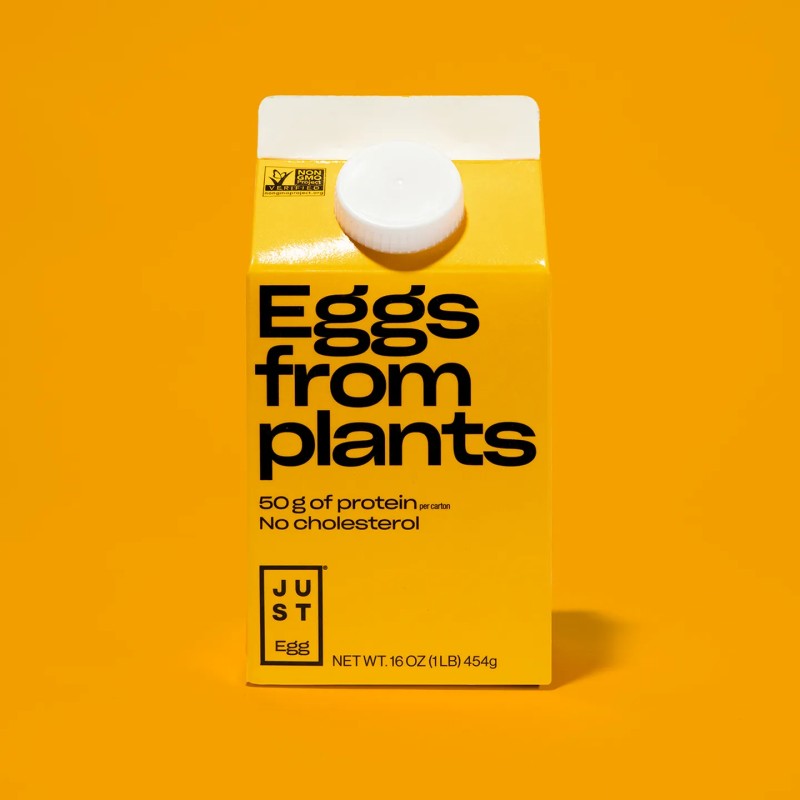
Just Egg is a US brand that is a household name, and has recently launched here. When it first launched, a well-known mayo company took it to court, saying it could not call its product ‘mayonnaise’ as it had no egg. The court case gave them so much publicity that it launched more products, and the company that tried to sue them launched its own vegan mayo!
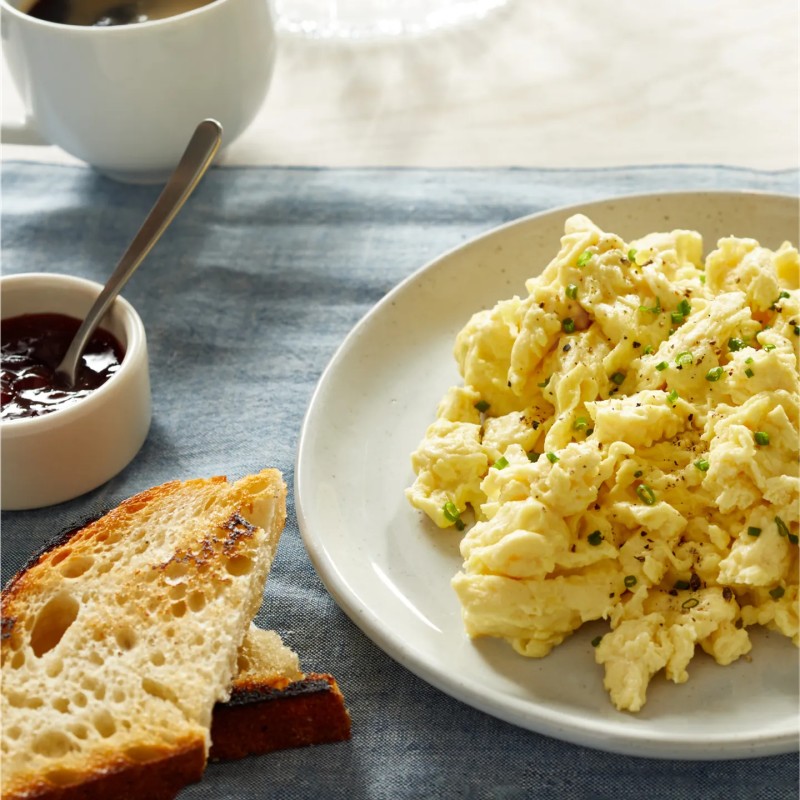
You can use it to make an scramble, omelette or an ‘egg salad sandwich!’
EVERYegg is a ‘liquid egg’ created by inserting the DNA sequence of chicken egg protein and inserting it into yeast. It may sound Frankenstein, but it’s likely safer than real eggs (no risk of Avian flu from factory farms) and is used by Michelin-star chefs. Although it’s not an egg, it must carry an egg allergy warning.
Made with chickpeas, potato starch, flaxseed, nutritional yeast and eggy-tasting black salt, it is made in a facility that processes other allergens. To use, just mix with water. You can use this to make omelettes, scramble, quiche and baking.