Exmoor and Dartmoor (small Devon National Parks)
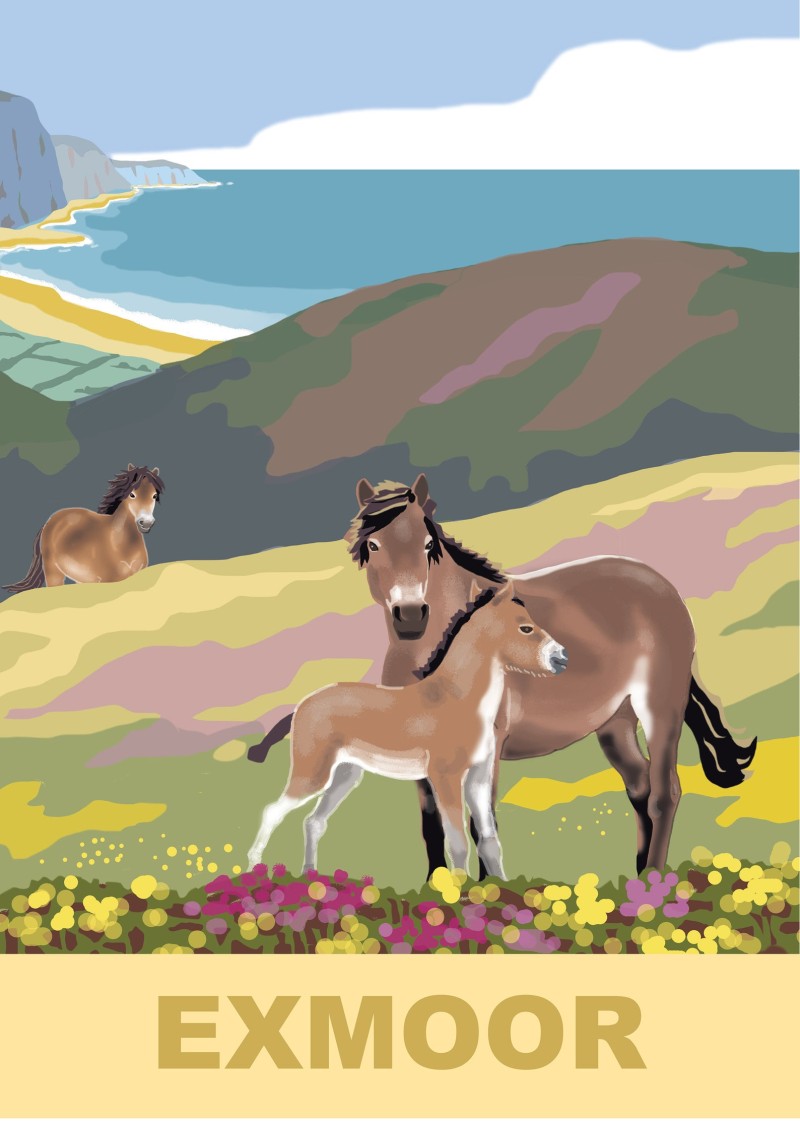
Exmoor is England’s only National Park with a coast. It has the highest sea cliffs in mainland Britain and Tarr Steps (the longest remaining clapper bridge, dating back to 1000 BC).
Never light fires, stoves or barbecues in National Parks (wild camping is not allowed). Follow the Countryside Code and at the coast, read how to keep dogs safe by the seaside.
Both parks are home to wild ponies, so never disturb or feed them. For concerns, contact the Livestock Protection Officer (Dartmoor), Exmoor Pony Society (and Moorland Mousie Trust).
Here also you’ll find endangered butterflies (the heath fritillary is here, found in only four places in the UK, due to loss of habitat). On the Exmoor coast are the twinned villages of Lynton and Lymouth, known for the world’s steepest (and fully water-powered) funicular railway (cliff lift).
Exmoor was Europe’s first International Dark Sky Reserve, free from light pollution. The ancient landscape (in some places over 200 million years old) is also home to large herds of wild red deer.
Dartmoor is 954 square kilometres, making it one of southern England’s largest open spaces, home to over 160 granite tors. Much of this park is owned by Prince William (passed to him when his father became King).
Land campaigner Guy Shrubsole says a lot of this land needs to be rewilded, as it is ‘devoid of trees and birds for miles’. Campaigners say the ‘small potatoes’ offered is not enough to restore ‘England’s rainforest’