Foster World Peace (and help animals in war zones)

It’s a colossal amount of money that England spends on the Armed Forces, Royal Navy, Royal Air Force and Trident (our nuclear deterrent). There are always arguments on why we need nuclear weapons etc. But what’s helpful is to look at countries that don’t have any armies. What makes us need them, when other places don’t?
Some countries worldwide have either never had or got rid of their armies, instead investing money in nature, education, people, healthcare and peaceful relations with other countries.
Costa Rica’s Bold Move to Peace

In 1948, Costa Rica came out of a short but bitter civil war. José Figueres Ferrer won power and abolished the army the same year, to keep the state focused on peace. Money once earmarked for soldiers, helped to build classrooms and health clinics, which led to fast gains in life expectancy and literacy. The country is now no.1 on the World Happiness Index with protected rainforests and a huge income from ecotourism.
This is an exemplary little country. We are the example for Latin America. In the next century, maybe everyone will be ike us. José Figueres Ferrer
José sounds an interesting character. He served three terms as president, and during the first term, also brought banking back to national ownership, granted women and Afro-Costa Ricans the right to vote, and also offered Costa Rican nationality to people of African descent.
After becoming a successful coffee farmer and rope maker, he described himself as a ‘farmer socialist’. He built housing and provided medical care for his workers, and established a community vegetable farm to provide free food. And if his workers could get better prices, he let them! He sounds a bit like our George Cadbury, the successful Quaker businessman who built his workers the pretty village of Bourneville, near Birmingham.
George was a strict teetotaller, and created drinking chocolate, to stop his workers drinking gin!
José’s son also went into politics and became President for a while, and now focuses on helping organisation to create a low-carbon economy, to save the planet and wildlife.
Iceland’s Path of Neutral Strength

Iceland became a republic in 1944 after centuries linked to Denmark. With a low population and a harsh surrounding sea, it needed no standing army. The The Icelandic Coast Guard and police handle protection at home.
This means money that would be used for armies, has instead been invested into geothermal energy that heats and lights homes and powers industry. It’s quite a well-off nation with one of the world’s best standards of living.
Andorra’s Timeless Neutrality

High in the Pyrenees, Andorra is one of the world’s smallest countries, sitting between France and Spain. It’s a principality (like Monaco, run by a king) but still quite diplomatic, which has kept the country out of wars for decades. Its border of steep mountains also helps to keep it safe. It also is one of the few countries on earth, with no airport.
Unlike in England with our public spats, Andorra is ruled by two princes who get on well. But neither are local, and neither are real princes! One is the Bishop of Urgell and the other is the President of France!
It’s a bit bonkers, as this means that one of their rulers is elected by voters in another country! And the other elected by the Pope in Rome! Having said that, many people think it odd that we are ruled over by a family that was never elected either!
Andorra also had a self-proclaimed ‘world king!’
Just like our previous Prime Minister Boris Johnson who proclaimed he would like to be ‘world king’ (and did not respect responsibilities that came with the job), Andorra had Boris I (King of Andorra), who was actually Russian swindler Boris Skyossyreff. Who in 1934 declared war on the Bishop of Urgell (one of Andorra’s co-princes).
However, the Bishop arrested him and threw him out of the country! He ended up serving 25 years in a Siberian camp, before being released and dying in his 90s.
Lessons to Learn from Army‑Free Nations
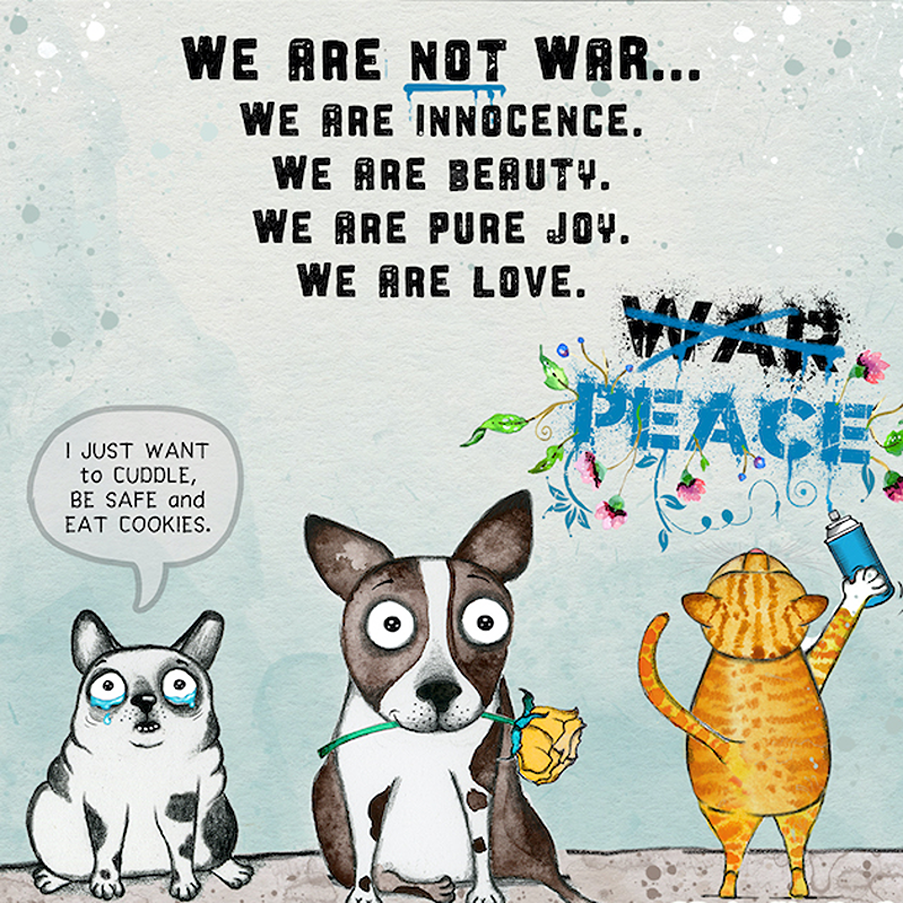
We all want world peace and animals safe from war. And looking at the countries above (all of which rank far higher in happiness indexes) would be a better idea, than always looking over the pond, to be inspired by USA politics.
Reinvesting earmarked defence funds would free up cash for the NHS, education and measures to reduce climate change (like free insulation of all older homes, which would also create thousands of skilled jobs). We could protect our forests, build affordable homes (on wasteland, not green land home to native wildlife).
We could invest in measures to prevent floods and wildlife, create a state-funded RSPCA, employ wildlife experts to save our endangered species, fund litter clean-ups, build walkable communities and cycle paths that linked towns, save independent shops, clear the national debt and keep communities safe.
Instead, all this money goes to fund big white elephants like Trident, because people still seem to think we are an empire that needs to get involved in wars all the time.
Nuclear systems come with waste and accident risks that last for generations. Instead, we could be like Costa Rica, and invest in people instead.
How Much is UK Defence Spending?
In 2025, the UK defence budget was projected to be almost £60 billion, almost 3% of GDP. Of course we need to keep safe, but usually selling arms to dodgy regimes and keeping Trident means we spend a colossal amount of funds that could be directed elsewhere. Why does the UK need Trident, but Austria and New Zealand (both 100% nuclear-free) don’t?
Running Trident costs around £3 billion a year, and replacing it will cost at least £205 billion, according to calculations by CND. This money by contrast could be pay for:
- Building new hospitals and funding more nurses. It costs around £100 billion to pay for 180 state-of-the-art hospitals or 1.5 million affordable homes (not on wildlife-rich land).
- Reducing NHS backlogs, by funding more doctors
- Building sustainable affordable homes and ending homelessness
- Building new schools and increasing teacher salaries
- Training young people in new skills
- Investing in better cleaner energy
The jobs lost by reducing the size of the Army and Navy could be go into new skills for renewable energy, insulating homes and other well-paid jobs to reduce bills for people nationwide, and help to stop climate change. Many also have skills to reduce terrorism and cyber-hacking.
Relying on oil has led to huge rises in bills, since the Russian invasion of Ukraine. The answer is of course an oil-free economy, as then we no longer have to rely on foreign countries to heat and feed us.
Relying on oil, also leaves the big companies like supermarkets and energy companies able to ‘blame others’ for price hikes, when we know that these companies operate solely for profit, unlike say community energy panels and zero waste non-profit food co-operatives.
What would mostly help to reduce oil is for town planners to create walkable communities (so no oil needed for petrol to reach supermarkets that use oil en-masse to power central distribution houses that house imported food that is often covered in chemicals made with oil).
Not relying on foreign oil also helps to create world peace. If Russia had not got so rich on selling oil, it would not now have the money to bomb Ukraine.
Its power has been on the back of other countries not being energy-independent. Nearly all wars on earth are caused by oil (proven as they are all oil-producing countries, Russia is only one example).
One country that is around 99% energy-independent (using renewables) is Iceland. And we never hear about this country going to war, do we?
If we wait for MPs to create an oil-free economy, we’ll be waiting a very long time. It’s far more empowering and effective to use less oil en-masse as people and companies. Together we can then create less demand for oil. Here are a few basic ideas to help:
Fortunately, it looks like the proposed Rosebank new oil and gas field in the North Sea (near the Shetland Islands) is now not going ahead, due to a change of government. It would have kept us locked into fossil fuels for decades.
Switch to a Green Energy Company
Ecotricity only uses vegan-friendly energy (so not energy from abattoirs etc) and also is making grass from gas!
Drive Less and Fly Less
Driving cars and flying aeroplanes are two of the world’s biggest users of oil. If you are not planning on going car-free (and never flying again), read tips to be a greener driver and airport traveller.
Use a Waterless Car Wash
Driveway and supermarket car washes cause ‘mini oil spills’ as oily untreated water goes down storm drains.
Either use a car wash that recycles the water, or switch to a waterless car wash brand. Same for boats. Read tips to be a sustainable sailor.
Eat Organic
Pesticides on fresh fruits and vegetables are usually made from oil. So by eating fresh produce that is organic (from the box scheme, market or farm shop) is a great way to use less oil.
Switch to Natural Fabrics
When you replace clothing, switch to organic cotton, hemp or linen fabrics (synthetic fabrics like nylon and polyester are made from oil). Launder these (and fabrics made from recycled plastic bottles) in a microfibre filter, to stop fibres escaping the washing machine, into the sea.
Choose Biodegradable Everyday Brands
Choose organic and biodegradable beauty, cleaning and laundry products (to avoid oil-based products like petroleum jelly.
Choose unscented for pregnancy/nursing, affected medical conditions and for pet/baby bedding/bowls/cleaning.
Go Plastic-Free
Easier said than done. But aim for it! Plastic is made from oil. So if you buy things, go for items made from recycled plastic.
Use Your Vote
You don’t have to vote for Green MPs. Just find independent or party candidates who are on a mission to take us out of the fossil fuel age, and are making clear plans to do it.
Even in 2023, President Biden (the so-called ‘green choice’) approved an $8bn drilling project on Alaska’s North Slope, which local environmentalists, wilderness campaigners and native communities were appalled at.
What We Can Learn from Alaska’s Oil Spill

Alaska is a small state (that used to be part of Russia and is now in the US) that sits in the far northwest corner of the country.
It’s home to most of the country’s tallest mountains and has over 100 volcanoes and volcanic fields, along with 30,000 rivers and a whopping 3 million lakes.
It has more coast than all the US combined (over 30,000 miles) and is home to many Arctic creatures including polar bears.
Back in 1989, the state suffered an absolute tragedy, when the Exxon Valdez oil tanker ran aground and spewed billions of gallons of crude oil into the sea, leading to a massive clean-up operation that was pretty futile.
As well as causing $300 million of economic harm to local people, it was catastrophic for wildlife. The spill killed around 2800 sea otters, 300 harbour seals, 900 bald eagles and 250,000 seabirds in the following days.
Along with 1000 harlequin ducks, many pink salmon embryos (and even today, many species including cormorants, common loons, Pacific herrings and pigeon guillemot have not yet recovered to original numbers).
Of course there have been numerous investigations. The spill was caused by the tanker hitting a Bligh Reef. It’s now believed the main cause was simple: the crew were absolutely knackered from lack of sleep.
This echoes many other massive accidents including some aeroplane crashes and even the Space Shuttle accident, when warnings were not heeded by staff who had only had 2 hours of sleep.
We Have Oil Spills in England, Too
You think this couldn’t happen here? There have been many oil spills from ships, with Greenpeace stating that over half the oil accidentally spilled by offshore oil and gas operations in UK waters over the last 10 years has ended up in marine protected areas.
In 1967, the worst environmental disaster of our times happened (like England’s version of the Exxon Valdex oil spill) when a tanker struck Pollard’s Rock.
The Torrey Canyon oil spill spilled around 25 to 36 million gallons of crude oil, which also affected hundreds of miles of coast in France, Guernsey and Spain.
In recent years, something even more surreal happened down the coast.
On a Cornish Beach on Lizard Peninsula, 4,500 containers of Vanish stain remover washed up, after they fell off a container ship (over 18,000 went missing, meaning the rest are still in the sea somewhere). It finally solved the issue of why the local sea had turned pink.
The happy story was many volunteers went to clean up the mess, to help local wildlife. The sad thing was that many others faced fines, as they visited the beach literally to pick up free bottles of Vanish, and drive them home.
Support EarthJustice (to stop Trump Drilling for Oil)
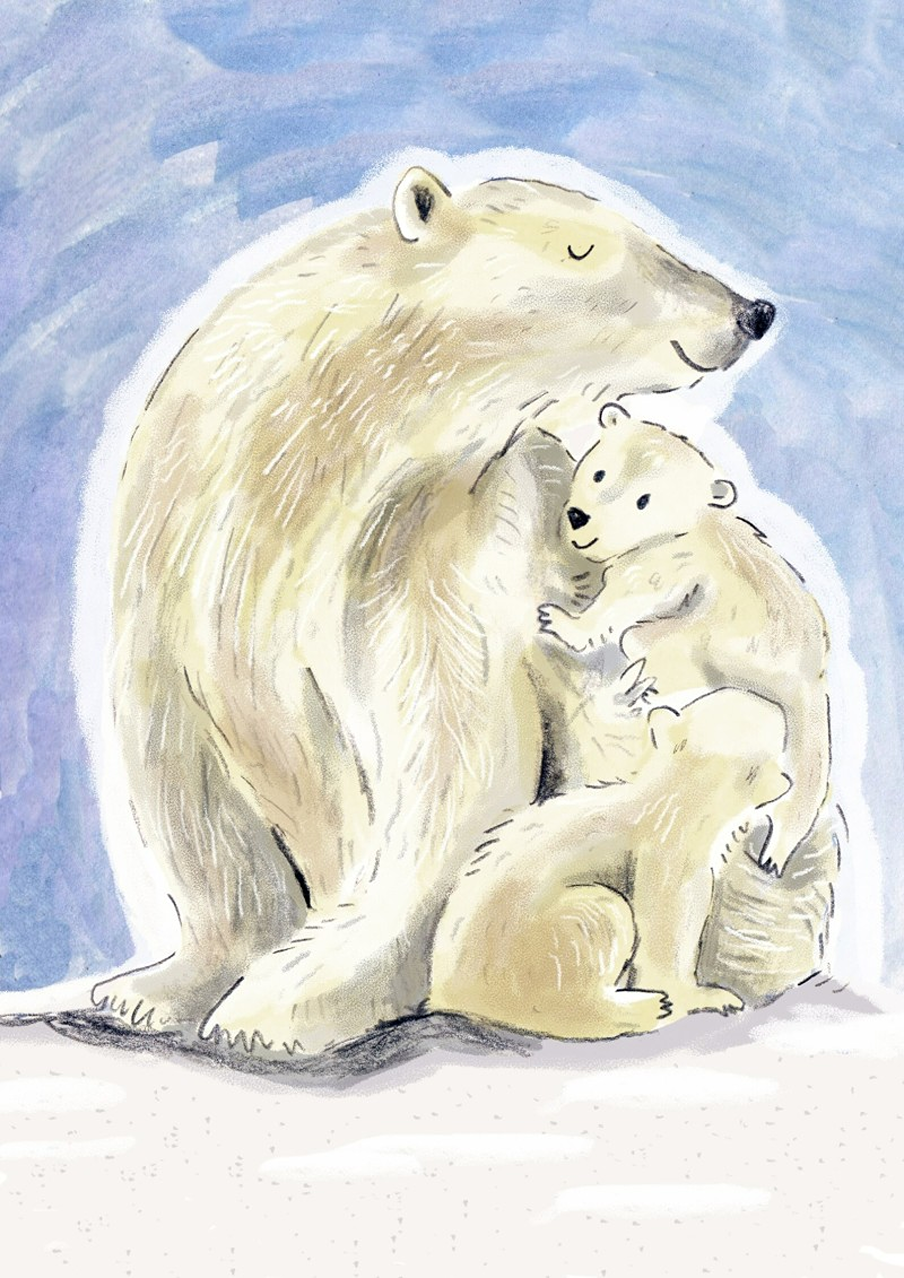
In October 2025, EarthJustice reported that President Trump is opening the entire coastal plain of the Arctic National Wildlife Refuge (1.56 million acres in Alaska near the Canadian border), to oil and gas leasing, making profits for fossil fuel companies.
The Refuge is home to black and brown bears, caribou, Dall sheep, moose, fox, muskoxen, whales, seals and many species of birds. The coastal plain is also an important denning area for wintering polar bears.
These lands are home to irreplaceable wildlife, in an area that is warming faster than the rest of the planet, and be disastrous for communities and ‘the American people’, so often quoted by his press secretary.
Expanding oil drilling in the Arctic threatens wildlife and cultural traditions that exist nowhere else in the world. It worsens the climate crisis and undermines energy security. The Gwich’in people, most Americans and even major banks and insurance companies know the Arctic Refuge is no place to drill. Erik Grafe (EarthJustice attorney)
Florida Also At Risk from Oil Spills

In sunny Florida, pelicans (big birds with pouches in their bills, to catch several fish at once) are often at risk from oil spills, due to leisure and commercial boats. Local volunteers also find emaciated birds, due to over-fishing by humans (pelicans feed their chicks up to 30 times a day).
Other risks are injuries from fishing line/hooks and habitat loss (rising sea temperatures means birds cannot dive deep enough to find food).
Recent oil spills in the USA have wiped out some pelican populations. But now US policy is to open up more areas, to ‘drill, drill, drill’ for more oil.
One spill a few years back killed over 100,000 birds and turtles, billions of oysters and trillions of newly hatched fish. Now 15 years later, President Trump seeks to reopen this area of the Gulf Coast to drill for oil and gas.
The environmental organisation EarthJustice is now suing the Trump administration, for its attempts to turn public waters off nearly every US coastlines, into oil fields.
England’s Version of Exxon Valdez (in 1967)
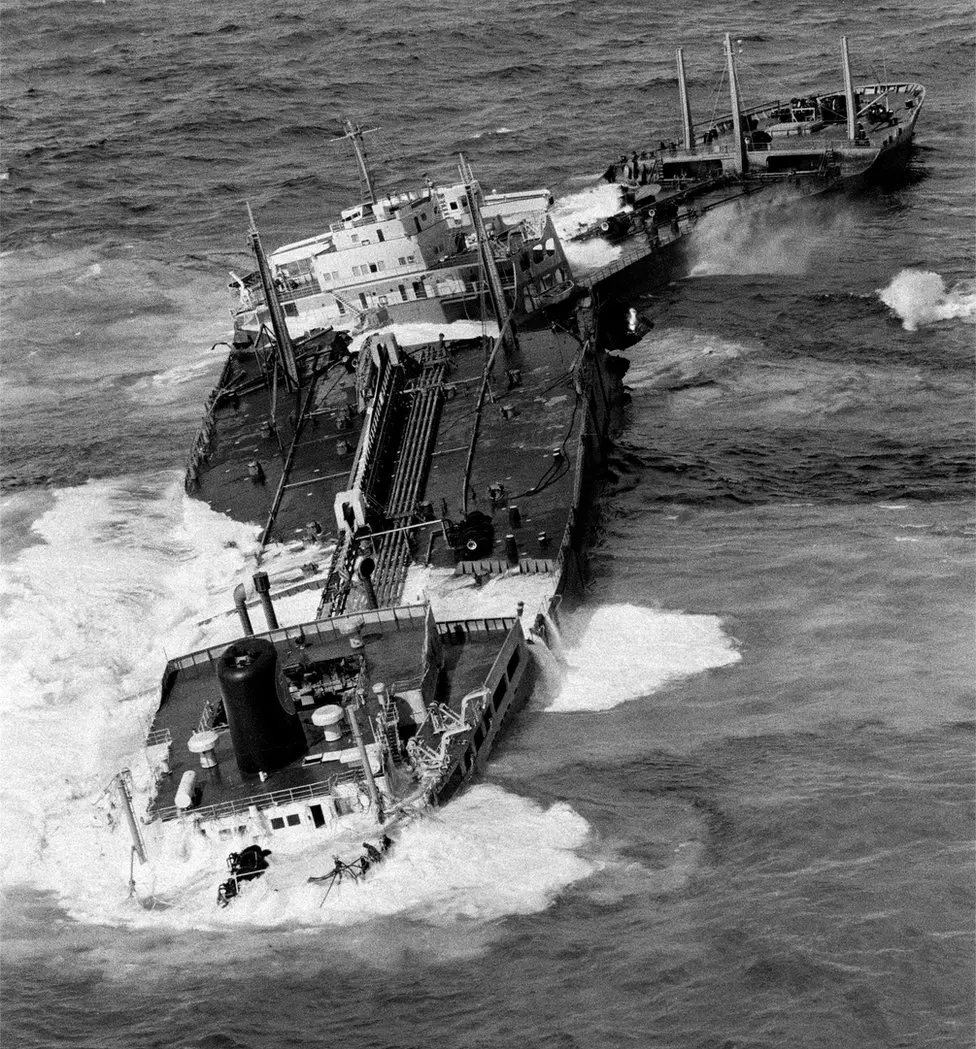
Exxon Valdez was a terrible oil spill in Alaska (apparently caused by staff being overworked and so lack of sleep). Even today the after effects of the damage it did to the seas, marine creatures and birds is heart-breaking.
But let’s not be complacent that nothing similar could happen here. Back in 1967 England had its own serious oil spill in 1967, when a tanker struck Pollard’s Rock in Cornwall, spilling millions of gallons of oil, which affected the coast in France, Guernsey and Spain. Over 15,000 birds were killed.
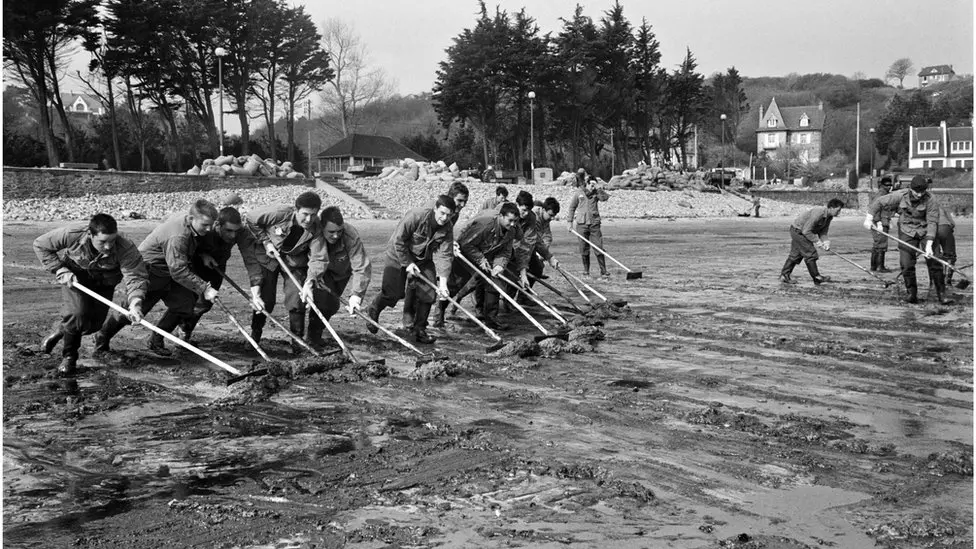
The Vanish Stain Remover Fiasco in Cornwall
Recently, 4500 containers of Vanish stain remover washed up on a Cornish beach, after 18,000 fell off a container ship (so the rest are still at sea somewhere).
The local sea turned pink, and thankfully many volunteers helped to clean up the sea, to help wildlife. However others faced fines, as they drove to the beach to pick up free bottles of Vanish, and drove them home. We have a long way to go.
And today in 2025, environmentalists are asking local people to stop polluting the beaches, as it’s causing catastrophe in Cornwall. Recently another ship load of plastic nozzles (for nasal sprays and antibiotic ear/eye wash) has been floating in their thousand on Cornish beaches and along Helford River, believed to be from a ship container that has been lost at sea.
Beach clean volunteers on the Isles of Scilly even found parts of an American space rocket. What goes up must come down – and unfortunately often lands in the sea.
World peace. We all want it. And it’s heart-breaking that in the 21st century, we still have politicians who believe killing each other, is the way to create it. Or that the way to make money is to sell weapons that kill innocent people and children.
Also learn how to help animals in war zones
One of the best ways we can help is to avoid mainstream news, which never report s the full story. Get real facts at Byline Times (no ads or bias).
There are innocent casualties on every side, while those who plan the bombs meet with ‘world leaders’ who seem powerless to stop the violence (what is the UN for?)
MPs talk as if war is the norm (in Australia recently, one Green MP was lambasted after her party walked out of Parliament, in protest at the government funding violence).
Why Do the Same Countries Go to War?
It’s always the same countries: the UK, USA, Russia, Middle Eastern countries. Most with oil to defend (or in the case of the UK and USA, possibly due to those who consider themselves ’empires’ that run the world, instead of leaving the job to professional peacekeeping teams).
If people in an office don’t get along, you find a mediator. You don’t bomb people. Owlcation says to find peace, you have to resolve the 8 main reasons for war.
Bad media is another reason. If you don’t know why Russia invaded Ukraine, join the rest of us. The news gives soundbites, never stories behind the wars, so therefore no solutions. This war actually dates back 10 years, and has killed half a million soldiers and countless civilians.
The irony is that Putin adores animals (despite being responsible for so many being killed in war) and has even passed laws for better treatment of animals in Russia.
This leads to the obvious preventive measure: don’t let people become leaders, who obviously are not right in the head (Trump included). Putin is now the longest-serving Russian leader since Stalin, and despite growing up in poverty, now lives in palace worth a billion dollars.
It was only in 1921 that Ireland became independent (against the wishes of the Guinness founder, a Protestant who would not let the new government use his harp logo – if you look closely, you’ll see the national harp emblem is the other way around, to get out of being sued).
Brexit caused issues with the peace-deal Good Friday Agreement (like a coalition government), due to fights over imports of food. But the obvious answer is to focus on local food, then this argument would never have arisen.
Remember the Girl Burned by Napalm?
We’ve all seen the infamous photo of Phan Thị Kim Phúc (who ran from the scene in Vietnam after being burned from a napalm attack). She spent 14 months in hospital and her brother (to her left in the photo) lost an eye).
Nick Ut (who had just watched a baby die in its grandmother’s arms) put down his camera after taking the photographer and took her to hospital. He remained friends with both siblings, she now runs The KIM Foundation, to help other child victims of war.
Is There a Solution to the Israel/Gaza War?

Apparently yes, though you would never know it from listening to the media and MPs. Palestine is presently on Israeli land and wants to establish its own state, a war dating back 2000 years, mostly from just after when Jews fled Europe from the Nazis.
A war in 1967 left Israel with the West Bank and Gaza Strip, which is home to many Palestinians. So you can how the conflict grew.
Things have got worse since Gaza (now controlled by the militant group Hamas) killed over 1000 Israelis (including babies) and took over 240 people hostage in 2023, leaving the present war, which has left many dead and over 2 million people at risk of famine.
Those seeking aid are even being shot dead. Ethical Consumer has a list of brands to boycott that are profiting from genocide.
Many peacebuilders believe their two-state solution (an independent state in Gaza and most of the West Bank – and the rest led by Israel) may now be impossible. But there is hope.
Political writer Daniel Levin (whose father had his arm blown off in the last days of the 1948 war) says rather than the now-utopian ‘one shared state’, a different vision of a two-state solution could work.
It would still contain aspects of the one-state solution (freedom of employment, movement and residency with security controls). So people could live, work and study anywhere. But only vote in their own state.
Israelis living in occupied Palestine could move back if wished to Israel (with relocation papers) or remain in Palestine and follow their laws.
He also writes that more support should be given to powers that promote peace, rather than politicians, that just fuel the fire by refusing to look at peaceful alternatives.
A Land for All is the likely best solution. An idea born from peaceful discussions on both sides, it offers 15 reasons why this idea is the best solution:
It acknowledges historical and cultural beliefs of both lands, provides each side with a sovereign state, Jerusalem becomes the capital of both states and the solution can be implemented immediately.
Seeds of Peace is a US summer camp, where they take opposing sides to have them work and play together, to become the future leaders of tomorrow (say Israeli and Palestinian teenagers). They arrive wanting to kill each other, and leave as friends.
Finding Hope in the Midst of War
The Forgiveness Project is a website set up by an Italian journalist, which interviews those who have chosen to forgive.
This is big stuff: mothers who have forgiven those who have murdered their sons, adults who have forgiven parents for years of abuse and sons who have forgiven terrorist fathers.
Recently, the founder interviewed two fathers (one from Palestine and one from Israel) who both had their young daughters murdered by the other side (an Israeli soldier and two Palestinian suicide bombers).
But both now work for peace organisations, to try to prevent the vicious circle of violence continuing. Organisations can download free forgiveness tools online.
Treating Women Well Creates World Peace

Most countries that go to war, have issues with women. Most men are peaceful, but it’s true that (aside from Margaret Thatcher), most countries that don’t go to war are led by women (until recently that would be New Zealand, and many Scandinavian countries).
It’s not that men are more ‘violent’, but that sometimes the egos come out (think Johnson, Trump and Putin).
Malala Yousafzai was born to a Pakistani education activist (and humanitarian father). The world’s youngest Nobel Prize laureate was shot in the head (along with two friends who thankfully recovered) for writing a blog on what life was like, living under the Taliban regime.
She graduated from Oxford University with a degree in philosophy, politics and economics and now campaigns for world peace and education for girls. She now possibly wants to return home one day, to lead her country.
If you want to end the war, then instead of sending guns – send books. Instead of sending tanks, send pens. Instead of sending soldiers, send teachers. Malala Yousafzai
Politics, Media and the Middle East
We have Prime Ministers and Presidents who indulge each other and those abroad who are committing genocide (while even our own BBC is like propaganda, never questioning or investigating what arms sales and cosying up to narcissistic leaders is doing).
Despite President Trump (in a Gallop poll in September 2025) being the most unpopular leader in his country than any other modern president, the media fawned over a state visit to England (boycotted by Ed Davey, who like many thought it disgraceful to host a lavish banquet, while genocide in Gaza is starving people). Partly due to England selling arms to Israel, which then drops bombs on children’s hospitals.
Those seeking aid are even being shot dead. Ethical Consumer has a list of brands to boycott that are profiting from genocide.
Political writer Daniel Levin (whose father had his arm blown off in the last days of the 1948 war) says rather than the utopian ‘one shared state’, a different vision of a two-state solution could work. A Land for All also has a peaceful solution that could be implemented immediately.
Better Alternatives to Replacing Trident

Trident is the name for four of Britain’s six nuclear submarines, one of which is patrolling our seas right now. Just one nuclear submarine is capable of killing 64 million people.
Each nuclear submarine also harms marine creatures through propellors and collisions, with underwater sonar noise affecting food and habitat of whales and dolphins (who often get ear/brain bleeds, hearing loss and suffer mass strandings).
Whereas Labour used to be against replacing Trident, today (along with the Conservatives and Reform UK), Sir Keir Starmer is committed to replacing our ‘nuclear deterrent’. A policy not shared by former Conservative minister Michael Portillo who says replacing it is a waste of time and money.
Greens and SNP both would not replace it, Lib Dems want a minimal nuclear deterrent.
The UK has admitted that many arms sold have been used to commit genocide atrocities abroad, including in Gaza. We even host ‘arms fairs’ (a bit like craft fairs, but it’s a meet-and-greet for people to buy weapons to kill and terrorise people). All promoted and funded by government.
We currently have 225 bombs that are 8 times more powerful than the one that dropped on Hiroshima and killed 140,000 people and severely burned two-year old Sadako Sasaki. Who survived for 10 years, before finally dying of her injuries.
What’s Wrong with Trident?
Nuclear weapons have not prevented wars (even during the Cold War between the USA and Soviet Union, they were involved in other wars elsewhere). Just one accident would kill us all in a second, and the chances of accidents are strong.
It’s not true that President Trump has a ‘red button’ on his desk (apart from one to order his beloved cola). But he could order strikes, to immediately release warheads.
Something like this happened in 1962 during the Cuban Missile Crisis. In Wisconsin, a ‘Soviet intruder’ set off all the alarms, and almost started World War III. Until someone thankfully stopped it, when it was discovered the ‘intruder’ was a wild black bear.
Only a few countries now use and sell nuclear weapons and arms (South Africa voluntarily got rid of all its arsenal, so why can’t we?) Costa Rica (no.1 in the World Happiness Index) got rid of its military decades ago, spending the money on protecting rainforests and funding education.
It does seem to mostly be due to the ‘we are the old British empire’ mentality. But even our nuclear deterrent system is only leased from the USA. So the recent purchase of more weapons means the government is even more in the pocket of President Trump.
Someone who so immature, he actually told the (unhinged and dangerous) North Korean president that ‘my nuclear button is bigger and more powerful than yours’.
One odd thing about US voters is that many who are very religious (so disagree with abortion) think it’s okay to fund weapons that kill unborn children abroad? Only American foetuses matter?
Spend the Money on Better Things
Replacing Trident will cost $31 billion, but with the add-ons (warheads, maintenance, contingency and de-commissioning), the cost skyrockets to $201 (source: CND). This money they say could be spent instead on:
- Building 120 state-of-the-art NHS hospitals
- Funding 150,000 new nurses
- Building 3 million affordable homes (not on wildlife land)
- Install solar panels in every UK home (which would reduce bills, as well as climate change).
- Pay the tuition fees for 8 million students.
Yet the government often says it has no money to fund what experts say are the real dangerous issues these days: climate change, terrorism, cyber-security and pandemic prevention.
We have a Chancellor who will take away essential pennies from pensioners to heat their homes in winter, and can’t find money to protect native wildlife.
Yet can find over $200 billion for a weapons system that is not needed, won’t be used, is a colossal danger to all species, and one day will be obsolete anyway, when we finally get world peace. Which would also help animals in war zones.
Switch your banking to Triodos, that does not fund weapon sales.
What About ‘Protecting Jobs?’
This is always the old chestnut brought out, to fund things that should not be funded. Big supermarkets and Amazon create ‘jobs’ but at the expense of local communities, which would be richer without them.
The UK arms industry is only responsible for around 2% of jobs, and these could easily be transferred to much-needed engineering jobs for the green energy industry.
The government says arms are not sold to countries that practice human rights abuses. But what else are you going to do with machine guns?
Trident employs around 11,500 people. CND says you could give each worker a cheque for £1 million, and it would still cost little more than 1/20th of the cost of replacing Trident.
Two British Men (who prevented World War III)
If you like songs by singer James Blunt, you may not know that before his song-writing career, he was a British cavalry officer. While serving in Kosovo, a unit he headed was ordered by a US general to attack Russian troops, who had seized an airfield.
General Mike Jackson refused saying ‘I’m not going to have my soldiers be responsible for starting World War III’. Mike’s standing up to the US orders led the tabloids to name him ‘Macho Jacko’. His colleague (James Blunt) agreed, saying he would have risked a court martial and refused the order himself.
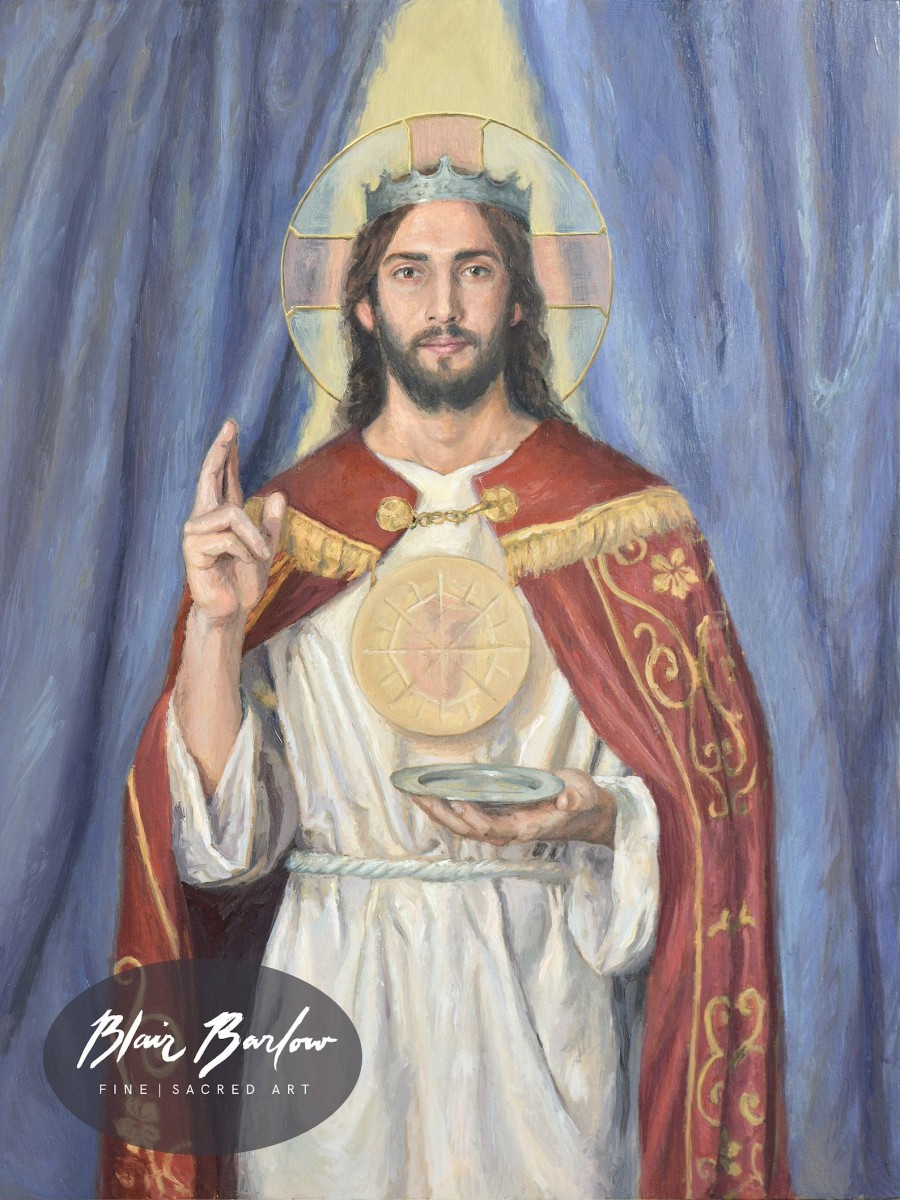
England was always a ‘Christian nation’, it was Catholic until the reformation of Henry VIII, when he replaced the Pope with himself as head of the church. Which later morphed into the Church of England (the head of which is now King Charles).
Of course today we live in a multi-cultural society. But the majority of people in England still identify themselves as Christians. And as a tolerant and peaceful bunch, there should not really be many issues (likely the only one that many of us have issues with is Halal and Kosher meat (where against the advice of vets at Compassion in World Farming), food animals are not stunned before slaughter.
The good news is that it’s perfectly possible for both Muslim and Jewish religions to be vegan, it’s kind and find within both faiths. The Middle Eastern Vegan Society even has its own v-label for plant foods!
But now something ugly has reared its head, first in the USA and increasingly in England. White Christian Evangelism. What is this? It’s the kind of Trumpian politics that is creating such division and hate, that it’s almost now causing civil war over the pond, and mass shootings. And could do here, if nothing is done.
It’s basically a blend of far right (not conservative with a small c) politics, combined with some idiotic notion that somehow it’s following the teachings of Jesus Christ. Who these ‘followers’ seem to either don’t know or have forgotten that Jesus Christ was a peaceful, simple man who preached to love and forgive everyone.
And if alive today, would no doubt be protecting the downtrodden people, innocent animals and saving the planet.
We are in dangerous territory. President Trump and his vice-president are both always ‘thanking God’ for their right to support arms sales, war, hunt polar bears, drill for oil, deny climate change, insult others who don’t share their beliefs, and then ‘hijack Christianity’ to do all this, in the name of Jesus.
This is veering into other areas like homophobia, not doing anything about genocide, cosying up to world dictators and groping women. We have a situation where the monarchy (head of our Church of England) used money to pay off a young woman who has now committed suicide, due to being groomed by sexual predator Jeffrey Epstein, who appears linked to powerful ‘Christian’ men.
It’s not for us to have shame, it’s for them. Gisèle Pelicot (whose husband drugged her to be raped multiple times in France)
Yet anyone who opposes these dubious morals are accused of being anything from ‘far left radicals’ to ‘antisemitic’ if questioning the genocide in Gaza. One Green MP in New Zealand was recently thrown out of parliament, for daring to question the genocide in Gaza, and asking politicians to do something to stop it.
Now in England, we are starting to get more of the same. Many people feel worried (not just due to politics) but because this message of Christianity does not match the message of love, acceptance, and peace found in the gospels.
JD Vance is wrong. Jesus doesn’t ask us to rank our love for others. Pope Leo XIV (in response to a quote by vice-president JD Vance).
A few years back, leading Catholics in England wrote an open letter to Iain Duncan-Smith (a Catholic Conservative MP who was in charge of reforming benefits, which appeared to be hurting the vulnerable – former MP Jacob Rees-Mogg is also a devoted Catholic). Here is an excerpt:
We urge you to abandon further cuts which are likely to cause more damage. To become seriously ill or disabled is bad enough. To then have to wait months for help whilst unpaid bills mount up, perhaps fearing eviction or needing to use a foodbank, is distressing and damaging.
We know you place great faith in Universal Credit to restore fairness to the system, but would ask you to reconsider halving of the disabled child’s allowance. Families with disabled children, are already more likely to be living in poverty.
Support Values of Peace and Acceptance

Quakers and others who follow the heart of Jesus’ teachings know real Christianity is about peace, forgiveness, and understanding. Trumpian politics and white evangelical movements often promote fear, division, and even support for guns and racism. That isn’t what Jesus preached.
Challenge Racism and Xenophobia
White Christian evangelicalism often ignores racism or tries to justify it with selective Bible passages. Real Christianity, as seen in the early church, stands against racism. Join and support groups fighting for racial justice within faith communities. Jesus Christ was from the Middle East, not the USA!
Did you that St George (the patron saint of England) was actually a Roman soldier born in what is now Turkey? He was a Eurasian immigrant!
Combat Homophobia and Exclusion
Many evangelical churches still preach against same-sex relationships, leaving LGBTQ people feeling unsafe or unwelcome. That goes against the message of Christ. Read more on why it’s best to ignore homophobia in both politics and the media.
Reject Guns, Hunting, and Violence
In the US, some evangelicals claim gun ownership or hunting is a God-given right. But Jesus never supported violence or weapons. Support campaigns that keep guns out of churches and promote safe communities. Share voices from Christians who are against hunting for sport or power.
A Book on Real Christianity (love, peace!)

God Didn’t Make Us to Hate Us is an uplifting book of 40 devotions, to liberate you from your fear of God, if you have a faith. And embrace the heart-healing forgiveness of Jesus.
Author ‘Father Lizzie!’ is the vicar of a church in Texas, which she planted in 2022 (yes, they ‘plant churches’ in the USA!) Known for her trademark phrase ‘beloved babes of God’, she uses her platform to unravel ‘toxic theology’ and reveal the abiding love of God. Her husband is also a preacher.
Why This Book is Timely (and needed)
Not so long ago, to believe in God was optional. And if you went to church, you mostly would find a kindly priest or vicar to offer advice, and offer prayers.
Now we have ‘born-again’ Christians (who know little of the religion they preach, due to being new to it) who scare people witless if they are gay or immigrants. Yet don’t call out people living lives of excess, flying around on private jets to meet world dictators.
Years ago, Gandhi was considering becoming a Christian. But after meeting ‘racist Christians’, he decided to not join the religion, just keep ‘all the good bits’ about Jesus.
There is a story of a Christian preacher in India, who was scaring local Hindus that if they did not follow the way of Christ, they would suffer in the next life.
With no takers, he asked Gandhi why this was happening, why they were not scared? The story is that Gandhi replied: ‘Once you start behaving like a real Christian, people may start listening to you!’
If you know anyone who’s racist, have them watch the 1958 film The Defiant Ones. It portrays a white and black man on the run from chain gangs, and can’t separate due to metal holding them together.
Highly reviewed, Tony Curtis (who took the role after Marlon Brando had to pull out due to contractual obligations) was warned not to do the film in a racist USA at the time, but he did it all the same. And insisted Sidney Poitier’s name took top billing, unheard of at the time.
Good Books to Reduce Religious Hatred
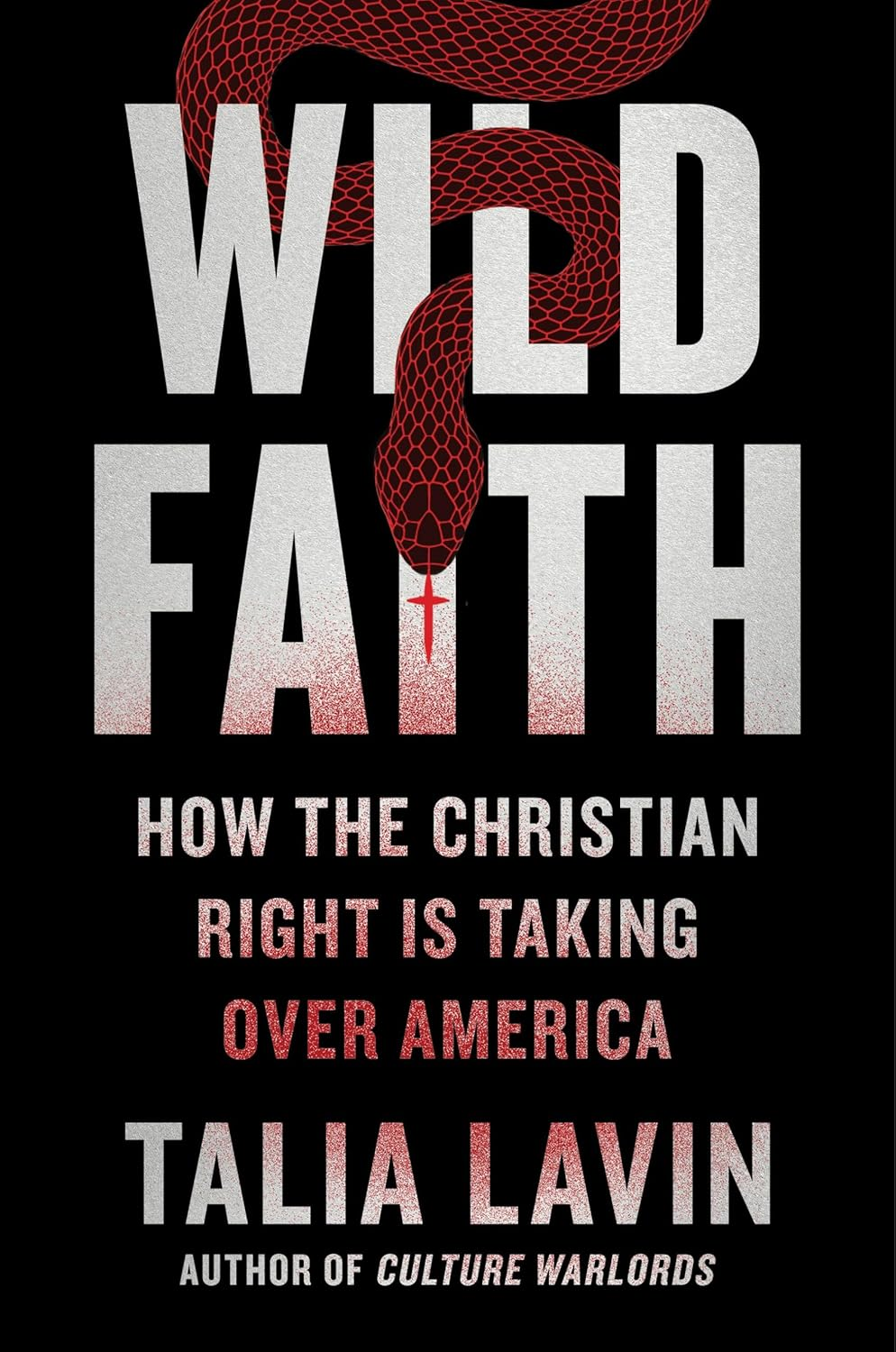
Wild Faith is a book again on how the Christian Right is taking over America, by investigative journalist Talia Lavin. From book bans in libraries to banning gay rights, she also covers the Christian Patriarchy movement (a desire to place all women under male control) and ‘deliverance ministers’ that leads to child abuse.
Separation of Church and Hate is by the son of a former Catholic nun and Franciscan brother, a Biblically correct takedown of far-right Christian hatred. For over 200 years, the US constitution has given people the right to a society where church and state exist independently. But now this is being hijacked by a few, to impose narrow views on government and faith.
These extremists who weaponize the Bible for earthly power, are not on the side of Jesus. Comedian John Fugelsang takes you through the issues. Abortion is a personal ethics issue and one that should be respected, but other issues like immigration and homophobia are far less clear-cut.
Nice Christians don’t get the airtime. You don’t see them on cable news, talking about how war is bad. Villains make for better TV. John Fugelsang
Bring Back Your People is a book to bring the real issues of climate change and pollution back to a nasty politics more concerned with scaring people into voting for far-right beliefs. The author is a preacher and leader of the Poor People’s Campaign in the USA, who even saw loved ones, get sucked into this new politics. He says, the price of gas is not the reason to spew politics of hate.
In the US recently, one bereaved father called out Trump and Vance for mentioning (without permission) the name of his son, accidentally killed by a Haiti immigrant. He asked them to stop using a genuine accident which involved the death of his son, for political gain.
I wish that my son was killed by a 60-year old white man. I bet you never thought anyone would say anything so blunt. But if that guy killed my 11-year old son, the hate-spewing people would leave us alone. Nathan Clark (father of Aiden Clark speaking alongside his wife Danielle).
The same thing happened in England, when Boris Johnson used two murders, again to spew his own agenda:
Jack would be seething at his death (and his life) being used to perpetuate an agenda of hate. He believed in the goodness of humanity. Borrow his intelligence, share his drive, feel his passion, burn with his anger and extinguish hatred with his kindness. Never give up his fight. David Merritt (father of Jack Merritt, who with Saskia Jones was killed in a London Bridge terrorist attack)
Quakers or ‘the religious society of friends) meet across England in Meeting Houses (usually plain beautiful buildings). Unlike traditional faith services, there are no priests, vicars, hymns or prayer services. People simply sit in silence, until someone is inspired to speak.
Often described as ‘western Buddhists’, this faith has the same kind of philosophy: plain living, peace, kindness, justice and doing good in the world.
Although inspired by the philosophy and teachings of Jesus Christ, Quakers don’t believe they have to be ‘saved’ and are more believing that the light of Christ, is through how you behave, not what you preach or how much money you give to a church.
Although being seen as meek and mild, this is not so. Many Quakers over the centuries have been imprisoned and attacked for their beliefs (founder George Fox and his wife spent years in prison, and was even thrown down church steps and beaten with sticks and a Bible).
When he refused to serve in the army due to Pacifist beliefs, he had his prison sentence extended. Quakers over the years have also been instrumental in bringing huge changes for both the planet and animals, and were involved in the ending of slavery.
The History of the Quaker Movement
George Fox (a shoe maker in Leicestershire) grew up in a religious family, so knew the Bible very well. But even while young, he was aghast at the hypocrisy of the established church, that seemed more concerned with wealth and power, rather than living the simple peaceful life that Jesus Christ preached.
After years of being disappointed with answers from ‘those in charge’, he went off to explore his faith alone.
It’s said that while visiting Pendle Hill (the gateway to the Lake District), he had a vision and from there, began a movement that soon had 60,000 followers.
This greatly upset the established church (at a time when there was civil war between Catholics and Anglicans, due to the reformation of Henry VIII who replaced the Pope with himself as head of the church, so he could divorce and remarry). This movement later became the Church of England.
George Fox was a frequent visitor to the Cumbrian town of Ulverston, where the local judge (though not a Quaker) supported him. He lived at Swarthmoor Hall (now a Quaker retreat ). George married his widowed daughter (ten years his senior and mother to 8 children).
She too became a Quaker. During over 20 years of marriage, they did not see each other that much, as he was either away preaching or one of them was in prison.
One of his great supporters was the English writer and thinker William Penn, who also was frequently sent to prison (in the Tower of London).
He went on to found the US state of Pennsylvania, and returned to England where he was cheated out of his wealth by an associate. He died penniless, but is known as one of the founding fathers of the Quaker movement.
I expect to pass through life but once. If therefore, there be any kindness I can show, or any good thing I can do to any fellow being. Let me do it now. And not defer or neglect it. As I shall not pass this way again. William Penn
Quakers Believe in Peace
World peace is what we mostly know Quakers for. They are against war, and also have strong views on human rights, animal welfare and environmental stewardship. Beliefs are so strong, that some were almost certainly put to death during the last World War.
Quakers Believe in Simplicity
Quakers are have always dressed simply, and avoided gambling (and mostly alcohol). Even Meeting Houses are very simple, with no formal sermon, hymns or prayer.
Quakers simply consider before purchase. Do they need it? And if so, how was it made, did it cause harm to the planet, animals or people? They still buy cars and coffee, but not if it causes others to suffer. Some have compared them Amish people (but with electricity and without the bonnets!)
Quakers Believe in Truth
If you tell fibs, you can’t be a Quaker. Truth is the ultimate aim of relationships. Because without truthful communication, there is nothing left. Quakers for this reason often were successful in business.
You won’t find sneaky businessmen in the Quaker world. They all pay a Living wage, and there is no deception of important things left unsaid. Quakers also speak ‘truth to power’. And are not afraid of telling MPs what they think, about social justice.
It was easy to imprison Quakers back in the day, because they don’t swear oaths on the Bible (preferring to just ‘tell the truth’). They also would not pay tithes to the established church, nor doff their hats (or bow) to people in charge. So you can imagine!
Quakers Believe in Equality
Quakers were into equal rights for all, long before anyone else. You won’t find arguments about women bishops here. Quakers were the first British religious movement also to condemn slavery, and were pioneers in prison reform.
For the same reason, Quakers refuse honorary titles. They would never become a Sir or a Dame or a Viscount or an OBE. They don’t even use the terms ‘Mrs and Mrs’, just referring to others as ‘friends’.
Quakers reject war in all its forms, and some even refuse to pay tax, because it is used to buy weapons (legally done, but refusing to earn above the tax threshold).
Quakers Don’t Accept Lottery Grants
Quakers refuse to take money from lottery grants. Because in order for someone to win, others (often vulnerable people desperate for money) has to lose. And lotteries are a form of gambling, which is against Quaker faith.
Lotteries also give the impression that ‘life begins when you have lots of money’, rather than working to produce something of worth to others. If a local church orders a shiny new roof paid from the pockets of people who are now out-of-pocket, this is not seen as good practice.
How George Cadbury Helped A Village (from the grave!)
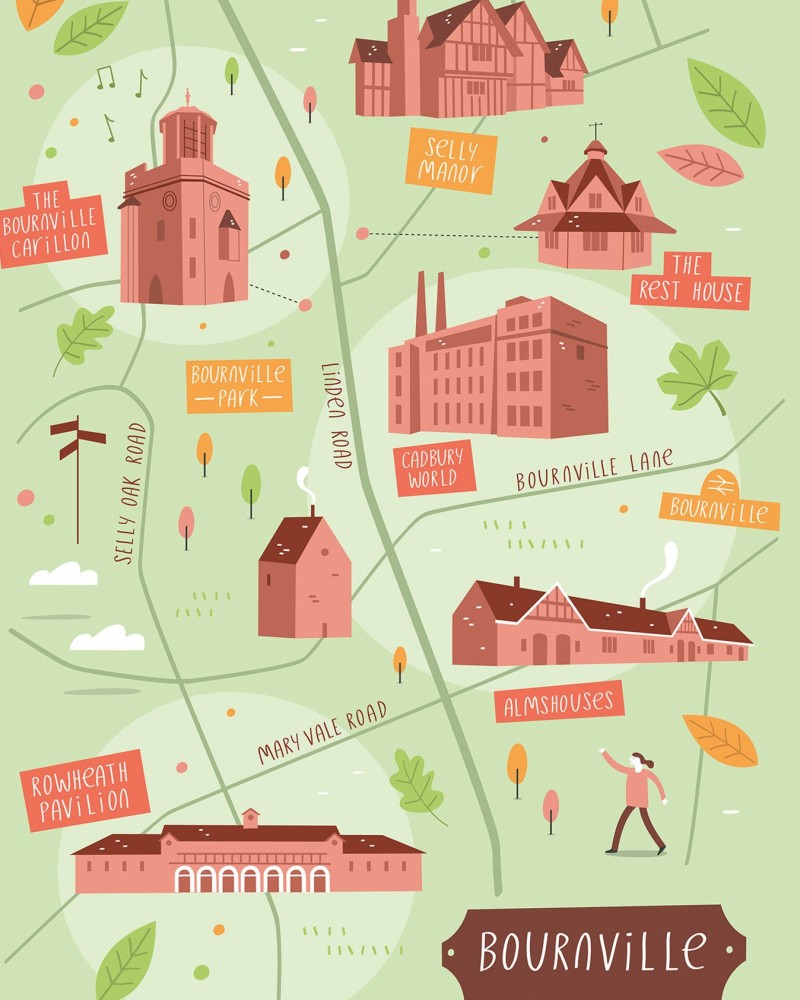
Now here’s a story to make you smile, even if eventually, Tesco did kind of win (as they unfortunately always tend to, same thing happened in Sheringham, Norfolk):
Bournville is a small village just outside Birmingham, built by George Cadbury, a devout Quaker, who invented drinking chocolate, to dissuade his workers from drinking gin (he was a strict teetotaller!)
He looked after his staff well, and built this village with nice houses and pretty green spaces, to give a good quality of life, amid the city slums of yesteryear.
Cut to a few years ago, and Tesco Express opened a store nearby, and applied for an alcohol license. It was refused, because local people (concerned more about glass litter and hooliganism than George’s religious beliefs) opposed it.
So Tesco Head Office went into action, and launched a legal challenge. And guess what? Clever Mr Cadbury had wrapped the deeds up so well, that it became the first store where it lost, and Tesco had to open this branch, with no alcohol. A triumph of the little man winning!
Alas, Tesco got around it by selling alcohol at a nearby petrol station.
Where to Learn More about Quakers

- Quakers of Britain is the main website, where you can learn more about the movement, read Quaker Faith and Practice (a bit like ‘the Quaker bible’) and find local meetings.
- Quaker Concern for Animals offers educational content and makes charitable donations, believing that all animal lives matter.
- Quaker Education gives details on schools that use Quaker values, to promote a peaceful world. Time is given over to arts, forest schools and volunteering, rather than being glued to phones and laptops.
The Friend (Quaker newspaper)
The Friend magazine is not ‘positive news’ as such, but a quarterly magazine that focuses on peace, designed to find solutions, rather than cause upset. It’s from the Quakers, a religion that broke away from the Church of England, to campaign for peace, environment, animal welfare and prison reform.
Also in podcast form, if you prefer to listen, rather than read. Just like BBC Radio 4’s Thought for the Day, this site has a ‘thought for the week’. There are also discounted rates for study groups.
Books to Learn More About Quakers
- A Simple Faith in a Complicated World is by a woman who grew up in mainstream faith, but could not find answers in science and psychology. She ended up a Quaker, where she found a community based on the base commandment: love one another.
- Quakers in Politics establishes the theological roots of political activism, which starts amid members of the Society of Friends. The book profiles individuals that influenced public policy, and traces the 360 years of political peaceful activism.
Some Well-Known Quakers
Quakerism still remains a small religious movement, with the highest percentage in Kenya and the USA, although we have the fifth most of any worldwide. Some well-known people raised as Quakers are:
- Judi Dench went to a Quaker school, and says her faith informs everything in her life. Happily married until his death, her husband Michael Williams was a Catholic but she never swayed, and neither believed they had to convert to the other’s faith.
- Paul Eddington (who played Jerry in The Good Life), was granted exemption from military service, due to being a pacifist Quaker. He attended school in Oxfordshire, where many teachers were conscientious objectors.
- Victoria Wood was not a Quaker, but attended meetings with her husband, after becoming interested in the faith. She wrote ‘As I’ve got older, I am more interested in having a belief. If you don’t, it makes everything seem pointless. To only think ‘You’re alive, you have acne and then you die’ makes you wonder what’s it all for’.
- Inspector Morse was raised by Quakers (who often give children ‘virtuous names’ like Hope and Patience, which is why he was called ‘Endeavor’). John Thaw’s widow Sheila Hancock ‘lost religion’ after her mother and first husband died of cancer, became a humanist, and later a Quaker.
War zones put animals in grave danger. From abandoned pets to working donkeys and farm animals, the impact of conflict doesn’t stop with people. Many animals end up hungry, scared, or injured, facing a fight for survival in harsh conditions.
The good news is there are real ways to help, even from thousands of miles away. Here’s a list of practical steps anyone can take to help animals trapped by war.
If you wish to donate anonymously to below charities, set up an account at Charities Aid Foundation. Make one-off donations or set up giving accounts (for business, Gift Aid is taken care of).
easyfundraising is a no-brainer way to raise money. After selecting your chosen charity, any time you buy anything from a participating shop (even train tickets to insurance), a portion of the sale goes to them – loyalty points are not affected:
Charities Helping Animals in War Zones
Nowzad: Helping Animals in Afghanistan & Ukraine
Nowzad is a wonderful charity that’s well worth supporting. As it does amazing work to help animals abroad (often caught up in war). And funds have gone down due to austerity, but they are in great need of financial donations, to help them continue the important work they do.
First, a little history. The charity was founded by a former Royal Marine Sergeant serving in Afghanistan, who was appalled to see how many animals were suffering. He rescued and befriended a dog involved in organised dog-fighting and named him ‘Nowzad’ – his first ever name.
Originally formed to rescue stray cats and dogs in the country, today it has a bigger mission of helping animals caught up in war, the forgotten victims often of world events.
In Afghanistan (where donkeys and horses are main form of transport), volunteers educate local people on how to care for their animals, and provide advice and veterinary care. Nowzad has also recently opened the country’s first sanctuary for horses and donkeys, for older and retired or ill animals.
Here they receive loving care, good food and veterinary care, on the outskirts of Kabul. Here is what your donations pay for:
- £1 – a kilo of bran
- £8 – a monthly hoof trim!
- £20 – an insulated winter coat
- £30 – a month’s fuel supply for the sanctuary
- £50 – a month’s water supply
- £80 – a month’s hay supply (tasty if you’re an equine!)
The charity also has a sanctuary for dogs and cats in Afghanistan, where local people can find free advice and vet care. Plus vaccinations and spaying/neutering services (important to prevent over-population, which often leads to pets living on the streets).
The veterinary team also humanely capture and peacefully put to sleep any local dogs with rabies (presently no cure) so they are not killed by others, in less humane ways.
Nowzad is also working closely with heroic volunteers at animal shelters in Ukraine, which have obviously seen a huge uptake in residents, since the invasion a few years ago.
Help to Save the Afghanistan Shelter
Recently (due to road construction and building high-rise buildings in Kabul, others have decided to bulldoze the Nowzad sanctuaries. So the charity is urgently raising funds to rent new land and build a new stable sanctuary, to continue its vital work. It also has to safely move each resident to the new sanctuary.
The charity needs to raise £100K, to be safe. Together, we can do it!
Easy ways to Support Nowzad Charity
- Set up a Charity Giving Account (can also be done for businesses). This allows you to regularly donate to your favourite charities, with gift aid taken care of. And you can tick the box to remain anonymous, if wished.
- easyfundraising is a no-brainer. Choose Nowzad as your nominated charity. Then anytime you buy a product or service from participating companies (small brands to Amazon to services), a portion of what you pay (at no cost to you) is donated to the charity.
- Leave a legacy in your Will, to help animals after you’ve gone.
- Donate your scrap car. If you have an old banger you never use, you can donate this (including in the USA) and the scrap metal money goes to Nowzad.
- For special occasions, save a tree and send an e-card instead, and profits help Nowzad.
- If you live in Bideford (Devon), the charity has its own retail store selling second-hand goods, to raise much-needed funds.
- Instead of a red paper poppy (plastic ones are now banned), consider buying a purple metal pin poppy, to remember animals that have lost their lives in wars.
- The Nowzad trolley coin fits into any supermarket shopping trolley, enabling you to not bother fiddling around looking for a £1 coin, each time you visit the shops. Your purchase supports the charity, and also advertises it to others, thanks to the logo on the metal coin.
War Paws also provides resources and rescue for animals in war zones.
Helping Donkeys in the Middle East

Safe Haven for Donkeys helps donkeys living on the border in the Middle East, obviously something of extreme concern at present. Donkeys and horses are the main form of transport for many, and often worked on little food or rest. Read more on helping donkey friends.
This charity has just set up a project in Egypt to help donkeys who work in intense heat to move bricks to kilns (used to build houses). Many have untreated wounds, fly infestations and overgrown hooves. The animals are treated both on-site and at mobile clinics.
Although playing lotteries is not the best way to live life, playing their Weather Lottery (instead of the national one) is good to earn them extra funds.
You can also scrap your old car, and monies raised from metal will benefit this wonderful cause. Lucy’s UK Donkey Foundation also gives grants, to help working animals in the Holy Land.
How to Help Animals in Ukraine
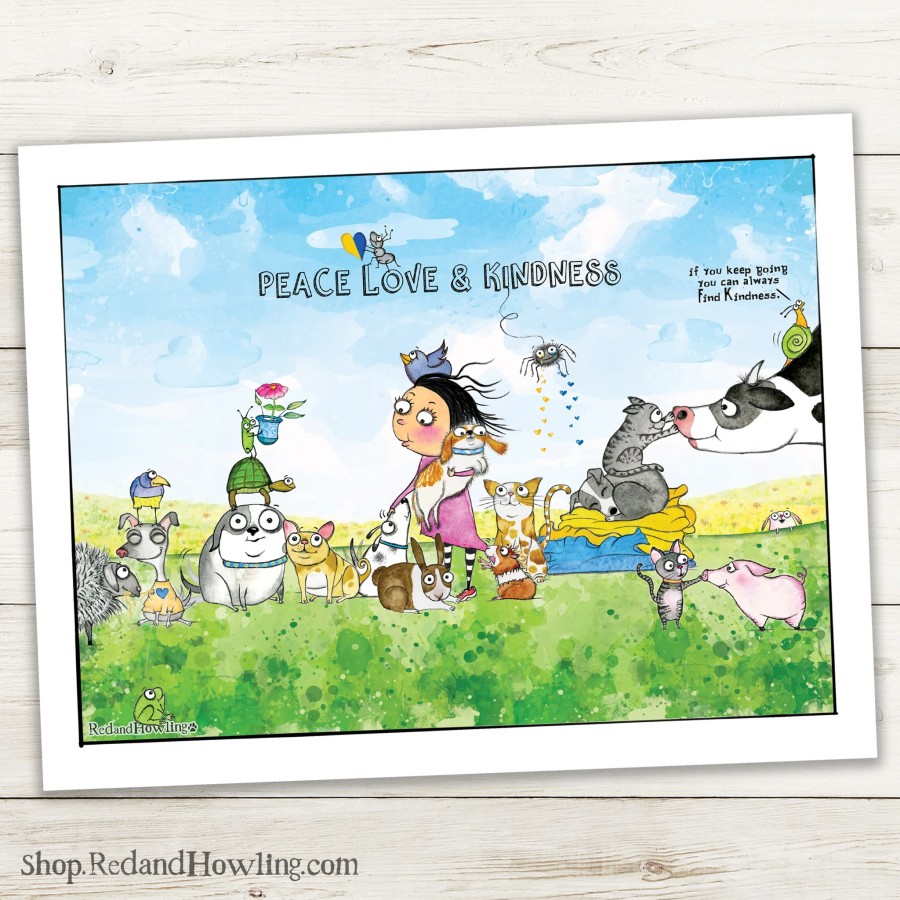
The war in Ukraine has also affected many animals, not just humans. 25% of profits from this print by Red and Howling are donated to animal rescue causes worldwide.
Good Good Good is an American newspaper with a super post on how we can help (the end of the post includes animal shelters to help).

Austria has no nuclear power plants
England opened the world’s first commercial nuclear power station in 1956, and still has many old reactors that are being de-commissioned.
The government has plans to build more nuclear power stations (including a small one on the beautiful wildlife island of Anglesey in North Wales), with an aim of providing around 25% of electricity using this dangerous, expensive and unnecessary form of power.
We can reduce bills and climate change, with walkable communities that promote farmers’ markets and independent shops (a huge amount of oil is used to power supermarkets and lorries to drive food to them). And insulating homes, so that they need less energy to heat.
Conservatives, Labour and Reform UK all support building more nuclear power plants, Lib Dems also do (thought not so many) and Greens don’t want any. If that sounds radical, know that a large number of countries abroad use no nuclear power, and have no intention of doing so:
European Countries with No Nuclear Power
- Austria
- Croatia
- Cyprus
- Denmark
- Estonia
- Greece
- Ireland
- Italy
- Latvia
- Liechtenstein
- Lithuania
- Luxembourg
- Malta
- Norway
- Poland
- Portugal
- Serbia
Other Countries with No Nuclear Power
- Australia
- Belize
- Cambodia
- Colombia
- Costa Rica
- Malaysia
- Nepal
- New Zealand
- Peru
- Philippines
Nuclear Power is Not Safe
Nuclear plants cost billions of pounds to build, with 1.5% of them having had a meltdown accident. Uranium mining can cause lung cancer.
And nuclear waste remains radioactive for hundreds of thousands of years (residents near the islands in the Pacific that carried out nuclear testing almost 100 years ago, still have a higher cancer risk today).
Radioactive Bird Droppings from Sellafield
England’s largest and oldest nuclear plant (Sellafield in Cumbria) was built in the 1940s to make plutonium, in expectation of a cold war. Today, the process has begun to shut the plant down, which will take 100 years.
In the 50s, a fire sent radioactive waste to mainland Europe, and cows’ milk became radioactive. Today, droppings from swallows have found radioactive insects (these birds migrate to Africa, taking pollution with them). Local stray cats are screened for radioactivity, before rehoming.
Even people in Norway are concerned over radiation for their own food and wildlife, due to south-westerly winds possibly carrying radioactive particles across the North Sea, in the event of an accident.
Better Alternatives to Replacing Trident
Trident is the name for four of Britain’s six nuclear submarines, one of which is patrolling our seas right now. Just one nuclear submarine is capable of killing 64 million people.
Each nuclear submarine also harms marine creatures through propellors and collisions, with underwater sonar noise affecting food and habitat of whales and dolphins (who often get ear/brain bleeds, hearing loss and suffer mass strandings).
Whereas Labour used to be against replacing Trident, today (along with the Conservatives and Reform UK), Sir Keir Starmer is committed to replacing our ‘nuclear deterrent’. A policy not shared by former Conservative minister Michael Portillo who says replacing it is a waste of time and money.
Greens and SNP both would not replace it, Lib Dems want a minimal nuclear deterrent.
The UK has admitted that many arms sold have been used to commit genocide atrocities abroad, including in Gaza. We even host ‘arms fairs’ (a bit like craft fairs, but it’s a meet-and-greet for people to buy weapons to kill and terrorise people). All promoted and funded by government.
We currently have 225 bombs that are 8 times more powerful than the one that dropped on Hiroshima and killed 140,000 people and severely burned two-year old Sadako Sasaki. Who survived for 10 years, before finally dying of her injuries.
What’s Wrong with Trident?
Nuclear weapons have not prevented wars (even during the Cold War between the USA and Soviet Union, they were involved in other wars elsewhere). Just one accident would kill us all in a second, and the chances of accidents are strong.
It’s not true that President Trump has a ‘red button’ on his desk (apart from one to order his beloved cola). But he could order strikes, to immediately release warheads.
Something like this happened in 1962 during the Cuban Missile Crisis. In Wisconsin, a ‘Soviet intruder’ set off all the alarms, and almost started World War III. Until someone thankfully stopped it, when it was discovered the ‘intruder’ was a wild black bear.
Only a few countries now use and sell nuclear weapons and arms (South Africa voluntarily got rid of all its arsenal, so why can’t we?) Costa Rica (no.1 in the World Happiness Index) got rid of its military decades ago, spending the money on protecting rainforests and funding education.
It does seem to mostly be due to the ‘we are the old British empire’ mentality. But even our nuclear deterrent system is only leased from the USA. So the recent purchase of more weapons means the government is even more in the pocket of President Trump.
Someone who so immature, he actually told the (unhinged and dangerous) North Korean president that ‘my nuclear button is bigger and more powerful than yours’.
One odd thing about US voters is that many who are very religious (so disagree with abortion) think it’s okay to fund weapons that kill unborn children abroad? Only American foetuses matter?
Spend the Money on Better Things
Replacing Trident will cost $31 billion, but with the add-ons (warheads, maintenance, contingency and de-commissioning), the cost skyrockets to $201 (source: CND). This money they say could be spent instead on:
- Building 120 state-of-the-art NHS hospitals
- Funding 150,000 new nurses
- Building 3 million affordable homes (not on wildlife land)
- Install solar panels in every UK home (which would reduce bills, as well as climate change).
- Pay the tuition fees for 8 million students.
Yet the government often says it has no money to fund what experts say are the real dangerous issues these days: climate change, terrorism, cyber-security and pandemic prevention.
We have a Chancellor who will take away essential pennies from pensioners to heat their homes in winter, and can’t find money to protect native wildlife.
Yet can find over $200 billion for a weapons system that is not needed, won’t be used, is a colossal danger to all species, and one day will be obsolete anyway, when we finally get world peace. Which would also help animals in war zones.
Switch your banking to Triodos, that does not fund weapon sales.
What About ‘Protecting Jobs?’
This is always the old chestnut brought out, to fund things that should not be funded. Big supermarkets and Amazon create ‘jobs’ but at the expense of local communities, which would be richer without them.
The UK arms industry is only responsible for around 2% of jobs, and these could easily be transferred to much-needed engineering jobs for the green energy industry.
The government says arms are not sold to countries that practice human rights abuses. But what else are you going to do with machine guns?
Trident employs around 11,500 people. CND says you could give each worker a cheque for £1 million, and it would still cost little more than 1/20th of the cost of replacing Trident.
Two British Men (who prevented World War III)
If you like songs by singer James Blunt, you may not know that before his song-writing career, he was a British cavalry officer. While serving in Kosovo, a unit he headed was ordered by a US general to attack Russian troops, who had seized an airfield.
General Mike Jackson refused saying ‘I’m not going to have my soldiers be responsible for starting World War III’. Mike’s standing up to the US orders led the tabloids to name him ‘Macho Jacko’. His colleague (James Blunt) agreed, saying he would have risked a court martial and refused the order himself.