Octavia, Canon and Robert (founders of the National Trust)
We’ve all heard of the National Trust. In this post, we’ll learn who founded it (and why children’s writer Beatrix Potter also had an important role). And what the National Trust actually does.
Octavia Hill (a pioneering social reformer)
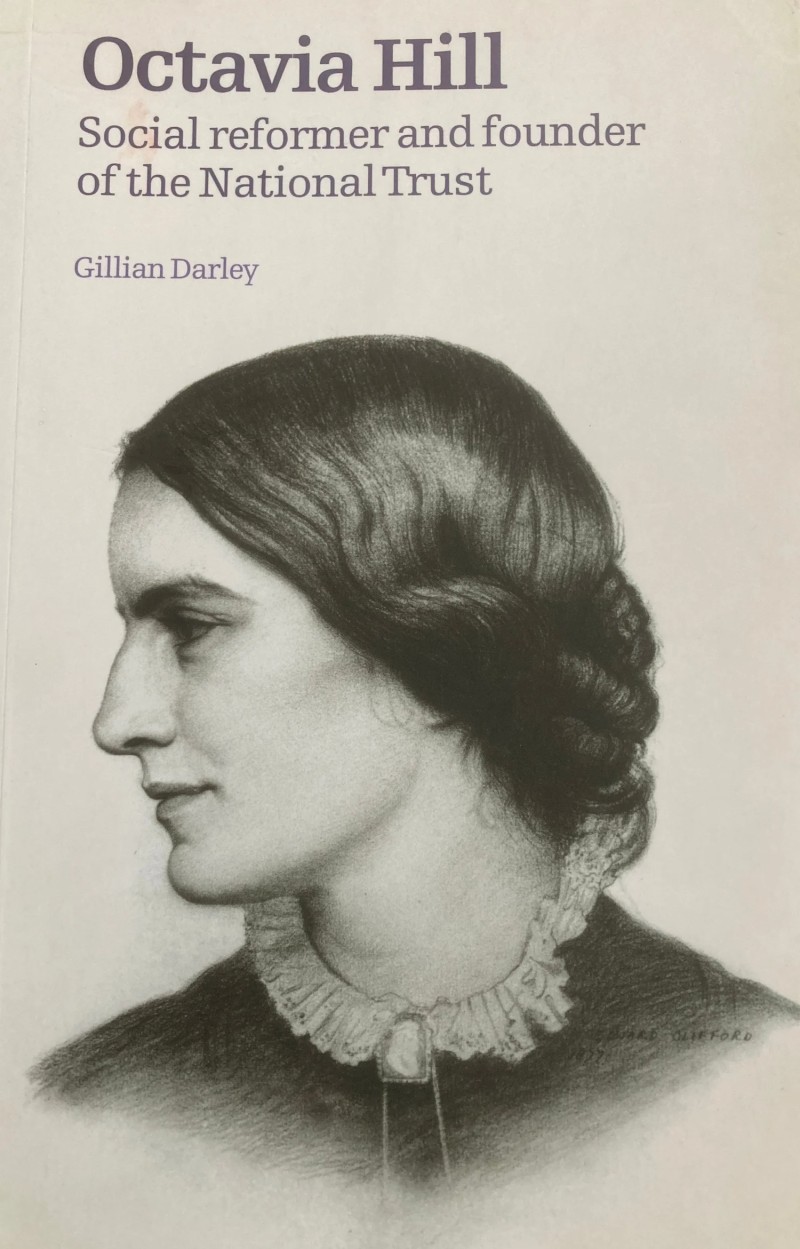
Octavia Hill was one of the three founders of the National Trust. A pioneering thinker and social reformer, she worked not just to protect green spaces, but to improve urban housing, at a time when many people lived in slums.
Born in Cambridge (one of nine children), her parents were also social reformers who opened a school for poor children and their life was comfortable until her father left with depression, after losing his investments. On moving to London, Octavia took a job in a workhouse and saw first-hand the effect of poverty in the city.
With financial help from John Ruskin, she began to do up decaying derelict properties and housing local people, alongside campaigning to preserve local green spaces. She soon had over 3000 tenants! One of the houses she saved was the National-Trust owned Alfriston Clergy House in East Sussex (read info for dogs).
Always follow the Countryside Code to keep all creatures safe. Keep dogs away from steep banks, mushrooms (and toxic plants/trees) and on leads near birds, barnyard friends and wild ponies.
If at the coast, keep away from nesting birds and never walk on sand dunes. Learn how to keep dogs safe by the seaside (check beach bans before travel).
How to upright an overturned sheep
Pregnant sheep (and sometimes due to wool waterlogged from rain) can sometimes roll over onto their backs, and can’t get back upright, due to having four stomach chambers (so will die if not turned back upright).
If you see a sheep on its back, just firmly right it back, then stay with it, until rain has drained off, so it won’t happen again. Then inform your local farmer.
Canon Hardwick Rawnsley and Sir Robert Hunter
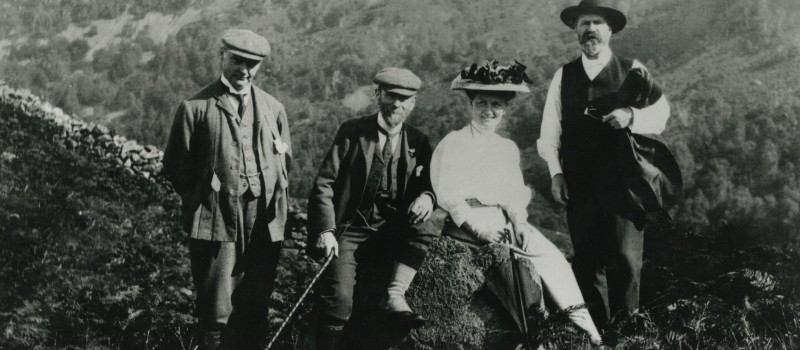
Just as important in the founding of the National Trust were two men: Sir Robert Hunter (centre with his daughter) and Canon Hardwicke Rawnlsey (on the left is a hill-walking friend in the Lake District!)
Canon Hardwick Rawnsley was called ‘Defender of the Lakes’ for his passionate wish to stop damage to the Cumbrian lakes and mountains (especially from tin mining – you’ll see the ruins if you’ve ever climbed Old Man Coniston).
Born to a large family in Oxfordshire, he was the son of a priest and after studying at Oxford, like Octavia also began to take an interest in social reform. After working as a lay preacher in London and volunteering at a ‘lodging house for vagrants’, he met Octavia and Robert Hunter for the first time (introduced by social activist John Ruskin).
After working as a chaplain in Bristol, he was ‘horrified’ by the living conditions of local people in damp houses, and began organising countryside walks and football matches to get them out in the fresh air.
After taking a holiday in the Lake District in 1875 (where he met his wife Edit – daughter of an Ambleside coal merchant), he continued his social work in Cumbria, and became vicar of Wray (known for its castle, near Windermere).
They were soon setting up workshops to teach sewing, woodwork and metalwork to locals and later they moved to Keswick, where he became a town councillor to oppose developments that would spoil the beauty of local mountain passes.
His home (Allan Bank) in Grasmere is now owned by the National Trust. Most areas are dog-friendly but there are rules to keep local squirrels safe!
Robert Hunter was a Londoner (son of a sailor!) who retired from ships soon after his birth, and switched hats to owning ships, so the family was quite wealthy. However as they moved around the city, he was aghast at how green fields were being replaced by roads and houses. This made him passionate in ensuring everyone on any income had access to natural space.
He soon became involved in legal campaigns, one of the first (which he won) to to stop Lord Spencer enclosing Wimbledon Common, to stop it being accessible to the general public (he planned to build a manor house there and sell the rest of the land off to build houses, to pay for it).
Thanks to Robert and his society (and help from local resident and future MP Sir Henry Peek), people can now enjoy Wimbledon Commn today as a public space.
Robert was also instrumental in saving Hampstead Heath and Epping Forest from development.
Remember geeky ‘Gavin’ from The Office? In real life, actor Mackenzie Crook is a passionate environmentalist. A few years back, a local forest in Essex was at risk of development. So he used the money from a project to buy all eight cares, so nobody could build on it!
Robert had a sad life. His childhood sweetheart Emily died in childbirth (along with their son) just three years after their marriage. He went on to have three daughters by his second wife Nellie, and they lived in Haslmere (Surrey) for the rest of his days (he’s buried in an unmarked grave).
He was introduced to Canon by Octavia, and this led him to also campaign against the closure of footpaths in Keswick. So you can could see what was going to happen, when these three got together!
It was Octavia and Canon who started the organisation, and Robert who named it.
Beatrix Potter (donated most of her land to National Trust)
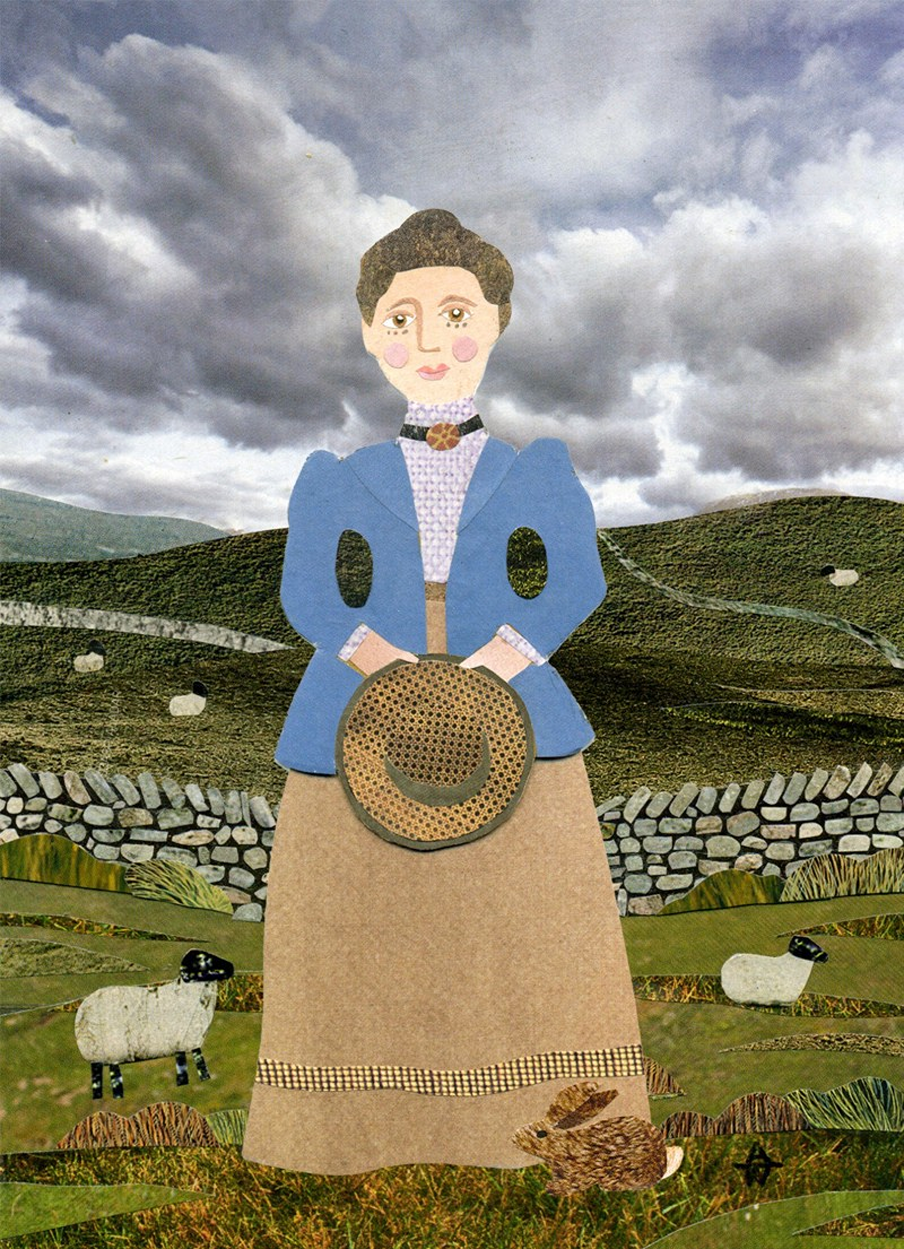
One person greatly influenced by Hardwicke’s work was children’s writer Beatrix Potter, who lived in the hamlet of Near Sawrey near Hawskhead (after marrying the local solicitor who was handling transactions, while she was busy buying local farms to save them from development!)
On her death in 1943 she donated 4000 acres of protected land in the Lake District to the National Trust, which without her likely would now be blocks of flats.
What exactly is the National Trust?
The National Trust is a major chartiy that owns around 500 properties and over 800 miles of coastline in the UK. Members get a magazine, but the main benefit is year-round free parking at any of their car parks, and free entry into any of the houses and grounds (but you stll pay for drinks and food).
The site is pretty dog-friendly, with its own ‘paw-print system to ensure people know beforehand where places are dog-friendly or not, with good safety advice and tips to keep them safe near barnyard friends, birds and native wildlife.
It also uses donations to fund important work like restoring natural habitats to protect endangered species, and also runs large-scale environmental projects (like planting 20 million trees and restoring natural bogs).
Like all major charities, it has its critics (though the main one of allowing trail hunting is not relevant anymore, as it’s listened and banned it).
Some farmers are not happy that the National Trust tend to give more priority to rewilding over farming for food (this is also Reform UK policy). But in fact nature-friendly friending and rewilding can exist side-by-side, it just needs to work with experts, instead of listening to vested interests.
Others (and this is quite laughable) are up-in-arms that the National Trust now serves vegan scones in its cafés! It also funds net-zero projects (Nigel may wish to ban the organisation!) and lobbies government on green issues.