How organic farmers can help yellowhammers
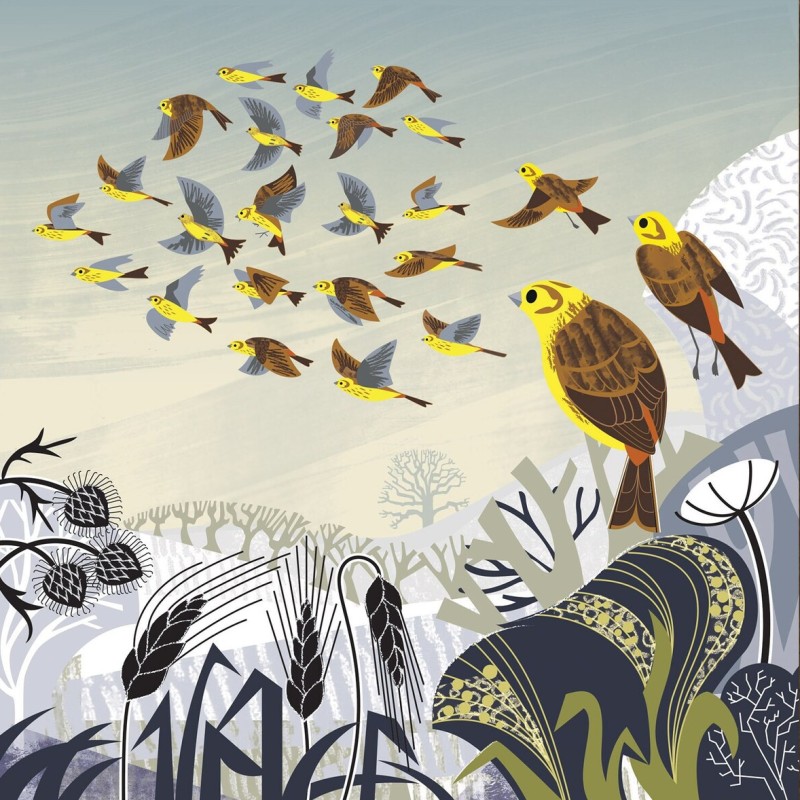
Yellowhammers are endangered birds in England, due to habitat loss and reduced winter food. Known for their bright plumage (females are more brown than yellow), they are a Red listed species.
Related to pine buntings, they have a distinctive song ‘see-see-see-see-bzuuuu’. They mainly eat seeds and insects (which they feed to chicks during the first weeks). In winter, they gather in mixed flocks with other finches, to feed on stubble fields (remaining stalks of wheat, barley and rye after the harvest).
Farmland is yellowhammer natural habitat, so it’s over to you farmers, to help!
- Avoid trimming hedges before September to protect nests (also avoid trimmers, use garden shears). It’s best to maintain thick hedgerows with field margins, to give birds natural food and shelter. Especially yellowhammers, as they nest on or near the ground.
- Farmers can help by creating wide grass margins around arable fields. This helps to seed weeds, and encourage insects as natural food.
- Leave the stubble on the fields, for birds and good soil. Don’t burn it to clear the fields, and never hire it out for stubble-track riding or motocross.
Read more on nature-friendly farming.
If yellowhammers visit your garden
Read our posts on creating safe havens for garden birds and how to stop birds flying into windows (both posts have lots of tips from what not to feed, how to safely clean feeders and how to safely site birdhouses – to avoid building up speed near glass).
Goldfinches (also yellow, but very different!)
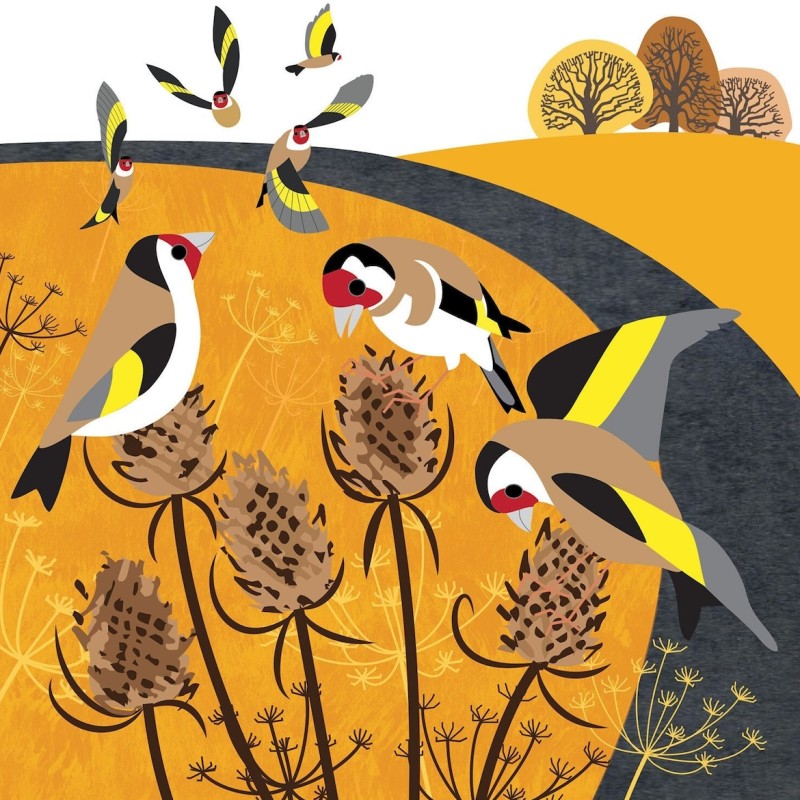
Goldfinches are also yellow birds often found on farmland (and woods). They have bright red faces, that travel together in a noisy flock.
They use their slender beaks to eat thistle and niger seeds, and commonly visit English gardens. They also like dandelion and lavender seeds. Their ancient name was ‘thistle-tweaker!’
Found all over the UK (apart from northern Scotland), you’ll also spot them in the woods and farmland. Some (not all) migrate to Spain for winter. They nest in cup-shaped nests.