Icelandic Puffins (also found in Northumberland!)
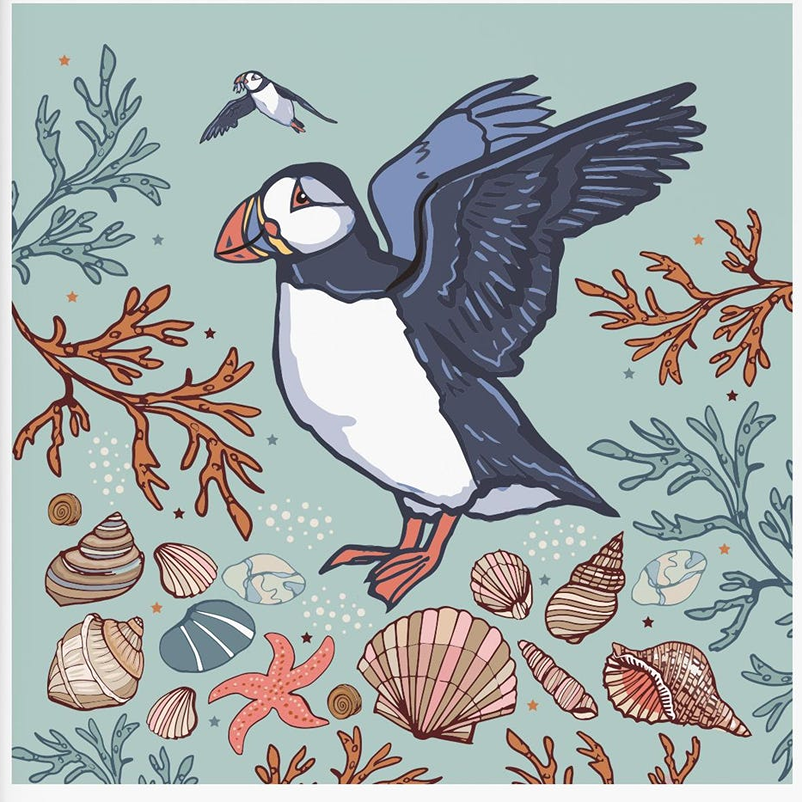
Atlantic puffins are one of England’s most unique seabirds, yet rare to see unless you live in Northumberland (or Wales or Iceland). Also known as ‘sea parrots’, these birds have grey beaks that turn orange when breeding, and baby ‘pufflings’ live in shallow burros.
Worldwide, there are also:
- Horned puffins (with yellow bills)
- Tufted puffins (a crown of straw-coloured feathers)
- Rhinoceros auklet (looks nothing like a puffin!)
Like penguins, puffins are clumsy on land (and in flight). But once underwater they are graceful swimmers. Many live free from human interference on the Farne Islands, where local experts monitor their wellbeing.
A recent ban on sandeel fishing in Europe is helping numbers to recover (sandeels are those silvery fish you see in photos of puffins). Some countries are up in arms, but puffins matter more!
The sandeel ban also helps the population of other birds like gannets, kittiwakes, guillemots and razorbills. Sandeels are also important food for haddock, whiting, seals and whales.
Puffins are also at risk from oil pills, freak weather, bird flu and even rat invasions on chicks and eggs.
From Pufflings to Puffins
Pufflings are as cute as their name sounds. The parents dig burrows in grassy cliffs, and take turns to keep their single egg safe. Puffins (like swans and geese) mate with the same bird each year, often returning to the same burrow.
Iceland: The Birthplace of Puffins

The world’s largest puffin population is in their native home if Iceland, where millions of pairs breed each year. However, as well as threats from over-fishing and habitat loss, they also face threats from hunting, which is legal here.
Email the Icelandic Prime Minister to stop puffin hunting for meat.
The SOS Puffin Project is run by Scottish Seabird Trust, helping to save a colony near Berwick (just over the border). Numbers crashed from 10,000 pairs to less than a thousand, due to a giant invasive plant which spread to nearby islands, mostly due to mild winters caused by climate change.
This prevented puffins from nesting and rearing their young. Volunteers have made regular trips over the years to cut down the tree mallow, to help restore numbers.
Follow Rules to Avoid Harming Breeding Sites
Breeding runs from May to August, with chicks in burrows for much of that time. During these months:
- Do not fly drones near colonies, many sites have no-fly zones.
- Keep voices low and movements slow.
- Stay behind ropes and on paths, turf can hide fragile burrows.
- Take all rubbish with you, even tiny bits of plastic.
- If you see a distressed bird, back away and alert a warden.
Puffins on the Farne Islands
Northumberland’s puffin headline act is the Farne Islands, a group of small islands managed by the National Trust. In breeding season, the place feels like a living motorway of seabirds, with puffins, kittiwakes, guillemots, and terns all sharing the same space.
Note dogs are not allowed on the Farne Islands, so make plans before your trip.
The usual way to see puffins is by boat trip from Seahouses (and sometimes nearby harbours). Some trips circle the islands without landing, while others include a landing on one island if conditions allow. Landings depend on season, sea state, and wildlife management, so it’s smart to treat any plan as “weather permitting”.
Timing matters here too. Puffins generally arrive for the breeding season in spring, and many visitors aim for May to July. You’ll often get the best mix of activity and access in late spring and early summer, although exact weeks change each year.
What does it feel like? Busy, loud, and oddly intimate. You might watch a puffin just a few metres away, standing on short grass with that neat, upright posture. Meanwhile, the sea keeps booming in the background, and terns may remind you who’s in charge.
If you’re prone to motion sickness, prepare for swell. Choose a calmer day if you can, sit where the boat crew suggests, and keep your eyes on the horizon. After the trip, the mainland feels peaceful. A simple reward fits the place: chips in Seahouses, then a sunset walk along the coastal path.
Books to Learn More About Puffins

Rathlin: A Wild Life is by a 21-year old woman who got her dream job working at an RSPB reserve off the County Antrim Coast. One of the most wildlife biodiverse corners, this was thrilling for a woman who grew up in southwest England.
But for someone who thought she knew what wild life was, this was something else. Puffins everywhere, swimming with seals and late-night trips to hear the call of the corncrake. To spotting dolphins from her front door, and getting to know some very special seabirds.
This is a heartfelt plea to look after our coastal life. And a love letter to the island and wildlife she found. And that we stand to lose, if things don’t change.
Puffin tells the story of these beautiful birds, in an illustrated guide for children. What happens down in the burrow, and how on earth does a puffin carry all those fish in its bill?