Kittiwakes (England’s ‘three-toed sailor’ coastal birds!)
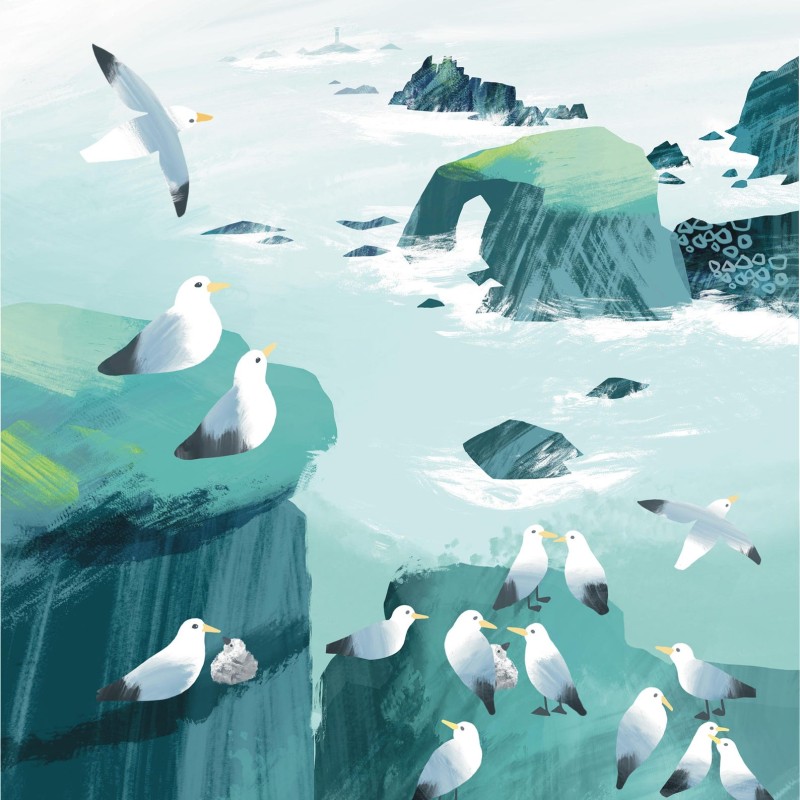
Kittiwakes are gulls. But due to over-fishing, pollution and warming seas, their population has fallen in the UK by 60% in the last 40 years or so. To attract a female, male kittiwakes perform a ‘head-jerk dance!’
And despite being a naturally cliff-nesting bird that spends most of the time at sea, this area has become a haven for gulls that previously would have nested on shipwrecks even. Unlike most gulls, kittiwakes (who only have three toes) are not scavengers, so you won’t find them stealing your chips or on landfill sites.
Keep at least 100 metres away from coastal birds, as flying away wastes energy that could be used for feeding (they need more space at high tide). Keep dogs away, as disturbing nests could cause birds to abandon chicks. Read more on keeping dogs safe at the seaside.
RSPB Puffin Binoculars are designed for children (only cost around £30) and are small and lightweight, so pretty good for most adults too.
Like puffins, the lack of sandeels has hugely affected populations (though there is now a law to ban sandeel fishing in the UK, which has been met with fury by EU fisheries). Thankfully a recent legal challenge failed, and it seems both birds have their primary food source safe, for now.
These three-toed coastal birds naturally spend the winters at sea, only returning to coastal cliffs to breed in spring. Chicks instinctively stay put (rather than walking around like most chicks), so have reduced risk of falling from cliff edges.
With yellow bills, eating lots of high-carotene foods turns the base of their beaks a strong red colour. They form strong monogamous bonds and spend the non-breeding season far out in the North Atlantic.
Nesting on Tyne Bridge!
Tyne Bridge (made from strong steel) provides a strong backdrop for nesting kittiwakes, around 700 use it each year, hidden from view. In fact, Tyne Side now boasts the largest colonies of inland breeding kittiwakes on earth.
Local wildlife experts have been instrumental in persuading those restoring the bridge to avoid netting (that could trap nesting birds) and use alternative methods from those who know, to protect birds that have been there a lot longer than us.