The Lake District: England’s Largest National Park
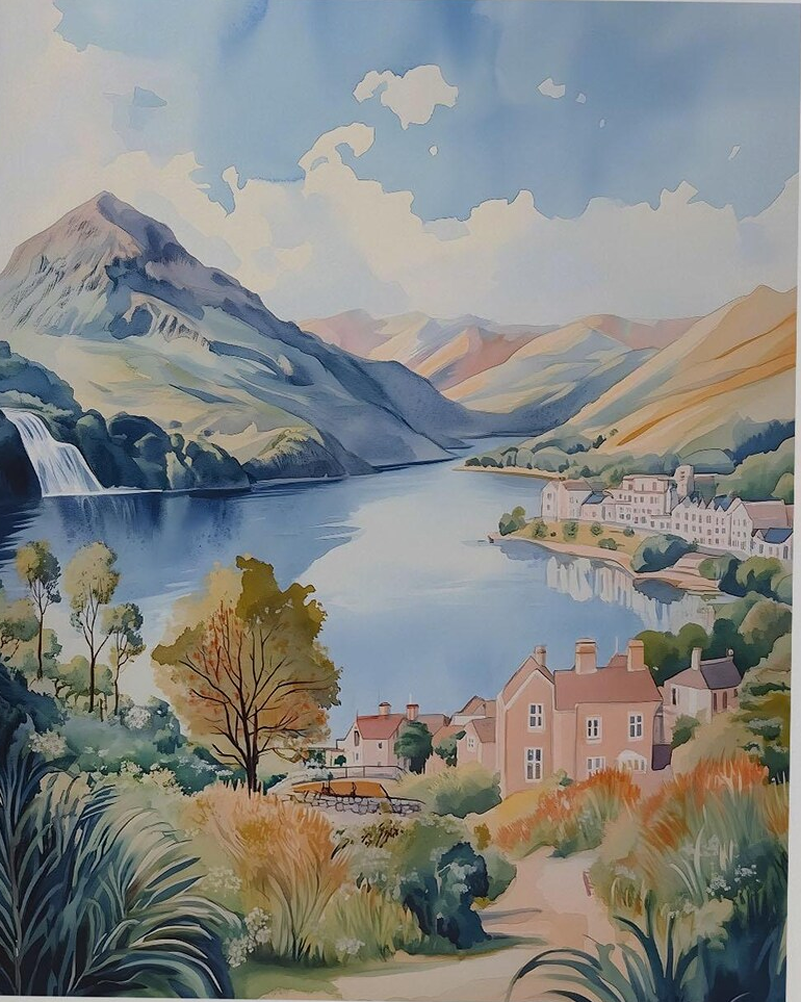
The Lake District is England’s largest National Park, situated in the north west county of Cumbria. It’s a popular walking holiday destination.
It only only contains one ‘proper lake’ (the rest are tarns or other bodies of water). The town of Windermere is not actually on the lake, it’s a few miles away. Poet Wordsworth campaigned against the building of a railway station there, saying it would ruin the quiet village. He was right. Today the station is much smaller, a good portion of it has now been turned into a Booth’s supermarket.
When out walking, always follow the Countryside Code, to keep all creatures safe. At the coast, read how to keep dogs safe by the seaside.
Cumbria has more sheep than people!
Pregnant sheep (and sometimes due to wool waterlogged from rain) can sometimes roll over onto their backs, and can’t get back upright, due to having four stomach chambers (so will die if not turned back upright).
If you see a sheep on its back, just firmly right it back, then stay with it, until rain has drained off, so it won’t happen again. Then inform your local farmer.
The 16 Lakes of the Lake District
The Lake District actually only contains one ‘proper lake’ (the rest are tarns or other bodies of water). There are around 16 lakes in England’s largest National Park. Here’s a quick guide, so you know when you visit (or can win at your local pub’s general knowledge quiz!
- Bassenthwaite Lake is the only real ‘lake’ in the northern Lake District, overlooked by Skiddaw mountain, with wide open views and a surprising sense of calm, considering it’s near a main road. There are footpaths and cycling routes on the western shore, where ospreys like to nest, when visiting from Africa.
- Buttermere is framed by dramatic fells that rise from its shores. The easy path around the lake offers a quiet charm.
- Coniston Water is set below the Old Man of Coniston (mountain), a beautiful village with a shore walk, although in summer it gets busy with paddle steamers and tourists. This is a charming place with a zero waste shop, little veggie cafes and a tiny museum.
- The body of speed racer Donald Campbell (who died here in the 60s) was only recovered 20 years ago.
- Crummock Water is quite remote, just 3 miles long. And popular with wild swimmers.
- Derwent Water is on on the edge of the mountain town of Keswick, surrounded by wooded hills and gentle slopes. There are many islands scattered across this lake, plus a shore with easy walking paths, and views to Catbells mountain and Friar’s Crag.
- Elter water is a little lake with views of Great Langdale Valley and the four peaks: Pavey Ark, Loft Crag, Pike of Stickle and Harrison Stickle. Nearby Stickle Tarn has views over Great Langdale, with rock pools cut into the mountain, and dramatic waterfalls.
- Ennerdale Water is a little lake of wild beauty, with few crows. The rugged paths along the shore are popular with walkers. The area remains almost untouched, and the birds like it that way!
- Esthwaite Water is a tiny lake that’s home to visiting ospreys, within walking distance of the chocolate-box village of Hawkshead, and hamlet of Near Sawrey (which was home to writer Beatrix Potter). If you like peace and quiet, this is the ‘hermit’s lake!
- Grasmere is next to the village of the same name (the home and burial place of poet William Wordsworth. You can walk the lakeside to Ambleside, known for its pretty bridges and waterfalls.
- Haweswater is a wild lake, which sadly was home to England’s last golden eagle.
- Loweswater is another hidden lake, not a touristy place. graze and herons fish close to the shore, while buzzards fly overhead.
- Rydal Water is tucked away between Rydal village and Ambleside, surrounded by woodland, trails and small beaches for ‘dipping your toes’. Walkers love the quiet paths and narrow lakeside trails, shaded by trees.
- Thirlmere is on the border of the south/north Lake District, surrounded by forests. It’s near to Helvellyn mountain, one of England’s highest climbs. It’s more enclosed than other lakes, passing through pine woods and open moor.
- Ullwater is a large lake (7.5 miles) that is set below the wild peaks of Helvellyn and Place Fell, and home to Aira Force Waterfall.
- Wastwater is England’s deepest lake, surrounded by Scafell Pike – England’s highest mountain that is only for experienced climbers). The setting has earned this lake the title of ‘Britain’s Favourite View’.
Visiting all 36 Islands of the Lake District
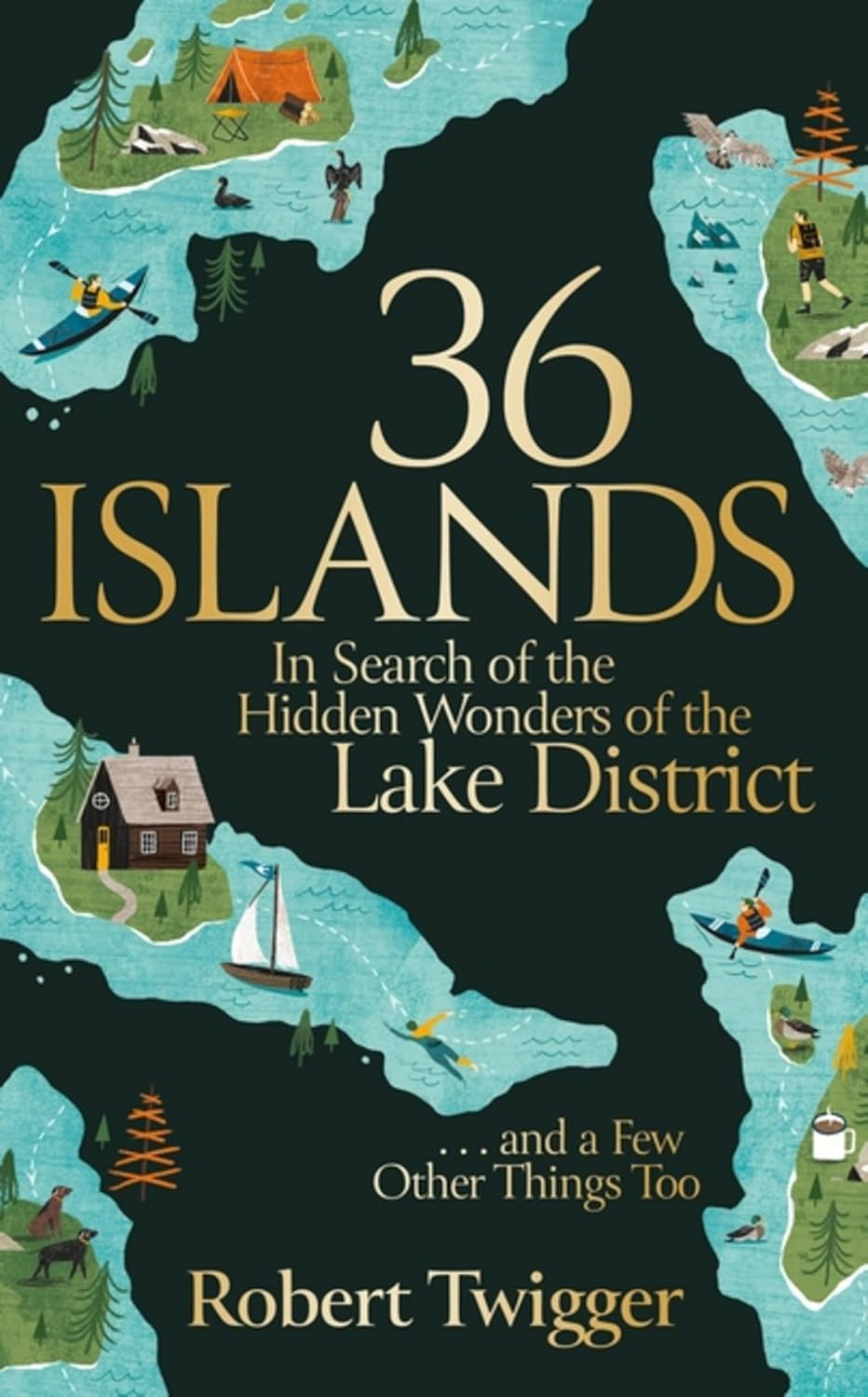
36 Islands is an adventure book with a difference, a poet who decides to visit all 36 islands in England’s largest National Park (some no more than rocks, others perfect for a night of wild camping).
Armed with just an inflatable canoe (and inspired by Inspired by Wainwright and Wordsworth), the author journeys beyond the tourists and busy roads, to islands both real and remembered.
You can feel the chill of waters creeping into your bones, as Twigger paddles his way to some of the most inaccessible spots. Shaun Bythell
He visits all the well-known lakes (and some not – who has heard of Devoke Water?) It’s usually raining, but he’s an irrepressible optimist. Fiona Reynolds
Robert Twigger is an award-winning poet, whose 12 books have been translated into over 20 languages. He has also crossed Canada in a homemade canoe, and was the first person to travel on foot across the Egyptian Great Sand Sea.
His previous book Walking the Great North Line saw him travel in a straight line from Stonehenge to Lindisfarne, to discover secrets of our ancient past.