Lancashire (Morecambe Bay, Manchester & Blackpool)
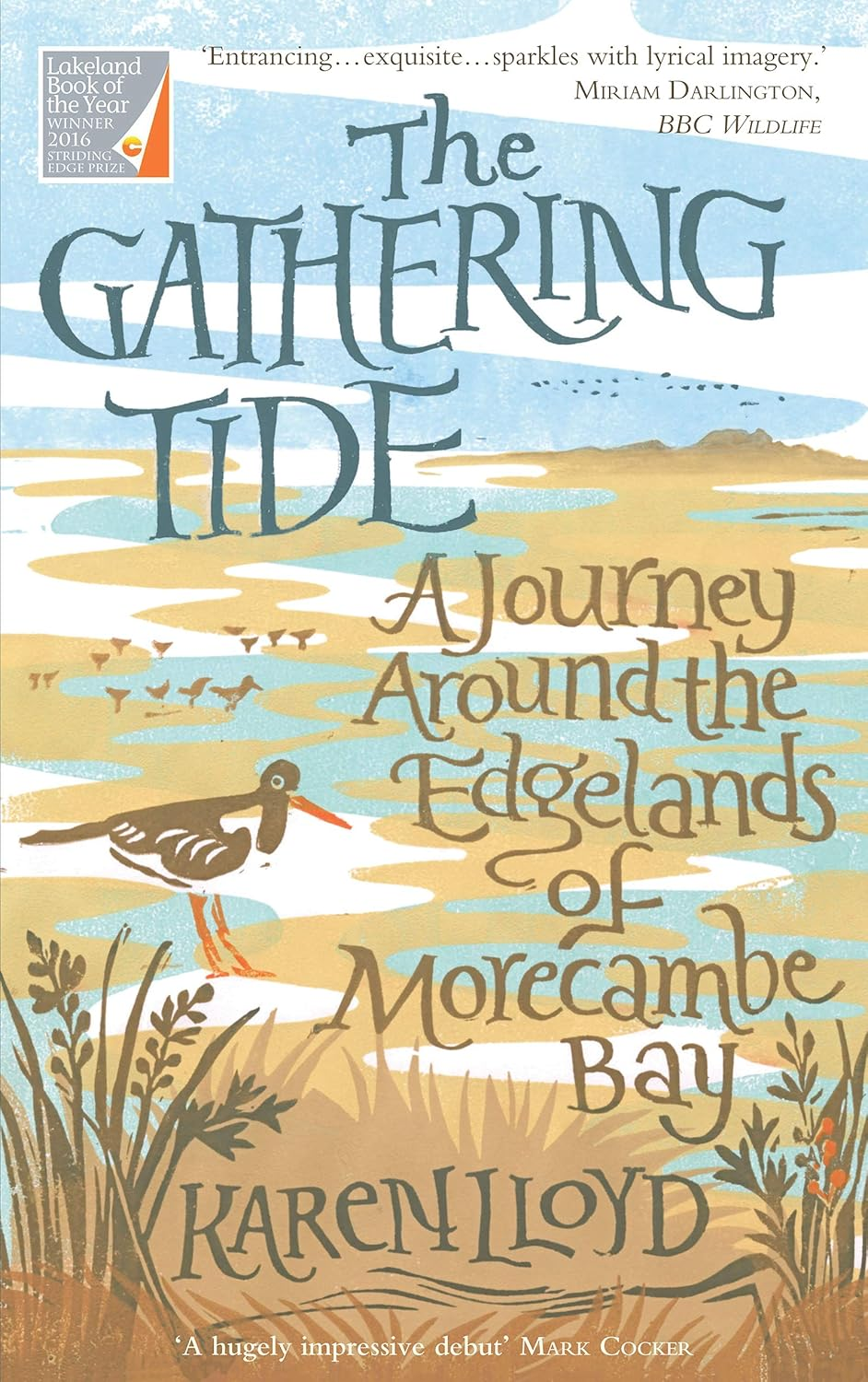
Morecambe Bay is a broad expanse of water in Lancashire (spilling into the Lake District), known for its shifting sands and wildlife. Flowing from the River Lune, it’s a wetland paradise for over 200,000 wading birds.
Morecambe covers around 300 square km (115 square miles in old money). It’s also the largest expanse of intertidal mudflats and sands in England, and an important estuary for waders, wildfowl and gulls (and home to rare brown fritillary butterflies).
If out walking, follow the Countryside Code to keep all creatures safe. Keep dogs on leads near steep banks (and away from toxic spring bulbs). If at the coast, read how to keep dogs safe by the seaside (check for beach bans, before travel).
Morecambe Bay has quicksand, so avoid walking on areas with warning signs. Keep yourself (and dogs) at least 50 metres away from birds, as disturbing nests could cause them to abandon chicks.
A Paradise for Wetland Birds
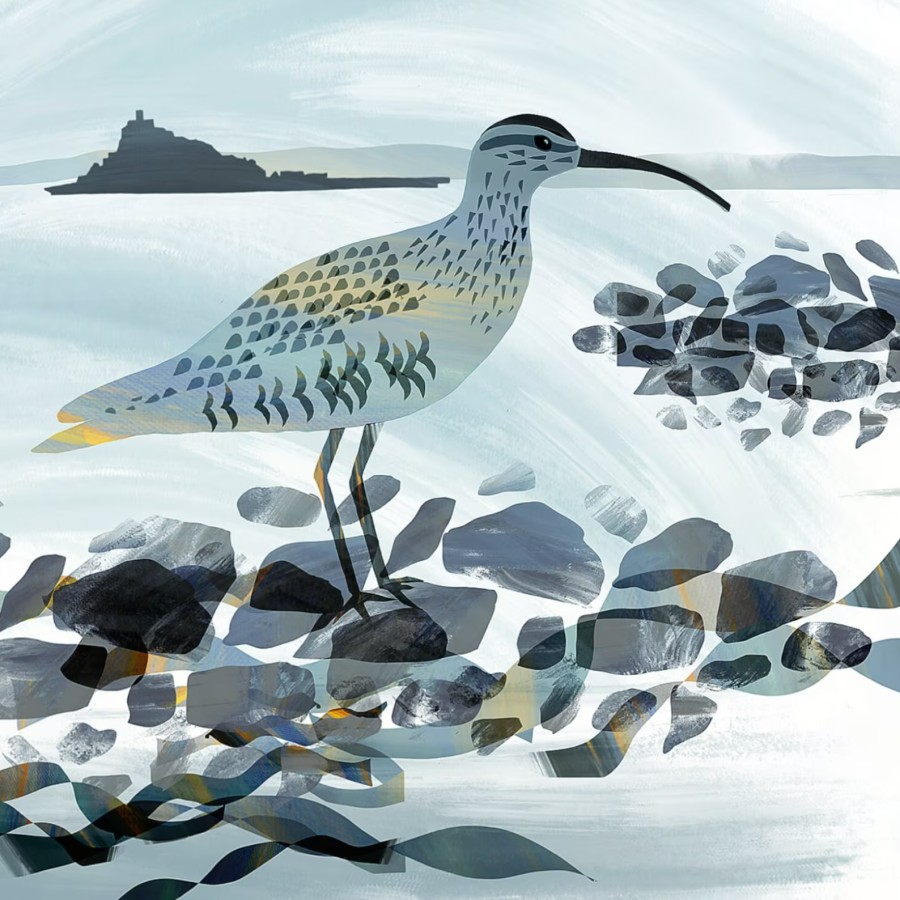
England’s coastal birds (like whimbrels above, known for their seven whistles!) claim a mix of habitats:
- Mudflats: Feast grounds for sandpipers and whimbrels at low tide.
- Rocky shores: Perfect for turnstones to hunt amongst crevices.
- Estuaries: Sheltered feeding spots where many birds gather in flocks.
- Sandy beaches: The ideal racetrack for sanderlings.
Migration is key for many coastal species. Some arrive in spring to breed, while others pass through on journeys between the Arctic and Africa. As tides and seasons shift, so do bird numbers.
Coastal birds face tough times. Their homes are shrinking due to building, pollution, and rising sea levels. Plastic waste and oil spills also threaten their food and safety.
But there is hope. Local wildlife trusts work to protect and restore vital habitats. They take part in volunteer beach cleans, and help communities care for coastal birds, with legal protection and careful town planning.
It’s important not to disturb birds. RSPB Puffin Binoculars are designed for children (only cost around £30) and are small and lightweight, so pretty good for most adults too.
The scale of Morecambe Bay (big sky, big tides)
Morecambe Bay doesn’t feel like a single spot, it feels like an entire working surface. The horizon stays wide, and the ground seems to stretch and stretch, then vanish under water.
That size matters for birds. Large feeding areas support large flocks, and the bay’s exposed flats offer time, space, and food between tide cycles. As a result, even a calm day can carry a sense of movement, distant lines of birds lifting and settling again.
Saltmarsh edges (where the bay turns green)
Saltmarsh brings a softer colour, low green plants and a rougher texture underfoot. It also makes a different kind of shelter, because it breaks the wind and adds cover for smaller birds.
The marsh sits between land and sea, and that in-between quality shapes the bird life. Some species feed on the flats and then tuck into the marsh, while others keep to the edges, using the plants as a buffer from weather and disturbance.
Warnings in beauty (quicksand alert)
Quicksand is part of the story here, and it isn’t a dramatic detail, it’s a practical one. The bay has areas of soft, shifting ground, and it can look harmless until it doesn’t.
That risk sits alongside the bay’s calm, which makes it easy to forget. Even so, it’s part of what keeps Morecambe Bay feeling raw and real, a place shaped by water and sediment, not by neat boundaries. The same processes that create rich feeding flats also create unstable patches.
The estuaries (where fresh water meets salt)
Several rivers feed into the bay, and each estuary adds its own feel. The mix of fresh and salt water supports different plants and prey, so the bird life changes subtly from place to place.
These meeting points often draw feeding birds in numbers. In addition, they create sheltered corners when the bay feels too open, especially in stronger winds. That blend of food and shelter keeps the estuary edges active through much of the year.
The power of the tides (and why mud matters)
Morecambe Bay has a big tidal range, so the sea can seem far away one moment and right at your feet the next. As the tide drops, it uncovers mud packed with life. Worms, shellfish, and tiny crustaceans sit under the surface, and waders know exactly where to probe.
Birds often feed on the falling tide because fresh ground opens up in front of them. Then, as the water returns, they lift off in groups and head to roosts, often on saltmarsh edges, sandbanks, or safer shoreline corners. That’s when you can get your best views, because the birds concentrate and come closer.
The tide rises fast here. Plan your watch around tide times and keep your distance from the waterline on open sands.
A quick habit helps. Check a tide table before you set out, then aim to arrive with time to settle. You’ll spend less time guessing, and more time watching behaviour that makes sense.
Grange-over-Sands (a gentler edge in Cumbria)
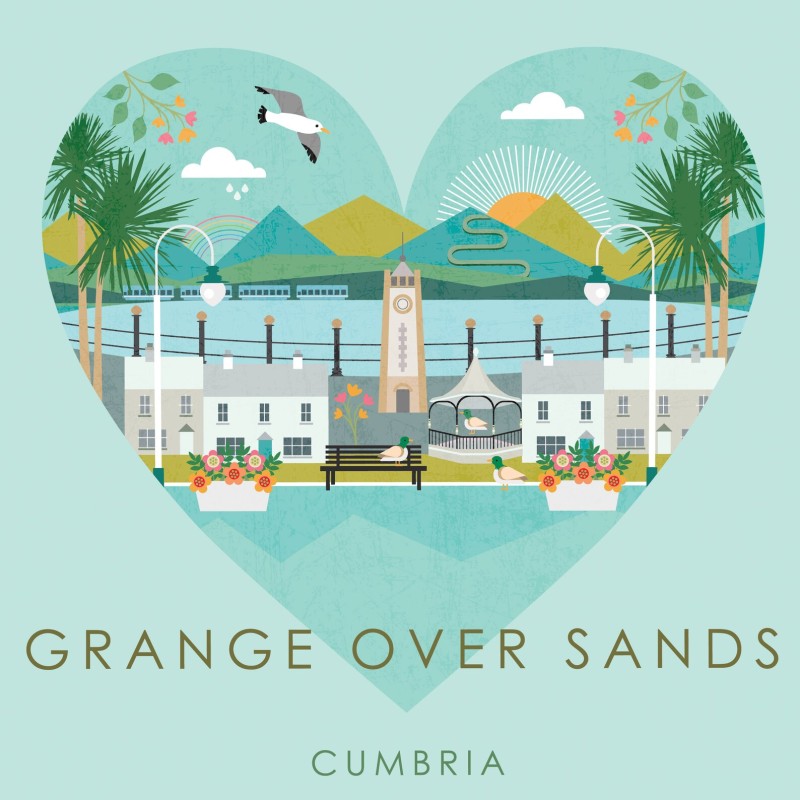
Grange-over-Sands has a calmer, sheltered feel, with the bay laid out in front like a wide, quiet stage. The shoreline here often feels less sharp, more about long views and slow changes.
From this side, the scale of the wetlands comes through clearly. Mudflats stretch out, saltmarsh holds the edges, and birds form scattered marks across the open ground. It’s a place where you can notice how the bay holds space, and how that space supports life.
Manchester (birthplace of England’s industrial revolution)

Manchester carries the Industrial Revolution lightly and loudly at the same time. You can feel it in the street plan, the brickwork, the water lines, and the old names that won’t go away. Yet it’s also a living city, busy, musical, and practical, with everyday places that sit right beside the big history.
Manchester is a city that was built from water and cotton, through labour and transport. The result is a Manchester that feels less like a museum label, and more like a place you can walk through.
If out walking, follow the Countryside Code to keep all creatures safe. Keep dogs on leads near steep banks (and away from toxic spring bulbs).
Manchester’s cotton industry roots
Manchester’s cotton industry didn’t just grow, it reshaped work, time, and the city’s pace. Mills and warehouses rose fast because cotton could move, sell, and scale. As a result, the city became a place where production felt constant, and where new ways of organising labour took hold.
Even now, the cotton story sits in the background of many streets. Look up and you’ll spot old loading bays, tall windows, and sturdy brickwork built for storage and sorting. This matters because cotton wasn’t only a product, it was a system, and Manchester became its working capital.
Castlefield (where canals & industry meet)
Castlefield makes the Industrial Revolution feel physical. The area holds canals, viaducts, warehouses, and open spaces where you can see how the city stacked transport on top of itself. It’s calm today, yet the layout still points to a time when water and rail carried everything.
Besides the big structures, Castlefield also shows the ordinary details that made industry work. Towpaths, basins, and tight corners hint at how goods shifted from boat to cart, then onwards to mills and markets.
Canals (the quiet infrastructure in Manchester)
Canals sound gentle, yet they changed trade with blunt force. They cut costs, sped up supply, and linked Manchester to wider networks. Therefore, raw cotton, coal, and finished cloth could move in larger volumes, with fewer delays.
What stands out is how the canals still sit within daily life. People walk them, cycle them, pause by locks, then pass under old bridges that once carried heavy loads. That mix, leisure beside labour history, tells you how deep the Industrial Revolution ran into the city’s bones.
Warehouses and “Cottonopolis” streets
Manchester once earned the nickname “Cottonopolis” because trade shaped everything, from skyline to street names. Warehouses weren’t minor buildings, they were the city’s engine rooms for buying, selling, and shipping. So you get long façades, repetitive windows, and interiors designed for bales and books.
In addition, the commercial heart of Manchester grew around routines that still feel familiar. Meetings, contracts, and deadlines took place in rooms above busy streets. The products have changed, yet the idea of Manchester as a working city, always making and moving, remains close to the surface.
Birth of the union movement (shaped by mills)
Industrial growth brought jobs, yet it also brought danger, low pay, and long hours. Workers organised because they had to, and Manchester became central to the birth of the union movement. That history isn’t abstract, it links to real streets and real families, and it still colours how the city talks about fairness.
Even when you can’t see it on the walls, you can sense the legacy in local pride. Manchester often respects plain speaking and collective effort. In other words, it’s a city that remembers who built it, and who pushed back when the cost got too high.
Political reform and public meetings
Manchester has a long habit of assembly, protest, and debate. Industrial crowds didn’t only fill factories, they filled public spaces as well. So reform became part of the city’s story, shaped by workers, writers, organisers, and ordinary people who wanted a say.
Meanwhile, those traditions helped form a civic identity that still shows up today. Big topics often meet practical local action here. You see it in campaigns, community groups, and the way people treat public space as something shared.
Trams and the push to connect neighbourhoods
Trams made movement simpler and more regular. They helped workers travel across the city, and they pulled districts closer together. As a result, Manchester didn’t stay compact, it stretched, and daily life became more patterned, with timetables, stops, and predictable routes.
Modern Metrolink lines keep that idea going. The vehicles look different, yet the logic stays the same, move people quickly, link work and home, keep the city connected.
Railways and viaducts (built by local people)
If canals set the first rhythm, railways turned the volume up. Manchester’s rail lines and viaducts carried goods and people at a pace earlier generations couldn’t match. Therefore, the city plugged into national and global trade in a direct, muscular way.
Walk near the bigger rail corridors and you can still read the engineering choices. Arches, brick spans, and heavy supports sit close to modern offices and flats.
Working-class housing and daily life
The Industrial Revolution didn’t only create factories, it created a new kind of urban crowding. Workers needed homes close to work, so terraces and dense streets spread quickly. As a result, whole communities formed around shifts, wages, and local shops.
Even when areas change, the older street patterns remain. Short blocks, back alleys, and tight rows tell a story about speed and necessity. It’s a reminder that industry wasn’t distant, it sat right inside domestic life.
David Neilson (who plays Roy Cropper) in Coronation Street owns the shopping bag that is as famous as he is – his late mother took the bag to Loughborough market for years. He now uses it carry scripts around!
Manchester music (the city’s other power)
Manchester is known for its music. It’s the city that birthed The Smiths and folk singer Ewan MacColl (who wrote Dirty Old Town and was father to Kirsty MacColl).
Another local was Letter from America’s Alistair Cooke, who presented on BBC Radio 4 for decades. A tragedy after his death is that illegal gangs sold his bones to the medical industry (he died from bone cancer, so the tissue was not even healthy). All in a country that Alistair spent his life endearing us to.
Unicorn Grocery (a Manchester food co-operative)
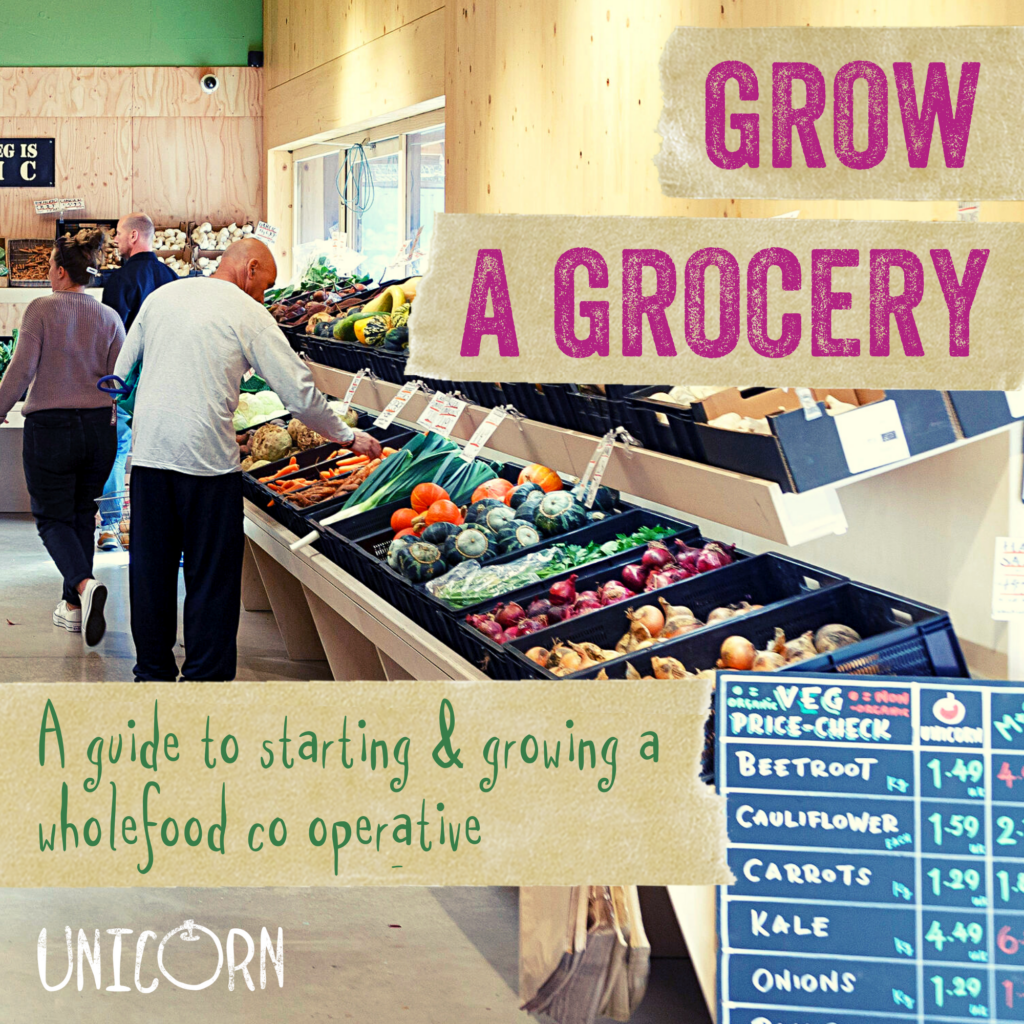
Unicorn Grocery is a thriving Manchester food co-operative that is owned by its staff (who get paid a real living wage). All items are vegan (2500 foods) and fresh produce is from its own farm.
Before cooking, read up on food safety for people and pets. Indie shops can learn which plants and flowers are unsafe near pets, to know what not to sell to people with animal friends.
It even has England’s first living roof on a commercial building, to support habitat of the endangered black redstart bird):
It also offers organic beers and eco-refillable beauty and household items, sold in plastic-free packaging. Salads and olives are sold in reusable tubs, and there’s even a soup cup deposit scheme.
Get discounts with the loyalty card. Prices are very good (due to no shareholders and most produce is local). A few items cost more (like homemade organic flapjack).
The ‘Good Stuff’ apple logo indicates favourite companies. With no plans to expand, you can download their free Grow a Grocery guide to bring the same to your town!
Blackpool (a seaside resort in north west England)

Blackpool is one of England’s most popular northern seaside resort, known for its wide sandy beaches and of course Blackpool tower.
The town has been known for decades as the home of its ‘Blackpool landladies’ who run hundreds of local bed-and-breakfasts. The 5pm rule years ago meant many guests were ‘booted out’ after breakfast (no matter the weather) and not allowed to return until ‘high tea’ at 5pm!
If out walking, follow the Countryside Code to keep all creatures safe. Keep dogs on leads near steep banks (and away from toxic spring bulbs).
If at the coast, read how to keep dogs safe by the seaside (check for beach bans, before travel).
The History of Blackpool Trams
Blackpool tram has a proud history, but spent years running older slower cars that creaked along the seafront. Today it has had a revamp, with wider platforms and new trams that go at higher speeds and are more accessible.
They have spacious low floors for step-free boarding, modern ticketing systems and upgraded tracks. It transports around 5 million people a year.
Blackpool Tower (not just ballroom dancing!)
The Blackpool Tower took seven years to build, and is indeed modelled on the Eiffel Tower, and known for its ballroom-dancing competitions. The floor is designed to sway in high winds. It opened back in 1899.
The ballroom sits inside the Tower complex, and it feels like entering a brighter, slower era. Expect ornate décor, a famous dance floor, and music that suits everything from a gentle waltz to a proper spin across the room. Even if you don’t dance, the atmosphere makes it worth the visit.
The Promenade (walks on breezy days)
Blackpool’s seafront promenade is where everything makes sense. You can walk for ages, with the sound of traffic, gulls, and the sea all stacked together. It’s wide, open, and built for wandering, so you can drift between piers, arcades, and coffee stops without thinking too hard.
On a breezy day it feels brisk and clean, even when the town is busy. In addition, the promenade makes Blackpool feel accessible, since you don’t need a plan to enjoy it.
The sandy beach (huge when the tide is out)
Blackpool’s beach surprises people who only picture the front. When the tide goes out, the sand spreads far, and the horizon feels bigger. It’s a proper sandy beach in the sense that you can sit down, build something, or just walk until the town noise drops back.
That said, you’ll still want to keep an eye on tide times. The sea comes in quickly, so the wide beach can shrink fast.
Better welfare for donkey rides
Alas the town is one of the few seaside resorts that still offers donkey rides for children. Unlike abroad, donkeys here are inspected for welfare, but most parents now are choosing to move on from donkey rides.
The history of Blackpool rock
Blackpool is where sticks of rock were created, made by folding and stretching coloured toffee or sugar crystals into hard sticky sticks, which will pull all your fillings out! Keep rock, candy floss and pebble sweets away from young children, due to choking hazards.
The upcoming sugar tax means that many brands will likely go bust (unlike soda drinks, it’s likely more complicated to make them with artificial sweeteners). Blackpool Rock was first sold around 1902 (or created in the 1870s) when Ben Bullock began to make sticks with words like ‘Whoa Emma’ at his Yorkshire factory, after a holiday in Blackpool.
Sticks of rock fell out of favourite during the sugar-rationing of World War II, and men were not around to do the heavy lifting of the sugar mix. Typical ingredients of a modern stick of rock are refined sugar, glucose syrup, flavours and the colours E153, E100, E122 and E129 (the two red ones are linked to hyperactivity in children).
Blackpool illuminations (light pollution issues)
Although astronomers are aware that the Blackpool lights bring in substantial tourism income, they are concerned over plans to create an artificial ‘aurora borealis’ (northern lights) by way of a 1KW laser to shine in the sky.
This would not just blight the night sky, but ruin views across the county (and also for Merseyside, Cumbria, North Wales and even Isle of Man).
The Winter Gardens (indoor shows for rainy days)
When the weather turns, the Winter Gardens helps you stay in the mood. It’s a place for shows, events, and that sense of a night out without needing to travel. The building itself carries the town’s history, and it’s easy to imagine how many evenings have started there.
Blackpool has a long relationship with live acts, and you can still find comedy, tribute shows, and variety-style nights out. It’s not trying to be cool, it’s trying to be fun, and that honesty is part of the charm. You can sit down, have a drink, and let someone else do the work.
Lytham St Annes (a quieter coastal resort nearby)
Lytham St Annes sits close enough to feel like an easy add-on, yet it has a different tone. It’s calmer, more residential, and more about slow walks and tidy views. After a day in Blackpool, it can feel like turning the volume down.
Because it’s so close, it works well as a contrast rather than a replacement. You can do the bright, busy parts first, then take a breath by the sand dunes and prom at St Annes.