Simple Vegan Recipes to Use Leftover Pears (no fuss, no waste)
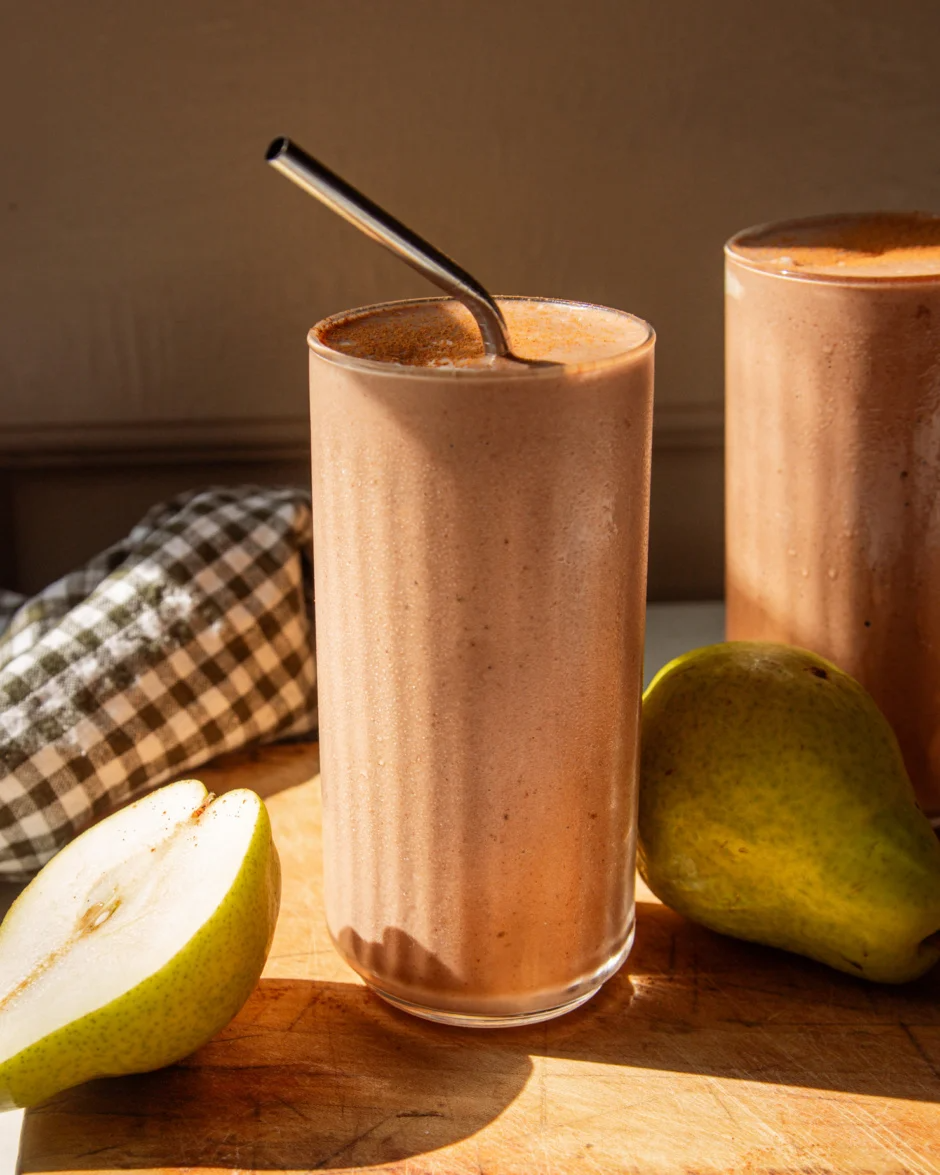
Chocolate Pear Cinnamon Smoothie (The First Mess)
Pears always seem to do the same thing. They sit there looking fine, then suddenly they’re soft, sticky, and one day away from the bin. The good news is simple vegan recipes to use leftover pears don’t need much planning. Soft pears are sweet, fragrant, and basically ready to become breakfast, pudding, or a quick snack.
Below you’ll find a mix of no-recipe ideas plus easy 5-ingredient vegan recipes, including stewed pears and a pear smoothie. If you buy juicy organic pears, the flavour can be brighter. If you buy local pears, they’re often fresher and sweeter, because they’ve spent less time travelling.
Most people can eat pears. But keep away from children, due to choking risk. Also don’t leave around near pets, due to pips/seeds. Same goes for chocolate, which turns up in many pear recipes. Take a minute to check basic food safety for people and pets.
Bin citrus peels, because the acids can harm compost worms and other helpers. The same goes for rhubarb, tomato, and all alliums (onion, garlic, shallots, leeks, and chives). With tins, remove the lid fully before recycling, or push the ring-pull down into the can, so wildlife cannot get stuck.
Choose seasonal pears, to support local growers
In-season pears taste better, partly because they’ve had time to develop flavour. They also tend to be cheaper when there’s plenty around. In England, that often means autumn and winter pears are easiest to find.
Buying local can help in a simple way: the pears usually arrive faster, so they’re less mealy and more fragrant. Farmers’ markets and farm shops are a good start. Veg box schemes can be even easier, because you get what’s good that week. Smaller supermarkets sometimes stock British fruit in season too.
Organic pears can taste great. For fresh eating, spend a little more if you can. For stewing, baking, and smoothies, ‘wonky’ pears work perfectly.
How to pick pears that will ripen well
Pears often ripen off the tree, so shops sell them firm. To check one, press gently near the stem. If it gives slightly, it’ll be ready soon. Smell the base too. A light, sweet scent usually means good flavour is coming.
Avoid deep bruises or cuts, because they turn mushy fast. Choose firmer pears for later in the week, and a slightly softer one for today. You might see Conference, Williams, Comice, or Rocha. Texture varies, but the ripeness check stays the same.
Easy ways to support local pear farmers
Small changes add up. Buy odd-looking pears for cooking. They’re often cheaper and just as sweet. Shop near closing time at markets, because some stalls discount the last crates.
Ripen, store, and freeze pears, to avoid waste
Leave pears at room temperature to ripen. A fruit bowl on the counter works, as long as it’s not in direct sun. Most firm pears soften in 2 to 5 days, depending on the variety and your kitchen temperature.
Once they’re ripe, move them to the fridge. Cold slows the ripening down, so you buy yourself time. Plan to eat them within 3 to 5 days for the best texture. If a pear is already very soft, use it the same day. That’s when stewed pears, smoothies, and quick oats come into their own.
If a pear smells fermented, has mould, or tastes fizzy, compost it. A little bruising is fine, though. Just cut it away.
How to store pears (and prevent bruising)
Pears bruise when they pile up. Keep them in a single layer if you can, or at least don’t stack heavy fruit on top. Also keep them away from heat (kettles etc).
Ethylene gas speeds ripening. Bananas and apples give off a lot, so pears ripen faster beside them. If you want pears to last, separate them. Use this simple rule: if it gives slightly at the stem, refrigerate it and eat within a few days.
How to freeze pears for smoothies and desserts
Use this simple method:
- Wash the pears, then core and slice or cube them.
- Toss with 1 to 2 tsp lemon juice per 500 g pears to slow browning.
- Freeze in a single layer on a tray, then transfer to a freezer bag.
For even faster options, freeze pear purée in portions. An ice cube tray works well for small amounts. Stewed pears also freeze nicely. For best taste, use frozen pears within about 3 months.
Nutrition and the best way to eat pears
A pear is mostly water, which is handy when you want something light. It also brings fibre, plus small amounts of vitamin C and potassium. That fibre matters in everyday life, because it helps you feel satisfied after snacks and breakfast.
The peel holds a lot of the fibre, so keep it on if you like the texture. Just wash the skin well. If you’re using pears in a smoothie, the peel blends in easily anyway.
Pears are gentle and sweet, which helps in plant-based cooking. They can replace some added sugar in oats, baking, and sauces. They also pair well with nuts and seeds, which bring protein and fats.
Eating a pear can feel messy if it’s very ripe. A simple trick is to slice around the core. Cut it into quarters, then slice each quarter away from the tough centre. A squeeze of lemon stops browning and adds a clean edge.
Quick pear ideas you can make in minutes
- Pear and peanut butter toast: Add cinnamon, plus a pinch of salt.
- Chopped pear in porridge: Stir in at the end so it stays juicy.
- Pears on granola with plant yoghurt: Finish with lemon zest.
- Pear salsa for tacos: Dice pear, red onion, lime, coriander, and chilli.
- Pear salad with rocket and walnuts: Use balsamic or lemon and olive oil.
- Pear and ginger tea: Simmer slices with fresh ginger and a lemon peel strip.
- Quick pear compote topping: Cook with cinnamon, spoon over pancakes.
Quick stewed pears (for very soft pears)
- Ingredients (serves 2 to 3): 3 pears, 60 ml water, 1 tsp lemon juice, 1 tsp cinnamon, 1 tbsp maple syrup (optional).
- Chop the pears (peel if you want), then add them to a small pan with the water. Simmer for 8 to 12 minutes, stirring now and then. Add lemon and cinnamon, then taste. If it needs sweetness, add maple syrup.
- Serve with oats, dairy-free yoghurt, pancakes, or spooned over toast. Store in the fridge for 3 to 4 days, or freeze in portions.
Creamy pear smoothie (for ripe or frozen pears)
- Ingredients (1 large glass): 200 g frozen pear, 1 banana (or 30 g oats), 250 ml plant milk, 1 tbsp peanut butter (or tahini), cinnamon.
- Blend the plant milk first with the nut butter, then add frozen pear and banana. This helps it catch and blend smoothly. Add cinnamon, then blend until thick.
- If it’s too thick, add a splash more milk. If it’s too thin, add a few more pear chunks, or a spoon of oats. Spinach works well here too, if you want a green version. Chia seeds thicken it, but they’re optional.
5-ingredient pear and oat crumble
- Ingredients (small tray, about 4 portions): 5 to 6 pears, 120 g rolled oats, 60 g plain flour (or ground almonds), 60 g coconut oil (or vegan butter), 50 g brown sugar (or 3 tbsp maple syrup).
- Heat the oven to 180°C. Slice the pears into a baking dish. If they’re very ripe, just tear them into chunks.
- Mix oats, flour, coconut oil, and sugar with your fingertips until you get a rough crumble. Scatter it over the pears, then bake for 25 to 35 minutes, until the top is golden and the fruit bubbles at the edges.
- To cut added sugar, use riper pears and reduce the sugar by a third. A pinch of cinnamon helps too, even though it’s not part of the “five”.
Conclusion
Soft pears don’t need saving, they need a plan. Buy local when you can for better flavour, then ripen and store pears with intention. Freeze what you won’t eat, and keep a few no-recipe ideas for busy days. Most importantly, lean on simple vegan recipes like stewed pears, smoothies, and a quick crumble.