Lessons from Florence (green city guides)
Just as other countries can learn from England (cottage gardens, animal welfare, London transport), there are many areas of life that we can learn from other countries. This series of posts looks at what’s best about fellow countries (and cities) to see what we can be inspired by, in our own country.
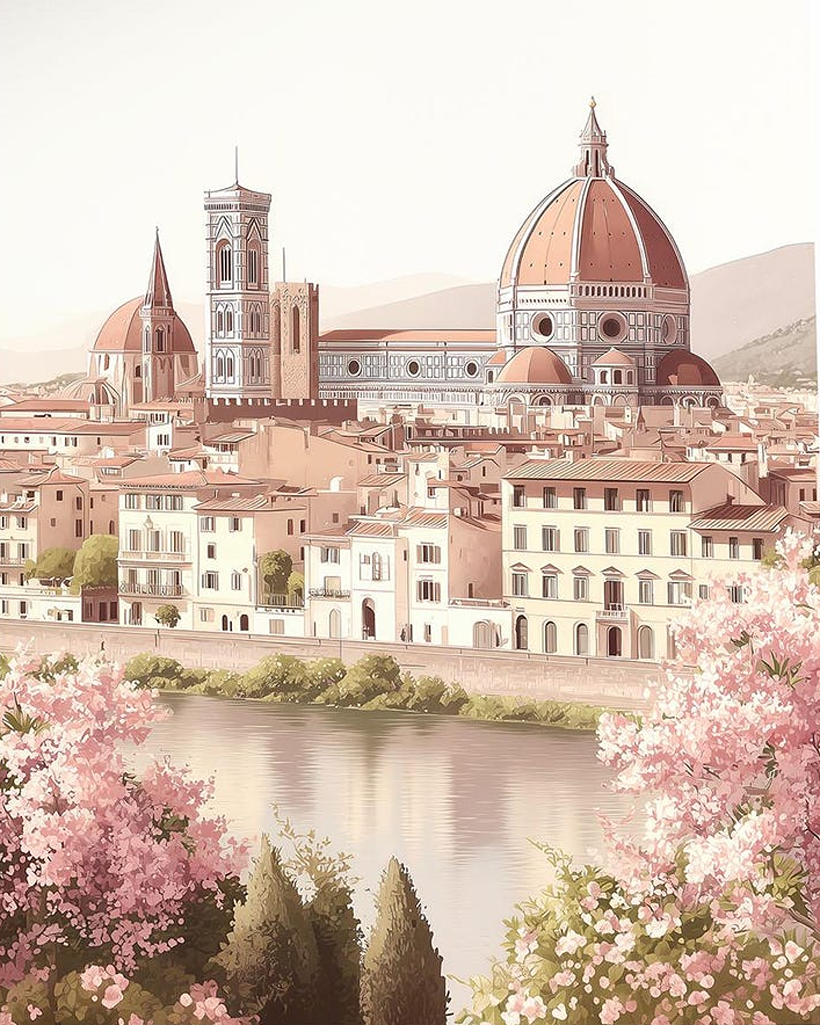
Florence is one of the world’s most beautiful cities, known for its lovely architecture, art galleries and museums. If you lovey our history in spades, the nearest equivalent in England would likely be the city of Bath.
The first city to have paved streets
In 1339, this former capital of Italy was the first to have paved streets. Today that still happens, and one can imagine there are likely not roads full of potholes in Florence.
Although today they are a bit uneven due to age (like most people are!), this is a very walking-friendly city, and very easy to get around on foot, thanks to its ancient design. This is true of many European cities (the grid-based Paris is a good example).
Packed with art galleries
Florence is home to some of the best art in the world. But viewing good art does not have to be expensive or elitist. Read where you can find free art galleries in England, for a nice day out!
A link with our Florence Nightingale
The English social reformer Florence Nightingale was actually born in Florence in 1820, named after the city. Known for the huge impact she had on the nursing world, her parents actually wanted her to marry and raise a family (she was from a well-to-do family and refused a marriage proposal at age 17).
She wrote over 150 books and pamphlets to lay the foundation of modern nursing, and also wrote books on religion, as well as helping wounded soldiers in the Crimean war. Fluent in several languages (including Italian), she had a passion for the city she was named after, and often visited to learn more on medicine.
Don’t let lies (your nose may grow!)
If you ever read the children’s book Pinocchio as a child (about a boy whose nose would grow when he told lies), its author Carlo Lorenzini was born (and died) in Florence. Heavily involved in politics, his writing was more for moral teachings of life and values, rather than to entertain. His stories in fact were much darker than the Disney film. It remains the most translated Italian book in history.
The main moral of this tale is honesty. Every time Pinocchio lies, his nose grows longer, and eventually the lies become so big, he cannot even turn his head. His friend Jiminy Cricket tells him that honesty makes hearts light, and that trouble is smaller, when the truth is finally given.
The birthplace of gelato
Gelato has less cream than ice-cream. It’s a real feast in Florence, and nothing like the pretty poor quality ice-creams we get here. Try a recipe for vegan pistachio ice cream (a major flavour in Italy, and also gives you some extra protein and calcium from the nuts – it’s also a pretty green colour, which always helps!)