The true cost of unused pills: medication reviews
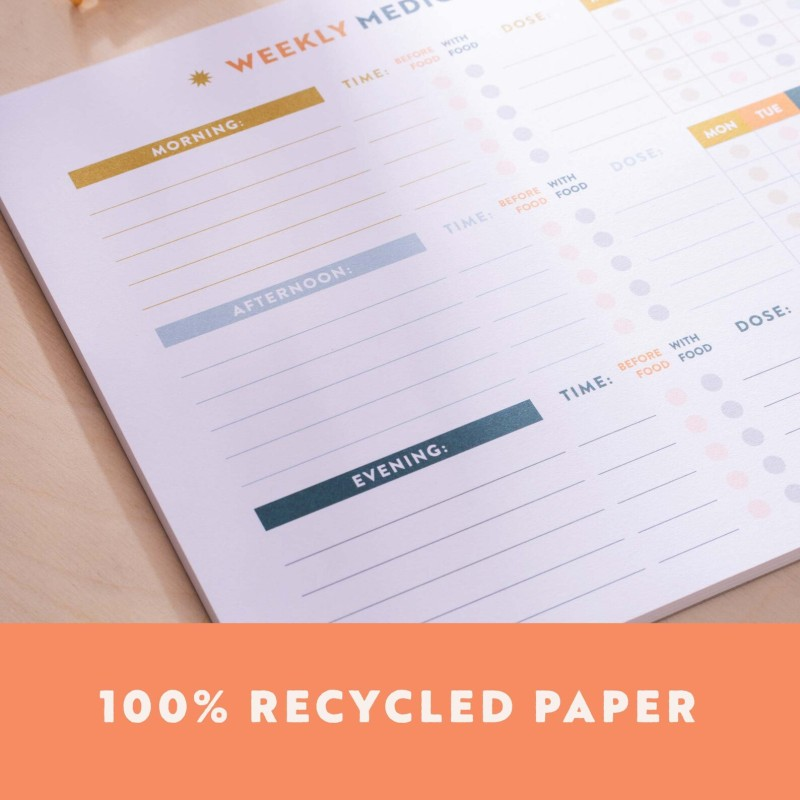
In the UK, the NHS recommends that each patient receives an annual medication review with their GP or pharmacist. This is aimed at ensuring that patients (especially those on long-term or multiple medicines) are only taking what they need. And to avoid medication waste, a huge issue for the planet, and wasted costs that could be spent elsewhere.
This medication tracker (with optional magnet backing) is printed on recycled paper, and sent in plastic-free packaging. Printed with green energy and nontoxic inks, it has 52 tear-off pages to keep you on track.
Medicines may do good, but also come with side effects. Although in many cases medicine is needed, sometimes so-called ‘dinosaur doctors’ just prescribe pills, when there are alternative methods like counselling (for anxiety/depression), gym memberships (for obesity) or or therapeutic massage or medical acupuncture (for pain).
What does a medication review entail?
The idea is to take along all your medicines (and supplements, as some have interactions) and ask if they are still appropriate, necessary, effective and safe.
For instance, if you take medicine for type-2 diabetes but have changed your lifestyle to need less insulin, your GP may be able to safely reduce or even eliminate the dose. Same with statins to reduce cholesterol.
And if you take medicines that are not helping, you may be able to safely come off them too with permission. Sometimes there are recalls, or more effective medicines to replace those you are already on.
Many people with long-term conditions (and patients especially over 75) are on many medicines. And reducing the number to what is only needed, reduces risk of over-dose, and interactions. Especially for older people who may be getting the first signs of dementia, so taking too many medicines confuses.
Who can conduct a medication review?
Ideally your GP, but clinical pharmacists are also able, if you prefer. The medication review can be face-to-face or even by phone or by home visit. Ensure you discuss any side effects, and you should also have blood tests reviewed, before deciding whether medicines can be adjusted, replaced or removed.
Is this not just more work for busy GPs?
On the contrary. If the GP’s job is to keep you healthy, reducing unnecessary medicines helps you to feel better. It also means he has a better patient, so should mean less work for him or her in the long-term. And it frees up funds from prescribing unnecessary medicines, to help other patients.
How to prepare for a medication review
After requesting a medication review, you should prepare by listing all current medications (and those you have been prescribed but for whatever reason are no longer taking). Along with supplements, over-the-counter medicines and herbal remedies. Including those being prescribed by holistic therapists.
Include the date your were prescribed, dosage and number of times a day or week you take them. Also be honest about if you feel ‘addicted’ to any medicines, as this is as serious an issue as for illegal drugs.
Why is medication waste such an issue?
In the UK, it’s thought that the NHS loses around £300 million each year from unused or partially used medicines, with around half returned to pharmacies for recycling each year. The other half languishes at home in cupboards, or is incorrectly disposed of in the trash, recycling bins or down the loo. Which then ends up in our waterways, messing up ecosystems and harming fish and marine wildlife.
This also creates safety risks (for instance some medicines are administered by needles). The cost of wasted NHS medicines each year could fund over 11,0000 community nurses or 80,000 hip replacements.
Why is there so much medication waste?
Due to the NHS over-ordering repeat prescriptions, and some ‘lazy GPs’ who just keep prescribing medicines to patients who often don’t even bother to take them, due to being ineffective or having side effects.
Many people also don’t like the ethics of medicine. All items by law must be tested on animals, and many include animal ingredients (like red dye colours from insects to lanoline to gelatine pack covers). So a person being prescribed such medicines, may feel uneasy to speak up, but then just stockpile at home.
Unused medicines at home are also a poisoning hazard, or at risk of misuse by people with addiction problems.
How to dispose of unused medicines
Never flush down the loo, nor bin or put in recycling bins. You can take any unused medicines (along with herbal remedies and supplements) to your local pharmacy for safe disposal. Remove your personal details for privacy, before doing so.
Unused medicines can’t be reused, even if they have not been opened. So are incinerated, to prevent environmental contamination. This causes greenhouse gases, another reason for not being given medicines that you don’t need, in the first place.
The plastic packaging can (along with paper and cardboard) be recycled at home. However, blister packs can’t, so them them to Boots recycling schemes (Supermarket also have a box in partnership with Terracycle).
Used needles should be disposed of in a dedicated sharps bin from your GP or local council.
Inhalers (used or expired) should be returned to pharmacies. They contain gases that harm the environment if sent to landfill, so this way they will be safely disposed of.
Insulin pens again can be recycled in Boots, and some brands offer postal recycling schemes for pens.
Why not take a few hours to gather together all your medicines and supplements (keeping them out of reach of children and pets), and group them into what to take to the GP. Along with whatever your GP takes you off, which can then all be sorted and recycled/disposed of safely, to get out of your home forever.
Is over-prescribing medicines harmful?
A National Overprescribing Review found that around 10% of prescriptions issues in primary care are unnecessary or potentially harmful. Over 8.4 million people in the UK take five or more medicines on a regular basis, and taking 10 or more means you are 300% more likely to be admitted into hospital, with adverse drug reactions.
It’s interesting that overprescribing is more common in deprived areas and in specific groups (like adults with learning disabilities). One in six people with a learning disability was found to have been prescribed anti-psychotics, without a proper diagnosis.
Why is this? It was found that it was less to do with lack of GP skill, and more cultural factors. Deprived areas often have more workloads, and this leads to less time for each consultations and proper medication reviews.
Unlike holistic medicine, clinical guidelines for orthodox medicine often focus on one issue at a time. So if a patient has multiple conditions, he or she may end up on a cocktail of drugs. Other surveys found that GPs also sometimes are pressured by patients to prescribe medicines, when they are not needed.
Also be proactive. If you visit a GP and are being prescribed a medicine, don’t be afraid to ask ‘What are the benefits and side effects?’ and ‘are there non-drug alternatives I could try first?’
Also in low income areas, prescriptions (unlike in Scotland where everyone gets free prescriptions), you don’t pay for them. So people who do like to take drugs, may end up asking for more than they really need.
Together Health CBD Hemp Supplement (in eco packs)
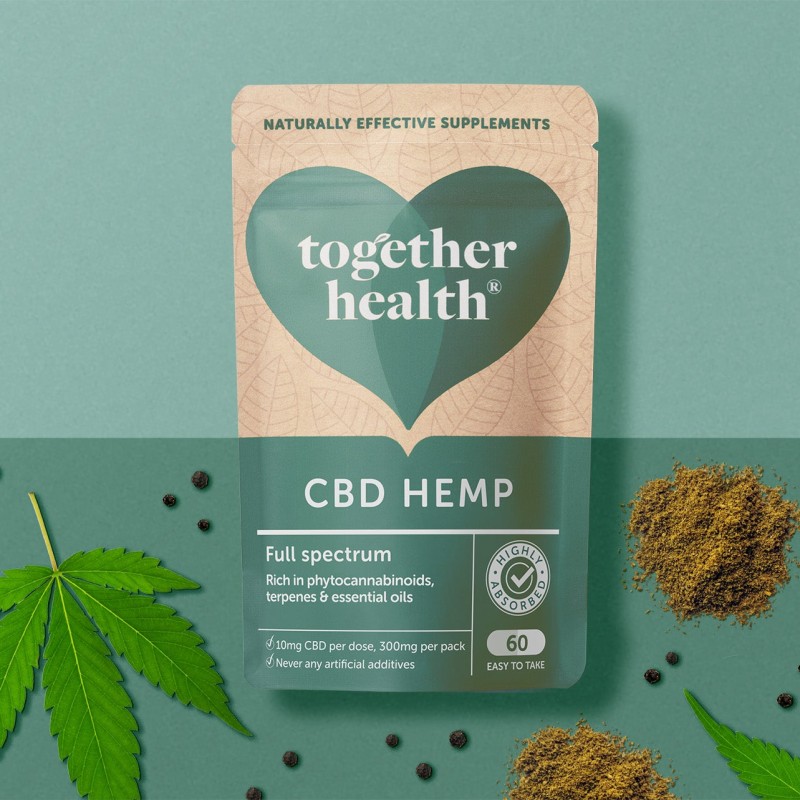
Together Health CPD Hemp is a quality organic supplement that’s batch tested for purity and potency, each dose provides 10mg CBD for chronic pain, and includes piperine (black pepper extract) for improved absorption.
The full spectrum powder capsules contain complete hemp material with CBD and terpenes, for a full spectrum of cannabis, terpenes and important compounds including phenols, flavenoids and essential fatty acids.
It is recommended to start witha low dose, increasing the dose to help pain. As the body builds tolerance to CBD when taken regularly, so it may be needed over time to increase the dose to maintain effects. Made with organic hemp grown in the European countryside.
Always check with GP if pregnant/nursing or taking any medication, before using supplements.
The capsules are made from plant cellulose from the Pinus Elliottii tree, and can be separated and the contents mixed with food or drink if preferred.
The supplements are sold in easy to recycle pouches that are plastic-free and contain a protective film made from wood pulp. All layers are home compostible.
Subscribe online for big savings, and get double rewards cash on orders, you can pause or cancel anytime.