Beautiful Anthologies of Creative Nature Poems
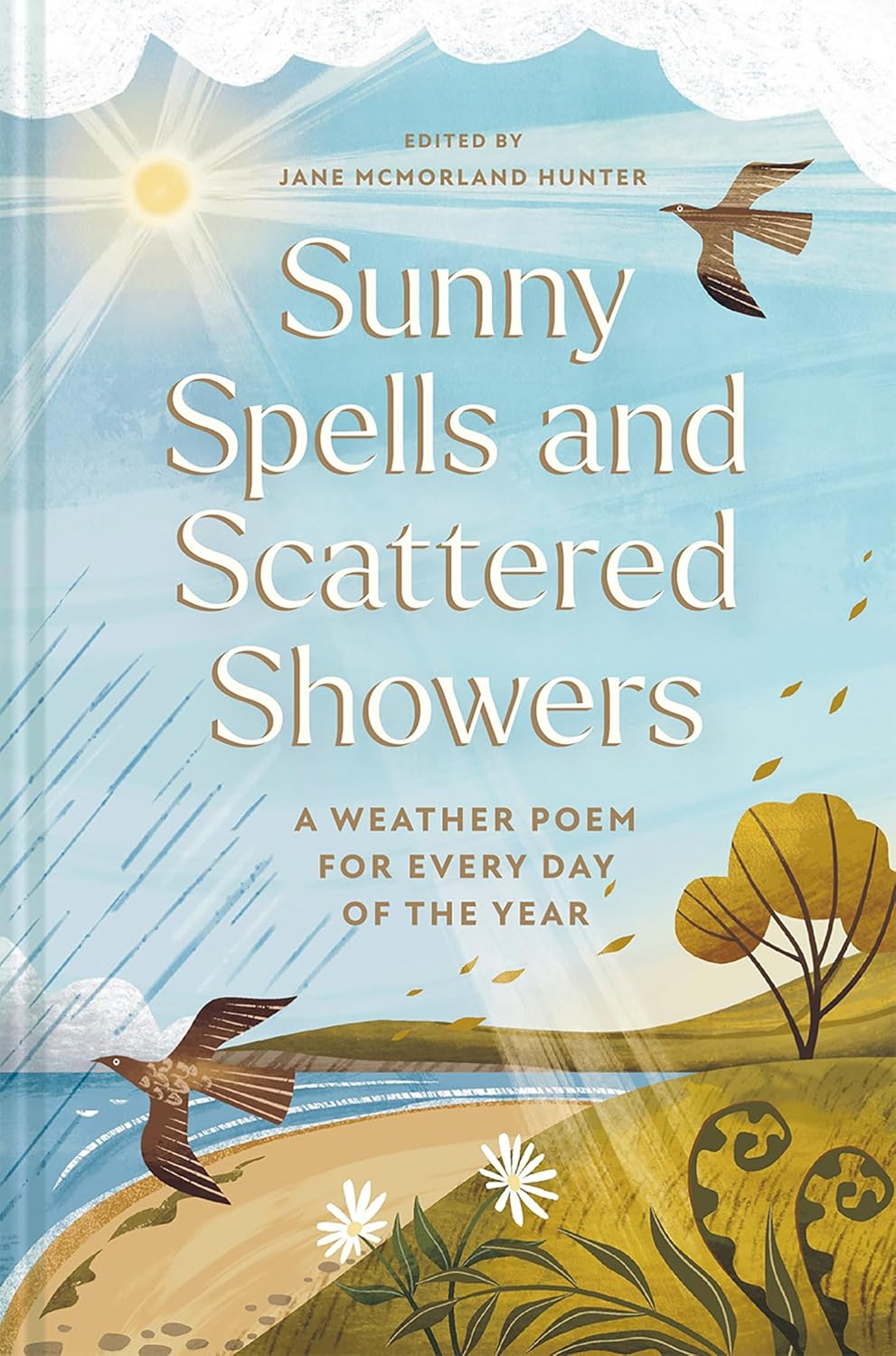
If you enjoy reading poetry, here are some beautiful anthologies. Find your favourite to keep by your bedside or armchair, to help you relax in the power of words on nature!
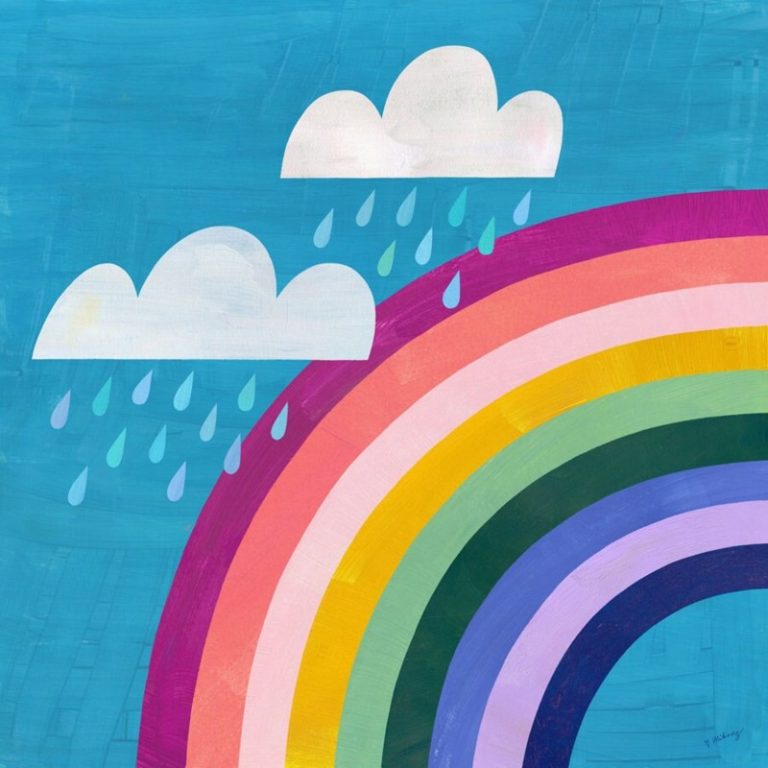
Sunny Spells and Scattered Showers is an anthology of classic and contemporary poems all about the weather. From storms to heatwaves to April showers, there’s a poem to reflect all the elements through the year.
From the nursery rhyme ‘Rain, Rain, Go Away’ to Sylvia Plath’s ‘Black Rook in Rainy Weather’, and from Ralph Waldo Emerson’s ‘A Snowy Day’ to Amanda Gorman’s ‘Earthrise’, slip into a poem to dream of better weather (whether to you that means snow, rain or sun).
Or just reveal in a mirroring of what is currently going on outside your window. There is all sorts of weather to be found; some favourites as well as some you may not even have heard of.
With a selection of poems stretching across the globe and centuries, you’re sure to find a weather poem to cast some sunlight on your day.
Poems on Reflection with the Natural World
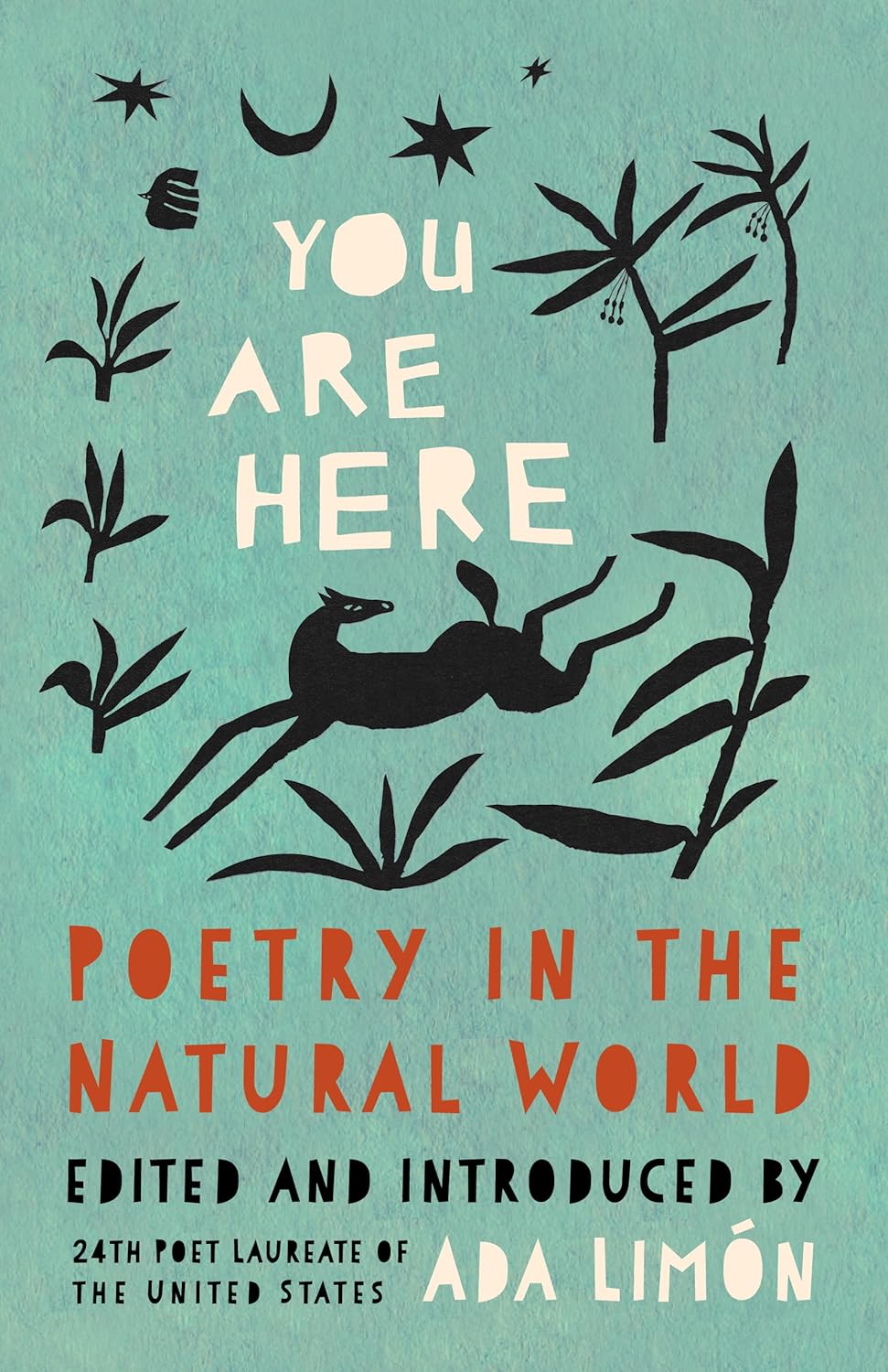
You Are Here: Poetry in the Natural World is published with the Library of Congress and edited by the Poet Laureate of the United States, a collection of poems reflecting our relationship with nature, by 50 celebrated contemporary writers.
Each poem engages with the author’s local landscape – from the breath-taking variety of flora in a national park to a lone tree flowering by a bus stop.
Poems are like trees. They let us breathe together. In each line break or stanza, there’s a place for us to breathe. Not unlike a forest, poems can be a place to stop and remember that we too are living.
W.S. Merwin wrote in his poem ‘Place’ that ‘On the last day of the world, I would want to plant a tree’. I think I would add that I would also like to write a poem. Maybe I’d even write a poem about a tree?’
Editor Ada Ada Limón is an American poet. In 2022, she was named the 24th Poet Laureate of the United States by the Librarian of Congress. This made her the first Latina to be Poet Laureate of the USA.
Nature Poems for Spring and Summer Evenings
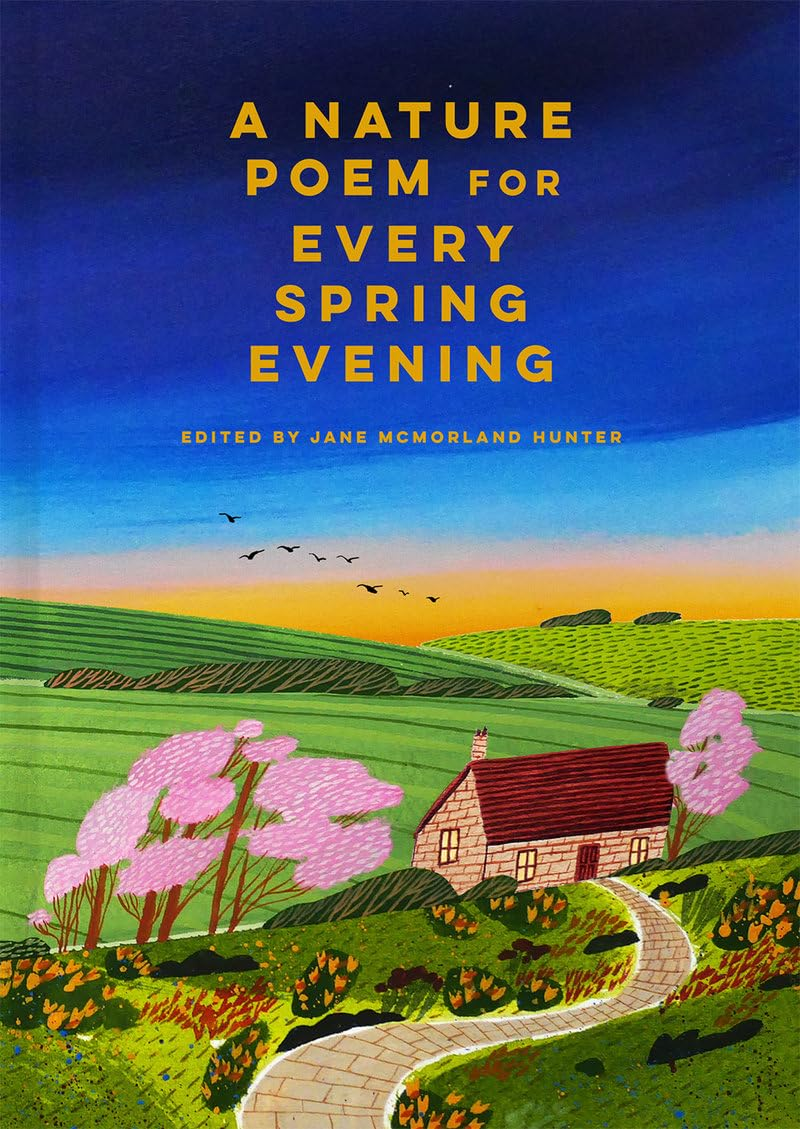
A Nature Poem for Every Spring Evening is a sublime bedside companion to enjoy, as the frost melts and days grow longer, with poems to immerse yourself in the season.
This anthology features poems by William Blake, Emily Dickinson, Robert Browning and Eleanor Farjeon, some of the finest poets that ever put pen to paper describe this wondrous season of new beginnings.
With an entry each day from 1st of March to 31st of May, these 91 poems will invigorate you in the warmer wetter months of spring.
From Robert Herrick’s first drops of March dew and the breaking blossoms of Laurence Binyon’s April day to William Blake’s meadow-sweet May and Emily Dickinson’s promise of light to come.
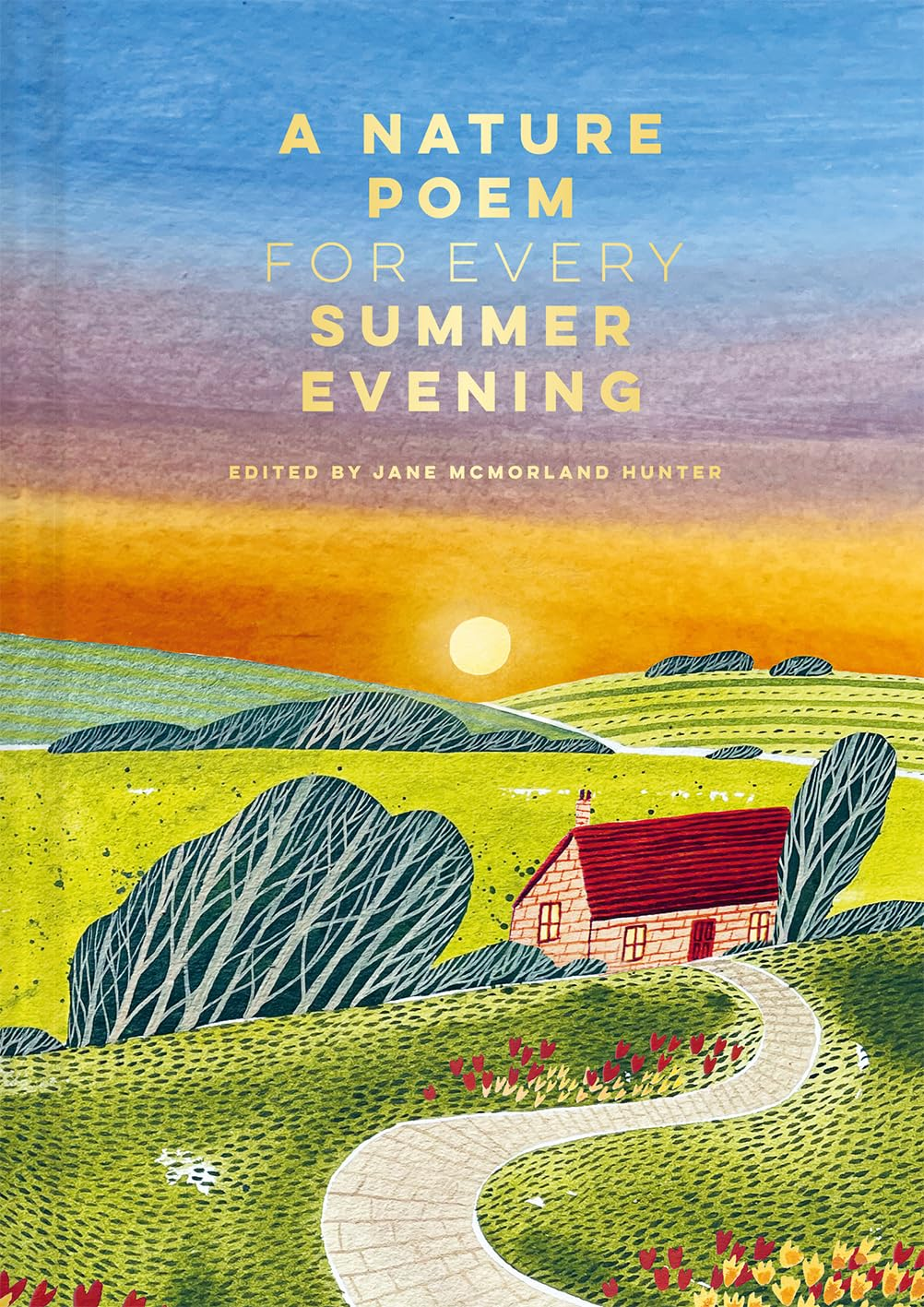
A Nature Poem for Every Summer Evening is a lovely collection of poems about nature to read at your bedside, or under a street on long light summer evenings. Pour out a long drink, take a seat and lose yourself in this sublime collection.
From William Shakespeare to Emily Dickinson and from John Keats to Isaac Rosenberg, some of the finest poets who have ever put pen to paper describe the slow glowing evenings of the season.
There is one entry for each summer day (from 1 June to 31 August). A collection of 92 poems to offer the perfect backdrop for balmy summer evenings in the garden.
From Christina Rosetti’s ‘larks hang singing, singing, singing over the wheat fields’ to Eugene Lee-Hamilton’s ‘rich, hot scent of old fir forests heated by the sun’. You’ll also find Samuel Palmer’s evocative descriptions of summer twilight, and Rachel Field’s whimsical musings on butterflies.
Feather, Leaf, Bark & Stone (nature poems)

Feather, Leaf, Bark and Stone is a book of poems and meditations with a difference. Over 100 short texts have been typed into small squares of gold leaf, then photographed into a sequence.
The book is full of the light and wind that fills the Pembrokeshire coast where it was crafted, each page anchored to the landscape, by the mechanical rhythm of Jackie’s antique typewriters.
What People Say About Jackie’s Art
Beautiful, lyrical and lovely. Joanne Harris
A quiet masterpiece Maria Popova
Jackie Morris is an artist who lives in Wales, where she shares a small cottage with her children, two odd dogs and cats of various colours, mostly ginger! She also illustrated the wonderful book The Lost Words.
Simon Armitage (England’s Poet Laureate)

England’s Poet Laureate hails from Yorkshire, and still lives there. Simon Armitage began his career as a probation officer, and now writes poetry and (and has been poet-in-residence for several universities).
Surprisingly, he lost on his chosen subject of the poetry of Ted Hughes, when appearing on Celebrity Mastermind, losing out to someone who answered questions on a soap opera. He joked ‘I’m not bitter, but next time I’ll choose the specialist subject of ‘what I watched on telly last night!’
Read his poetry volumes Dwell (inspired by animal homes from a squirrel’s drey to a beaver’s lodge) and Blossomise (on spring blossom and orchards).
The Gift of Animals (beautiful poems on nature)
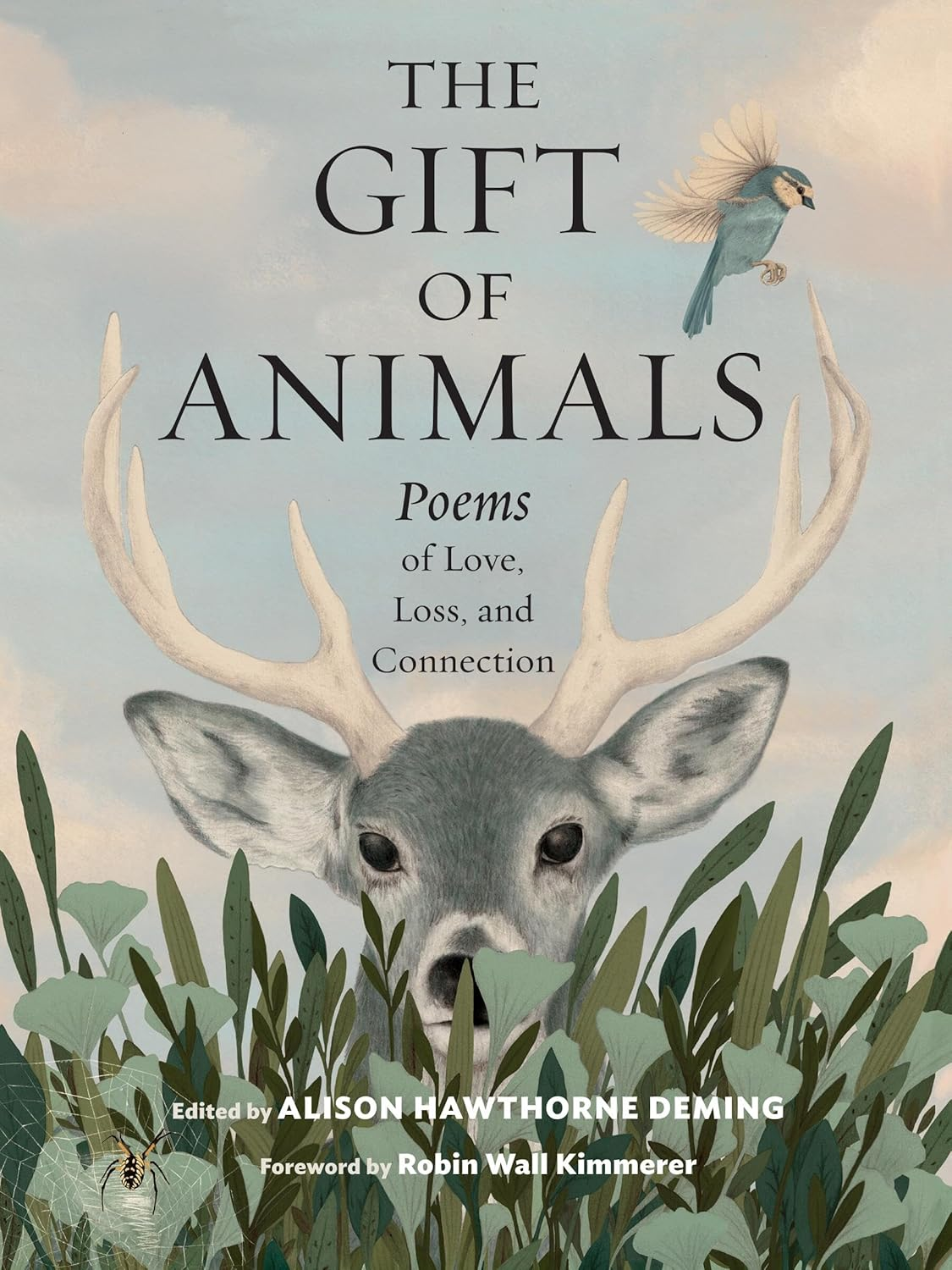
The Gift of Animals is a beautiful gift book of poems on the animal kingdom, from pets to wildlife and even reptiles.
Animals have long been a source of inspiration and companionship. And poems about them are amongst the oldest traditions in human culture.
This collection of contemporary poems adds to this ancient lineage:
- Celebrating other creatures for their beauty & intelligence
- Empathising over their suffering
- Hoping for their future
The presence of an animal is a gift. The loss of an animal is a grief.
To share such feelings through poetry, is to create a community of caring, for the creatures that accompany us on Earth.
The book includes poems by some of the world’s most beloved poets.
Brilliantly selected and meaningfully arranged, the poems unfold one after another. Kathleen Dean Moore
Alison Hawthorne Deming is a nature writer and former poet-in-residence at Milwaukee Public Library and Museum, and currently is Professor Emerita at University of Arizona, USA.
Poetry Break: ‘Snake’ by DH Lawrence

DH Lawrence did not just write controversial novels, his nature poetry was amazing (often studied by English literature students at college and university). Born in Nottingham, he eloped with the wife of his professor. But they did stay together until his early death from TB, age just 44.
While they were living in Sicily (Italy), he wrote this poem. Snake talks of him coming across a venomous snake. And after admiring it for a few seconds, he picks up an object and throws it at the snake, who quickly disappears into the underground.
And immediately he regrets his ‘paltry education’, at missing out at an encounter with one of the lords of life.
It’s a smashing poem. Read it aloud. It will kind of make you like snakes – even if you’re terrified of them! Read more on why reptiles matter.
A snake came to my water-trough
On a hot, hot day, and I in pyjamas for the heat,
To drink there.In the deep, strange-scented shade of the great dark carob tree
I came down the steps with my pitcher
And must wait, must stand and wait, for there he was at the trough
before me.He reached down from a fissure in the earth-wall in the gloom
And trailed his yellow-brown slackness soft-bellied down, over
the edge of the stone trough
And rested his throat upon the stone bottom,
And where the water had dripped from the tap, in a small clearness,
He sipped with his straight mouth,
Softly drank through his straight gums, into his slack long body,
Silently.Someone was before me at my water-trough,
And I, like a second-comer, waiting.He lifted his head from his drinking, as cattle do,
And looked at me vaguely, as drinking cattle do,
And flickered his two-forked tongue from his lips, and mused
a moment,
And stooped and drank a little more,
Being earth-brown, earth-golden from the burning bowels
of the earth
On the day of Sicilian July, with Etna smoking.The voice of my education said to me
He must be killed,
For in Sicily the black, black snakes are innocent, the gold
are venomous.And voices in me said, If you were a man
You would take a stick and break him now, and finish him off.But must I confess how I liked him,
How glad I was he had come like a guest in quiet, to drink
at my water-trough
And depart peaceful, pacified, and thankless,
Into the burning bowels of this earth?Was it cowardice, that I dared not kill him?
Was it perversity, that I longed to talk to him?
Was it humility, to feel so honoured?
I felt so honoured.And yet those voices:
If you were not afraid, you would kill him!And truly I was afraid, I was most afraid,
But even so, honoured still more
That he should seek my hospitality
From out the dark door of the secret earth.He drank enough
And lifted his head, dreamily, as one who has drunken,
And flickered his tongue like a forked night on the air, so black,
Seeming to lick his lips,
And looked around like a god, unseeing, into the air,
And slowly turned his head,
And slowly, very slowly, as if thrice adream,
Proceeded to draw his slow length curving round
And climb again the broken bank of my wall-face.And as he put his head into that dreadful hole,
And as he slowly drew up, snake-easing his shoulders,
and entered farther,
A sort of horror, a sort of protest against his withdrawing into
that horrid black hole,
Deliberately going into the blackness, and slowly drawing
himself after,
Overcame me now his back was turned.I looked round, I put down my pitcher,
I picked up a clumsy log
And threw it at the water-trough with a clatter.I think it did not hit him,
But suddenly that part of him that was left behind convulsed
in an undignified haste,
Writhed like lightning, and was gone
Into the black hole, the earth-lipped fissure in the wall-front,
At which, in the intense still noon, I stared with fascination.And immediately I regretted it.
I thought how paltry, how vulgar, what a mean act!
I despised myself and the voices of my accursed human education.And I thought of the albatross,
And I wished he would come back, my snake.For he seemed to me again like a king,
Like a king in exile, uncrowned in the underworld,
Now due to be crowned again.And so, I missed my chance with one of the lords
Of life.
And I have something to expiate:
A pettiness.
Lawrence’s poem ‘Baby Tortoise‘ also speaks to empathy for another reptile:
To open your tiny beak-mouth, that looks as if it would never open
Like some iron door:
You draw your head forward, slowly, from your little wimple
And set forward, slow-dragging, on your four-pinned toes,
Rowing slowly forward.
Rather like a baby working its limbs.
Except that you make slow, ageless progress
And a baby makes none.
Traveller,
With your tail tucked a little on one side
Like a gentleman in a long-skirted coat.All life carried on your shoulder,
Invincible fore-runner.