The Best Brands of No-and-Low Alcohol Beers
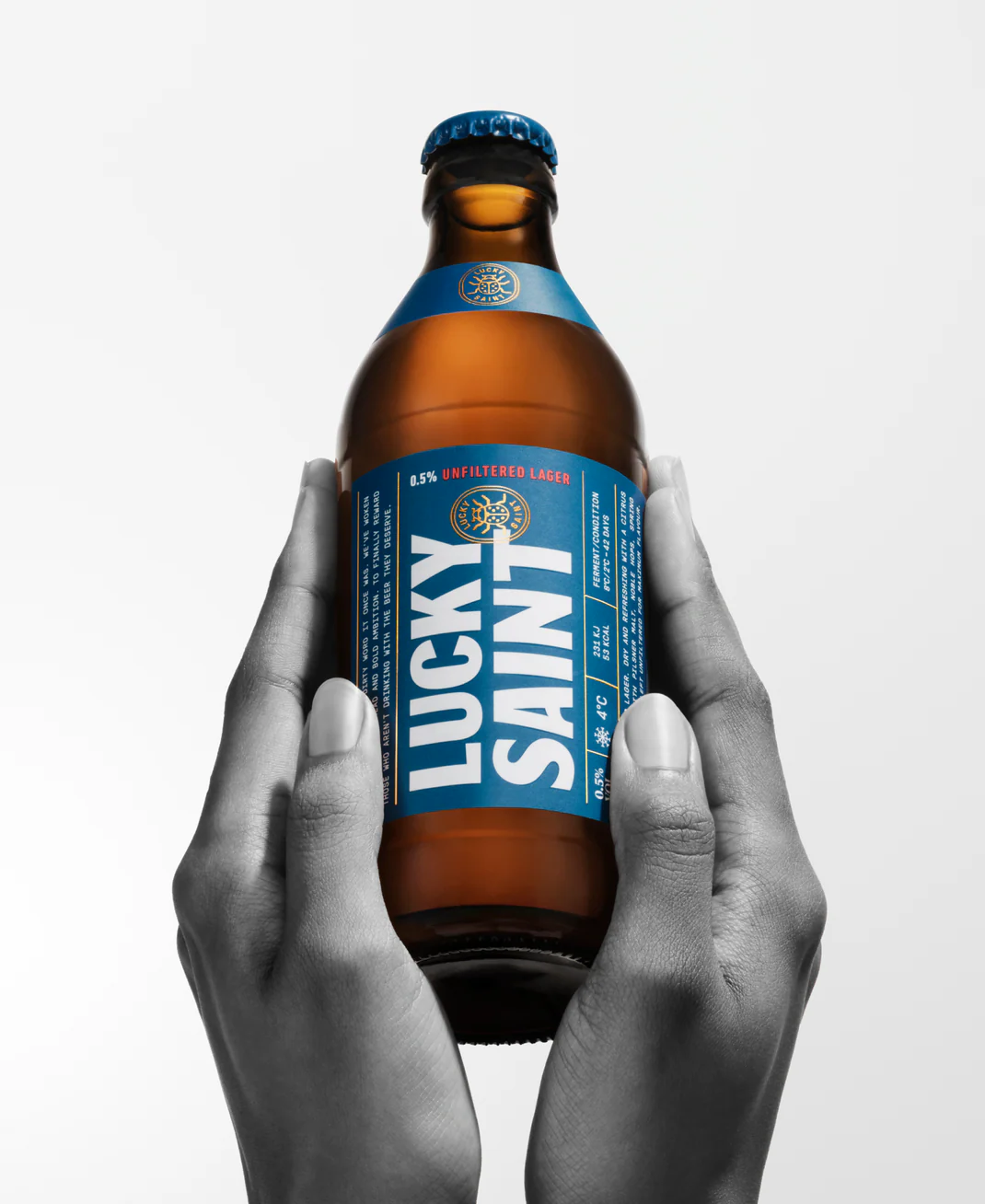
Lucky Saint is a brand of superior alcohol-free beer, which is widely sold across England in grocery stores. Left unfiltered for maximum flavour, and made with all natural ingredients. It’s also vegan-friendly, and low in calories and sugar.
The beer is not gluten-free, due to Pilsner malt used.
No alcohol can be 0% booze, as even fruit and bread contain a little alcohol. But 0.5% is the main percentage used. It is safe to drive, but it’s best to avoid even this amount, if pregnant or nursing.
Before recycling, pop the ring-pulls back over the cans, to help avoid wildlife getting caught inside. Set up a can recycling program to raise money for your community! Never buy beers wrapped in plastic rings, they harm wildlife (if you see any, rip the holes and securely bin).
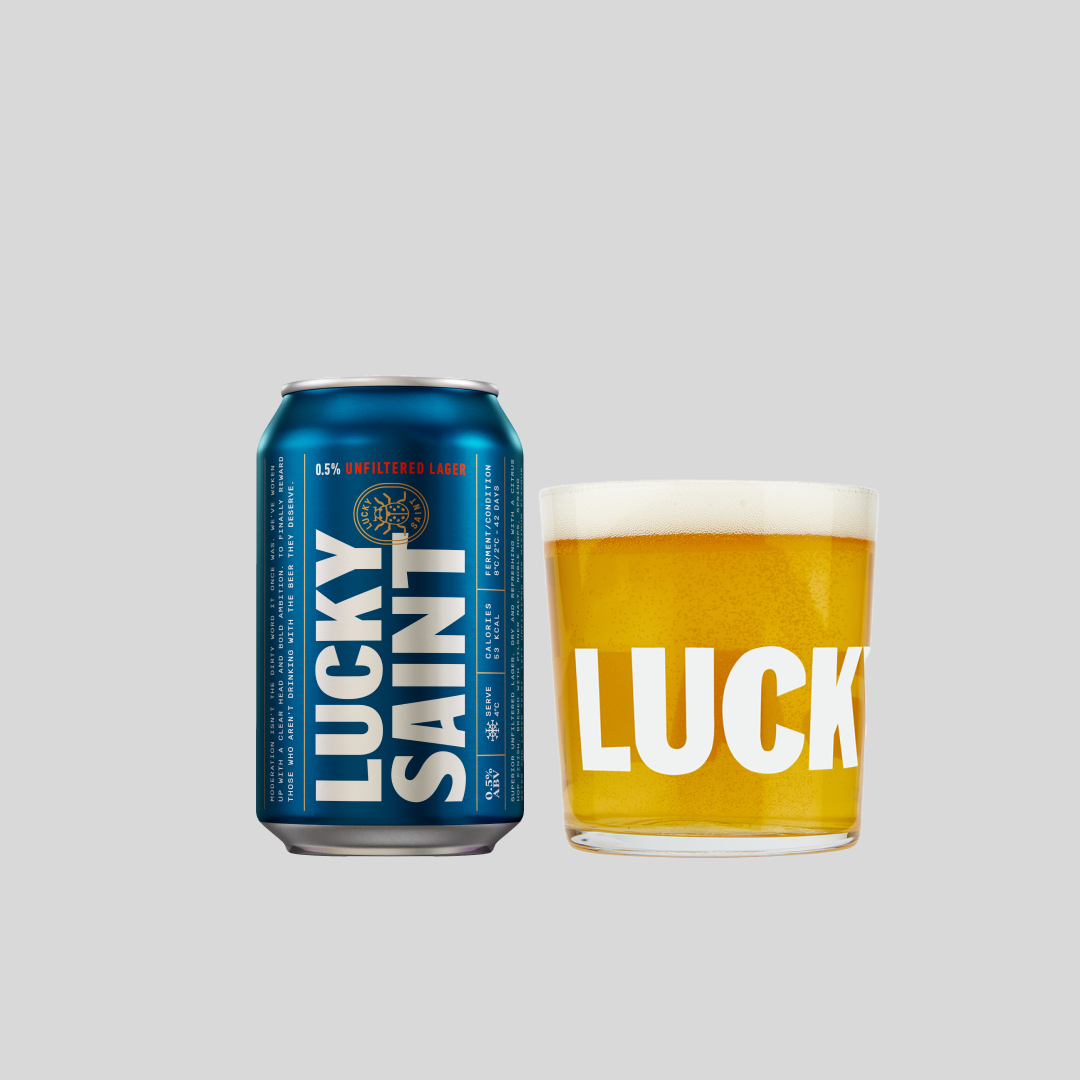
The beer is brewed to German purity laws, and takes four weeks to allow the sediment to drop out of the beer naturally, so it can remain unfiltered.
- Lucky Saint blends toasty Pilsner malt with fresh citrus German hops (dried lemon, light orange) and has a fresh bread aroma. Blend with Fentimans lemonade for a summer shandy, or serve over ice with ginger beer.
- Hazy IPA has notes of tropical and stone fruits.
- Lemon Lager includes a squeeze of fresh lemon juice.
- Weissbier is a Bavarian wheat beer, with notes of cloves, banana and citrus.
All beers are available wholesale (including on draught).
What is Alcohol-Free Beer?
No alcohol can really be 0% booze, as even fruit and bread contains a little alcohol. But 0.5% is as low as you can get. It’s officially safe to drive (but still best to avoid for pregnancy/nursing).
Do You Drink Too Much Booze?!
If you like to drink boozy beer, and are wondering whether you need to cut down (and perhaps sub with a few alcohol-free beers through the week), here is a simple guide (none of that confusing ‘unit’ stuff):
For a normal sized adult, NHS recommendations are (these are either/or – not all together!):
- 6 pints of beer a week (not all on the same day!)
- 6 glasses of wine a week
- 12 measures of spirits
So in plain English, if you drink 14 pints of beer a week (way over recommended limits) but still wanted to drink beer, you would cut down to one beer a day for six days (and the other one could be alcohol-free, plus go booze-free one day a week). Or mix and match if you also drink wine or spirits.
Below Brew Co: Alcohol-Free Craft Beers
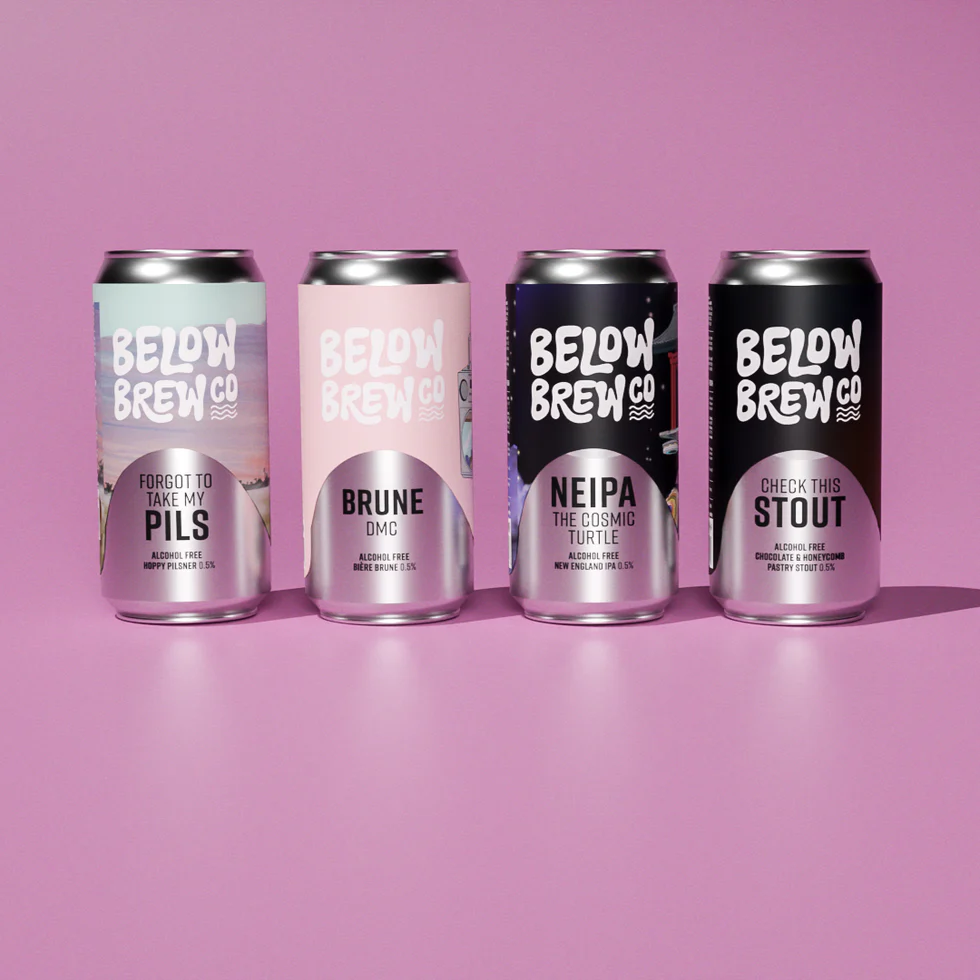
Below Brew Co is an independent alcohol-free brewing company, offering a small range of drinks in beautifully designed cans. You can buy in local shops, or shop online (including mixed cases and taster packs.
The range includes:
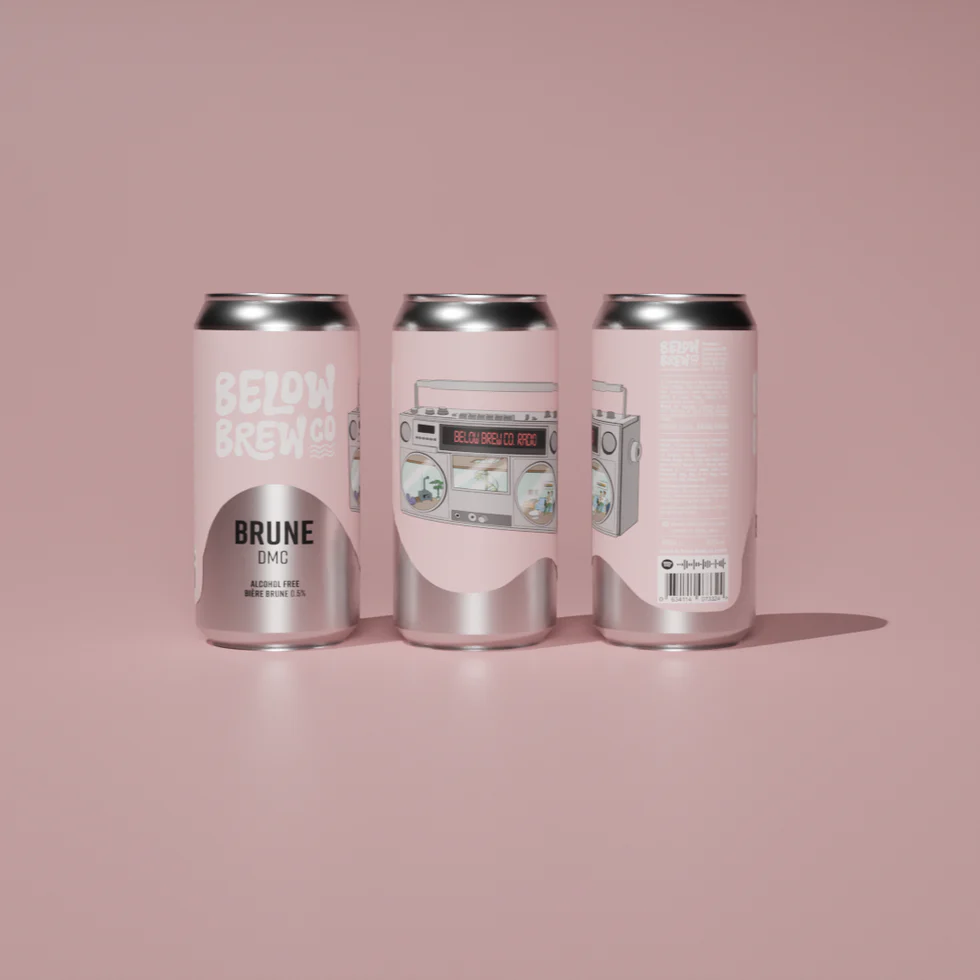
- Brune DMC (Belgian brown ale – supports local economies unlike Newcastle Brown Ale, owned by Heineken)
- Neipa Cosmic Turtle (New England IPA)
- Wild Juice Chase (juicy pale ale)
- Heaven & Helles (gluten-free lager)
- Forgot to Take My Pils (hoppy Pilsner)
- All Hopped Up (IPA)
- Unruly AF (pale ale)
Small Beer (low-alcohol beers & mini-kegs)
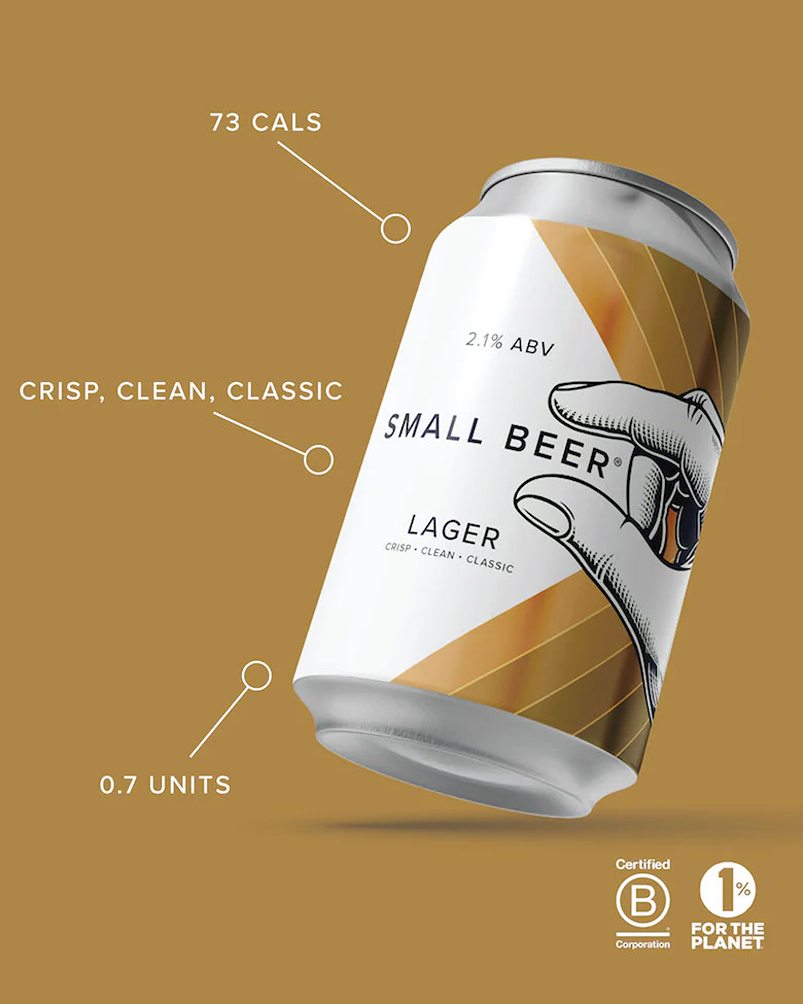
Small Beer Brew Co (London) offers vegan beer with half the alcohol and fewer calories, sold in cans or bottles or in kegs for parties, pubs, hotels and restaurants. Sustainably-crafted in a B-corp brewery, this is made with the finest British barley. Low-alcohol beers are classed as drinks with APV of 1.2% (compared to conventional beers that are around 4.4%).
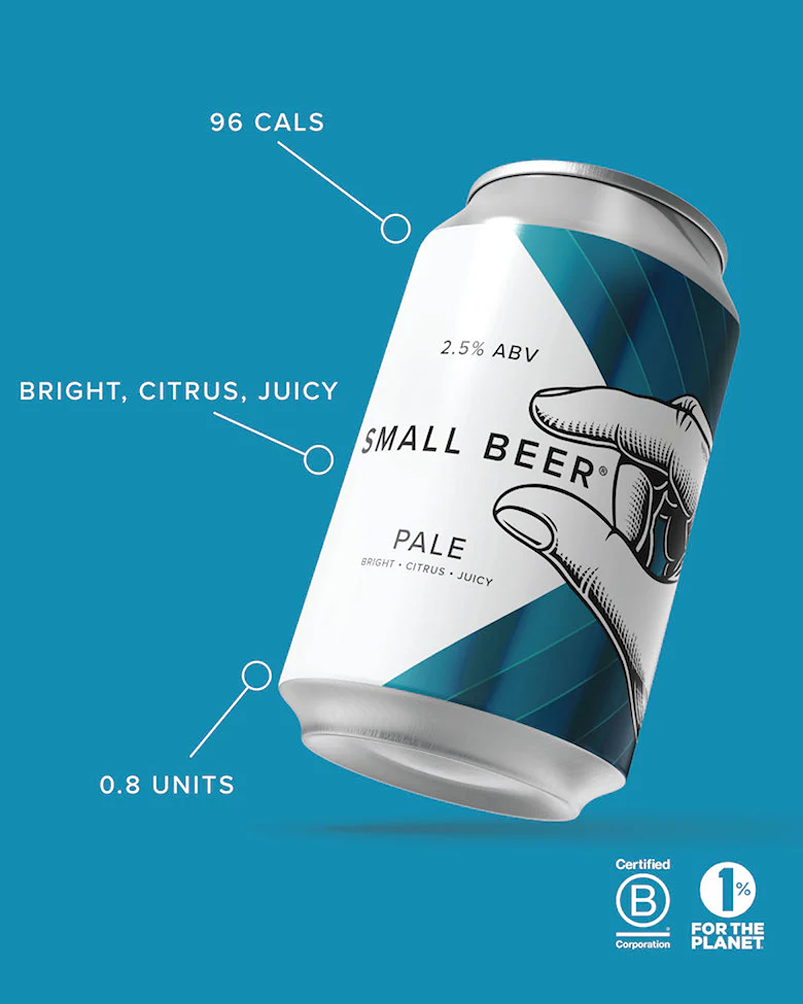
The company’s brewing kit uses around an eighth of the water typically used and the brewery is cleaned with recovered heat and water, and all packaging is recycled. Spent grain is delivered to a local farm. The range includes:
- Pale ale (tropical fruits)
- Amber (toasty rye)
- Lager (citrus nose)
- Hazy (apricot & tropical fruits)
- IPA (bitter orange & biscuit)
- Blanche (made with Sussex coriander and Spanish orange peel)
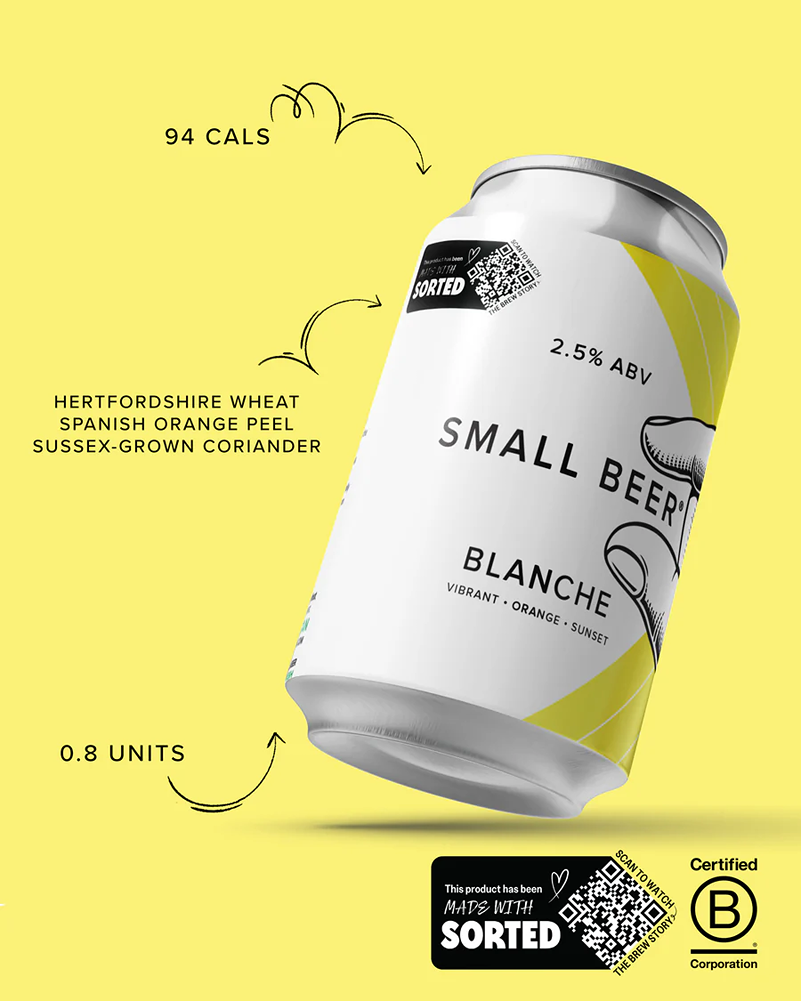
The company also offers beers in mini-kegs (up to 9 pints), which can be stored cold and consumed within a month of delivery. Once open, drink within a couple of days. Ideal for parties, empty kegs can be recycled. The site has full info on how to use kegs.