Northumberland Coast Path (Cresswell to Berwick-upon-Tweed)
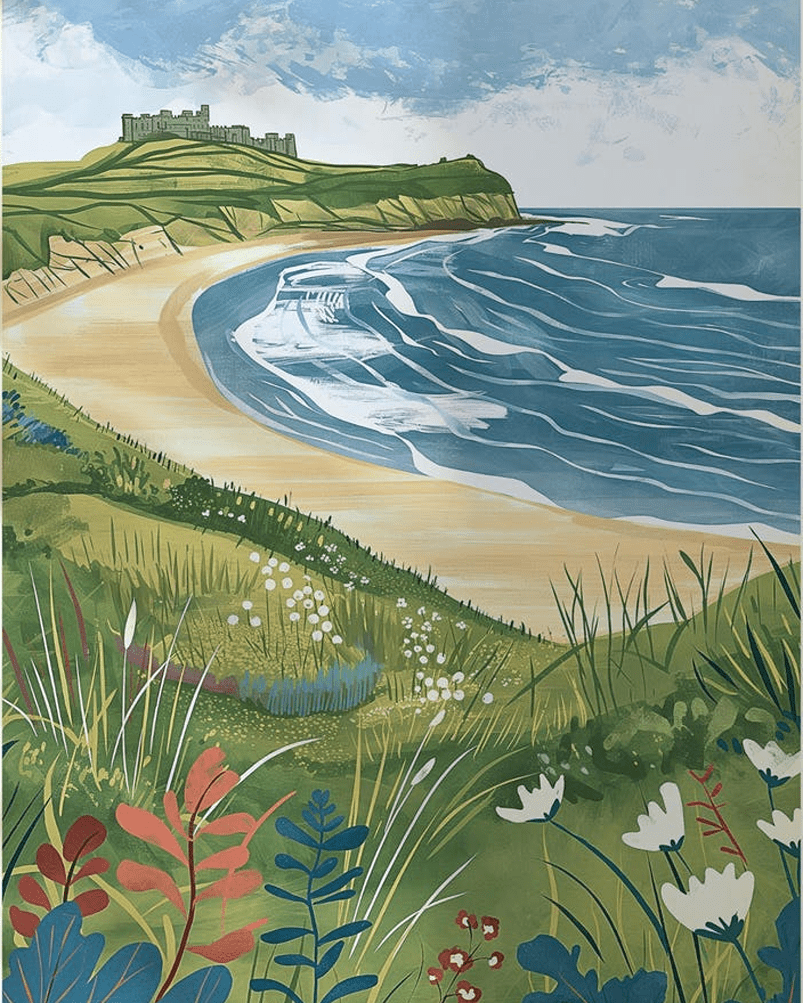
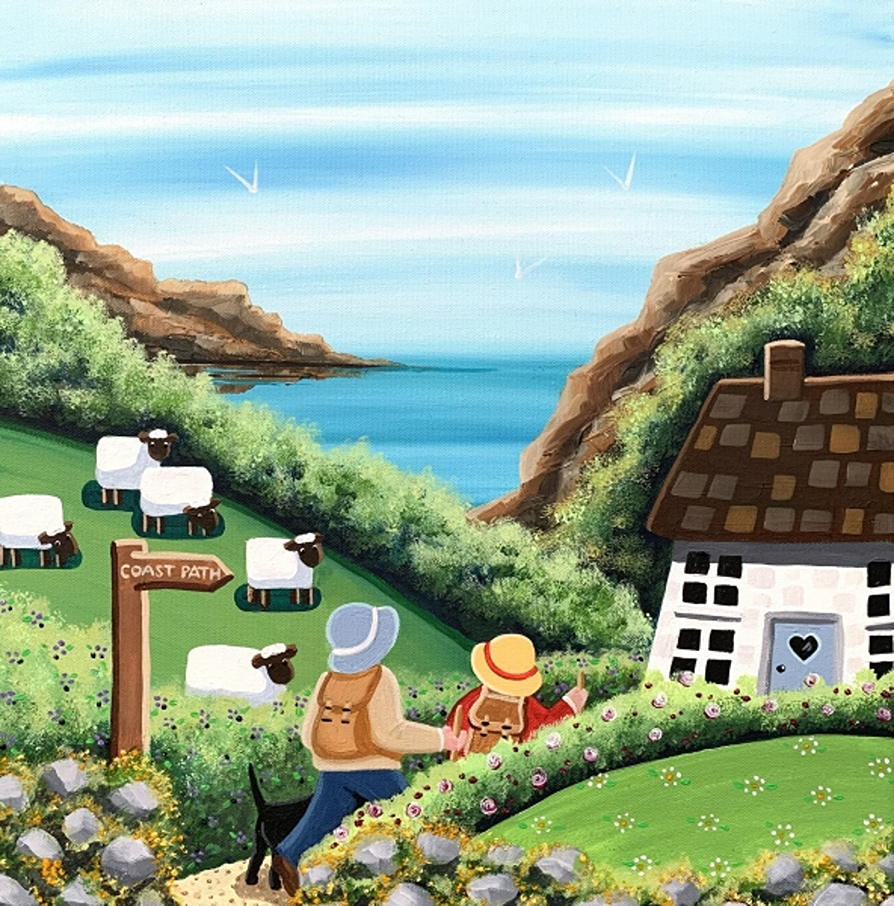
The Northumberland Coast Path runs for 62 miles from Creswell to Berwick-upon-Tweed near the Scottish Border (you can just walk part, if you want). If you do take the whole walk, most people take four to six days, which gives time for weather changes, stopping off and bus links.
Northumberland (the whole county is a national park) has one of England’s lowest populations. And has a huge forest and beautiful coastline – home to many birds (including puffins) and marine creatures. With little light pollution.
Interestingly, it has one of England’s largest populations of endangered red squirrels. This is because it houses pine forests (red squirrels need natural habitats for good immunity against Squirrelpox – read more on how to help both red and grey squirrels)
As the park with the lowest population, this is also England’s quietest National Park, the highest point being The Cheviot Hills. It also has five of the cleanest of England’s rivers (over 6000 of them), presumably as there are less people to drop litter and other pollutants in them.
Alongside the river, you’ll find ancient oak, birch and alder trees, providing a glimpse into the historic landscape. Keep conkers away from dogs (oak trees are great for jays, but unsafe near pets, barnyard friend and horses).
Always follow the Countryside Code to keep all creatures safe. Keep dogs away from steep banks, mushrooms (and toxic plants/trees) and on leads near birds, barnyard friends and wild ponies.
If at the coast, keep away from nesting birds and never walk on sand dunes. Learn how to keep dogs safe by the seaside (check beach bans before travel). Join the campaign to ban flying rings, to help local seals.
How to upright an overturned sheep
With more sheep than people, it’s likely that in Northumberland you’ll come across more than one!
Pregnant sheep (and sometimes due to wool waterlogged from rain) can sometimes roll over onto their backs, and can’t get back upright, due to having four stomach chambers (so will die if not turned back upright).
If you see a sheep on its back, just firmly right it back, then stay with it, until rain has drained off, so it won’t happen again. Then inform your local farmer.
Cresswell to Amble (quiet sands, dunes, birds)
Creswell is a small coastal village with a rich history, where you begin (or end, if going the other way) the walk. Prehistoric footprints from 7000 years ago show that ancient people lived here.
There is also a story of a 14th century ghost – a young woman who died of a broken heart, after her brothers killed her Danish prince beau on the beach. She can occasionally be seen gazing out to sea from a local roof tower.
A local heroine (like Northumberland’s Grace Darling) was Margaret Brown, who led a human chain during a fierce storm to rescue sailors from a shipwrecked Swedish steamer in 1876.
Amble to Seahouses (harbours, villages, coast)
This middle section is home to the best-known sites, including the village of Warkworth, Dunstanburgh castle and Bamburgh with its castle and beach. Seahouses offers shops and a bed/food for the night.
Seahouses to Berwick-upon-Tweed
Berwick-upon-Tweed is just a few miles from the Scottish border, it even has its own tweed, due to having changed hands many times in history.
This is England’s most northerly town, on the mouth of the River Tweed. It has Elizabethan town walls and the ruins of a castle, three bridges and a beautiful coast.
The nearby coastal villages are now best-known, for being locations for the Scottish crime series Taggart, when it was still filmed.