Nature friendly farming (sustainable agriculture)
Nature-friendly farming is gaining traction as farmers across the globe recognise its vital role in sustainable agriculture. Not only good for the planet and wildlife, but also for farmers. Find more tips on organic farming and join Nature Friendly Farming Network.
Over 70% of England’s land is agricultural, so farmers are important to both planet and food, and our economy. We need to ringfence all farmers who look after the land (and care for their animals well), so food as as ethical as it can be. And not dominated by big supermarkets or industry.
The site has many free downloads, including how to cope with changing weather patterns. Also how to help reduce carbon emissions and protect habitats for native wildlife. And grow better food, which means more profits for farmers.
Grazers is a good company from Yorkshire, which offers nontoxic products to deter rabbits, pigeons, deer, slugs/snails and aphids, all using nature-led methods.
Farm Wildlife has detailed information for farmers, to protect wildlife habitats. Mostly by creating natural habitats for feeding and shelter, and leaving undisturbed cover.
The Hare Preservation Trust suggests:
- Providing more grass on arable farms, for summer grazing. Run wide strips of grass across open fields, or have patches of pasture.
- When making silage, cut fields from centre outwards (not outside in) to let hares escape machinery, to neighbouring fields.
- Have ploughed or rough-cultivated areas left for spring crops, for hares to sleep.
- Leave 6 metre uncultivated margins around arable fields. And leave cereal stubbles over winter.
The Hare’s Corner (making space for nature)
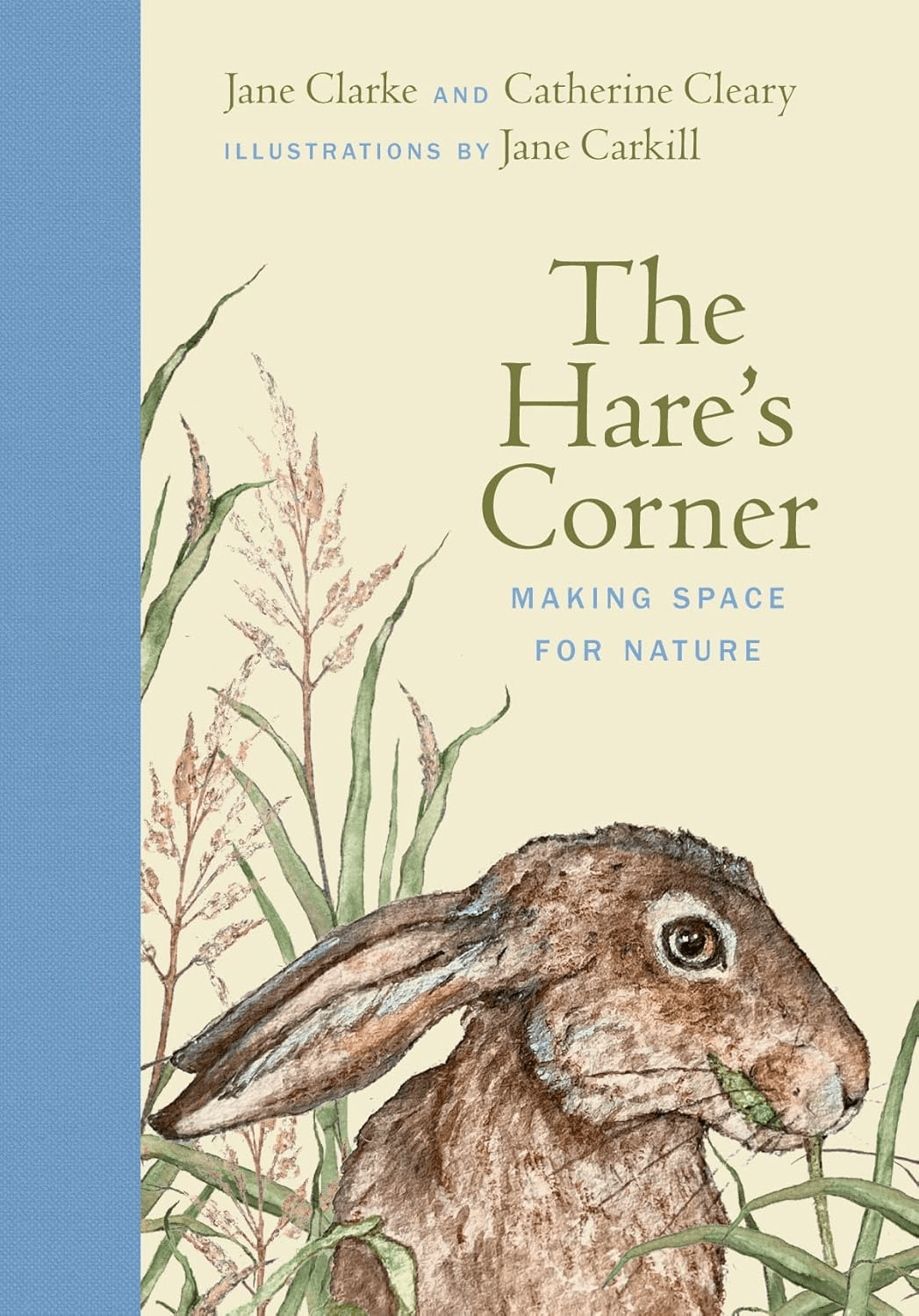
The Hare’s Corner is an Irish book, a powerful celebration of a quiet and hopeful revolution taking place across Ireland where people are making space for nature to thrive. Great reading for any country interested in nature-friendly farming!
This beautifully illustrated book brings together ten inspiring profiles of participants in a national project, where farmers, families and community groups are restoring habitats and reviving species, across both rural and urban landscapes.
Woven throughout the book are poems by Jane Clark, along with lovely art and photography. Each page invites readers to reconnect with wild corners of the world, and perhaps to create their own.
Named after the traditional practice in farming of ‘leaving a field edge for wildlife’, this is a testament to resilience, renewal and the deep wellbeing that can blossom, when we let nature in.
Jane Clarke is an acclaimed Irish poet on nature who lives in Co. Wicklow. This is like our Kent (known as ‘the garden of Ireland’) and known for stunning mountain scenery and ancient monastic sites. It boasts Ireland’s highest waterfall, the largest national park and Glendalough (the 6th century ‘city of two lakes’).
In Ireland, this idea has grown into an environmental movement called the Burrenbeo Trust. Which instead of viewing uncultivated strips as wasted space, encourages farmers to boost diversity.
Key areas of a ‘hare’s corner’ include:
- Wildlife ponds to support amphibians, insects and birds
- Mini-woodlands (planting native trees to act as carbon sinks and windbreaks)
- Heritage orchards (establishing small plots of traditional or rare fruit trees)
- Wildlife hedges (preserving field boundaries and leaving buffer zones during hat cutting, so flora and fauna can thrive).
How organic farmers can help yellowhammers
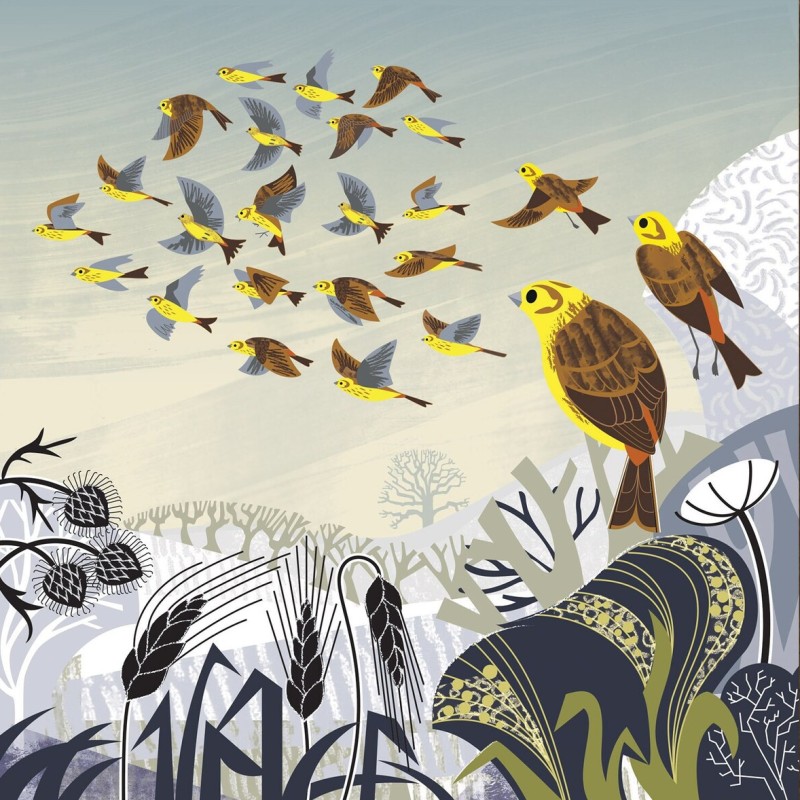
Yellowhammers are endangered birds in England, due to habitat loss and reduced winter food. Known for their bright plumage (females are more brown than yellow), they are a Red listed species.
Related to pine buntings, they have a distinctive song ‘see-see-see-see-bzuuuu’. They mainly eat seeds and insects (which they feed to chicks during the first weeks). In winter, they gather in mixed flocks with other finches, to feed on stubble fields (remaining stalks of wheat, barley and rye after the harvest).
Farmland is yellowhammer natural habitat, so it’s over to you farmers, to help!
- Avoid trimming hedges before September to protect nests (also avoid trimmers, use garden shears). It’s best to maintain thick hedgerows with field margins, to give birds natural food and shelter. Especially yellowhammers, as they nest on or near the ground.
- Farmers can help by creating wide grass margins around arable fields. This helps to seed weeds, and encourage insects as natural food.
- Leave the stubble on the fields, for birds and good soil. Don’t burn it to clear the fields, and never hire it out for stubble-track riding or motocross.
Read more on nature-friendly farming.
If yellowhammers visit your garden
Read our posts on creating safe havens for garden birds and how to stop birds flying into windows (both posts have lots of tips from what not to feed, how to safely clean feeders and how to safely site birdhouses – to avoid building up speed near glass).
Goldfinches (also yellow, but very different!)
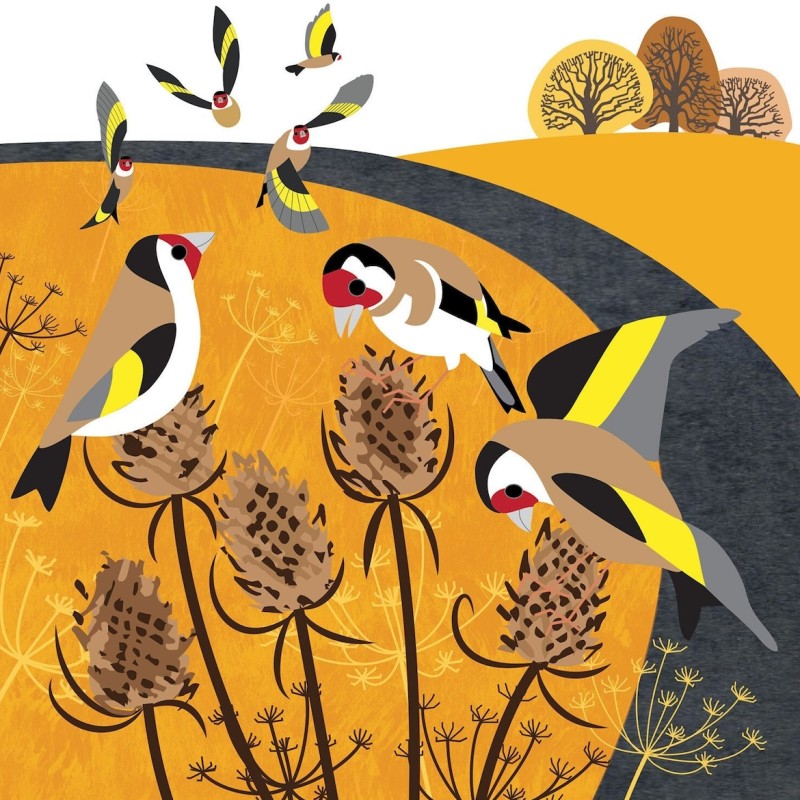
Goldfinches are also yellow birds often found on farmland (and woods). They have bright red faces, that travel together in a noisy flock.
They use their slender beaks to eat thistle and niger seeds, and commonly visit English gardens. They also like dandelion and lavender seeds. Their ancient name was ‘thistle-tweaker!’
Found all over the UK (apart from northern Scotland), you’ll also spot them in the woods and farmland. Some (not all) migrate to Spain for winter. They nest in cup-shaped nests.