How to Choose and Measure for Organic Bras
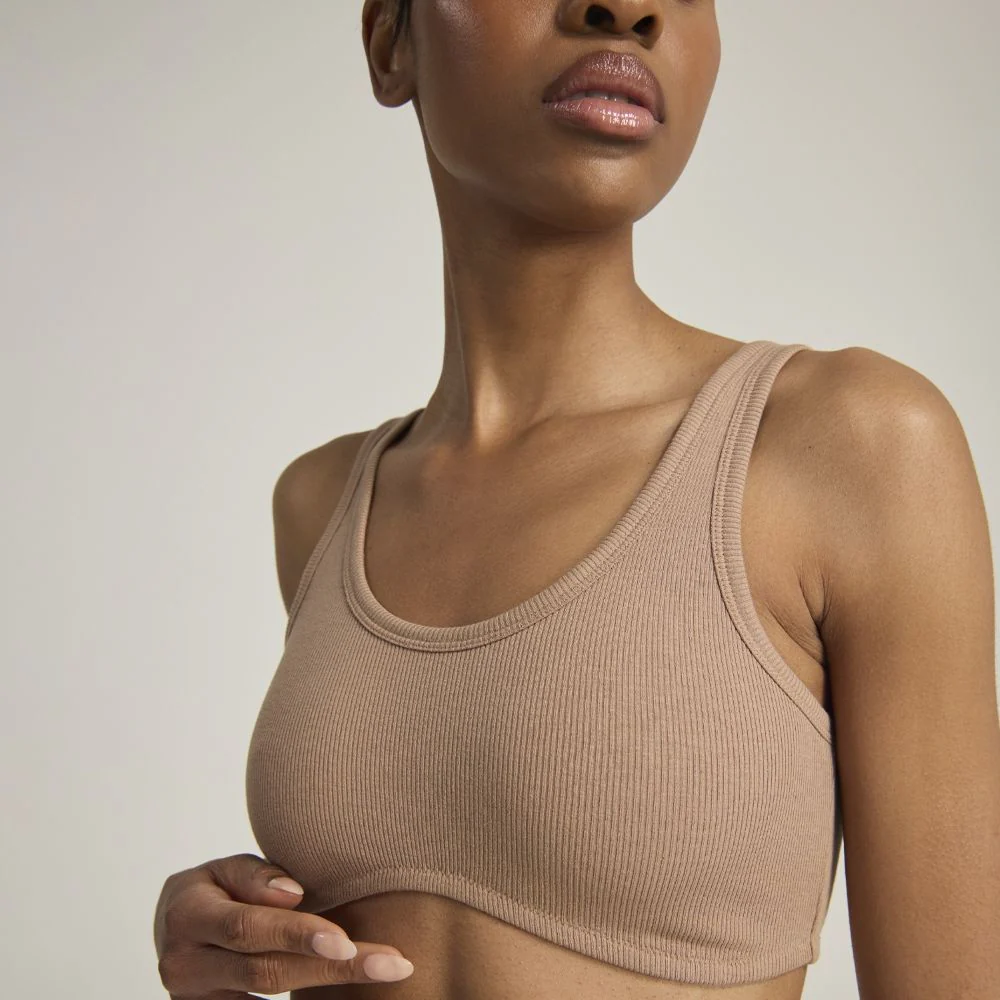
Buying a bra online can feel like a gamble. One arrives and the band digs in, another gapes at the top, and a third has straps that slide off your shoulders by lunch.
With organic bras, fit can feel even more personal. Natural fabrics are often softer, sometimes less springy, and they don’t always behave like high-stretch synthetics. That’s why measuring matters, even if you “know your size”.
For any synthetic blends, launder in a microfiber filter.
Measure yourself at home in 10 minutes
First, grab a few basics:
- Soft tape measure: the flexible sewing kind.
- Non-padded bra: or go braless if that feels easier.
- Mirror: to check the tape sits level.
- Pen and paper (or notes app): write numbers down straight away.
Next, decide what “snug” means. A snug tape should sit firm against the skin, stay in place, and let you breathe normally. It shouldn’t pinch, leave deep marks, or make you hold your breath. Think of it like a supportive handshake, not a vice.
Measure more than once. Bodies shift slightly as you move, and a tape can slip by a centimetre without you noticing. If your size changes through the day (bloating, swelling, hormonal shifts), measure in the evening as well and keep the higher number in mind.
If you’re between sizes, trust the tape over the label. Bra sizing varies by brand, and organic ranges can run differently because fabric stretch differs.
How to measure your underbust (band size)
Stand tall in front of a mirror. Place the tape under your breast root, where the band would sit (not on the ribs much lower down). Keep it flat all the way round, then check in the mirror that it’s level at the back.
Breathe normally and take the reading on a gentle exhale. That gives a more realistic number than sucking in air or pushing it out.
It helps to take two underbust measurements:
- Snug: firm, comfortable, and how you’d want a supportive band to feel.
- Tight: a little firmer, without pain, to show how much “give” you have.
Different brands convert these numbers into sizes in different ways. So treat your underbust measurement as the starting point, then match it to the brand’s size chart rather than guessing.
How to measure your bust for cup size
Cup fit depends on volume and shape, not just one number. That’s why taking two or three bust measurements can be more accurate, especially with softer tissue, fuller busts, or if your breasts sit differently supported versus unsupported.
Use the tape across the fullest part of your bust. Keep it lightly touching, not squashing.
- Standing: measure upright with relaxed shoulders, this suits many people with firmer tissue.
- Leaning: bend forward so your torso is closer to parallel with the floor, this captures fuller tissue that sits to the sides or lower down.
- Lying: lie on your back and measure, this helps if your bust spreads when unsupported.
Write all readings down. Then use the brand’s chart to pair your underbust and bust numbers to a size. If the chart asks for one bust number, use the leaning measurement if you have a fuller or softer bust, otherwise use standing.
Choose the best organic bra for your body
“Organic” in bras usually means organic cotton or other certified fibres, plus lower-impact dyes and finishes. However, it’s normal for parts of the bra not to be organic. Elastics, strap adjusters, hooks, and most threads are usually synthetic because they need strength and stretch.
Instead of chasing a perfect label, focus on what affects comfort day to day: fabric feel, seam placement, support level, and how the band behaves after a few hours.
Start with your routine:
For everyday wear, many people prefer soft-cup or lightly structured styles, with a firm band and wider straps. For hot weather, breathable cotton and lighter coverage can feel better than thick foam.
If you’re nursing, look for drop cups that open with one hand and a band that doesn’t dig as your size shifts. For sport, prioritise a stable band and reduced bounce, even if the fabric isn’t fully organic.
Pick a style that matches your support needs
- A bralette can be ideal for light support, lounging, and sensitive ribcages. The best ones still have a firm band, because that’s where support comes from.
- Soft-cup bras suit daily wear and can be very comfortable in organic fabrics. Look for wider underbands, stronger elastics, and side support panels if you need more lift.
- Wired organic bras exist, but they often use lighter materials. If you go wired, the band should feel secure first, otherwise the wire does the job the band should be doing.
- Sports bras need the most structure. Even when made with organic cotton blends, they should feel snug and stable. If you have a fuller bust, prioritise wider straps, a stronger band, higher coverage, and a higher centre (the middle front) for better control.
Check the fit when it arrives
- Try your new bra on indoors, with tags on, so you can return it if needed. Start on the loosest hook, because the band should have room to tighten as it relaxes over time.
- Organic fabrics can soften and ease slightly with wear. So the first fit should feel secure but not harsh. If it already rides up or feels loose, it probably won’t improve.
- After your first try-on, wear it around the house for a few minutes. Heat and movement reveal problems fast.
- Finally, treat it kindly. High heat can shorten the life of elastics, even in an organic bra. Cooler washes and air-drying usually keep the band firmer for longer.
The 60 second fit test
- Band: level all the way round, firm on the loosest hook, no riding up.
- Cups: smooth fabric, no bulging at the top or sides, no empty gaps.
- Centre gore (wired bras): sits flat against the sternum.
- Straps: secure but not digging, you should fit one or two fingers under them.
- Movement: reach up, twist, then bend forward, the band should stay put and the cups shouldn’t shift.
Common fit problems and quick fixes
- If the band rides up, try a smaller band or a firmer style. If the band digs in, go up a band, or choose a wider underband.
- For cup spillage, go up a cup, or try a more covering shape. For cup gaping, go down a cup, or switch to a style with more closed cup edges.
- If straps slip, look for a racerback option, closer-set straps, or a style with a firmer band. If a wire pokes, the cup may be too small, the wire shape may not suit you, or the band may be too loose and letting the wire tilt.
Sister sizing can help when you like the cup volume but not the band. For example, if a 34D band feels tight, try 36C (band up, cup down). If a 34D band feels loose, try 32DD (band down, cup up).
Save your measurements in your phone, and re-measure every 6 to 12 months, or after weight change, pregnancy, or breastfeeding. Comfort shouldn’t be a surprise, it should be the default.
Boost (a silicone breathable breast form)
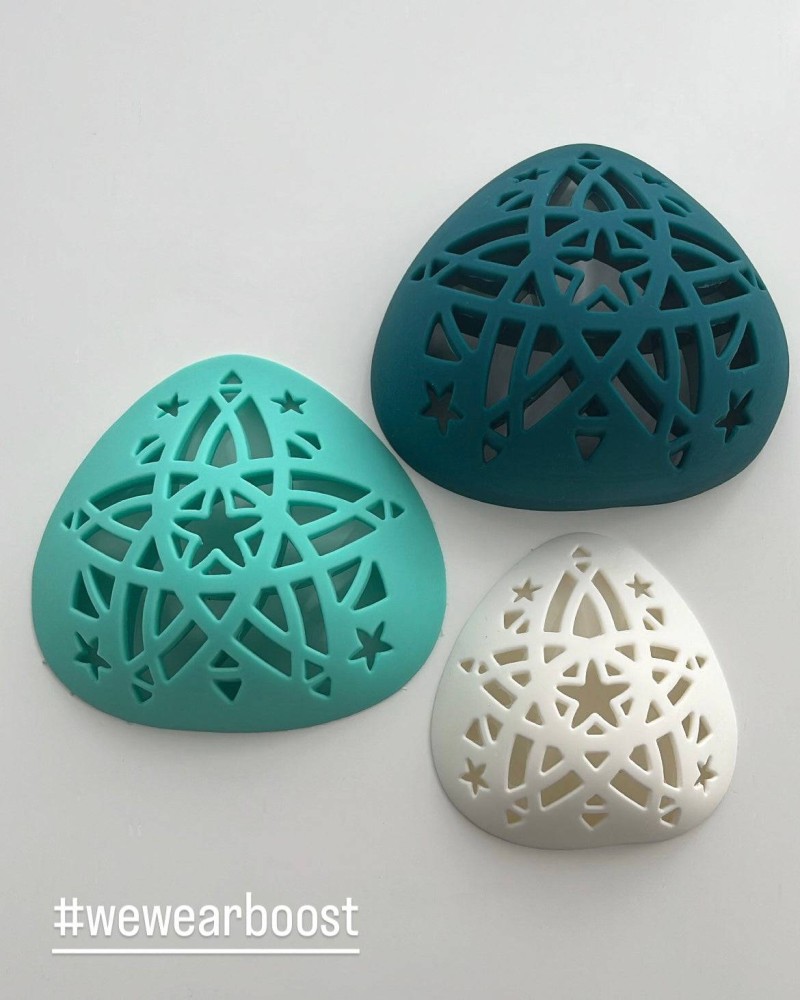
Boost is an innovative breast form (for women to use who have had mastectomies, made from medical silicone in Cornwall. It’s breathable and lightweight, in attractive colours and patterns (breast forms don’t have to be beige and boring!)
Some are now sold in independent shops, ideal so you can try them on before purchase. You can now even get a Boost breast form on the NHS in England and Wales, contact your GP or Breast Care team to discuss.
Sold individually (so obviously order two for double mastectomies), they are designed to fit inside a standard bar, and sold by normal bra size (there are charts online including for abroad sizes).
For fuller breast shapes, there is a ‘curve range’ to create a more natural silhouette. Please allow up to five days to process orders, as this is a small company. You can send it back for replacement if it doesn’t not fit right, or a full refund.
Speak to your healthcare provider (GP, breast care nurse or physicians) to ensure you are ready to begin wearing a prosthesis, after surgery.
The breast forms are made from silicone, which is a much greener alternative to plastic, lasts for years and is easily recycled (it also doesn’t have the health concerns of plastic, next to your skin).
All offcuts (and old forms) are recycled into a material called Flekl, used to make lampshades and plant pots. The breast forms are also sent in reusable cotton bags. ‘Seconds’ (with small air bubbles or colour blemishes) are sometimes sold online at discounted prices, if you’re on a budget.
Why Choose Boost Breast Forms?
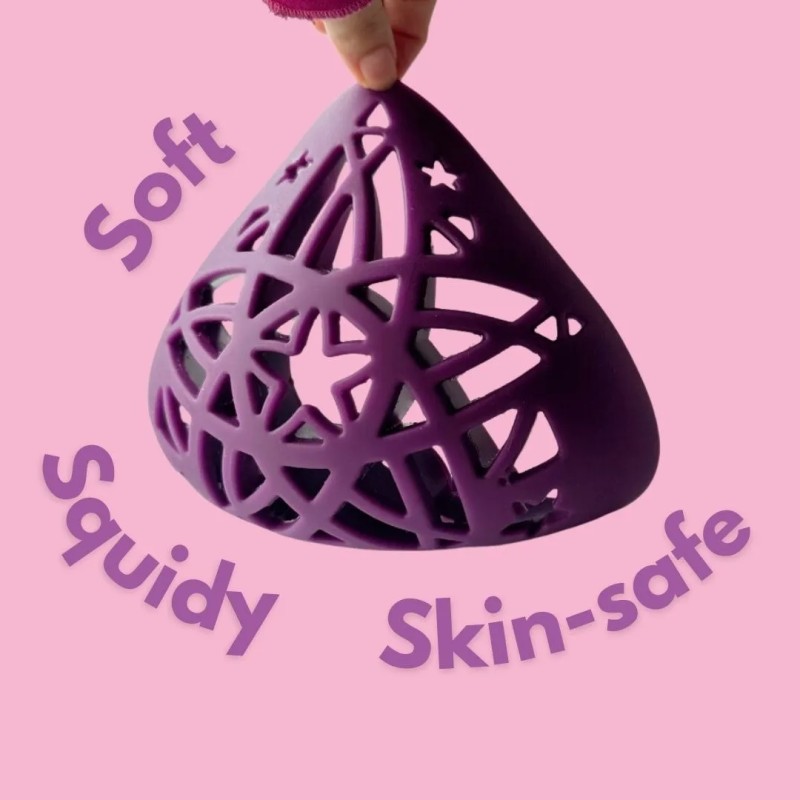
Unlike some, these are up to 50% lighter and so you can just get on with your day. The delicate cut-outs allow air to circular under your clothing, and avoid feeling hot and sweaty. You can even wear them when exercising, dancing or inside a swimsuit.
You can wear the breast forms under a normal bra of their mastectomy bralettes (these are made from synthetic materials, so launder in a microfiber filter, to avoid microplastics leaching out of washing machines).
Tips to Help Prevent Breast Cancer
Breast cancer still remains a serious disease, but survival rates are far better these days. Here are tips from the experts, on how to prevent (and hopefully recurrence) of breast cancer:
- Maintain a healthy weight (particularly after menopause)
- Limit alcohol (avoid or limit to one drink per day)
- Exercise (at least 150 minutes of moderate activity per week)
- Eat well (fruits, veggies, whole grains and lean plant proteins.
- Limit processed, fatty and sugarry foods)
- Reduce chemical exposure (live an organic life!)
- Carry out regular breast exams (and follow mammogram screening guides).
- Breastfeed for several months (this offers protective effect in later life)
- Avoid long-term HRT (read how to sail through menopause!) This is also good to avoid medicines made from the urine of pregnant horses.
- Know your family history. Talk to your GP if you have a family history, and consider genetic testing for mutations.
- Switch donations to humane medical research (which does not use animals) has far less funding, but uses modern, kind, quicker and cheaper research to find cures for many diseases.