Palace Culture (plant-based organic cheeze)
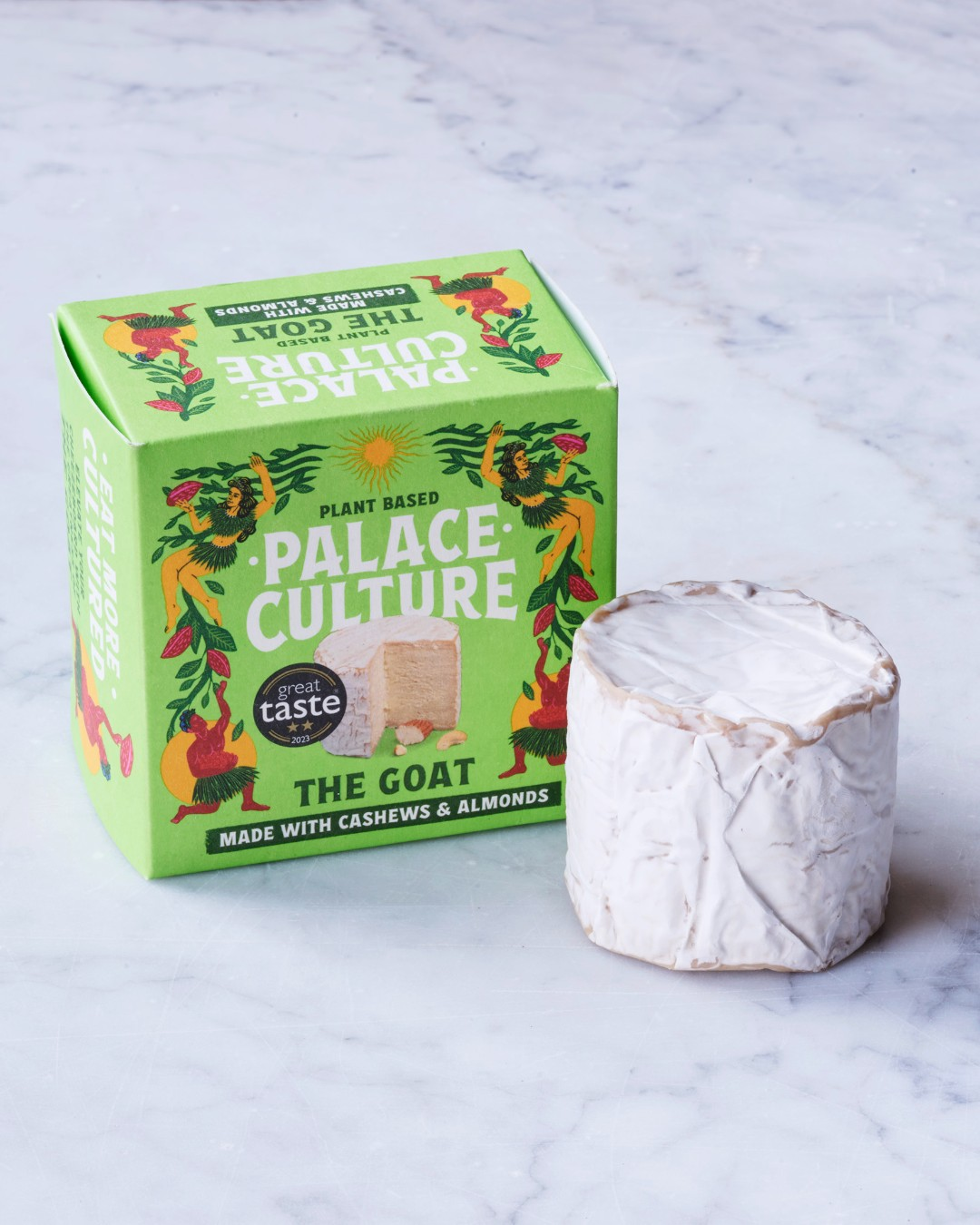
Palace Culture is also sold in groceries (including Waitrose). Began in a London family kitchen to deal with the founder’s son’s dairy intolerance, these are made from organic cashews and almonds (grown using regenerative farming methods in Spain):
Don’t eat ‘blue cheese’ etc for pregnancy/nursing, children or weak immune systems. And keep away from pets, due to unsafe ingredients (nuts, garlic, salt etc). For the same reason, don’t give leftovers to garden birds or wildfowl (salt is toxic and fat can smear on feathers, affecting waterproofing/insulation). Read more on food safety for people & pets.
If ordering online, arrange a safe space due to chilled goods (keep dry ice away from children and pets, and recycle or dispose of responsibly).
- The Goat is a semi-soft moult-ripened cheeze with fermented cashews, almonds and live cultures.
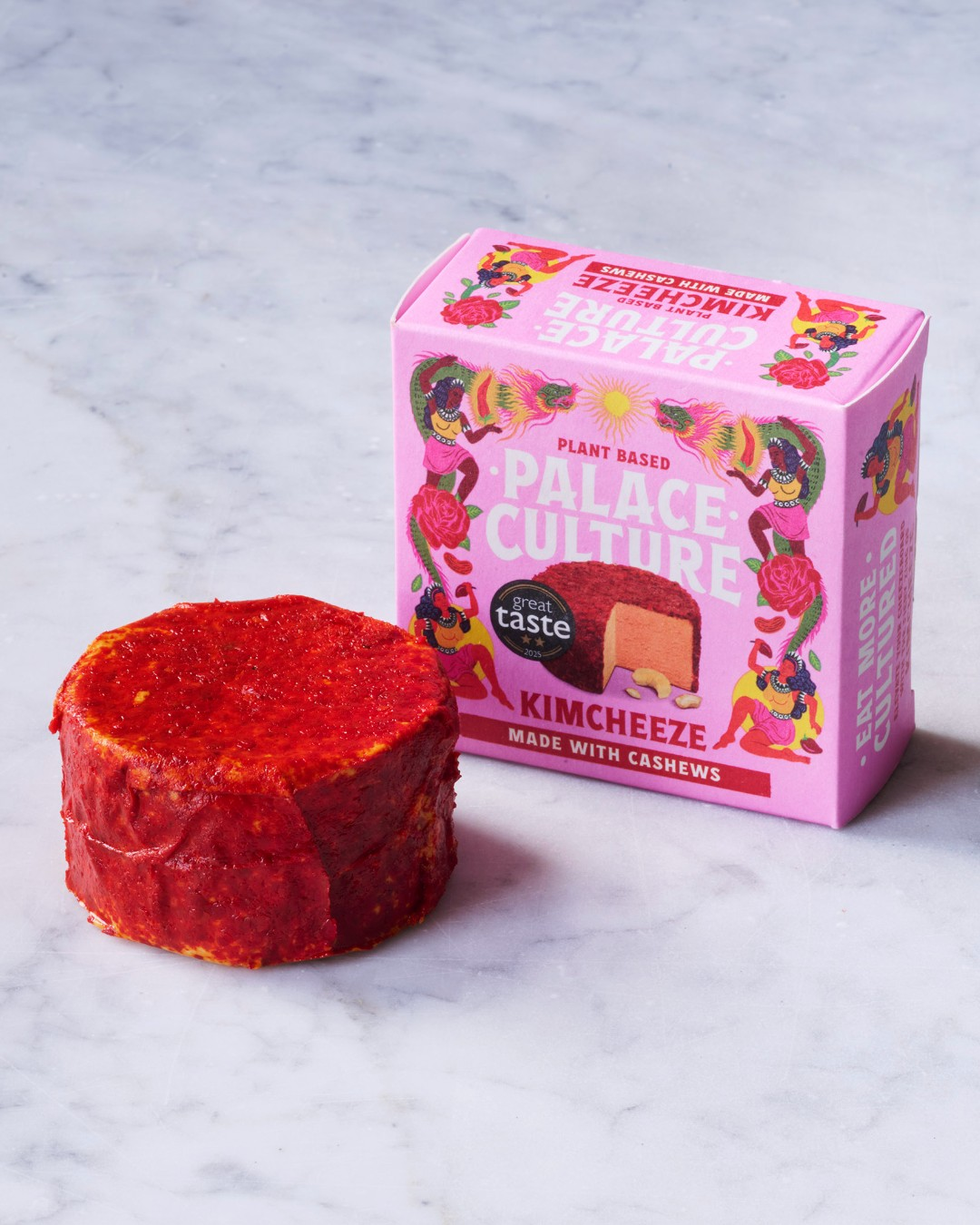
- Kimcheeze is a semi-soft cheeze with fermented cashew nuts, kimchi brine and live cultures, rolled in red chillies for a tangy heat.
Why Try Artisan Vegan Cheese?
Most supermarkets now stock vegan cheese, but it’s usually not very good. Most is either own-brand or from dairy companies that are ‘getting on the bandwagon’. But alas they tend to make them from coconut oil (so no protein or calcium unlike dairy) which not only gives them a funny aftertaste, but can actually make you feel sick. One reviewer said one supermarket version tasted like ‘solidified vomit’.
Proper vegan cheese may use a tiny bit of coconut oil, but tends to be based on nuts, and is made in the same way as dairy cheese. It’s more expensive but very tasty, so just buy less and enjoy it more!
Like ‘oat milk’ has to be called ‘oat drink’, these dairy-free products have to legally be called ‘cheese alternatives’ (some say ‘cheeze’ to differentiate) due to laws from government? As if people are too stupid to recognise the difference?
The good news is that you can now buy dairy-free cheese alternatives from independent homegrown brands in England. Which not only reduces food miles, but these better-quality brands are also supporting local farmers, and sold in sustainable packaging, instead of plastic packs.
The Many Benefits of Vegan Cheese Alternatives
- They taste better! If you want a proper stinky and rich pungent alternative, go for an artisan brand, served on crackers as part of a ‘cheese board’.
- Contain protein, calcium and fibre. Like dairy cheese, non-dairy artisan alternatives have calcium and protein (unlike coconut oil cheeses) so as long as you don’t have nut allergies, they are more nutritious. They also have fibre (animal foods have none).
- Supports local farmers. Unlike cheap coconut oil cheeses, artisan brands tend to use local ingredients (not the nuts but the add-on flavours). This helps support local organic farmers, and keep money circulating within communities.
Why Are People Giving Up Dairy?

No-one denies that a small organic dairy farmer treats his cows well. But the big dairy industry (from where most dairy milk is produced – especially for all the by-products used in ready-meals etc) has huge welfare concerns.
In the UK, most male calves (of no financial use to the dairy industry – separate from beef industry) are shot dead, soon after birth.
Many cows spend their entire lives in factory farms, being inseminated and giving birth, then having their calves taken from them. Cows and calves form incredibly strong relationships, and will cry out loudly for weeks, if separated.