The Passivhaus Handbook (low-energy homes)
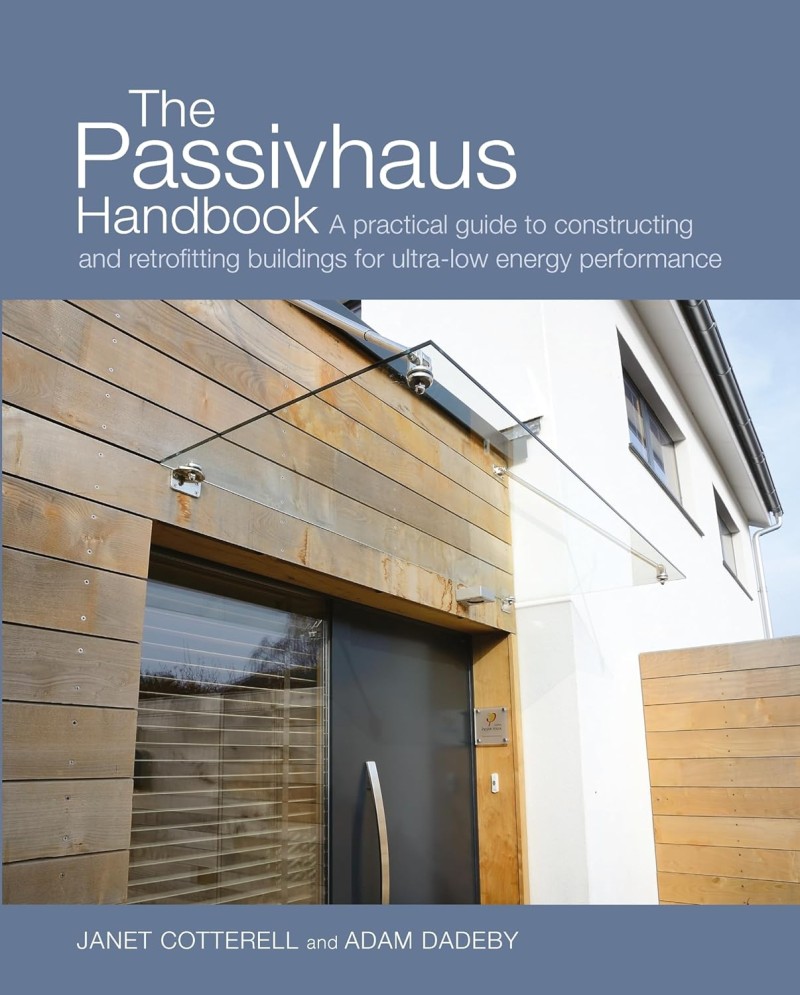
The Passivhaus Handbook (printed on recycled paper) is the essential guide for anyone who wants to build a comfortable and durable home, with exceptionally low energy costs. This method can be combined with the UK Code for Sustainable Homes to build an extension, renovate an existing home or build from scratch.
The book includes a clear explanation of the underlying physics and terminology of low-energy buildings including air leakage, designing thermal (cold) bridges, moisture management and ventilation. Plus there is lots of practical advice including economic considerations.
What is Passivhaus building?
This is a type of green building that results in massive energy bill reductions, to keep homes warm in winter and cool during summer. Pioneered by physicist Wolfgang Feist in Germany, some homes cut heating bills by a massive 90%.
As these homes often have south-facing glass, turn off unwanted lights (use blinds, curtains and desk lamps), and avoid facing indoor foliage to outdoor gardens, to stop birds flying into glass windows.
Some people who have built Passivhaus homes, have seen bills drop from £2000 to under £500 (and of course that means less carbon use too, good for the planet). For more information, visit Passivhaus Trust.
The idea is to keep heating demand under 15 kWh per square metre of floor area. Total primary energy use caps at 120 kWh per square metre per year. Using the sun and body heat, the walls, roofs and floors of such homes have super insulation, and triple-glazed windows as the norm.
Compare this to most English homes that leak a lot of air, which forms cold spots and mould that grows in damp corners. In Passivhaus homes, this does not happen. Draughts vanish and bills drop. Some homes don’t even have need for boilers or radistors.