Prevent Chewing Gum Litter (simple tips & swaps)
You’ve just stepped onto the pavement after a quick walk. Your shoe sticks. You look down. It’s chewing gum, fresh or old, plastered there like glue. That moment annoys anyone. In the UK, it happens too often. Chewing gum makes up about 10% of pavement litter, says recent Keep Britain Tidy reports. Councils spend over £10 million each year on clean-ups. They steam streets and scrape paths, but the problem persists.
Gum litters easily because of its sticky plastic base. It clings to shoes, then spreads. Bins seem scarce when you need them. Worse, it harms the environment. Microplastics from gum wash into drains during rain. They pollute rivers and seas. Wildlife faces risks too, as animals mistake gum for food. Birds and hedgehogs suffer in towns.
You can change this. Simple tips help prevent chewing gum litter. Easy swaps offer fresh breath without the mess. These steps cost little. They fit daily life. Start today, and pavements stay cleaner.
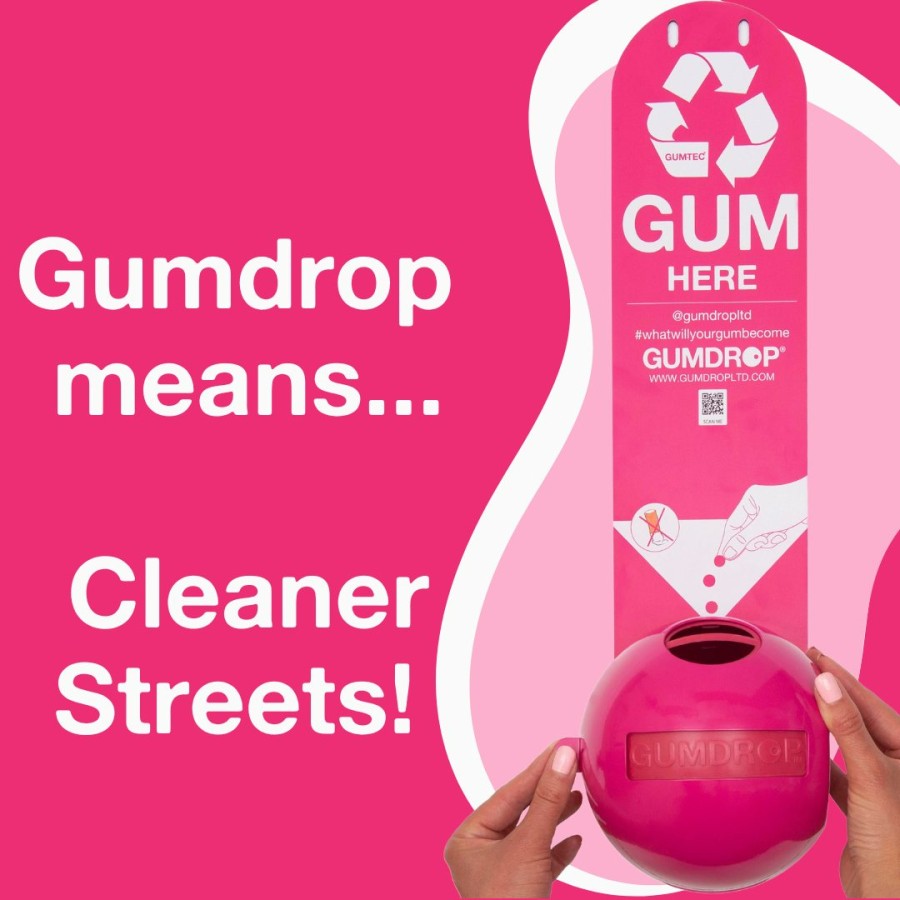
The Gumdrop Bin is an ingenious invention by a Brighton designer. The bright pink ‘ball-shaped bins’ take gum that is then sent off when full to make into new gum bins.
The company also makes personal gum bins that once full, you can download a freepost label to send it off, and get discounts on new ones. Collectively, the company is saving clients (including schools and offices) over £1 million in cleaning bills.
One full bin contains 500 pieces of gum (enough to make 3 new bins) and can be permanently mounted to the wall or posts in shopping centres, football stadiums, public toilets, bus stops and train stations, supermarkets, car parks, theme parks, cinemas, pubs and anywhere else.
Just sign up to receive your Gumdrop bins and a welcome pack within days. The bad news is that in some trials, people have inexplicably been ripping them off posts to take home as souvenirs.
Issues with the Chewing Gum Market
Gum is lethal to pets, birds and wildlife if licked, due to sweetener xylitol. As most gum is littered on streets, it’s so important to pick it up (there should be pack warnings).
It’s not true that chewing gum stays in your stomach, but you should not swallow it (same with bubble gum, both are choking hazards).
You can freshen your breath by drinking more water, giving up smoking and pressing a slice of cucumber on the roof of your mouth for 90 seconds and press on it with your tongue (nature’s instant breath-freshener!) Or choose organic mints.
Councils are responsible for clearing it up on public land and private landowners (including shops) are responsible for cleaning it up on public land. If they don’t (no matter who dropped it) you can report it at Fix My Street and councils can serve litter abatement orders.
Doctors are not fans of chewing gum, saying over-use can lead to jaw pain, headaches, diarrhoea and tooth decay. Do not use gum if you have fillings or dentures.
In Singapore, it’s illegal to chew gum unless prescribed by a doctor or dentist.
What’s Exactly in Chewing and Bubble Gum?
Wrigley (owned by the massive multi-national brand Mars) is the world’s largest chewing gum brand. Like most gum brands, it was originally made from chicle (latex) but now is more plastic and xylitol.
It owns nearly all the main brands, which are a mix of pet-lethal xylitol, aspartame (an artificial sweetener) and sorbitol (which can cause laxative effects, in large amounts).
Hubba Bubba (bubble gum) contains corn syrup (a non-natural alternative to sugar) aspartame (cause artificial sweetener), BHT (a lab-made preservative that is medically used to treat genital herpes) and artificial dyes including blue lake 1 (linked to all kinds of issues) and yellow lake 5 (a dye that you remember was removed from fish fingers and orange squash, for sending children off the wall).
Why Chewing Gum Litter Sticks Around and Hurts Our Environment
Chewing gum does not break down like apple cores or paper. Food litter rots in weeks. Gum lasts years. Its synthetic rubber and plastics resist weather. Rain soaks it. Sun bakes it hard. Still, it stays stuck.
In the UK, costs add up fast. Taxpayers foot over £10 million yearly for removals. Councils in London hire teams with pressure washers. Manchester streets show grey patches from old gum. It blights high streets and parks. Tourists notice. Locals sigh.
Chemicals leach out too. They seep into soil and water. Storm drains carry bits to beaches. Fish eat them. The chain affects us all. Birds peck at gum on paths. They choke or starve. A London park saw dead pigeons last year, gum in their crops.
Visual mess hurts pride in places. Clean towns lift moods. Gum changes that. It signals carelessness. Yet, one person’s habit affects many. Councils try gum-specific bins, but people spit anyway. The cycle continues. Simple shifts break it.
Pocket a Tissue or Wrapper Before You Chew
Keep a tissue handy. Or use the gum’s own wrapper. Chew, then fold it inside right away. Press flat. It stays small, no mess in your pocket. Carry packs in bags or cars. Kids learn this at school. It prevents impulse spits. Bins wait nearby. For example, pop one in after lunch. No litter follows.
Reach for tissues at supermarkets. They cost pennies. Make it habit. Fold twice, tuck away. Your pocket holds it till bin time. Clean hands too.
Spot the Bin First, Chew Second
Check for bins before you start chewing. Parks have them. Offices too. Many UK streets lack gum bins, but general ones do fine. Walk towards one while you chew. Habit forms easy. Spot a postbox or lamp with a bin nearby. Chew there.
After work, head to the station bin. Kids, use school gates. This way, gum never drops. You save time on guilt. Pavements thank you.
Team Up with Friends for a No-Litter Challenge
Tell mates your plan. Pledge together at work or pub. Remind each other kindly. Use phone notes or stickers on bottles. Apps track streaks for fun. Schools run challenges with charts.
Groups shift norms. One friend spits, others nudge. Soon, no one does. Manchester offices tried this. Litter dropped. Build your circle. Share wins weekly.
Chew Less, Enjoy More: Mindful Moments
Stress triggers gum often. Pause instead. Take deep breaths. Sip water. It freshens mouth naturally. Less gum means less risk overall.
Health wins too. Fewer calories. Better teeth. Try during breaks. Replace habit with stretches. Enjoy quiet. Litter falls anyway.
Smart Swaps for Gum That Keep Pavements Clean
Gum gives fresh breath and chew feel. Alternatives match that. They dissolve or biodegrade. No sticky trace. Find them in UK supermarkets or health shops. Tastes vary, fun included. Enjoy without litter worry. Compare to gum: same pop, zero harm.
How to Easily Remove Stuck-on Gum
The simplest method is to rub the gum with ice (or freeze the item, then use a spoon or paint scraper to remove. Alternatively, heat white vinegar and use an old toothbrush to soften (you can sprinkle bicarbonate of soda to fizz and dissolve stubborn gum). Canned air (used to clean in-between computer keys) is also good.
To remove gum stuck in your hair, cover with olive oil (or peanut butter – not near dogs or they’ll lick your head!). Wait a few minutes, and it should come out easily, then wash your hair.
Max’s Organic Mints (from The Netherlands)
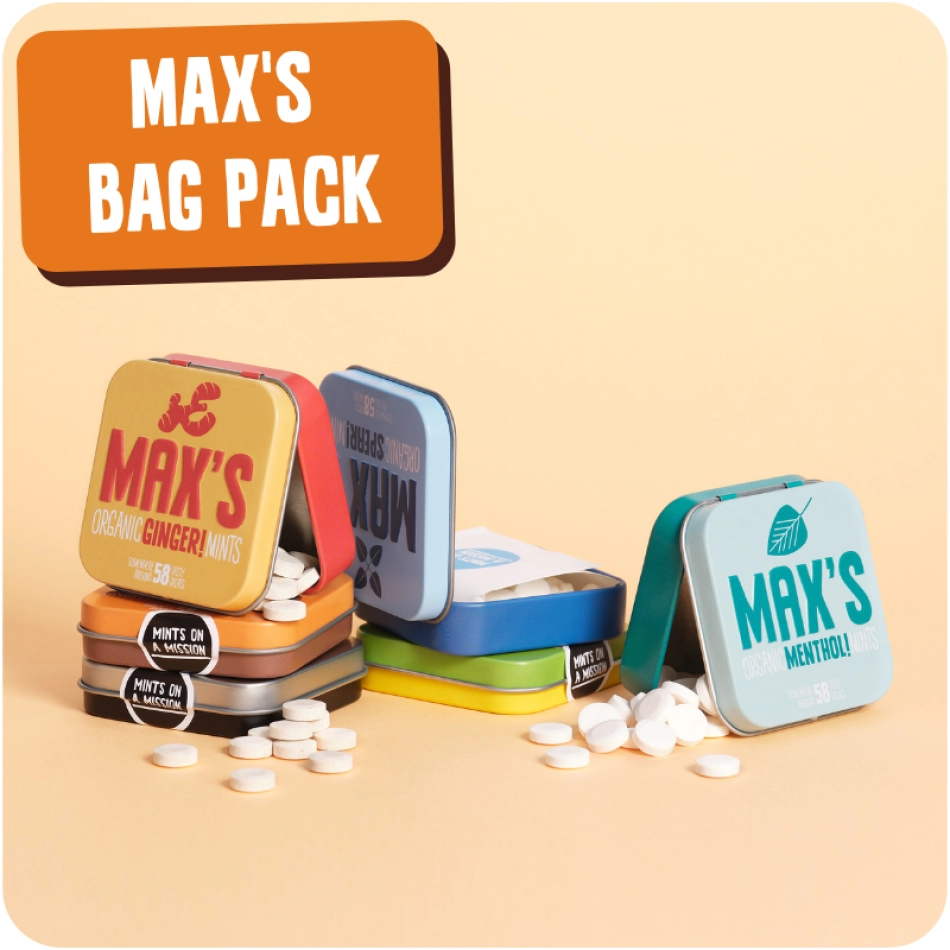
If you want fresh breath, a far better idea is simply to carry a tin of organic mints around, just like your grandpa did! Or just hold a slice of cucumber on the roof of your mouth for 90 seconds!
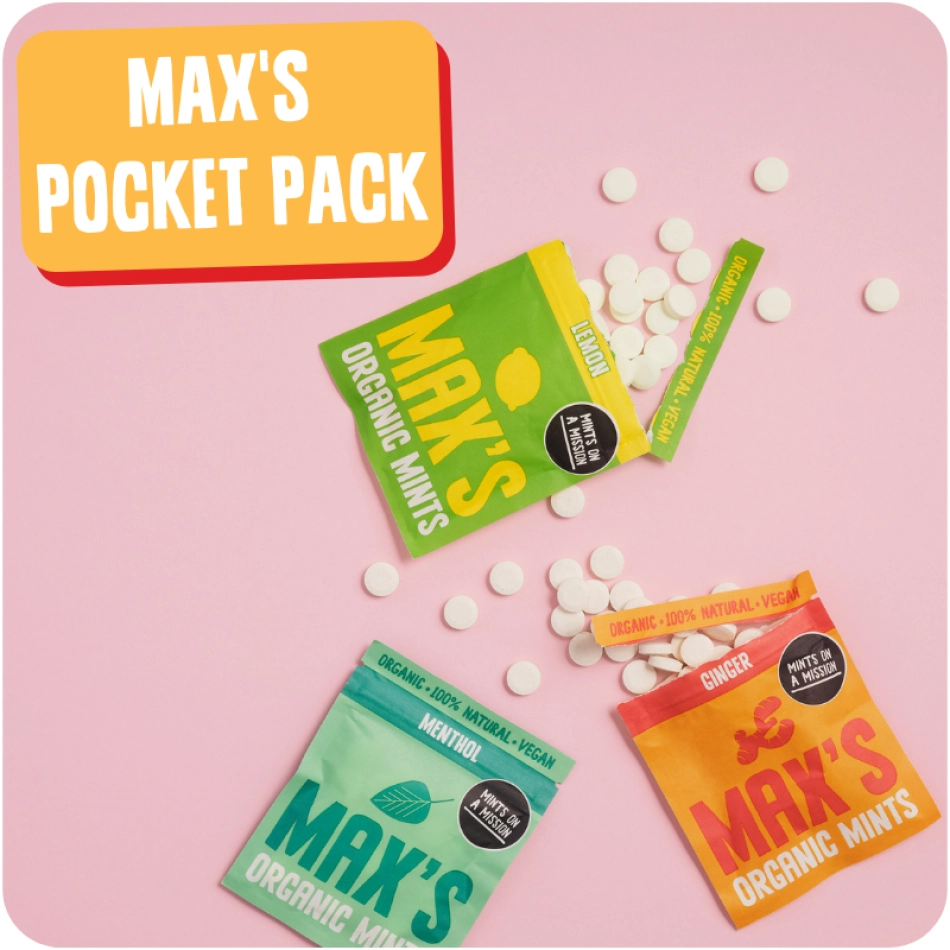
Unfortunately, most stores in England no longer stock them, instead preferring to sell plastic packs of mints. So stock up from The Netherlands with packs of Max’s Organic Mints, sold in sweet little tins (or compostable bags).
Organic mints also don’t give you jaw ache, and are free from pet-toxic sweetener xylitol (in most gums, and lethal to wildlife and dogs, if littered on streets.
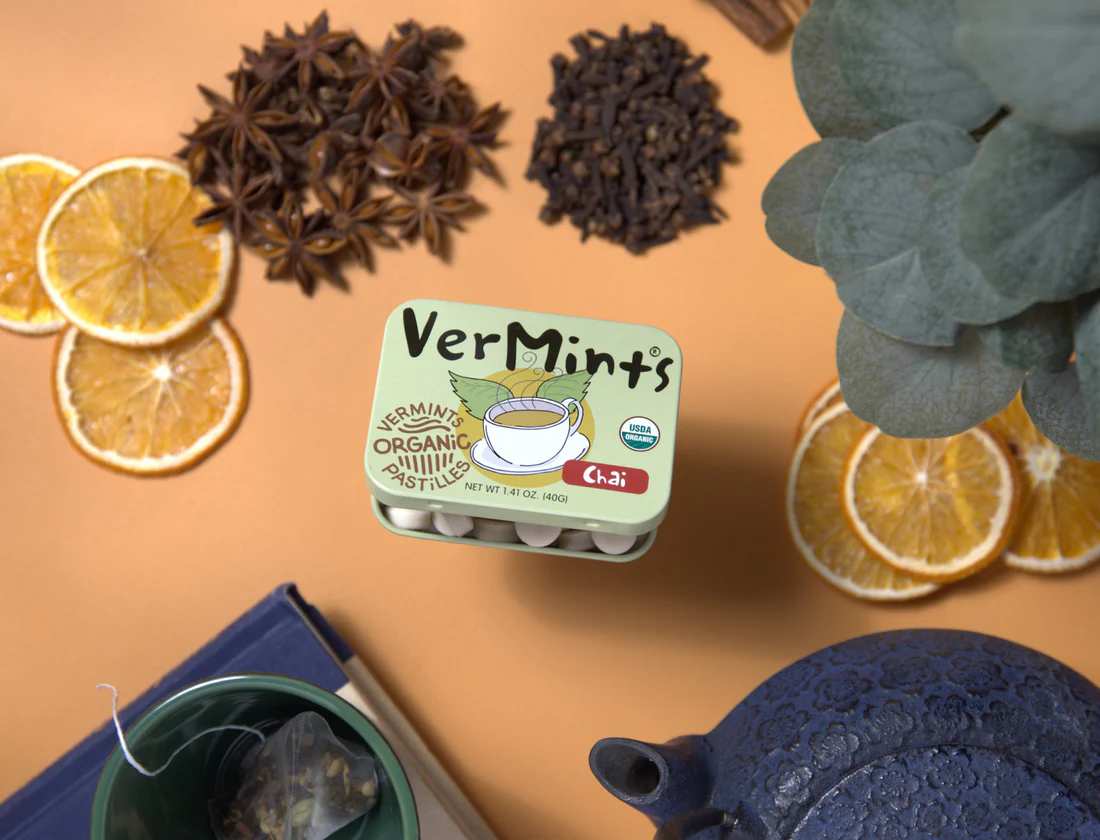
Another good brand to inspire mint-makers is Vermints (US), again organic and sold in tins. Why with all England’s litter problems, are no makers here offering something similar?