Simple Ideas to Rescue England’s Street Litter
Neat Streets Litter Toolkit is free to download for volunteers and councils, from the wonderful folks at Hubbub. Litter is undoubtedly one of the biggest problems in England, and this inspirational and positive toolkit is packed with case studies of research that works, to make your town litter-free!
Litter not only makes communities ugly, but it harms children, pets and wildlife and pollutes rivers and seas. Obviously choosing reusable over disposable (and deposit return schemes would help). But meanwhile, these guys have done the research to find out how to get people throwing away less litter, and how to pick it up effectively, and not return.
The Neat Street Toolkit includes a library of case studies, along with info on why people drop litter, how to stop them, and the best inventions to keep communities litter-free.
It’s great that volunteers spend hours picking up litter and unclogging rivers full of trash etc. But disheartening if it all comes back again.
Unfortunately, we don’t live in a country like Japan (where people literally never drop litter, it’s just not the culture). Here in England you can often find binned cans and rubbish, right next to bins, even if they’re not full. Why is this?
Behaviour research by Hubbub has shown that often people drop litter, because they say there are not enough bins, others say they are full, and it’s known that if litter is already on the street, it encourages people to drop more.
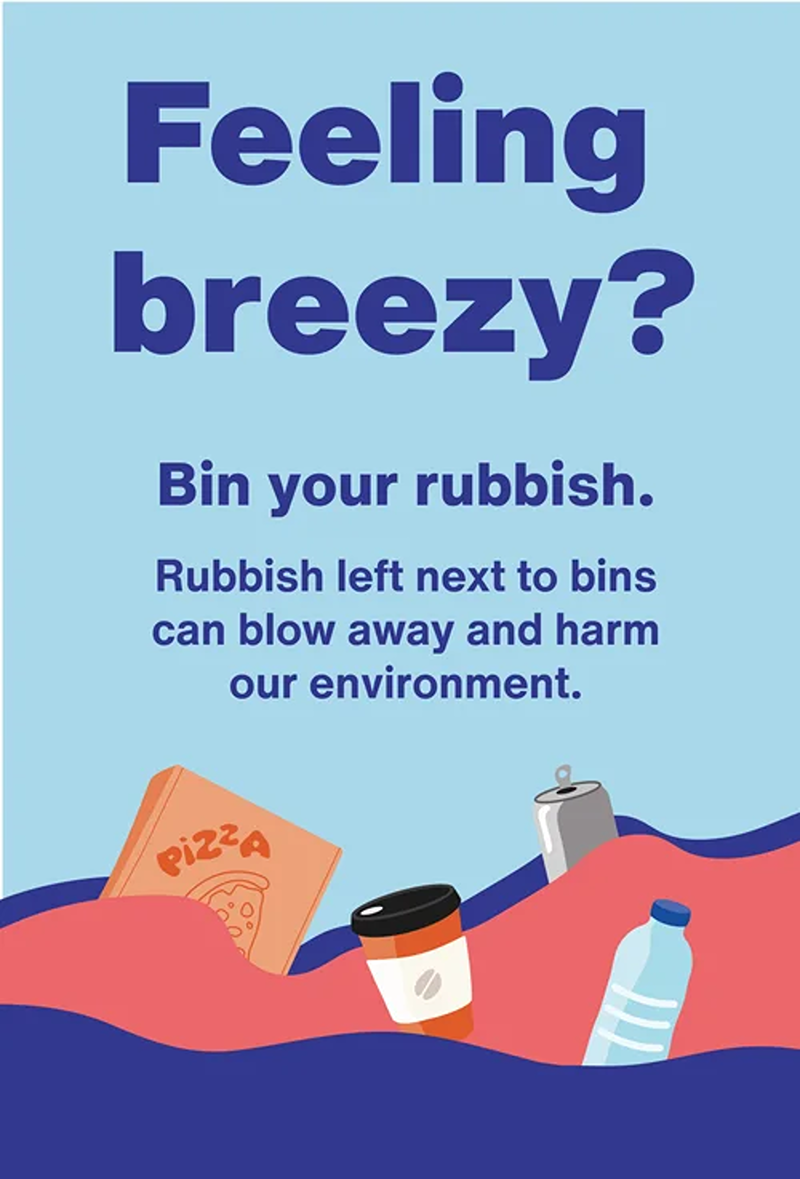
The answer is not to tell people off (this won’t work). The answer is to educate people on what happens when litter is dropped (harming wildlife etc). And make bins more fun, to encourage them to use them.
It was found that ‘finger-wagging negative messaging’ actually increases litter-dropping by 10%
If all communities downloaded this toolkit, we could have a litter-free England pretty soon. Because once councils and volunteers had cleaned up the litter, it would be unlikely to come back.
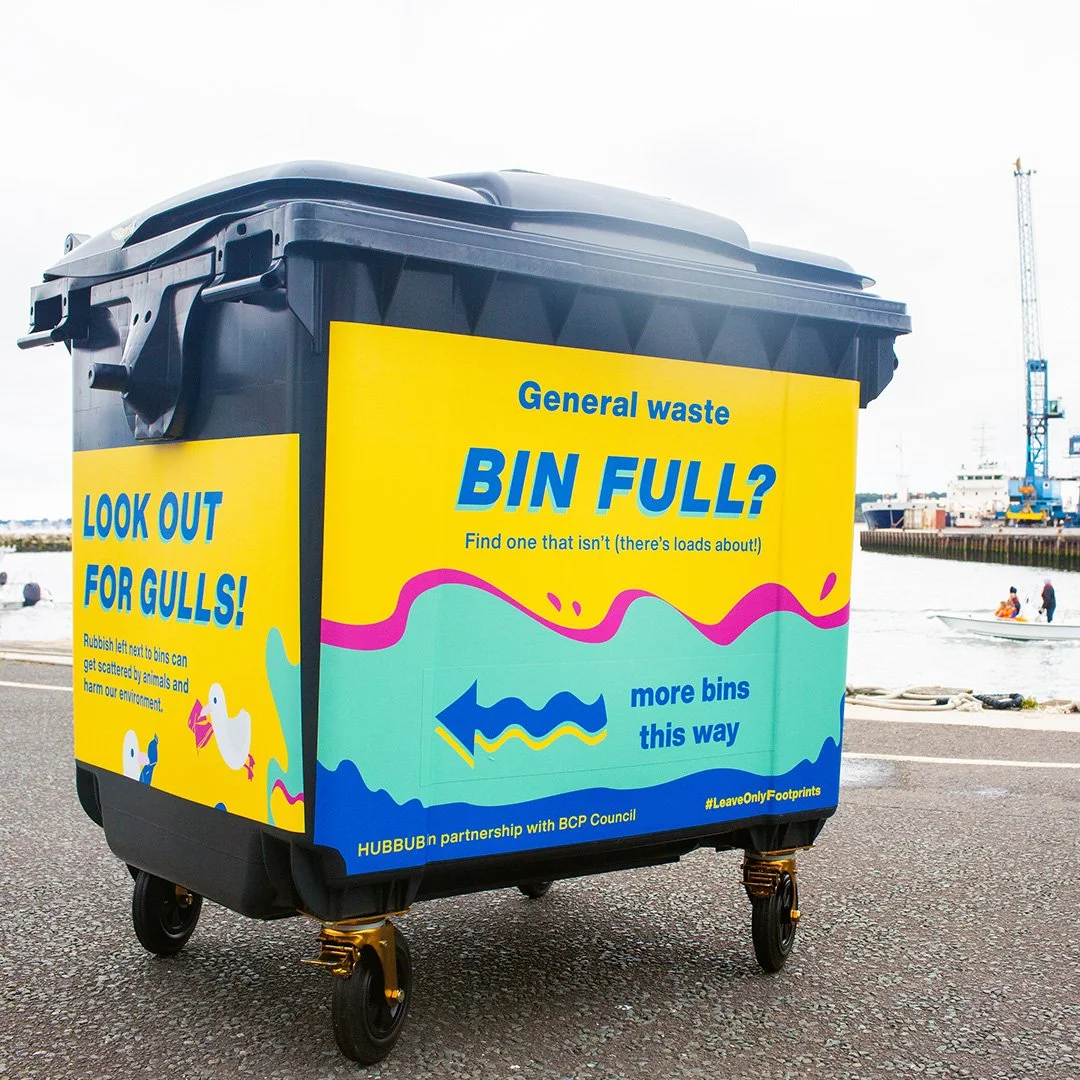
Studies show that bright and colourful bins with positive messaging work. Many people literally are unaware of how dropped tin cans, plastic bottles and cigarette butts harm the planet. And how carrying a personal ashtray could prevent the most littered item on earth (and also prevent fires and wildfires).
The Ballot Bin began as an experiment, and has proved very successful. People are asked questions (like which footballer do you prefer?) and deposit their rubbish (or cigarette butts) in their choice. Sounds silly, but it works as it makes dropping litter in bins fun, and communities clean up naturally.
People only spend around 2 seconds at a bin, so keep messages short and punchy. Studies show that circular apertures (rather than wide open bins) lead to less littering (this also helps to stop birds and foxes etc raiding bins, which keeps them safe too.
Recycling bins should always be next to general waste bins (most people will not walk around looking for the other one, they are too lazy or busy).
Boycott Plastic Beer Can Rings

E6PR is the very ‘name doesn’t roll off the tongue’ for an incredible invention that could save millions of birds and wildlife. Although some supermarkets have now banned their sale, those plastic can holders that surround many beers and ciders are lethal to wildlife.
Invented by a team of brainy engineers, these are the gold-standard and used worldwide for many brands of beer. If you don’t already pack in cardboard, you can order test packs in different sizes, to ‘try before you buy’.
It’s known that consumers will always pay a few pence more, for items that are good for wildlife and the planet.
It’s unclear why plastic beer can holders are still on sale following the single-use plastic ban, but they appear to be around, as you often find them littered on the street.
Although sometimes advertised as ‘biodegradable’, this takes months and meanwhile they are invisible, so get caught around necks of wildlife, or are accidentally ingested as microplastics. If big brands like Stella Artois can manage to pack their beers in cardboard, so can the others.
Many creatures have been found trapped in plastic beer/cider rings. These include seagulls, sea turtles, squirrels, cats, ducks and hedgehogs (one was found dead in Swindon, having suffocated when getting trapped in a discarded one).

This company can also offer various compostable options for food service, as an alternative to plastic. Whilst politicians and media pundits waffle on about reducing litter and plastic waste, it’s small companies like these, that are actually ‘walking the talk’ and finding solutions that could be implemented today.
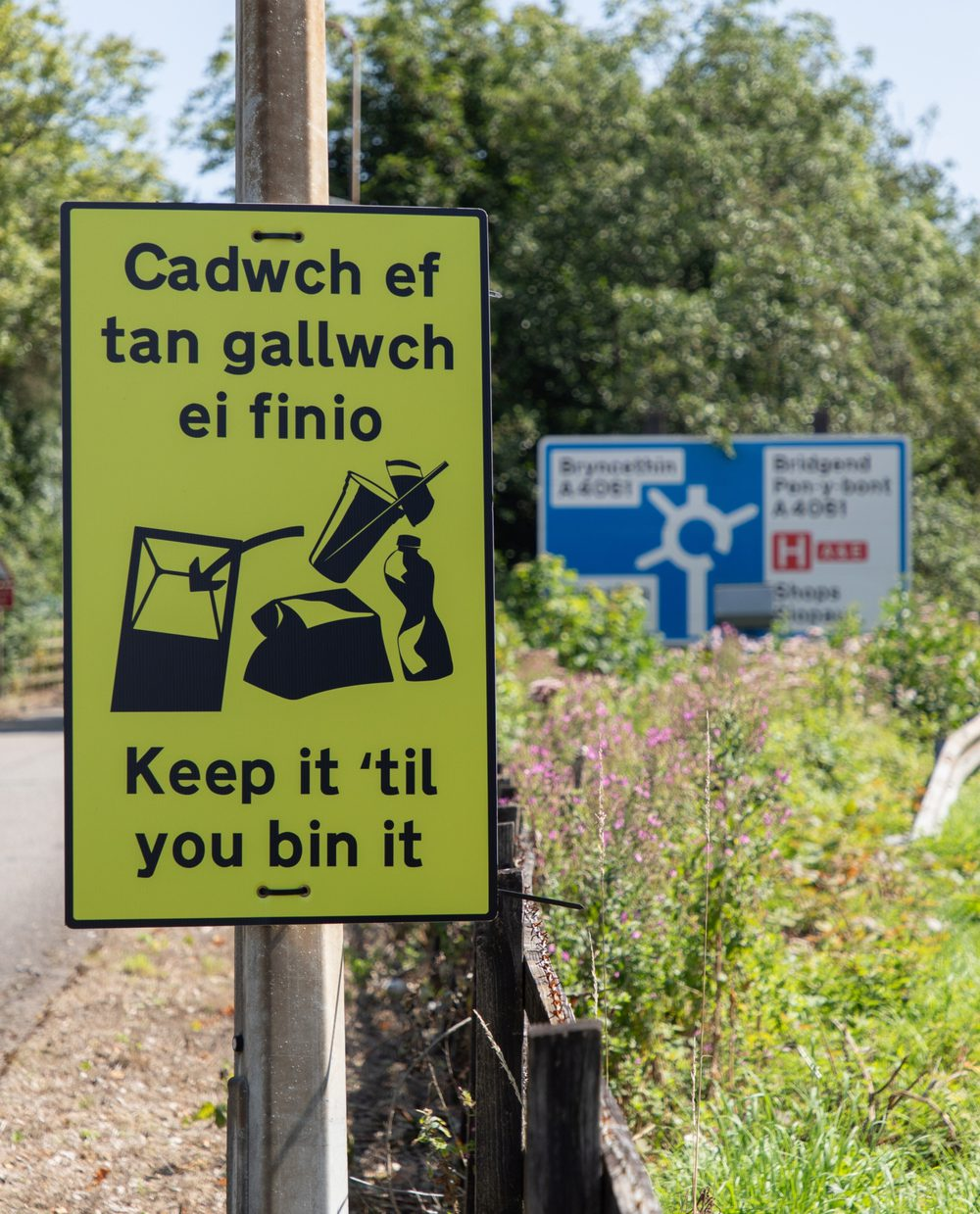
Hubbub (who designed the Neat Streets Litter Toolkit) also has a campaign to reduce roadside litter, with their Tidy Roadside campaign.
Using research in Cardiff and Glasgow, Hubbub have come up with reasons why there is so much roadside litter, and how to prevent it. And roadside litter is obviously more difficult and expensive to clean up, as it has to be done by councils (it’s too dangerous for volunteers to clean on motorways).
Their research found that:
- Roadside litter happens mostly when people slow down (say at traffic lights, junctions or slip roads).
- Often roadside litter is accidental (say blowing out the window, which is why a car trash bag is such a good idea).
- Some roadside litter is unbelievably due to ‘young men wanting to keep their cars clean’. If they have fast food or cans, they simply throw them out the window, to avoid spoiling their car seats etc.
- The main types of roadside litter are cigarette butts, plastic (from food and drink packaging), and paper litter (napkins, receipts and packaging).
What Works to Reduce Roadside Litter?
Based on case studies, what worked was:
- Installing bright fun signs ‘keep it till you bin it’.
- Providing bright ‘car-ready bins’ at petrol stations and roadside stops.
It was found that the bins were not enough, only litter reduced when coupled with signs explaining why litter harms, and positive messaging to get involved in litter reduction. When this was done, litter reduced significantly, especially when coupled with radio ads.
Other Ideas to Reduce Roadside Litter
If you smoke, get a personal ashtray to immediately extinguish cigarettes until you find a bin (rather than throwing them out the car window, where they fall down storm drains and go into the sea).
Carry a car trash bag in your car, to safely deposit empty bags of crisps and other litter, until you get home. Not only is this good to prevent litter, but helps birds and wildlife (they put themselves at risk, by trying to eat the litter. If that creatures dies, another creature may die going onto the road to eat it.
One farmer had a great idea. He wants fast food restaurants to put vehicle registration numbers on receipts. So if people throw fast food packaging out their car window, they receive a fine in the post, just like for speeding.
CleanupUK has a litter-picking code for highways. It wants councils to pick up litter before mowing grass verges, as otherwise all the litter and glass just gets smashed and goes into the air. National Highways are responsible for clearing over 4000 miles of motorways and trunk roads in England, you can report litter at the website.
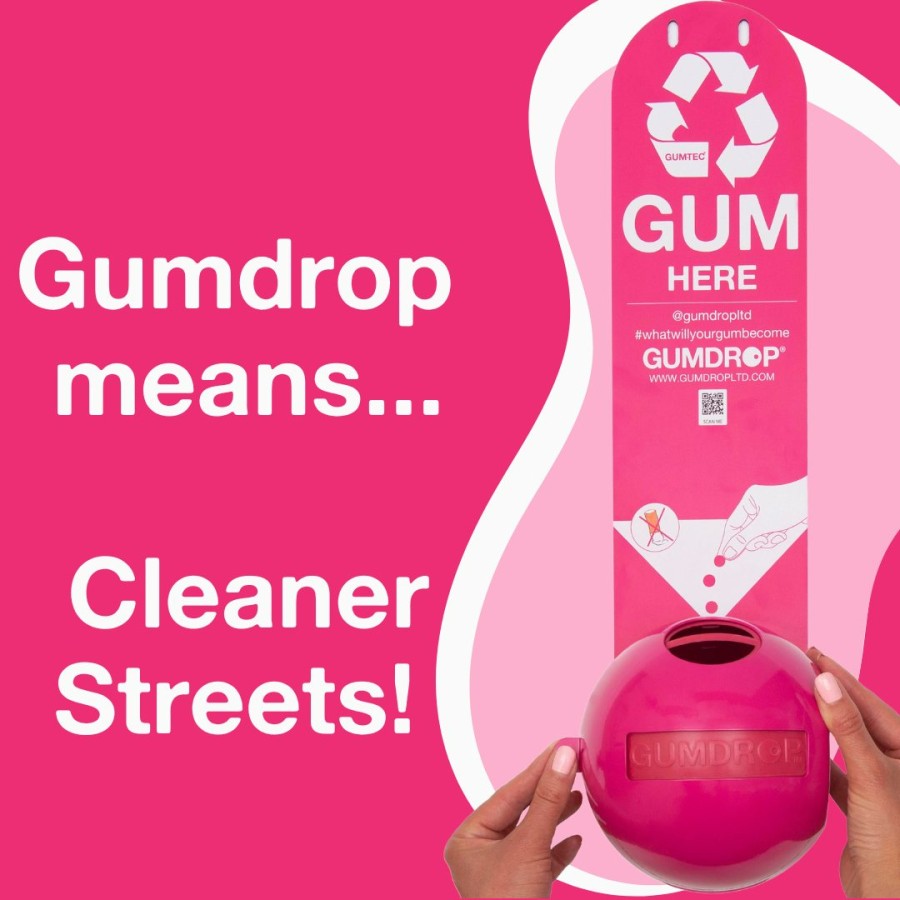
The Gumdrop Bin is an ingenious invention by a Brighton designer. The bright pink ‘ball-shaped bins’ take gum that is then sent off when full to make into new gum bins.
The company also makes personal gum bins that once full, you can download a freepost label to send it off, and get discounts on new ones. Collectively, the company is saving clients (including schools and offices) over £1 million in cleaning bills.
One full bin contains 500 pieces of gum (enough to make 3 new bins) and can be permanently mounted to the wall or posts in shopping centres, football stadiums, public toilets, bus stops and train stations, supermarkets, car parks, theme parks, cinemas, pubs and anywhere else.
Just sign up to receive your Gumdrop bins and a welcome pack within days. The bad news is that in some trials, people have inexplicably been ripping them off posts to take home as souvenirs.
Issues with the Chewing Gum Market
Gum is lethal to pets, birds and wildlife if licked, due to sweetener xylitol. As most gum is littered on streets, it’s so important to pick it up (there should be pack warnings).
It’s not true that chewing gum stays in your stomach, but you should not swallow it (same with bubble gum, both are choking hazards).
You can freshen your breath by drinking more water, giving up smoking and pressing a slice of cucumber on the roof of your mouth for 90 seconds and press on it with your tongue (nature’s instant breath-freshener!) Or choose organic mints.
Councils are responsible for clearing it up on public land and private landowners (including shops) are responsible for cleaning it up on public land. If they don’t (no matter who dropped it) you can report it at Fix My Street and councils can serve litter abatement orders.
Doctors are not fans of chewing gum, saying over-use can lead to jaw pain, headaches, diarrhoea and tooth decay. Do not use gum if you have fillings or dentures.
In Singapore, it’s illegal to chew gum unless prescribed by a doctor or dentist.
What’s Exactly in Chewing and Bubble Gum?
Wrigley (owned by the massive multi-national brand Mars) is the world’s largest chewing gum brand. Like most gum brands, it was originally made from chicle (latex) but now is more plastic and xylitol. It owns nearly all the main brands, which are a mix of pet-lethal xylitol, aspartame (an artificial sweetener) and sorbitol (which can cause laxative effects, in large amounts).
Hubba Bubba (bubble gum) contains corn syrup (a non-natural alternative to sugar) aspartame (cause artificial sweetener), BHT (a lab-made preservative that is medically used to treat genital herpes) and artificial dyes including blue lake 1 (linked to all kinds of issues) and yellow lake 5 (a dye that you remember was removed from fish fingers and orange squash, for sending children off the wall).
How to Easily Remove Stuck-on Gum
The simplest method is to rub the gum with ice (or freeze the item, then use a spoon or paint scraper to remove. Alternatively, heat white vinegar and use an old toothbrush to soften (you can sprinkle bicarbonate of soda to fizz and dissolve stubborn gum). Canned air (used to clean in-between computer keys) is also good.
To remove gum stuck in your hair, cover with olive oil (or peanut butter – not near dogs or they’ll lick your head!). Wait a few minutes, and it should come out easily, then wash your hair.
Max’s Organic Mints (from The Netherlands)
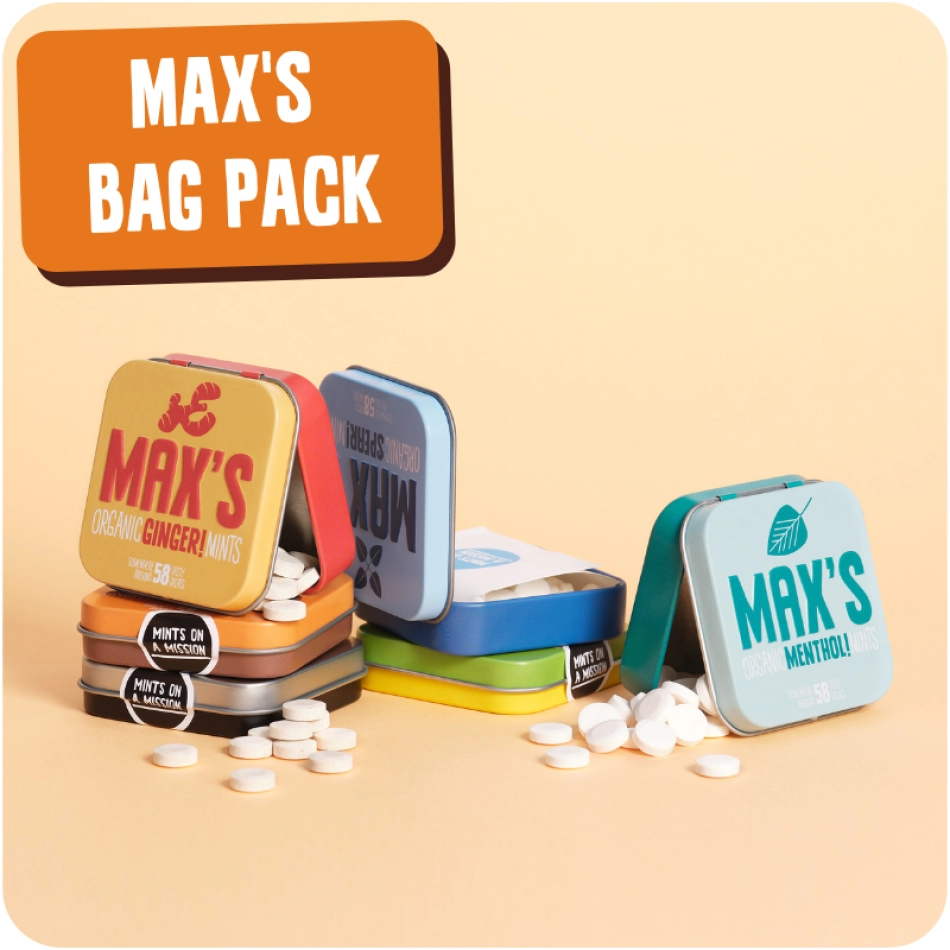
Chewing gum litter is one of England’s biggest street litter problems. But if you want fresh breath, a far better idea is simply to carry a tin of organic mints around, just like your grandpa did!
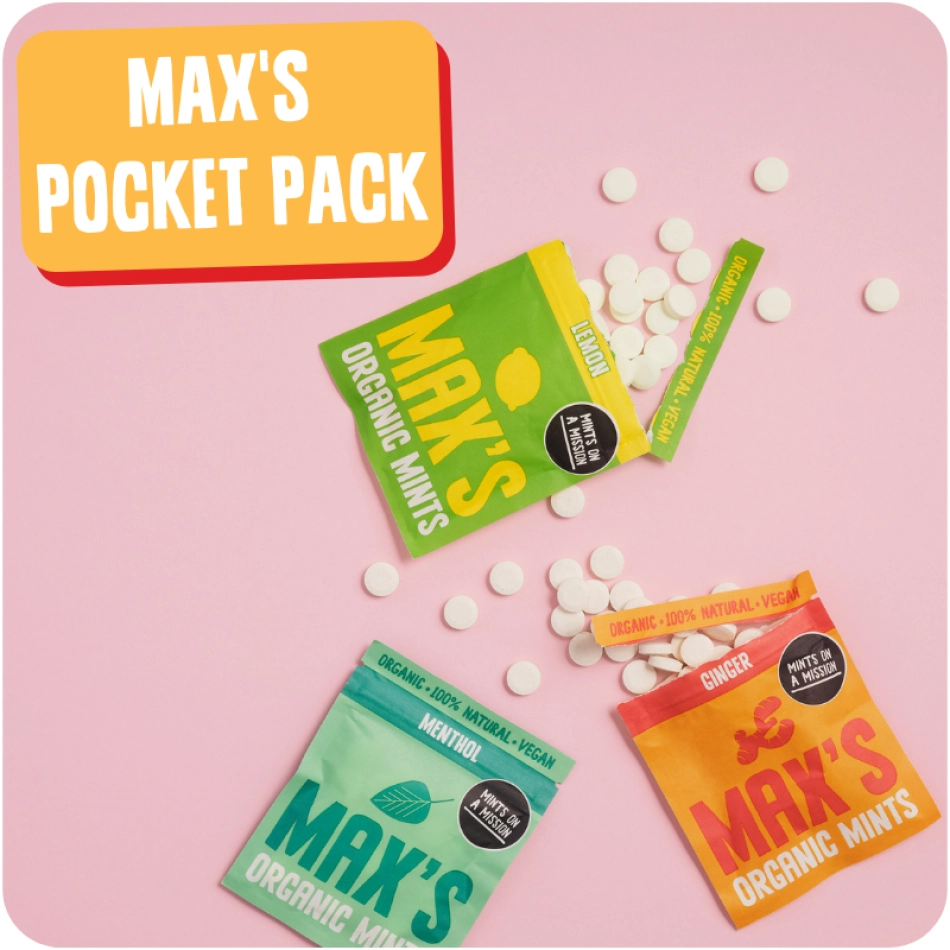
Unfortunately, most stores in England no longer stock them, instead preferring to sell plastic packs of mints. So stock up from The Netherlands with packs of Max’s Organic Mints, sold in sweet little tins (or compostable bags).
Organic mints also don’t give you jaw ache, and are free from pet-toxic sweetener xylitol (in most gums, and lethal to wildlife and dogs, if littered on streets.
Another good brand to inspire mint-makers is Vermints (US), again organic and sold in tins. Why with all England’s litter problems, are no makers here offering something similar?


Obviously it’s the responsibility of individuals not to drop litter, but councils also have responsibility (legally) to remove dropped litter, no matter who dropped it. Many of us get exasperated by having walks ruined, having to pick litter off the streets or in parks or on the beach – some of it has been there for months or years, proving that councils are not doing their jobs properly.
No matter who dropped it, it’s the council’s responsibility to clear litter. Ask people to report litter (with photos) to Fix My Street. These public reports are sent to councils, and tend to get sorted pretty quickly.
Obviously, dead animals are not ‘litter’. But it’s important to report dead animals to councils for removal. This prevents disease and road scavenging. And gives some closure to people who have lost pets.
Litter is not just unsightly but dangerous to children, pets, birds, wildlife and marine creatures. Councils have help by a combination of:
- Educating the public on why not to drop litter
- Not giving planning approval to fast food joints
- Installing quality bins, and enough of them
- Employing staff to remove all litter in the area
- Having a zero tolerance litter policy for all
Educate Residents on Why Not To Drop Litter
Unfortunately, we don’t live in a country like Japan (where people literally never drop litter, it’s just not the culture). Here in England you can often find binned cans and rubbish, right next to bins, even if they’re not full. Why is this?
Behaviour research by Hubbub has shown that often people drop litter, because they say there are not enough bins, others say they are full, and it’s known that if litter is already on the street, it encourages people to drop more.
The answer is not to tell people off (this won’t work). The answer is to educate people on what happens when litter is dropped (harming wildlife etc). And make bins more fun, to encourage them to use them.
It was found that ‘finger-wagging negative messaging’ actually increases litter-dropping by 10%
Refuse Planning Approval to Fast Food Joints
Many councils these days are finally ‘growing a pair’ and refusing to give planning permission to more fast food joints (often due to litter concerns and health concerns, if such joints are near schools). Despite the TV ads hinting at more success, McDonald’s is losing profits, and many councils in recent months have refused planning permission for new ones.
One of the main sources of litter on our streets is from fast food packaging (burger clamshells, those pesky little plastic pots that are sold alongside pizza takeaways, and coffee cups (which often contain sweet liquids that entice curious wildlife at night, who get their heads stuck).
Instead, get involved in ways to encourage local independent shops, which also bring far more money and taxes into communities, giving your council more of a budget to spend on more litter bins!
Install Quality Bins (and enough of them)
Research on how to prevent street litter has shown that having big colourful bins (with secure tops to prevent litter flowing away) and with messages on why not to drop litter) are effective, but only if there are enough bins. Some towns have lots of litter bins, others have only a few.
Neat Streets Litter Toolkit is free to download for volunteers and councils, from the wonderful folks at Hubbub. Litter is undoubtedly one of the biggest problems in England, and this inspirational and positive toolkit is packed with case studies of research that works, to make your town litter-free!
It’s also important to know that sometimes people forget to take poop bags with them (it’s just human nature). So far better (and more economical than sending council staff out to pick up poop left in parks) is to install dog poop bin stations with free biodegradable bags. So if people do forget, they can just tear one off the roll to use.
The Gumdrop Bin offers bright pink receptacles to drop used gum (ideal for schools and streets – it’s then sent off to be recycled into industrial goods). Removing gum litter keeps dogs safe, as most gum is sweetened with pet-toxic xylitol sweetener.
Better Recycling Options in Communities
Install textile recycling banks. Synthetic fibres don’t biodegrade. Don’t send these items to Africa – people there are fed up of receiving paint-stained overalls and ‘dead white man’s clothing’.
Install battery-recycling and cork-recycling banks in your town. There are millions of both (choking hazards) so this makes it easy to get rid of them.
Be a Drop-Off Point for Terracycle.
A few are free (sponsored by industry) but most Terracycle boxes are £100 to £200, the cost pooled by local people, offices or councils. These create one-off amnesties to get rid of hard-to-recycle rubbish in your town (from homes, offices or community clean-ups). There are boxes to recycle nearly everything:
Pens, dental waste, contact lenses, cigarette waste, bread packets, hair salon waste, safety equipment, office supplies, art waste, baby items, sports equipment, media waste, PPE, glue sticks, hotel waste, gardening waste, holiday decoration, pet food packaging, medicines, shoes, mobile phone accessories and fitness equipment.
Employ Staff to Remove All Litter in the Area
Often bins and dog poop bins are not installed near enough for people to use them, so unfortunately people just drop litter and poop bags anyway. Make it a priority for councils to employ staff to clean litter. Most councils have lots of office staff, but not enough jobs for people to keep towns clean.
The typical town or city has parks strewn with rubbish (some litter-pickers find items from decades ago) and rivers are often clogged with litter too.
Advertise a few good secure jobs for people who would like outdoor jobs to keep our towns and villages and cities clean. Pay them well and ensure they have good safety equipment. Keeping areas litter-clean should be good jobs with good prospects, they are worthwhile jobs, and should be seen as so.
Have a Zero Waste Tolerance Litter Policy
After councils have cleaned up all the litter, it’s time to install a zero waste tolerance policy. For litter on private land, councils have legal power to serve Litter Abatement Orders on private land, for those who don’t clear it up.
Ban balloons & fire lanterns. The former causes belly ulcers in cattle, has choked at least one horse to death and when they land in the sea, kill sea turtles (who think they are jellyfish). Fire lanterns cause litter and fires (animals in a German zoo recently died, when one fell in an enclosure).

Litter is one of England’s most pressing problems, with it being nearly impossible these days to walk down a street, without having to pick up litter dropped by residents or tourists, due to a combination of not having personal responsibility and poor town planning. Read about simple ideas for councils to reduce litter.
But some countries have hardly any litter. So why is this? In this post, we’ll focus on two countries: Switzerland and Japan.
It’s illegal to drop litter in England, but many people don’t take much notice. Despite councils having the power to fine and issue Litter Abatement Orders to private landowners.
Switzerland (clean, pristine and litter-free)
Switzerland is one of the world’s most beautiful, clean and green countries. It’s not the culture to drop litter, and recycling is a almost a national pastime! Recently, the Swiss government has upped the fines. Throwing away just a sandwich wrapper or cigarette butt will be a standard fine (around £90). Or £180 for 2 items of litter. And larger fines from £200 to around £18,000 (20,000 Swiss Francs).
If you dropped so much as a sweet wrapper in Switzerland, the police would be after you. And you would never have rivers choked with litter, like we do here.
How Strict Rules Keep Streets Clean
In Switzerland, dropping litter is on a par with theft. Many cantons (regions) set on-the-spot fines for dropping rubbish, with harsh penalties for serious or repeated offences. Daily checks are carried out by council staff. As a result, it’s never the case that you get there what you get here:
- Rivers clogged with years-old rubbish
- Streets with dropped cans, bottles and litter.
- Supermarket surrounded by litter.
- People dropping litter out of car windows.
It helps that Switzerland (like most of Europe) has deposit return schemes, where people get money back, if returning their bottles or cans to vending machines.
The law has been delayed in the UK, as the English government does not want glass bottles included. Yet many countries have included glass in deposit return schemes for decades.
In countries with deposit return schemes, plastic bottle recycling is over 80%, cans above 90% and glass around 95%. Some people even make an income, just going around hovering up litter, and getting money for popping it back into machines!
Clean Up UK has a wonderful nationwide army of litter-picking volunteers. But it’s disheartening for them, to see streets soon swimming in rubbish again. If they knew that the litter would not return (thanks to fines, deposit return schemes, zero waste packaging and more litter bins), their work would be more rewarding.
Why Japan’s Streets are Almost Litter-Free

Another country where you’ll never find litter on the streets is Japan. People who walk their dogs, even carry little bottles of water, and ‘wash the pavement’ after a poop!
Why no litter? For two reasons. One is that as an isolated set of islands with many mountains, there are few places to ‘shove everything to landfill’. One town even has 45 different recycling categories!
The other is ”Meiwaki’. This word means to avoid causing trouble to others, and this includes not dropping litter.
Just like Quakers don’t play the lottery (because someone desperate has likely spent their electricity bill on a ticket so it’s their money you are winning), Japanese people know that if they drop litter, someone else has got to pick it up, wildlife could be harmed, or dropped glass could cut a child’s foot or a dog’s paw.
Locals even play a game ‘Spogomi’, to see who can pick up the most litter, in the least time. In East London, groups have used litter-picking kits to do the same, on Hackney Marshes.
People in Tokyo cannot believe it, when they see that there is not one piece of litter on the streets (even when litter bins were removed, after nerve gas left in them caused a terrorist attack in 1995).
There are no ‘anti-litter signs’ in Japan, as they are not needed. The only signs are for tourists, to let them know that when visiting their country, it’s not their job to pick up litter that tourists leave behind.

Cigarette butts are the world’s biggest source of litter. On dry land (especially in warm temperatures), a dropped butt can cause wildfires (like a match to paper). And as 70% of our planet is water, most go down storm drains and fall into the sea.
Cigarettes are a mix of materials including nicotine but also plastic and tar, and these butts are then ingested by marine wildlife. Despite smoking being not as popular in England, millions of people do still smoke, and abroad the majority of people smoke, especially in Asia.
So it pays to find some solutions to prevent cigarette litter. There are a few council initiatives (see below). But the most effective solution is to take personal responsibility, and invest in a pocket ashtray.
This ‘snuffs out’ butts by removing oxygen, so you can then keep the butts safely with you, until you find a bin.
What is TakeTray Personal Ashtray?
TakeTray is made in Switzerland, and is one of the best personal ashtrays on the market (you can order online, shipping is quick and affordable). It’s also made from recycled and ocean-bound plastic.
Designed to keep odours out, it has a safety lock to prevent accidental opening. Designed to be easily used with one hand, it’s small enough for a trouser pocket, and can also be converted into a normal ashtray.
Do Smokers Use Personal Ashtrays?
Yes. Obviously people should not throw litter. But it’s interesting that research has found that when there are solutions, most smokers always use them (ie. nearby bins). So if smokers have a personal ashtray, they would almost certainly use it. Yet cigarettes are the world’s most common source of litter.
It’s a no-brainer. All smokers need a personal ashtray, that only costs a few pounds. It could even be argued that councils could hand out free ones, and this would likely cost less, than the cost of cleaning up cigarette litter in cities, towns and villages.
Having static litter bins are not enough. Most people who smoke outdoors are ‘on the move’. Say waiting for a bus, train or tram. So when the transport arrives, if there is no litter bin (and you can’t smoke indoors), they drop the butt on the ground. If they owned a personal ashtray, they would not.
This has got to be one of the world’s best ideas to reduce the world’s most common source of litter. Which causes so much harm to land and marine wildlife. And costs councils millions to clean up.
Yet you presently can’t find personal ashtrays in any newsagents, petrol stations or supermarkets. Why not? Mass use would also help prevent building fires and wildfires.
The company also has invented a personal bin for disposal of chewing gum (most brands contain pet-toxic xylitol when littered on streets) and a combi-bin for disposing of both.
There are discounts for orders of six or more ashtrays, so get together with others to order in bulk.
Offices and Councils Can Prevent Cigarette Litter
Keep Britain Tidy is presently giving away personal ashtrays as part of a trial. Why a trial? Why are these not on sale at every single shop that sells packs of cigarettes already? They’ve been invented for years.
Most personal ashtrays hold around 5 to 7 cigarettes, to save them being dropped on the ground, or thrown out of car windows. They are also a great idea for events like music festivals (and can be paid for sponsors, advertising on custom packs). Boodi offers such a service.
It also offers beach ashtrays. These have a little hole in the bottom. You can use sand to extinguish the cigarette, then the sand is poured out the hole at the bottom, so you can then keep it with you, until you find a safe bin.
- Ballot Bin sounds daft, but it apparently reduces cigarette litter by 73%. It’s a bright yellow bin, and users are encouraged to ‘vote’ on fun questions, by putting their bins in the preferred slot. The bins are then emptied, and questions updated.
- No Butts offers smoking shelters that are designed for butts not to fly away in the wind. Made in Dorset, they provide all-year weather protection, discouraging smoking at building entrances. Which again can minimise fire risk, from discarded butts.
Is Switzerland Really Litter-Free?
We all have visions of never finding a piece of litter in Switzerland. It’s true that it has far less litter than England (though not as litter-free as Japan, where there is literally no litter at all, it’s just never an issue due to culture and respect for others).
But Switzerland these days does have problems with litter (including from tourists). The litter fines are staggered (so ‘small litter’ of up to 35 litres incurs a heavy fine). And more litter incurs heavier fines and even criminal proceedings.
In England, councils have a responsibility to remove litter (no matter who dropped it). They can serve Litter Abatement Orders to private landowners (who then either have to remove it, or will have it removed by councils and get billed with the invoice).
So if you find rivers clogged with litter (or supermarket surrounds with the same), find out who owns the piece of land. Then you can report at Fix My Street for action to be taken.